EveryDojo

Judo

The gentle way from Tokyo: Jigoro Kano, the masters around him, and how judo reached a mat near you.

Judo is a Japanese grappling art and Olympic sport created by Jigoro Kano in Tokyo in 1882. 1,2 From two schools of jujutsu, Kano kept the throws, holds, strangles and locks that could be practised safely at full effort, and built a way of teaching around free practice, set forms and two principles: the most efficient use of energy, and mutual welfare and benefit. 1,66 He called his school the Kodokan. 66

Judo reached Britain through Japanese jujutsu teachers from 1900 and the Budokwai, opened in London in 1918, and British judoka helped to found the European and world federations. 7,9,33,34 It joined the Olympic Games in 1964 and the Paralympic Games in 1988. 1,64

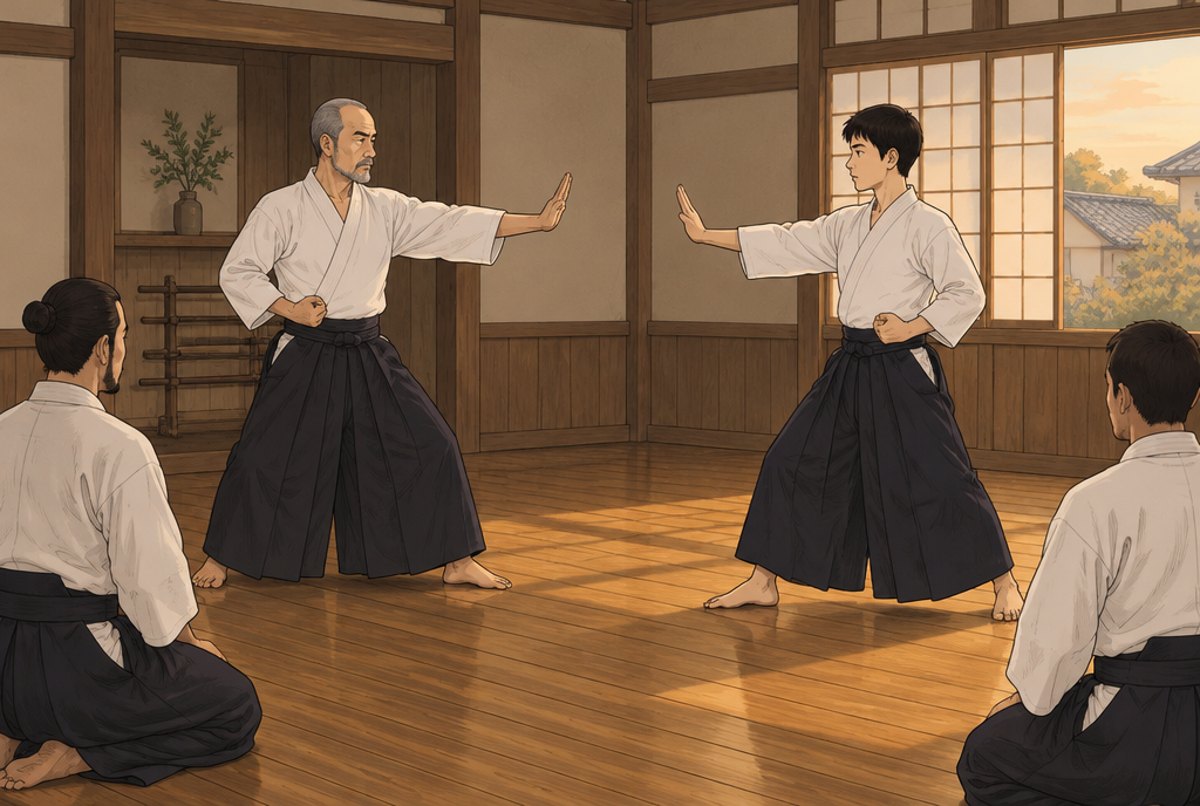
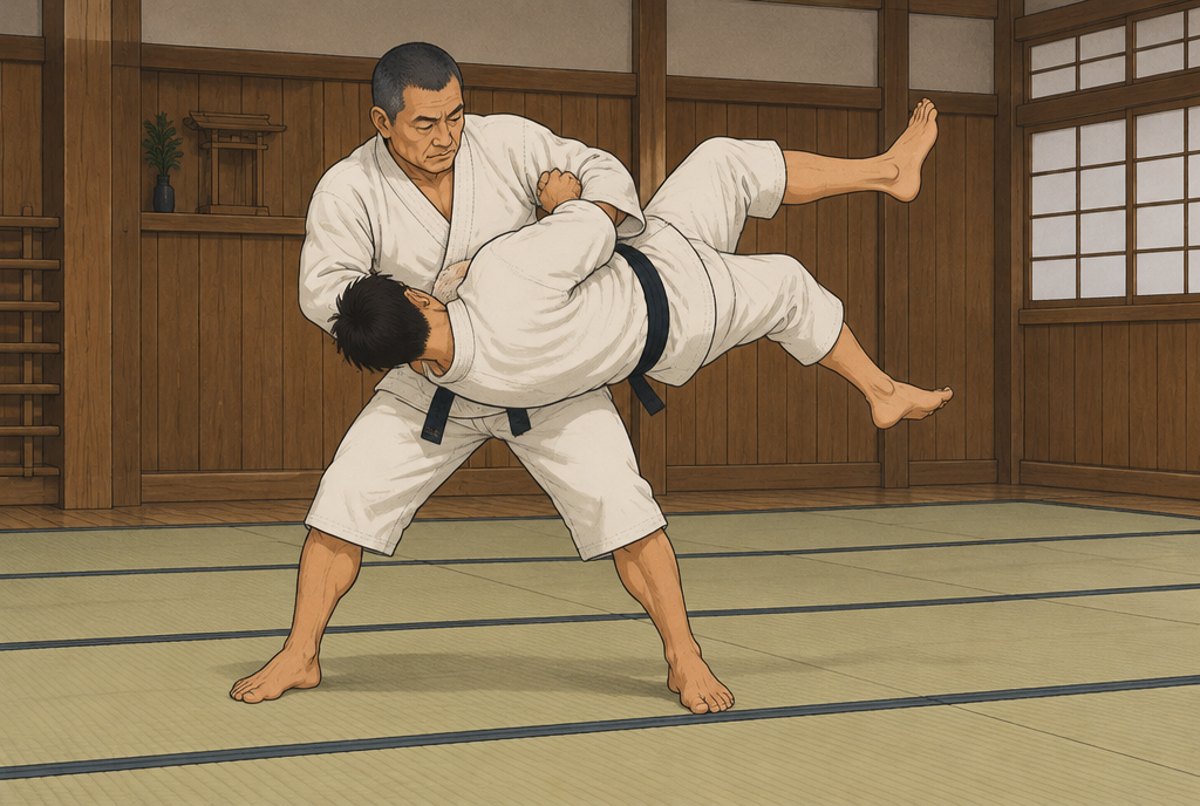
A class is built on learning to fall safely first, then throws standing up and holds on the ground, practised in drills, in set forms called kata, and in free practice, randori. 1,81 Classes begin and end with a bow. 81,123

Judo in the UK is more unified than many martial arts: most clubs follow British Judo's grades, while a few independent associations keep their own belt orders. 13,121,160 Where they differ, each version is shown side by side with its owner.

The story of judo

The same true story, told two ways. Pick the one for you.

For younger readers

Ages 8 to 11, read aloud if you like. 7 short chapters, each with a Listen button.

For teenagers and adults

Age 12 and up. 7 short chapters.

Through the years

Drag along the line, or tap a dot, to meet the people of each time.

18702012

1870 to 1883

Before judo had a name

Tokyo, Japan

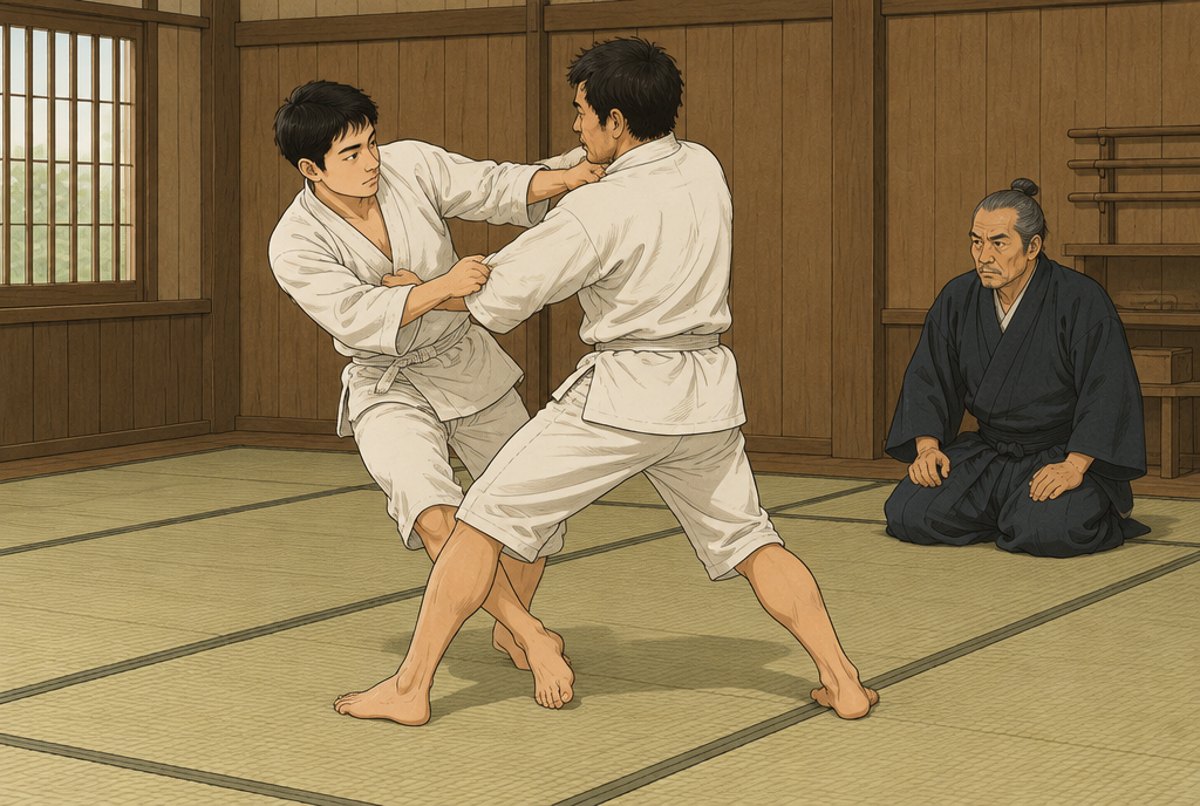
In the 1870s Japan was quickly taking up Western ways, and its old schools of unarmed fighting, called jujutsu, had fallen out of fashion. Many teachers had given up or turned to bone setting for a living when a young man called Jigoro Kano went looking for one.

Hachinosuke Fukuda

Hachinosuke FukudaDied 1879

Kano's first jujutsu teacher, in a school called Tenjin Shin'yo-ryu

He taught Kano to learn by doing, through free practice.

  • He preferred randori, free practice, to set forms.
  • Free practice is still the bigger part of everyday judo training.
Masatomo Iso

Masatomo IsoDied 1881

Kano's second teacher, in the same school

He showed Kano the other way to learn: set forms.

  • He was an expert in kata, set forms practised with a partner in a fixed order, and in striking vital points of the body.
  • Strikes live on in judo only inside some kata, and are not allowed in free practice or contests.
Tsunetoshi Iikubo

Tsunetoshi Iikubo

A teacher of Kito-ryu, a jujutsu school strong in throwing

Judo joined his school's throws with the holds and strangles Kano learned first.

  • In 1883 he gave Kano a certificate to teach Kito-ryu.
  • A judo kata from his school is still performed as if both partners wore armour.
Read this part of the story

Learn about judo

Find a judo club near you

Or browse every judo club by town.

Every page can be read aloud by your device. Tap Listen at the bottom of a chapter.

Written from checked sources, listed on the sources page. Pictures are drawn, with computer help, under our direction; none shows a real child. Recorded chapters are read by a computer voice; Hear it on a word uses your device's own voice.