

A ("form") in judo is a set sequence of techniques performed by two people, and , with formal bows at the start and end. 96 British Judo describes kata as a way to understand the principles behind techniques, and says there are kata of randori techniques, kata of self-defence, kata for physical conditioning and kata that preserve judo's history, "a sort of living judo museum". 96 Kata also lets judoka practise techniques that are not allowed in randori, such as strikes and wrist locks. 1
Unlike karate's, judo's kata are almost all done with a partner, and they are a smaller part of everyday club training than randori. In the UK they matter most for black belt and higher gradings, and for kata competitions. 1,86,88
How many kata are there?
It depends on whose list you use.
The seven Kodokan kata
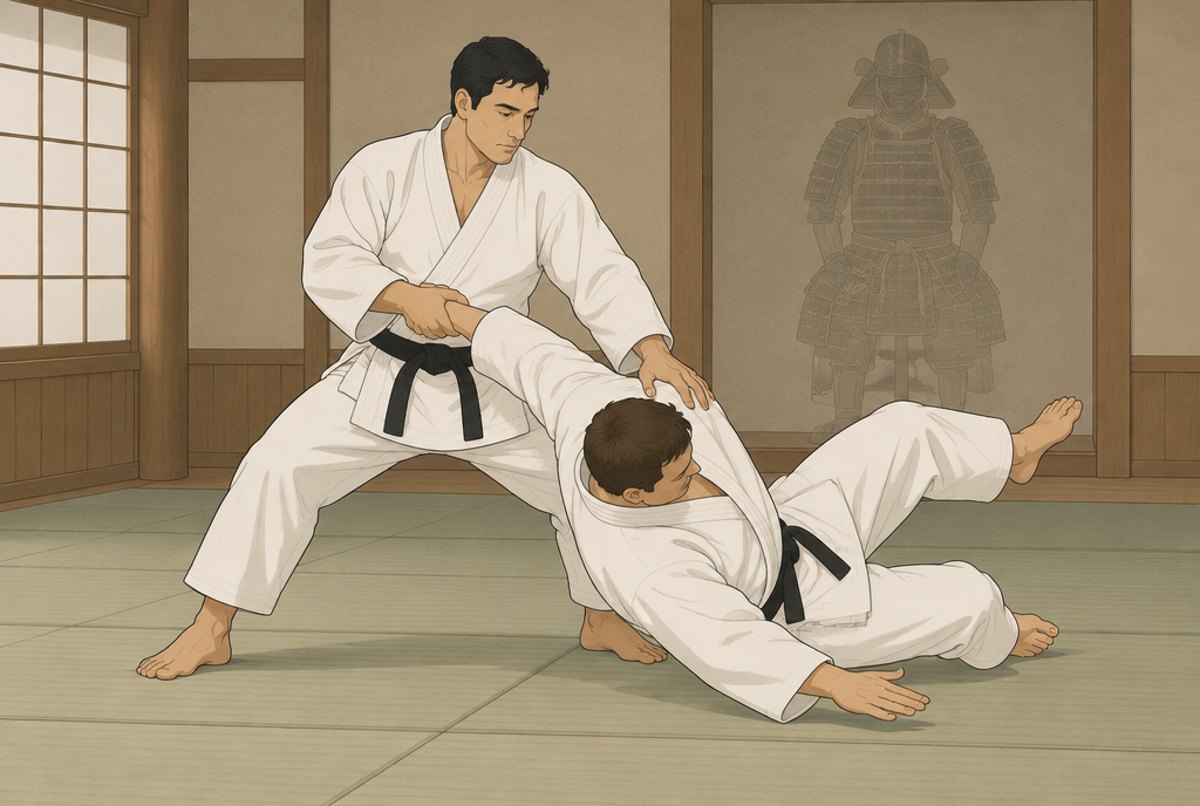
Nage-no-kata, the forms of throwing
The basic principles of throwing: three representative throws from each of the five throw groups, 15 in all, each done to the left and to the right. It is one of the two randori-no-kata, the "free practice forms". The Kodokan dates it, with Katame-no-kata, to around 1885 to 1886; it is said to have begun with 10 throws and later grown to 15. 26,68
- Te-waza: uki-otoshi, seoi-nage, kata-guruma.
- Koshi-waza: uki-goshi, harai-goshi, tsurikomi-goshi.
- Ashi-waza: okuri-ashi-harai, sasae-tsurikomi-ashi, uchi-mata.
- Ma-sutemi-waza: tomoe-nage, ura-nage, sumi-gaeshi.
- Yoko-sutemi-waza: yoko-gake, yoko-guruma, uki-waza. 68
In the UK: one set as an option for British Judo brown belt, and complete for British Judo 1st Dan on every route. IJF under 18 kata competitions use the first three sets. 60,81,86,88
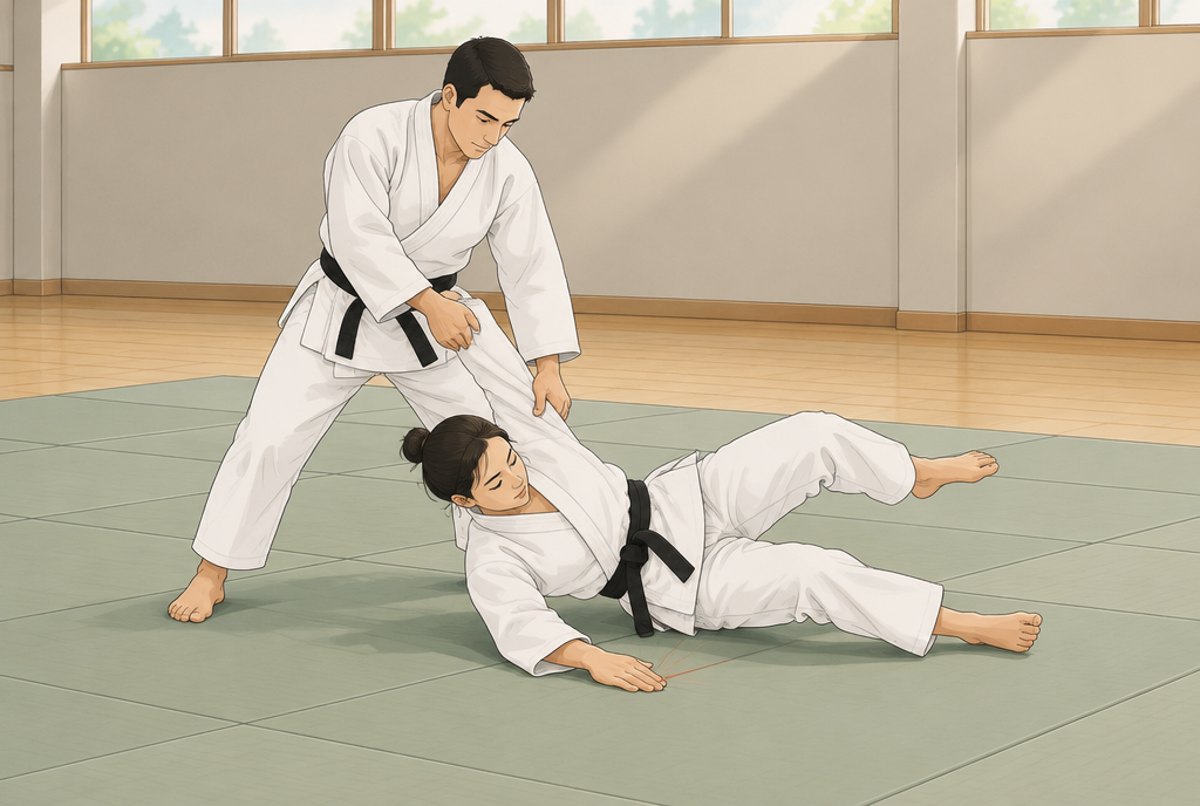
Katame-no-kata, the forms of grappling
Five hold downs, five strangles and five joint locks, showing how to control, pin, strangle and lock: the other randori-no-kata. Around 1885 to 1886 by the Kodokan's dating; between 1884 and 1887 by another account. 26,68
- Osaekomi-waza: kesa-gatame, kata-gatame, kami-shiho-gatame, yoko-shiho-gatame, kuzure-kami-shiho-gatame.
- Shime-waza: kata-juji-jime, hadaka-jime, okuri-eri-jime, kataha-jime, gyaku-juji-jime.
- Kansetsu-waza: ude-garami, ude-hishigi-juji-gatame, ude-hishigi-ude-gatame, ude-hishigi-hiza-gatame, ashi-garami. 68
Some lists give the first hold as kuzure-kesa-gatame, the modified scarf hold; the Kodokan's textbook names it simply kesa-gatame. 26,68 In the UK: one set as an option for British Judo brown belt; required for British Judo 2nd Dan. 81,86,88
Ju-no-kata, the forms of gentleness
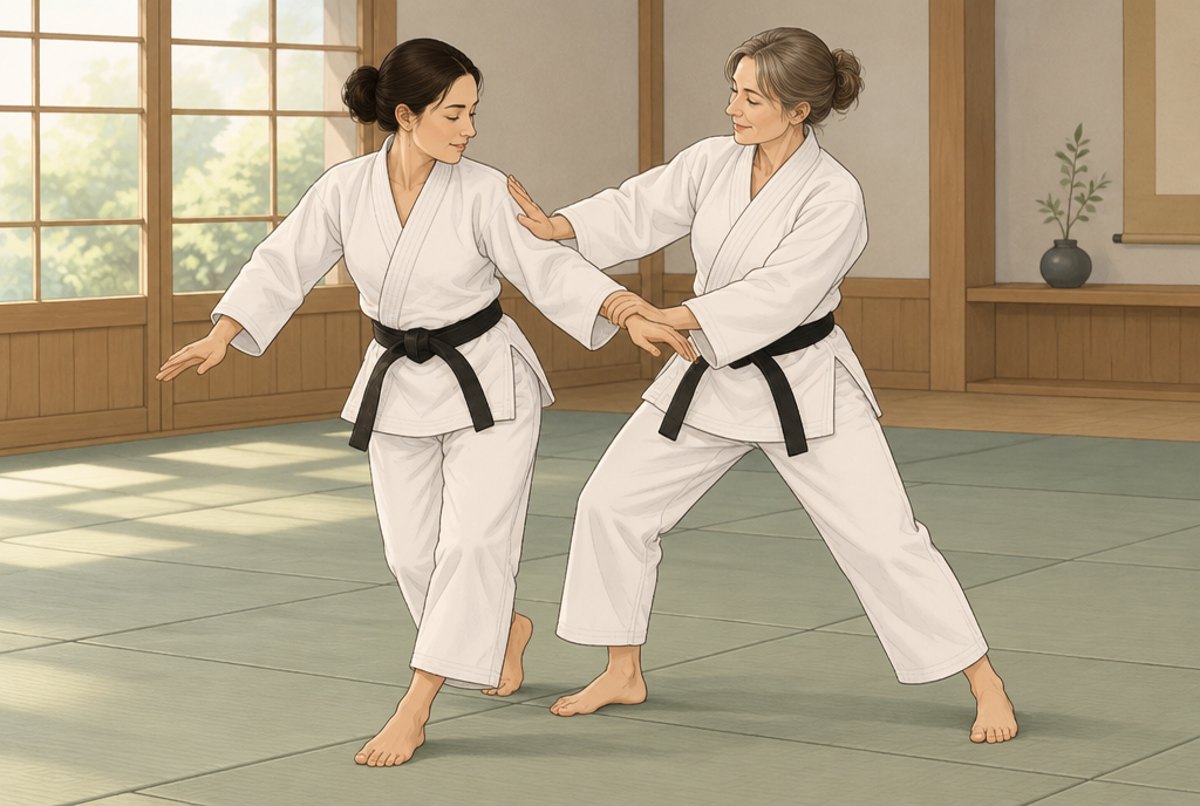
Slow, flowing attack and defence movements showing the principle of yielding, in 15 techniques in three sets of five. The Kodokan stresses that it can be done anywhere, in any clothes, by anyone of any age, because nobody is thrown. One account dates it to around 1887; the Kodokan's textbook gives no date. 26,68 In the UK: British Judo 3rd Dan. 86,88
Kime-no-kata, the forms of decision
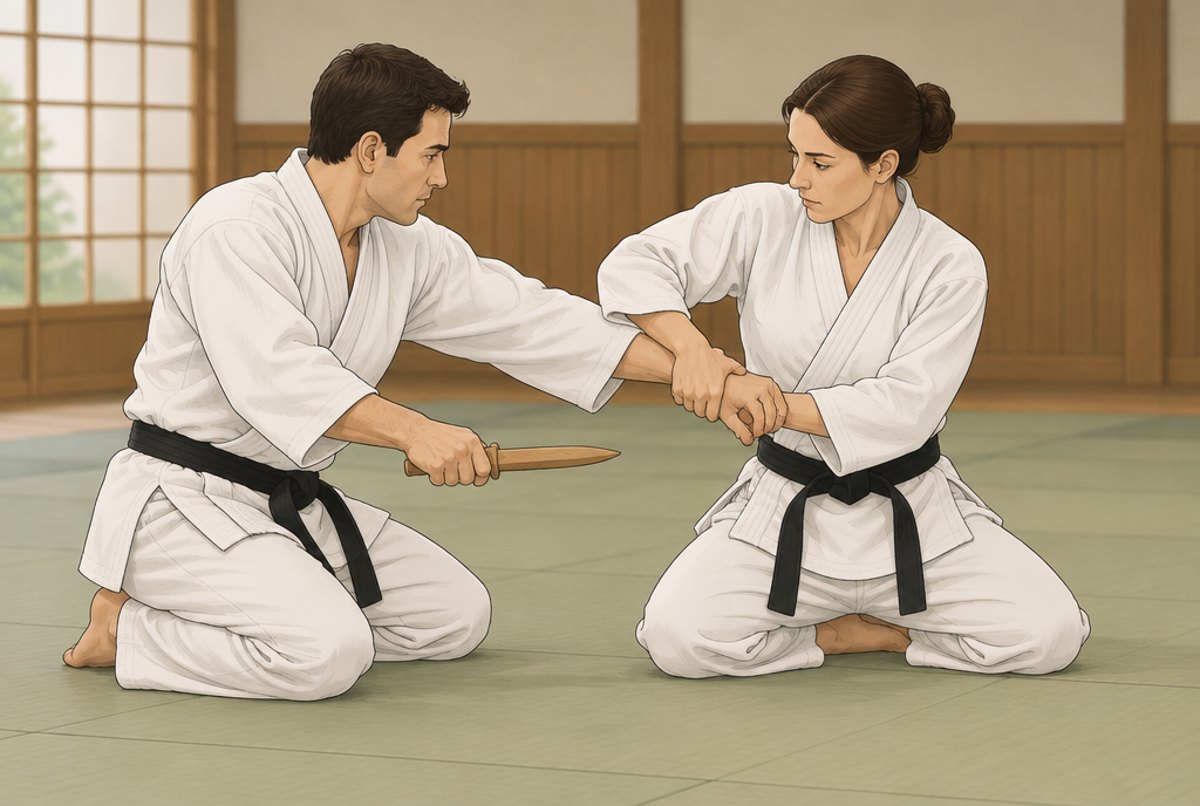
Self-defence against unarmed and armed attacks, with a dagger and a sword, and with strikes: the old "kata of real fighting". Twenty techniques, eight kneeling and 12 standing. The Kodokan says Kano first made a 10 technique Shobu-no-kata soon after founding the Kodokan and that the present form was settled at a Butoku Kai meeting in 1906; another account says around 1888. 26,68 In the UK: British Judo 4th Dan. 86,88
Kodokan Goshin-jutsu, Kodokan self-defence
Modern self-defence: unarmed attacks when held or from a distance, and attacks with a dagger, a stick and a pistol; it includes wrist locks. Twenty one techniques, 12 unarmed and nine against weapons. The Kodokan dates it to January 1956. 68 In the UK: British Judo 5th Dan. 86,88
Itsutsu-no-kata, the five forms
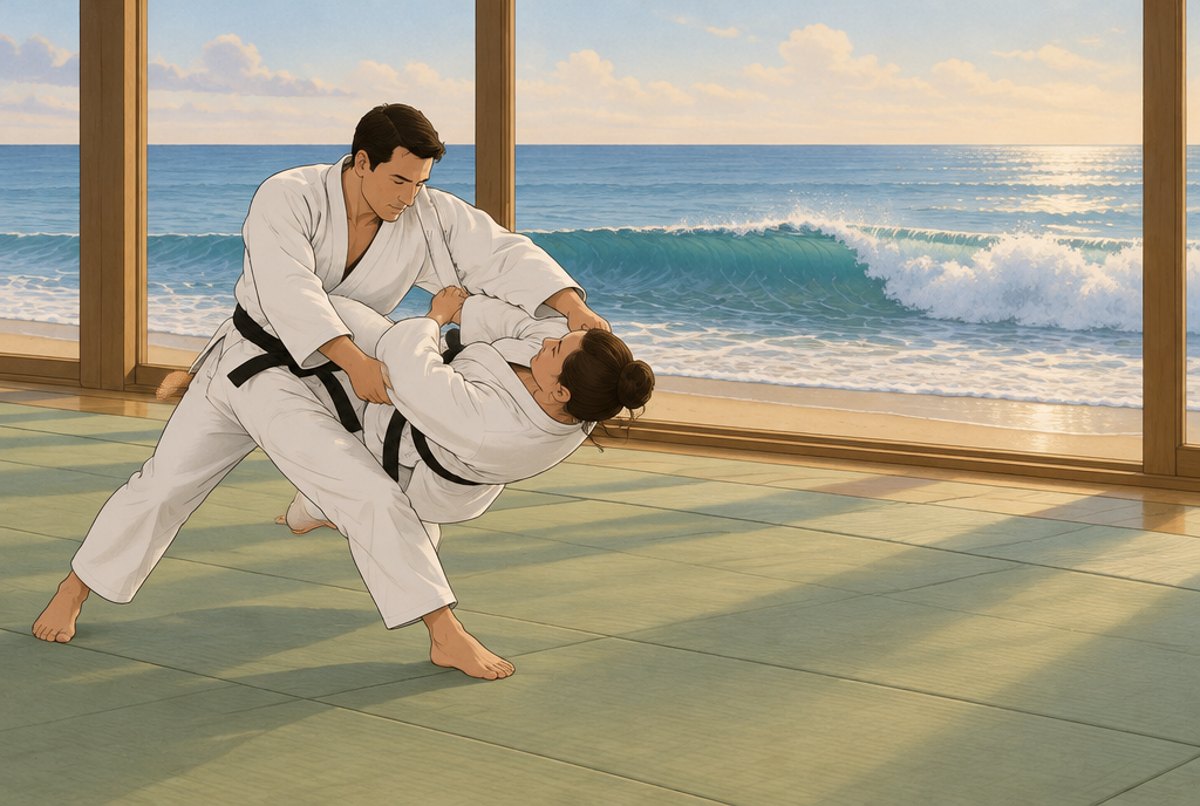
Five unnamed techniques expressing forces of nature, such as a wave sweeping the shore; considered advanced. It is not required by British Judo's dan syllabus, and in IJF competition tori must be at least 6th Dan. 26,60,68,86
Koshiki-no-kata, the antique forms
Throws from Kito-ryu jujutsu designed for warriors in armour, kept by Kano almost unchanged to preserve judo's roots. Twenty one techniques: 14 "omote" and seven "ura". 26,68 In the UK: British Judo 6th Dan; in IJF competition tori must be at least 6th Dan. 60,86
Other kata seen in the UK
- Go-no-kata, the forms of force: one of the oldest Kodokan kata, now rarely practised. 1
- Go-no-sen-no-kata, counter throws: not a Kodokan kata. It is said to be unknown in Japan; Mikinosuke Kawaishi spread it in the West. 1 The AJA requires it for 2nd Dan, and British Judo's 2016 grading FAQ allowed it or another Kodokan kata instead. 89,131
- Nage-waza-ura-no-kata, attributed to Kyuzo Mifune, and Katame-waza-ura-no-kata, attributed to Kazuo Ito: kata of counters, not recognised by the Kodokan. 1
- Adaptive kata: British Judo publishes separate adaptive kata rules for judoka with disabilities. 95
Kata in UK gradings
- British Judo: optional at brown belt (one set of Nage-no-kata or Katame-no-kata instead of a personal choice section). Then 1st Dan Nage-no-kata, 2nd Katame-no-kata, 3rd Ju-no-kata, 4th Kime-no-kata, 5th Kodokan Goshin-jutsu, and Koshiki-no-kata added at 6th. A Level 1 certificate is needed on the competitive route and Level 2 on the technical route. From 1 January 2026, attendance certificates no longer count. 81,86,88
- British Judo Council, 2014 syllabus: juniors meet single techniques of Nage-no-kata and Katame-no-kata on the green belt tab grades, building up tab by tab to the complete Nage-no-kata. Seniors need the first set of each kata for 2nd Kyu, two sets for 1st Kyu, and the complete Nage-no-kata plus two sets of Katame-no-kata for 1st Dan. 123
- Amateur Judo Association, 2018 syllabus: Nage-no-kata at 1st Kyu; Katame-no-kata for 1st Dan; Go-no-sen-no-kata for 2nd Dan; Ju-no-kata or Kime-no-kata for 3rd Dan. 131,132
British Judo also runs four levels of kata awards, separate from grading, and the British Kata Championships, managed by its National Kata Commission. 96,97
Kata competition, IJF rules of 14 August 2026
- Pairs: tori and uke, of any gender. Each athlete may enter two kata. 60
- Under 18: both partners under 18 in the year and at least 3rd Kyu (green belt); Nage-no-kata (first three sets), Katame-no-kata or Ju-no-kata. Roles in Nage-no-kata are drawn at random, so both must know both roles. 60
- Under 21: at least 1st Kyu; Nage-no-kata, Katame-no-kata or Ju-no-kata. 60
- Seniors: at least 1st Dan and 15 years old; any of the seven Kodokan kata. For Itsutsu-no-kata and Koshiki-no-kata, tori must be 6th Dan or above and uke at least a black belt. Pairs doing Kodokan Goshin-jutsu or Kime-no-kata bring their own practice weapons. 60
The Kodokan's English textbooks for all seven kata are free to download; the link is on the sources page. 68