

Japanese names here follow the Kodokan's spelling; British Judo sometimes spells them differently, for example "barai" for "harai". 67,81 English meanings are short glosses, not official translations.
The big picture
Judo techniques, , fall into three families. 1
- : throwing techniques.
- : grappling on the ground: hold downs, strangles and armlocks.
- : strikes to the body. They exist only in some kata and are not allowed in randori or contest.
The Kodokan, which keeps the official list, recognises 100 techniques: 68 throws and 32 grappling techniques. 67 The IJF's contest rules only score techniques on this list, in its version of 1 April 2017, or recognised variations. 60 The Kodokan's own technique pages, listed on the sources page, link a short official video for almost every one. 67
The groups
- , 16: hand techniques, where the arms and hands do most of the work. 1,67
- , 10: hip techniques, lifting or turning the partner over the hip. 1,67
- , 21: foot and leg techniques: sweeps, reaps and hooks. 1,67
- , 5: sacrifice throws falling straight back. 1,67
- , 16: sacrifice throws falling to the side. 1,67
- , 10: hold downs, pinning the partner on their back. 1,67
- , 12: strangles and chokes, with arms, lapels or legs. 1,67
- , 10: joint locks; in contest only the elbow may be attacked. 1,60,67
Standing throws are together called , the two sacrifice groups , and groundwork as a whole . 1
Ideas every beginner meets
- and : tori applies the technique; uke receives it. 1,81
- : breakfalls, the safe ways to land: backwards (ushiro ukemi), sideways (yoko ukemi), forwards (mae ukemi) and rolling (mae mawari ukemi, also called zenpo kaiten ukemi). 1,81,123
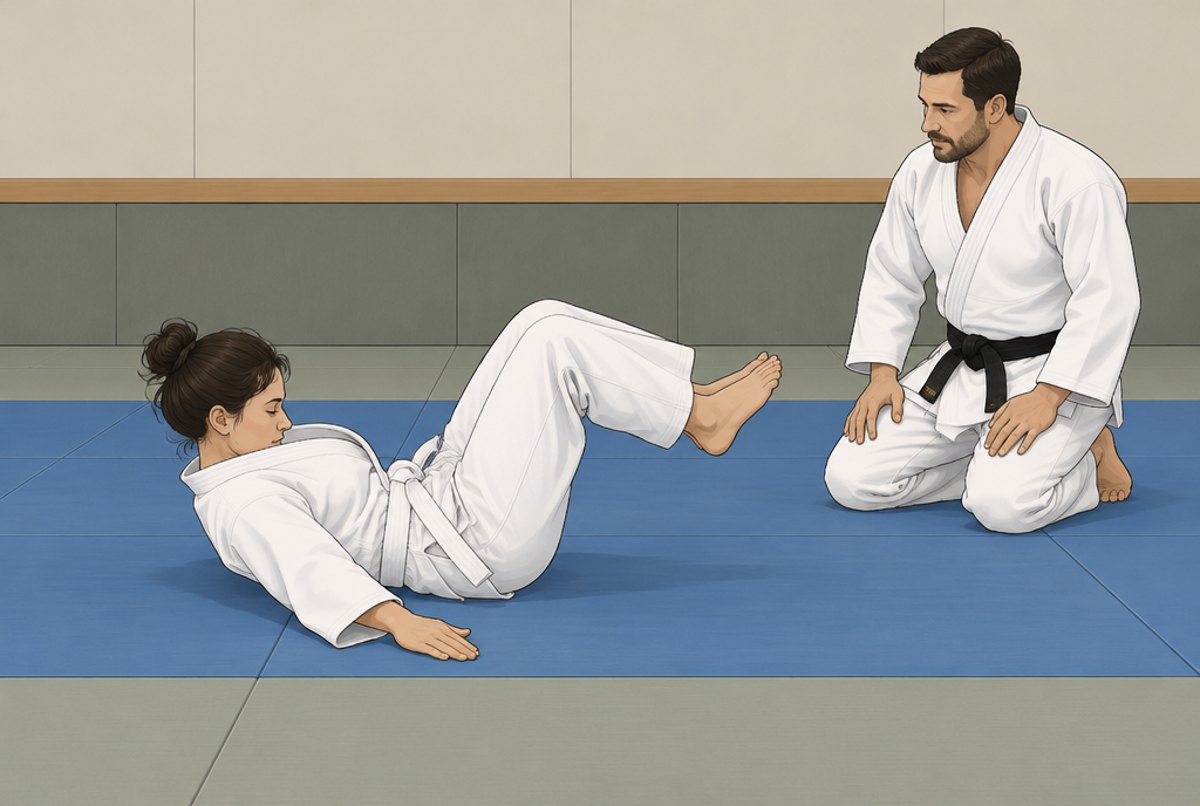
- , , : the three stages of a throw: breaking the partner's balance, fitting into position, and completing the throw. British Judo examiners also check , control at the end. 1,81
- : gripping, how the two judoka take hold of each other's jacket. 60,81
- : repeating the entry to a throw without completing it. 1
- : repeating a throw with a cooperative partner, completing it each time. 81
- : free practice, from light and cooperative to close to competition intensity. 1,81
- and : combinations. British Judo uses renraku for linking techniques in opposite directions and renzoku for the same or a similar direction. 81
- : counters to the partner's attack. 81
Reading a throw's name
Many names are built from the same few words, as British Judo's English names show. 81
- major, large; minor, small.
- outer; inner.
- reap; (or barai) sweep; hook.
- drop; wheel; (or koshi) hip.
- carrying on the back; throw.
- hold or lock; strangle; broken, modified.
So is a major outer reap, and a minor inner reap.
The Gokyo: 40 throws in five groups
The is the Kodokan's traditional teaching list of throws. A first version of 42 throws came in 1895; the revised list of 40 throws, in five groups of eight, came in 1920 and is the one usually taught today. 67 The order follows how hard each throw is to fall from: the first group is the easiest to land from. 1 The Kodokan notes that tsurikomi-goshi was not in the 1895 list and seems to have been added around 1911. 67
- First group: de-ashi-harai (advancing foot sweep), hiza-guruma (knee wheel), sasae-tsurikomi-ashi (propping ankle throw), uki-goshi (floating hip), o-soto-gari (major outer reap), o-goshi (major hip throw), o-uchi-gari (major inner reap), seoi-nage (shoulder throw). 67
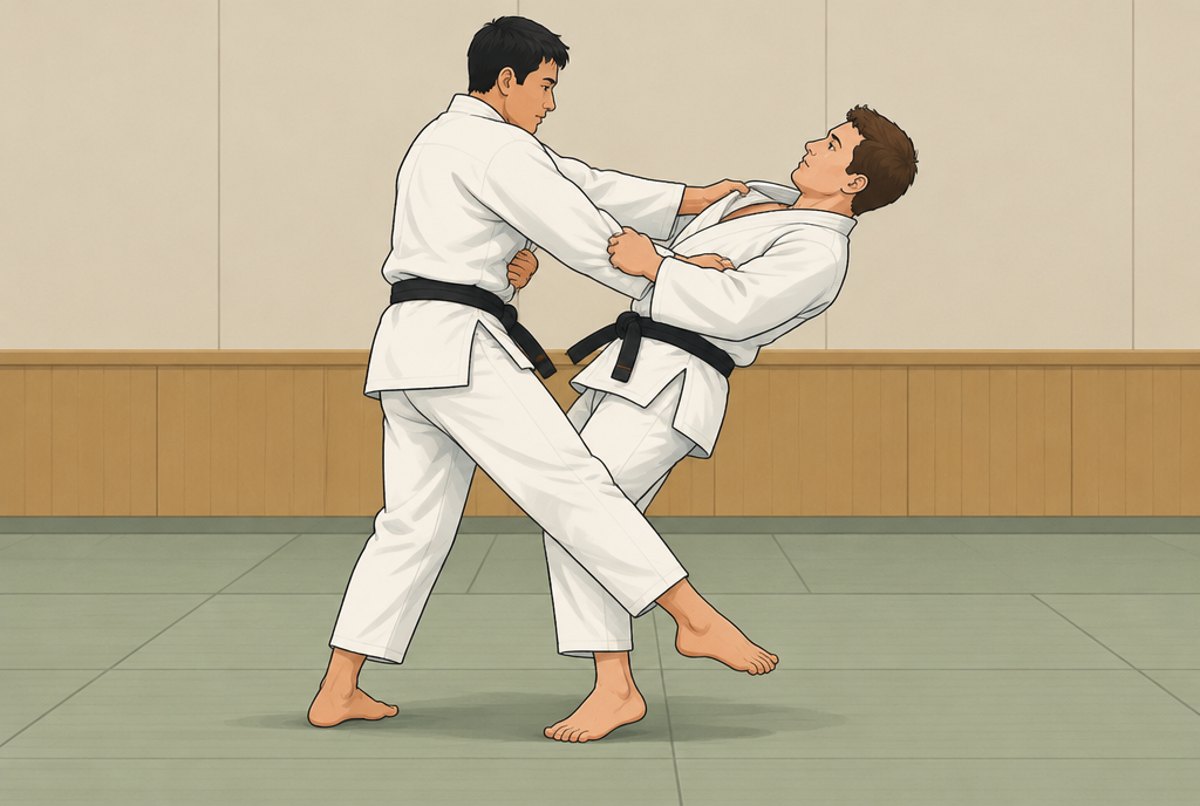
- Second group: ko-soto-gari (minor outer reap), ko-uchi-gari (minor inner reap), koshi-guruma (hip wheel), tsurikomi-goshi (lift and pull hip throw), okuri-ashi-harai (double foot sweep), tai-otoshi (body drop), harai-goshi (sweeping hip), uchi-mata (inner thigh throw). 67
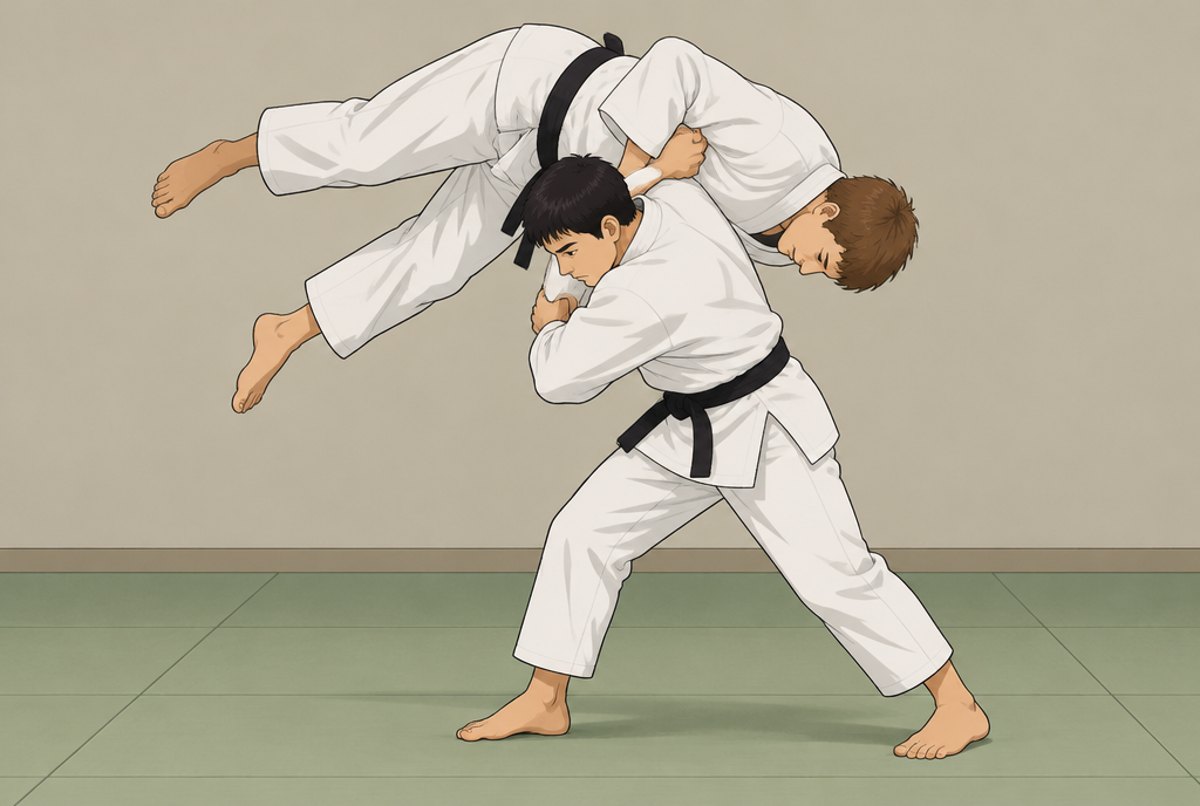
- Third group: ko-soto-gake (minor outer hook), tsuri-goshi (lifting hip throw), yoko-otoshi (side drop), ashi-guruma (leg wheel), hane-goshi (springing hip), harai-tsurikomi-ashi (lift, pull and sweep the foot), tomoe-nage (circle throw), kata-guruma (shoulder wheel). 67
- Fourth group: sumi-gaeshi (corner reversal), tani-otoshi (valley drop), hane-makikomi (springing wrap round), sukui-nage (scooping throw), utsuri-goshi (changing hip throw), o-guruma (large wheel), soto-makikomi (outer wrap round), uki-otoshi (floating drop). 67
- Fifth group: o-soto-guruma (major outer wheel), uki-waza (floating technique), yoko-wakare (side separation), yoko-guruma (side wheel), ushiro-goshi (rear hip throw), ura-nage (rear throw), sumi-otoshi (corner drop), yoko-gake (side hook). 67
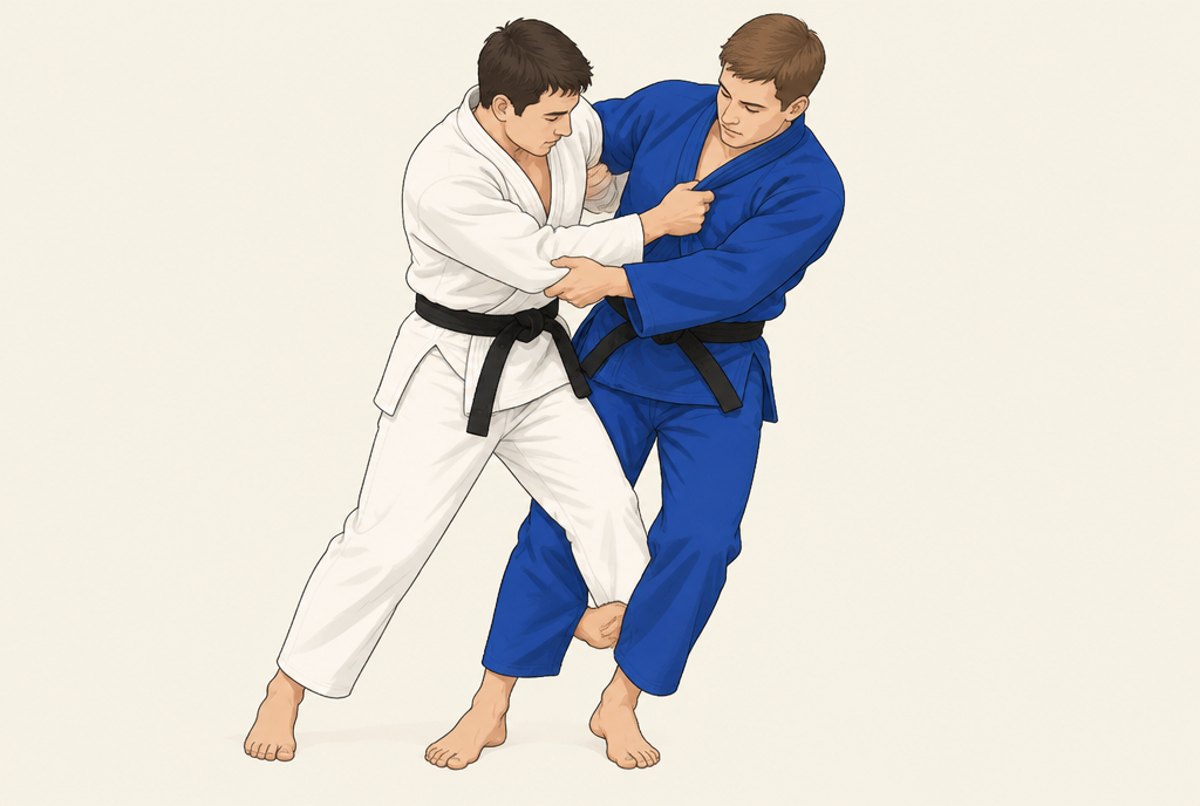
The other 28 of the Kodokan's 68 throws sit outside the Gokyo. 67
A note for parents. Some traditional throws grip the legs, for example sukui-nage, and kata-guruma done with a leg grab. Under the IJF rules since 2025, grabbing or blocking the legs is penalised with shido, so throws like these are now mainly learned for kata and gradings. 60,61 British Judo's 2016 grading FAQ gave the same reason for keeping kata-guruma in its syllabus. 89
Groundwork
Hold downs (osaekomi-waza), 10
(scarf hold), kuzure-kesa-gatame (modified scarf hold), ushiro-kesa-gatame (reverse scarf hold), kata-gatame (shoulder hold), (upper four quarters hold), kuzure-kami-shiho-gatame (modified upper four quarters hold), (side four quarters hold), (lengthwise four quarters hold, astride the partner), uki-gatame (floating hold) and ura-gatame (rear hold). 67
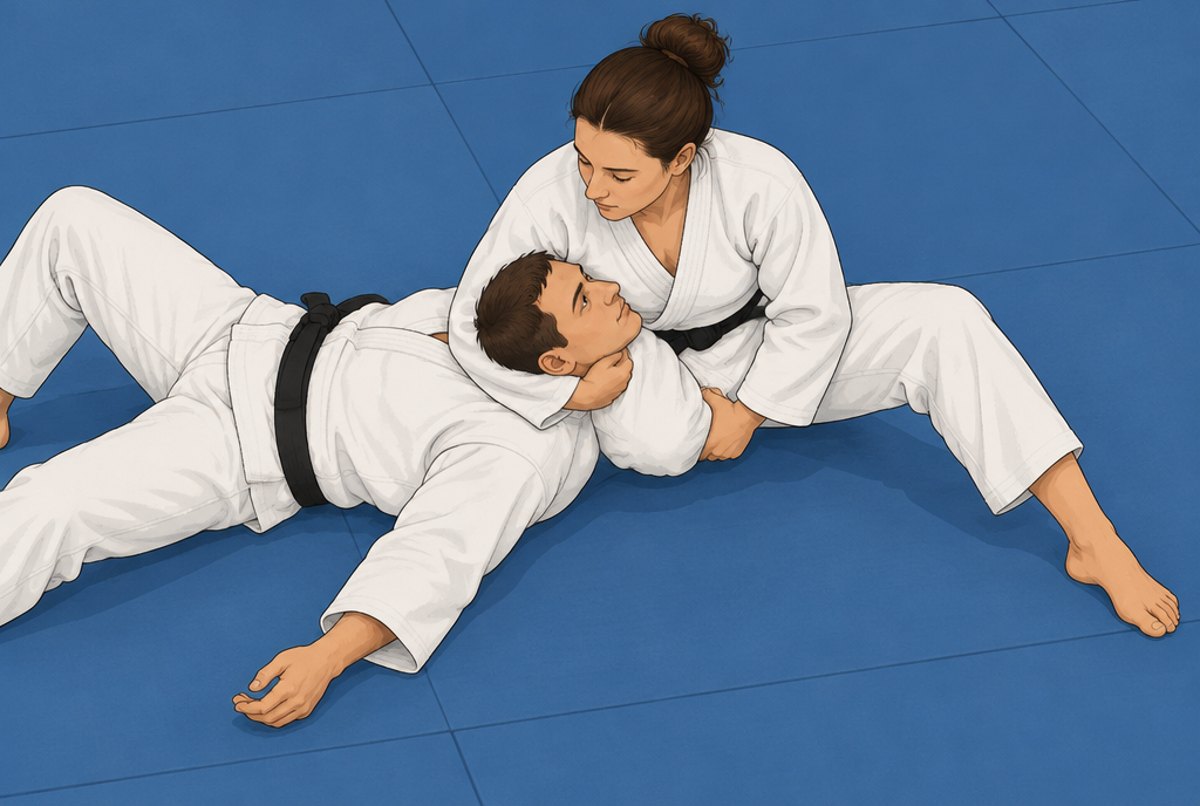
In contest a hold counts once the referee calls and the held judoka has their back or upper back on the mat and is controlled from the side, behind or on top. 60 The competition page gives how long a hold must last for each score.
Strangles (shime-waza), 12
Nami-juji-jime (normal cross strangle), gyaku-juji-jime (reverse cross strangle), kata-juji-jime (half cross strangle), (naked strangle, without using the jacket), okuri-eri-jime (sliding collar strangle), kataha-jime (single wing strangle), katate-jime (one hand strangle), ryote-jime (two hand strangle), sode-guruma-jime (sleeve wheel strangle), tsukkomi-jime (thrusting strangle), sankaku-jime (triangle strangle, with the legs) and (trunk squeeze with the legs). 67 Do-jime is a Kodokan technique but is banned in IJF contest. 60
Joint locks (kansetsu-waza), 10
Ude-garami (entangled armlock), (ude-hishigi-juji-gatame, cross armlock), ude-hishigi-ude-gatame (straight armlock with the arms), ude-hishigi-hiza-gatame (armlock with the knee), ude-hishigi-waki-gatame (armpit armlock), ude-hishigi-hara-gatame (stomach armlock), ude-hishigi-ashi-gatame (leg armlock), ude-hishigi-te-gatame (hand armlock), ude-hishigi-sankaku-gatame (triangle armlock) and (leg entanglement, a knee lock). 67 All the armlocks attack the elbow. Ashi-garami attacks the knee and is banned in IJF contest; locks on any joint other than the elbow are forbidden. 1,60
Rough order of learning: one UK example
There is no single order. As an illustration, these are examples, not the full list, of what British Judo's 2025 Kyu syllabus introduces at each belt. 81
- Red (6th Kyu): back, side and rolling breakfalls; o-soto-otoshi, de-ashi-barai, uki-goshi; kesa-gatame and mune-gatame; simple escapes; standing and kneeling bows.
- Yellow (5th Kyu): front breakfall; tai-otoshi, ippon-seoi-nage, o-uchi-gari; the three "shiho" (four quarters) holds; standard grips; light randori.
- Orange (4th Kyu): o-goshi, ko-uchi-gari, ko-soto-gari, o-soto-gari, morote-seoi-nage; first combinations and counters.
- Green (3rd Kyu): harai-goshi, uchi-mata, hiza-guruma, hane-goshi, okuri-ashi-barai; first armlocks, including juji-gatame.
- Blue (2nd Kyu): tomoe-nage, tani-otoshi, yoko-guruma, soto-maki-komi; first strangles.
- Brown (1st Kyu): sumi-gaeshi, ura-nage, ushiro-goshi, koshi-guruma; hadaka-jime and triangle (sankaku) techniques; kata as an option.
Juniors on Mon grades follow almost the same content, spread over three steps per belt colour, and juniors under 16 learn strangles and armlocks but must not apply them to the point of submission. 81,82
For contrast, the British Judo Council's 2014 syllabus lists its standing techniques "in order of grading" starting with morote-seoi-nage, morote-seoi-otoshi and ko-uchi-gari, and its groundwork starting with hon-kesa-gatame. 123 So a judoka moving between clubs may have learned the same techniques in a different order.
Banned in contest
Under the IJF rules of 14 August 2026, these lead to , disqualification, and the athlete cannot continue in that event: 60
- , wrapping one leg round the partner's leg and falling back into them;
- , the "scissors" throw;
- do-jime;
- locks on any joint other than the elbow, such as ashi-garami, or on the shoulder;
- actions that endanger the neck or spine, including certain "sankaku" grips.
Diving head first into the mat while throwing is also hansoku-make, but the athlete may continue in the event. In cadet (under 18) events, using the head to throw or defend is penalised with shido, as is a reverse seoi-nage. 60,61
British Judo adds its own technical restrictions for younger and lower graded players, all under 12s and under 16s up to yellow belt, and allows strangles and armlocks only in categories where everyone is at least 14. 97 British Judo publishes the exact list; ask the club.
A note for families: reading about a technique is for understanding it. Throws, holds and locks are learned from a coach, on a mat, with a partner who knows how to fall.