

Every club runs things a little differently, so in places the honest advice is "ask the club". Prices below are as published on 25 October 2026 and will change.
Before you go
- Find a club. British Judo has a club finder for England and Wales; JudoScotland and the Northern Ireland Judo Federation run their own, and so does the British Judo Council. 102,160
- Free tasters are common. British Judo says many of its clubs offer free taster sessions. No special kit is needed at first: comfortable, stretchy clothing is enough. 94
- A free first month. British Judo lists a free one month "Introductory" membership, which cannot be renewed. 92 Ask the club whether you need it for a taster.
- Insurance comes with membership. British Judo membership includes personal accident and public liability cover, valid only at clubs and events it recognises. 92,93 You join through the home nation where you live (British Judo in England, JudoScotland in Scotland, and so on), which makes you a British Judo member by affiliation. 92,112
- Tell the coach about any medical condition or injury. The BJC's syllabus makes this one of the first things a child learns. 123
How young, how old?
- 3 to 4: British Judo's "Judo Tots" membership. Some clubs run classes for even younger children; the Budokwai, for example, lists a "JudoGym" class from 6 months and judo games from 4. 92,136
- 4 to 7: JudoScotland's Under 8 membership and its Kai grades. 111,112
- 5 to 7: British Judo's Sho awards in "Judo Kids" sessions, built around fun and basic movement. 83
- From 5: the BJC allows children "not less than 5", but calls 7 the recommended starting age, when most children can concentrate and coordinate well enough. 123
- 8: British Judo's Mon grades start, and so does competition; under 8s may only take part in "Under 8 Judo Festivals". 82,97
- 14: Kyu grades open, and strangles and armlocks are allowed in British competition from this age. 81,97
- 15: the minimum age for a British Judo black belt and for any IJF event. 60,86
- Adults of any age: Kyu grades for everyone over 18; masters (veterans) events from 30; British Judo's "Finding Your Feet" programme teaches older adults to fall safely. 60,84,97,102
The Kodokan says people from 6 to over 80 train there. 66
When you arrive
Common practice, as shown in the BJC's syllabus and British Judo's grading requirements; every club has its own small variations. 81,90,123
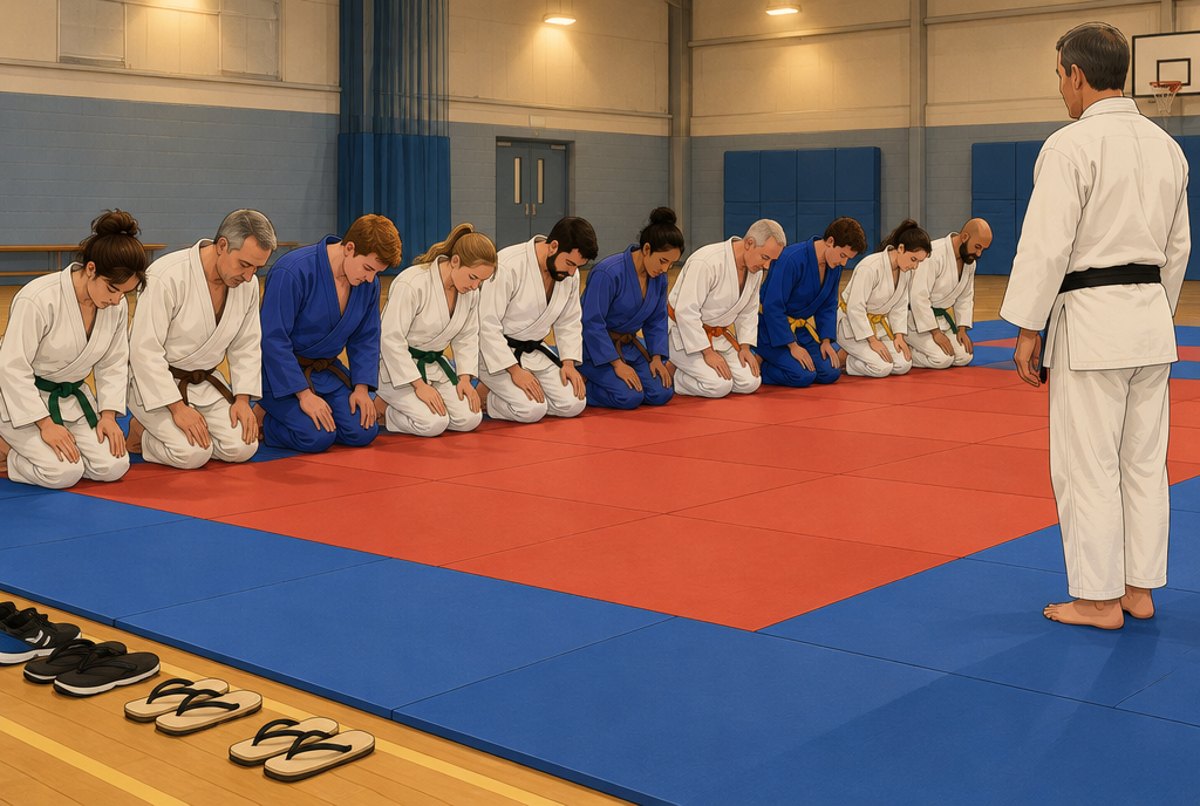
- Bow, , when you enter and leave the , before you step onto and off the mat, and to your partner before and after practising together. Both standing bows, , and kneeling bows, , are used.
- Shoes off the mat. Leave your , sandals, or shoes neatly side by side at the edge of the mat. Feet should be clean.
- Line up in grade order at the start and end and bow to the teacher, the .
- Ask before leaving the mat, and stop straight away when the coach says (often said "Matte").
- Keep it safe: short, clean finger and toe nails; long hair tied back; no jewellery or hard objects (British Judo says taping over rings is not enough); a clean judogi. 81,83,90
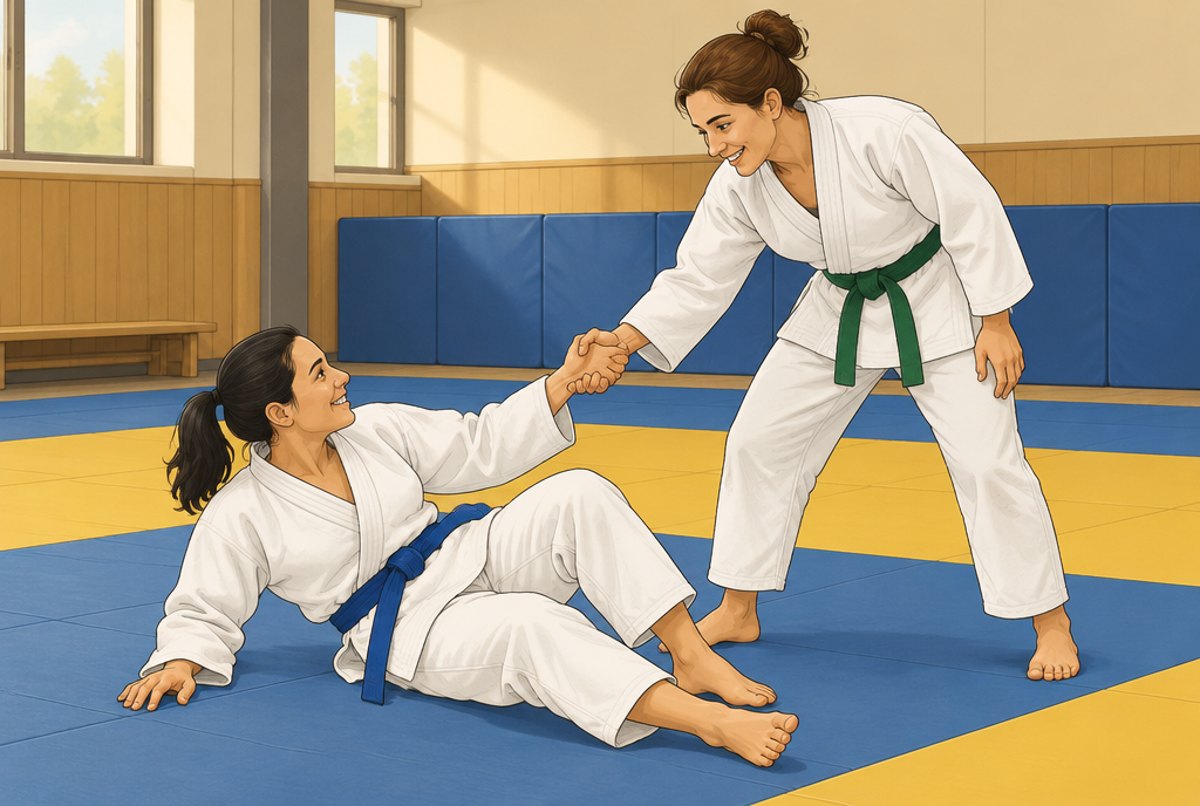
- Respect the rules of practice: hands and feet off your partner's face, and submit by tapping twice, or saying , when a hold, strangle or lock hurts. 60,123
What a class usually looks like
The exact shape varies by club and age group, but most classes have these parts. 1,81,83,123
- Bow in, lined up by grade.
- Warm up, often with games for children; British Judo's youngest awards are built on jumping, hopping and movement skills. 83
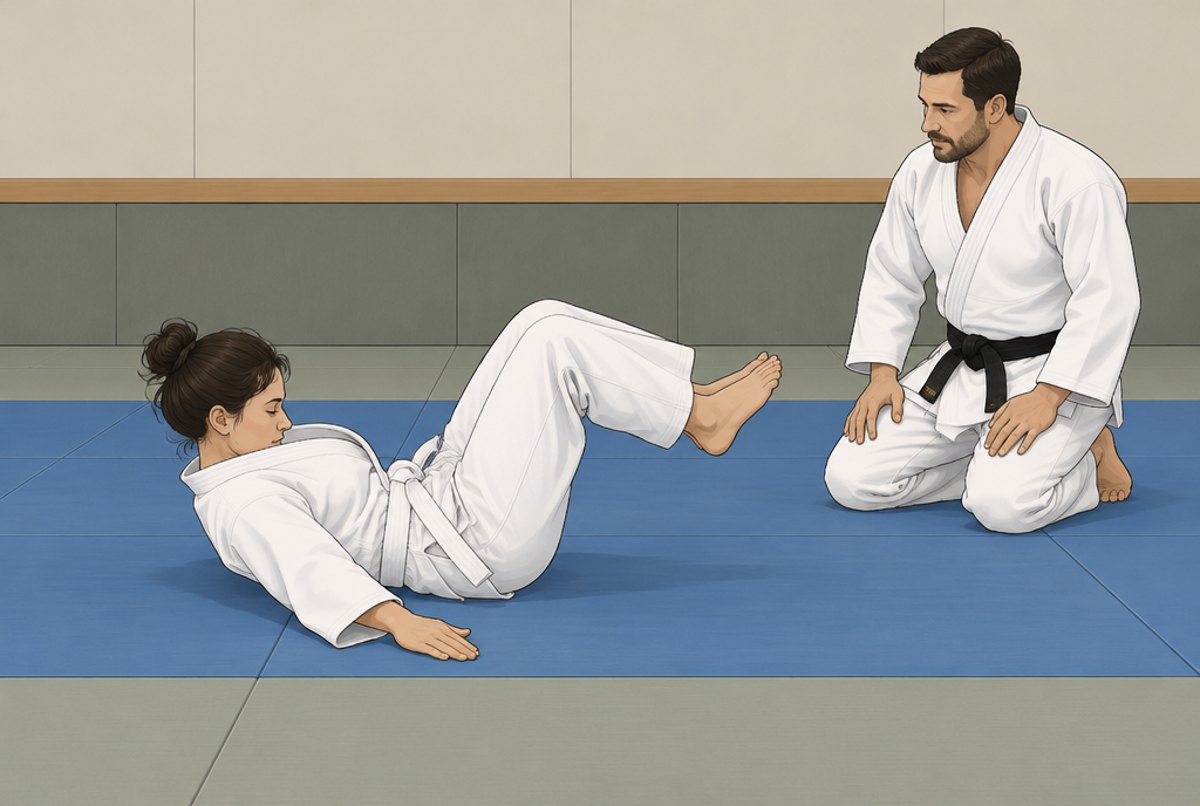
- Breakfalls, . Learning to fall safely comes first. Beginners learn back, side and front breakfalls and a forward roll; the youngest start from crouching or with help. 1,81,83,111
- Technique, standing () and on the ground (): a throw and a hold down, and how to escape.
- Drills: repeated entries () and repeated throws with a willing partner ().
- , free practice, for those ready for it, often groundwork first. The BJC does not recommend competitive randori before children reach its green tabs, or orange belt for older juniors and seniors. 123
- Bow out.
Kit, later on
- : a heavy cotton jacket, trousers and belt, much thicker than a karate suit because it is gripped and pulled. White is normal in training; in IJF contests one judoka wears white and the other blue. 25,60
- Under the jacket: in IJF competition women must, and men may, wear a short sleeved white T-shirt. British Judo's youngest syllabus tells girls to wear a T-shirt. Ask the club what it expects. 60,83
- Belt: everyone starts on a white belt. The belts and grades page explains what comes next.
- Zori: sandals for walking to and from the mat. 81,90
Safety
- Mats and breakfalls. Judo is trained on mats, , and every beginner learns to fall before being thrown. Throws are traditionally taught in order of how hard they are to fall from. 1
- Strangles and armlocks come later. In British Judo they are taught from green and blue belt, and juniors under 16 must not apply them to the point of submission; in competition they are only allowed where everyone is at least 14. 81,97 In IJF cadet events, a judoka who loses consciousness from a strangle cannot continue in that event. 60
- Extra rules for young players. British Judo uses "technical restrictions" for all under 12s and for under 16s at low grades, banning certain actions in contests. 97
- Concussion and strangulation injuries. British Judo's protocol is "if in doubt, sit them out": immediate removal from the mat, a health professional's assessment and a graduated return. For under 19s the minimum time back to judo is 23 to 24 days, longer than for adults. 99
- Coaches and safeguarding. British Judo says all its coaches keep first aid and safeguarding certificates up to date. 92 The NSPCC's Child Protection in Sport Unit publishes five questions any parent can ask a sports club about keeping children safe. 140 British Judo's Safe Sport pages explain how to report a concern. 141
- Disability. British Judo's adaptive judo pathway runs from recreational judo to the Paralympics, with adjusted gradings, and it also supports visually impaired judo. 81,95
Competition: only if you want it
- British Judo's Mon and Kyu gradings have no contest requirement; competing is encouraged but optional. 81,82
- Beginners' events (Level One, often called "red belt" events) are a first taste of contest, and at Level One events every competitor receives a medal. 81,97
- Boys and girls, men and women may train and grade together, but IJF contests between men and women are not allowed. 60,81
What it costs, as published on 25 October 2026
- British Judo full adult membership, 12 months (insurance, grading, competition): £46. 92
- British Judo full junior, student, services or "blue light" membership: £35. 92
- British Judo recreational membership (training only): £23 adult and £17.50 junior. 92
- British Judo introductory membership (1 month, once only): free. 92
- British Judo's Judo Tots, ages 3 to 4: £5. 92
- JudoScotland Under 8, Junior (8 to 15) and Senior (16 and over): £20, £30 and £40. 112
- British Judo Mon grade registration: £14, plus any organiser's surcharge (British Judo recommends no more than £5). 82
- British Judo Kyu grade registration: £20, plus any surcharge. 81
Class fees are set by each club; ask Welsh Judo, the NIJF, the BJC or the AJA for their membership prices.
Questions families ask
What age can my child start? In British Judo, Sho awards start at 5 and some clubs take toddlers; the BJC suggests 7 as the ideal starting age. Ask the club what its youngest class is. 83,92,123
Will my child be thrown in the first lesson? The sources all start with breakfalls and simple, controlled throws with a partner; free practice comes later. 81,83,123
Is it only for sporty children? British Judo stresses that its syllabus works for those who never compete, and it adapts gradings for disabled judoka. 81,95
How long to a black belt? In British Judo, about three years to brown belt, then at least a year more and a minimum age of 15. 81,86
Is it safe? There are no published injury figures for UK judo. The safety measures above are what the governing bodies require.