

Read this first. Every association, and every coach within it, sets the details of a grading: the content, the order, the words used, the ages and the waiting times. The examples here are a general picture built from published syllabi. They are not any association's syllabus. Before a grading, the only syllabus that counts is the one your own club and association give you.
What gradings tend to have in common
With that caveat, this is what the published syllabi share.
- Technique, shown with a partner, standing and on the ground. British Judo's examiners check balance breaking (), positioning (), execution () and control (). 81
- Breakfalls, safety and etiquette. Every BJC grade has technique, safety and etiquette points. 123
- Japanese terms. British Judo's Mon and Kyu gradings test Japanese terms and "supplementary knowledge"; every BJC grade has a Japanese word to learn, for example "Matte" at the first tab. 81,82,123
- History. BJC junior and senior grades include questions on its own history, for example that Kenshiro Abbe founded it. 123
- Randori, a growing element at higher grades in British Judo. 81
- Contest is not needed below black belt in British Judo, but Dan grades on its competitive route come from contest points. 81,86
Three real examples of how it varies
- British Judo: red is the first senior coloured belt; at most one Kyu grade a month up to 5th Kyu, then one every three months; kata optional at brown belt; the coach can assess over several sessions. 81
- British Judo Council, 2014 syllabus: 6th Kyu is a white belt for seniors; three months and 12 sessions between each step; kata from 3rd Kyu for seniors. 123
- Amateur Judo Association, 2018 syllabus: juniors' grades count up rather than down; Go-no-sen-no-kata for 2nd Dan. 131,132
Three bodies in one art, with different belt orders, timings and kata. A club in any of them may add its own expectations on top.
Practice set: 15 example theory questions
These are examples of the kind of question a theory section might ask. Each answer shows its source. A coach may want a different answer or a different spelling, and the coach is right for that grading.
- What does judo mean? "The gentle way": ju, gentle or yielding, and do, way. 1,66
- Who founded judo, where and when? Jigoro Kano, in Tokyo, in 1882. Sources disagree about the month. 1,2,64,65
- What does Kodokan mean? The Kodokan explains it as "a place to teach the path". 66
- What are Kano's two principles? Seiryoku zen'yo, maximum efficient use of energy, and jita kyoei, mutual welfare and benefit. 1,66
- What do tori and uke mean? Tori applies the technique; uke receives it. 1,81
- Name four breakfalls. Ushiro ukemi (backwards), yoko ukemi (sideways), mae ukemi (forwards) and mae mawari ukemi (rolling). 1,81,123
- What are the three stages of a throw? Kuzushi, breaking balance; tsukuri, fitting in; kake, completing the throw. 1,81
- What do hajime, mate, osaekomi, toketa and sore-made mean? Begin; wait or stop; hold down is on; hold broken; that is all, finished. 60,81,123
- What are the three families of judo technique? Nage-waza (throwing), katame-waza (grappling) and atemi-waza (striking, found only in some kata). 1
- What are the three groups of katame-waza? Osaekomi-waza (hold downs), shime-waza (strangles) and kansetsu-waza (joint locks). 1,67
- What do o, ko, soto, uchi and gari mean in a throw's name? Major, minor, outer, inner and reap: o-soto-gari is a major outer reap. 81
- What is the Gokyo? The Kodokan's teaching list of throws: since 1920, 40 throws in five groups of eight. 67
- What are the scores in an IJF contest, under the rules of 14 August 2026? Ippon, waza-ari and yuko; two waza-ari make ippon. A hold down scores yuko at 5 seconds, waza-ari at 10 and ippon at 20. 60
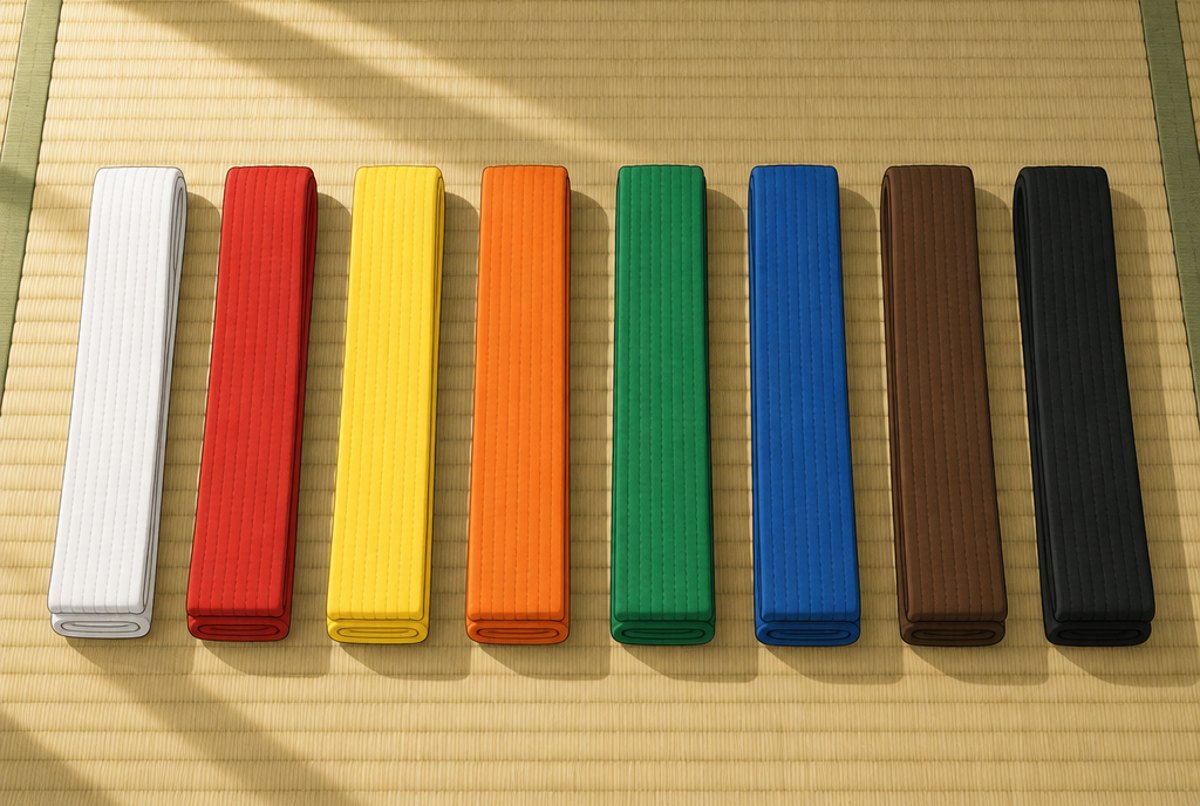
- Name British Judo's senior kyu belts in order. White (novice), red, yellow, orange, green, blue, brown, then black. Other bodies differ. 81,123,131
- Who founded the Budokwai, and when did it open? Gunji Koizumi; it opened on Saturday 26 January 1918 with 12 members. 7,8,136
Questions only your coach can answer
The exact techniques for your next grade, your own association's terms and spellings (British Judo writes "barai" where the Kodokan writes "harai", and many clubs say "Matte" for "Mate"), your association's own history questions, and anything about fees or dates. Those come from your coach. 67,81,123