

In the 1870s Japan was westernising fast, and much of the old way of life was being left behind. 1,2 One part of it was , the name for a large family of older Japanese schools of unarmed fighting, each school a with its own methods. 1,2 By the time a young man called Jigoro Kano went looking for a teacher, jujutsu had fallen out of fashion. Many teachers had given it up, and some had turned to bone setting to make a living. 1,2
Those schools held throws, holds, strangles and locks, and some taught strikes as well. 1,2,5 Kano would study two of them, under three men. 1,2
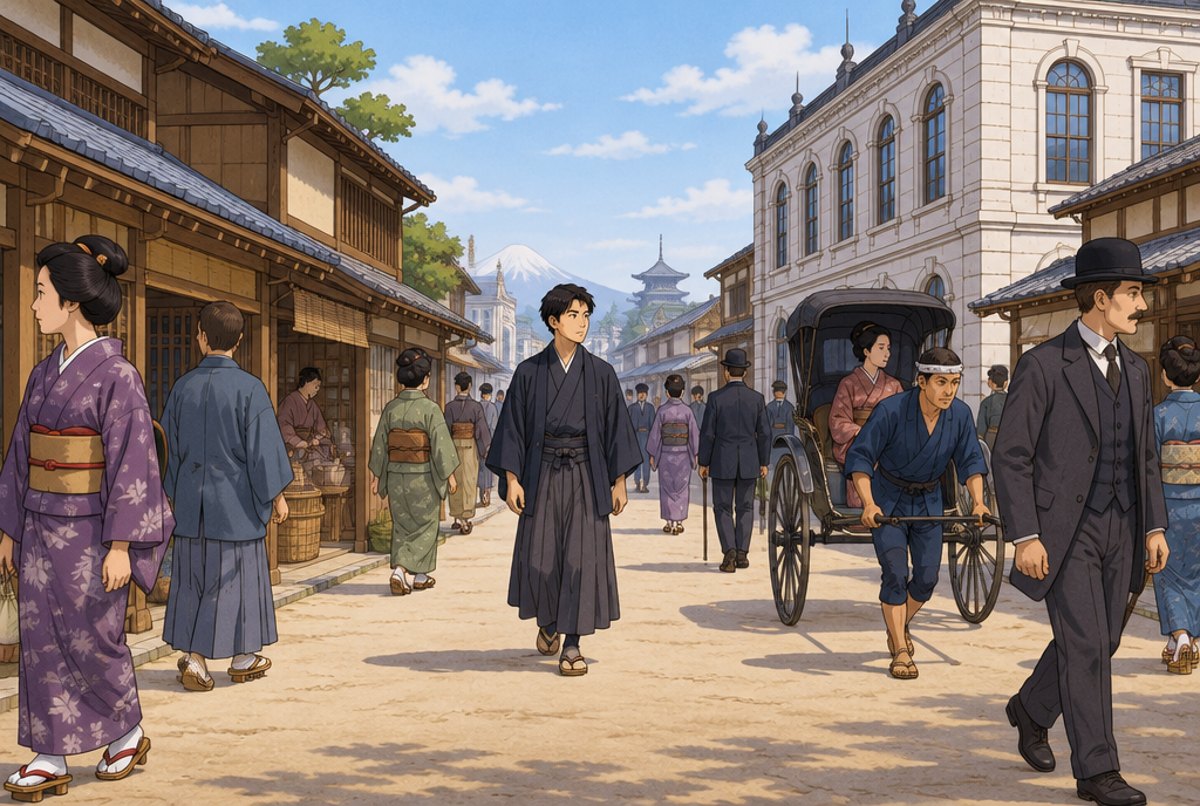
Kano was born on 28 October 1860 by the old Japanese calendar, which is 10 December 1860 in the Western one. World Judo Day, which marks his birth every year, keeps the old date, 28 October. 1,2,174,175 The art he went on to build has spread, the Kodokan says, to about 200 countries and regions. 65 At the start, though, he was a student looking for someone still willing to teach.
Fukuda: learning by doing
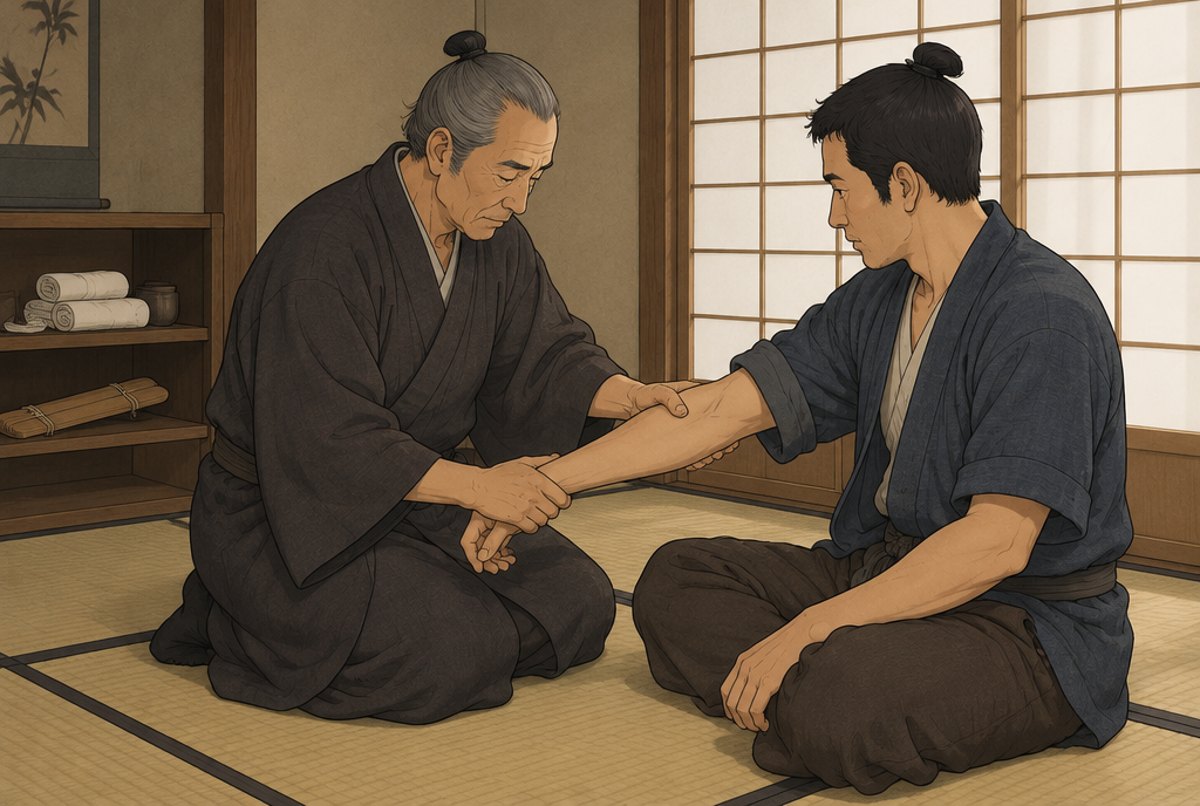
Kano's first school was Tenjin Shin'yo-ryu, and his first teacher in it was Hachinosuke Fukuda. 1,2,5 Fukuda favoured free practice over set forms. 1,2,5 Free practice, , can range from light and cooperative to close to competition intensity, and it is still a bigger part of everyday judo training than kata. 1,81
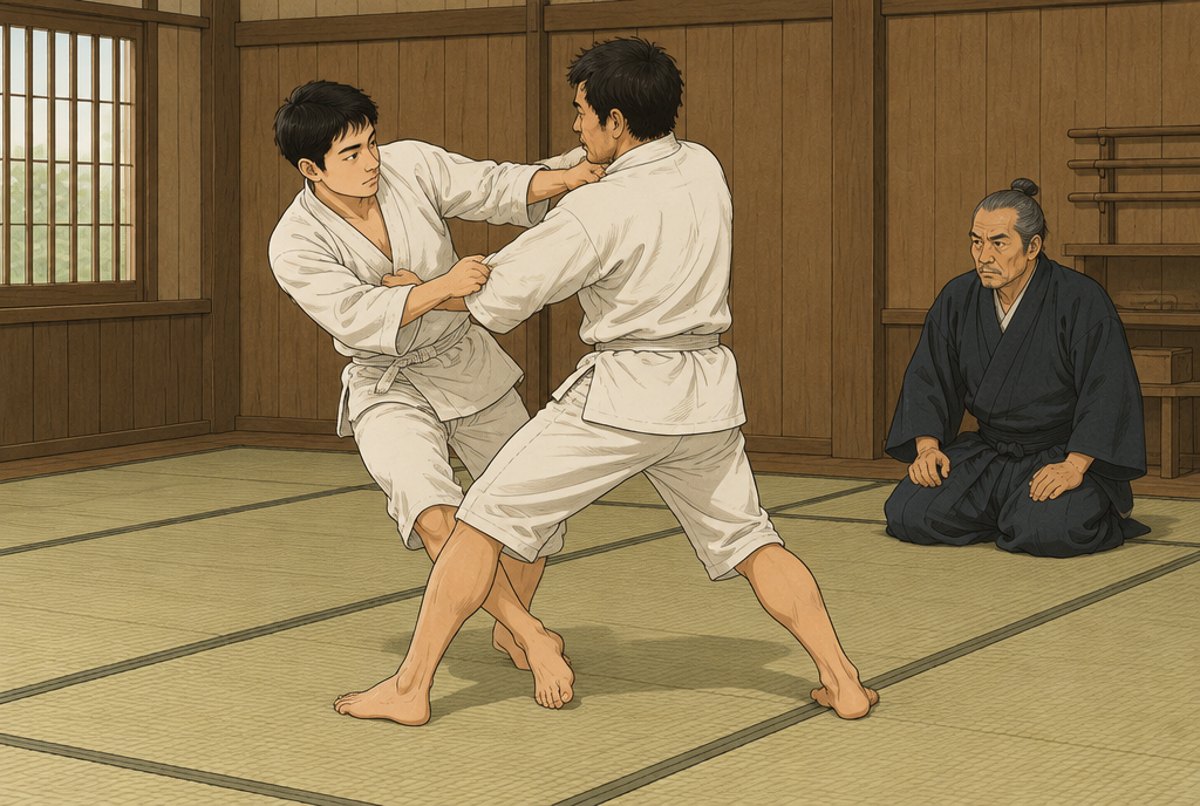
Fukuda died in 1879, aged 52. 1,2,5
Iso: the forms
Kano carried on in the same school under Masatomo Iso. 1,2,5 Iso was a different kind of teacher. He was a specialist in , set forms practised with a partner in a fixed order, and in striking vital points. 1,2,5,96 Iso died in 1881. 1,2,5
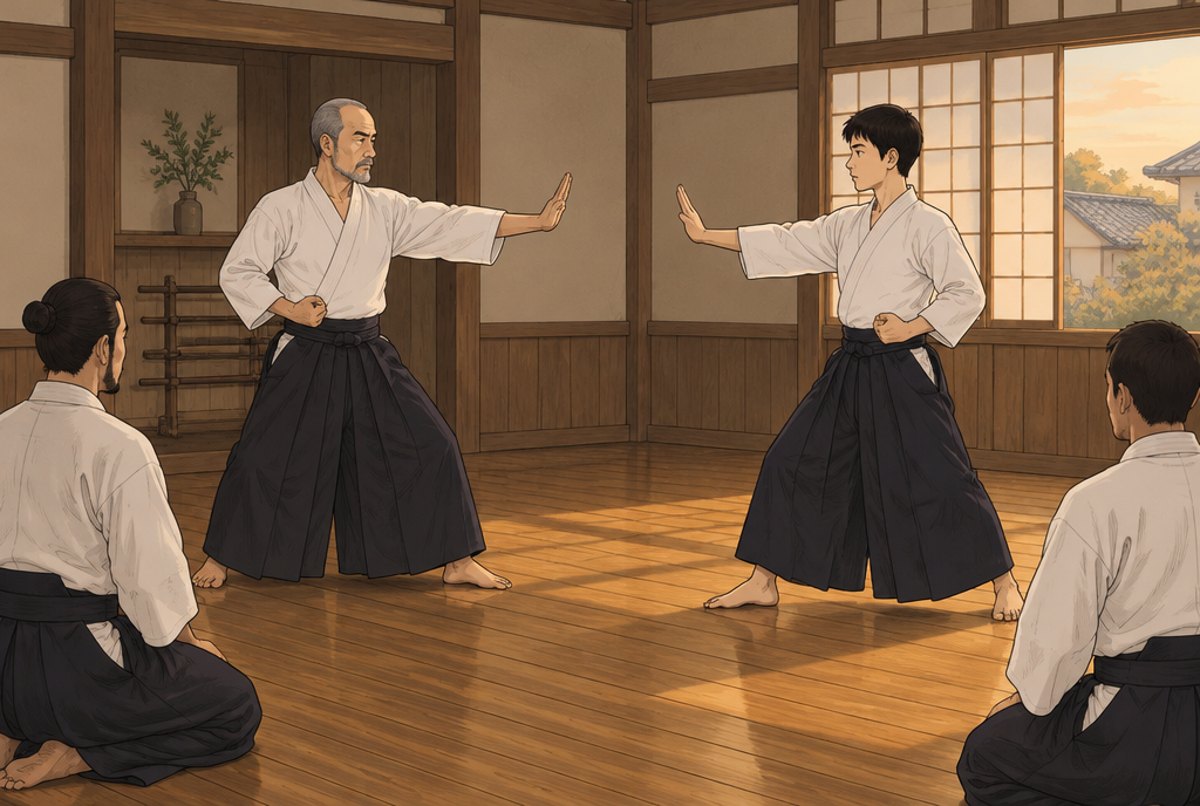
Within two years Kano had lost two teachers and been shown two different ways to learn. One built skill through free practice. The other kept it in set forms. Judo would keep both: Kano built his teaching method around randori and kata together. 1
The balance between them still shapes a judo class. Randori is the bigger part of everyday club training, while kata matter most for black belt and higher gradings and for kata competitions. 1,86,88 British Judo describes kata as a way to understand the principles behind techniques, and says that some kata preserve judo's history, "a sort of living judo museum". 96
Strikes have only a small place in judo today. Its striking techniques, , appear only inside some kata and are not allowed in randori or contest. 1
Iikubo: the thrower
Next Kano trained under Tsunetoshi Iikubo, a teacher of Kito-ryu, a school strong in throwing. 1,2,6 Iikubo gave Kano a Kito-ryu teaching certificate, a , dated October 1883. 2,6,173 By then Kano already had a school of his own, so the certificate came after he had begun to teach. 2
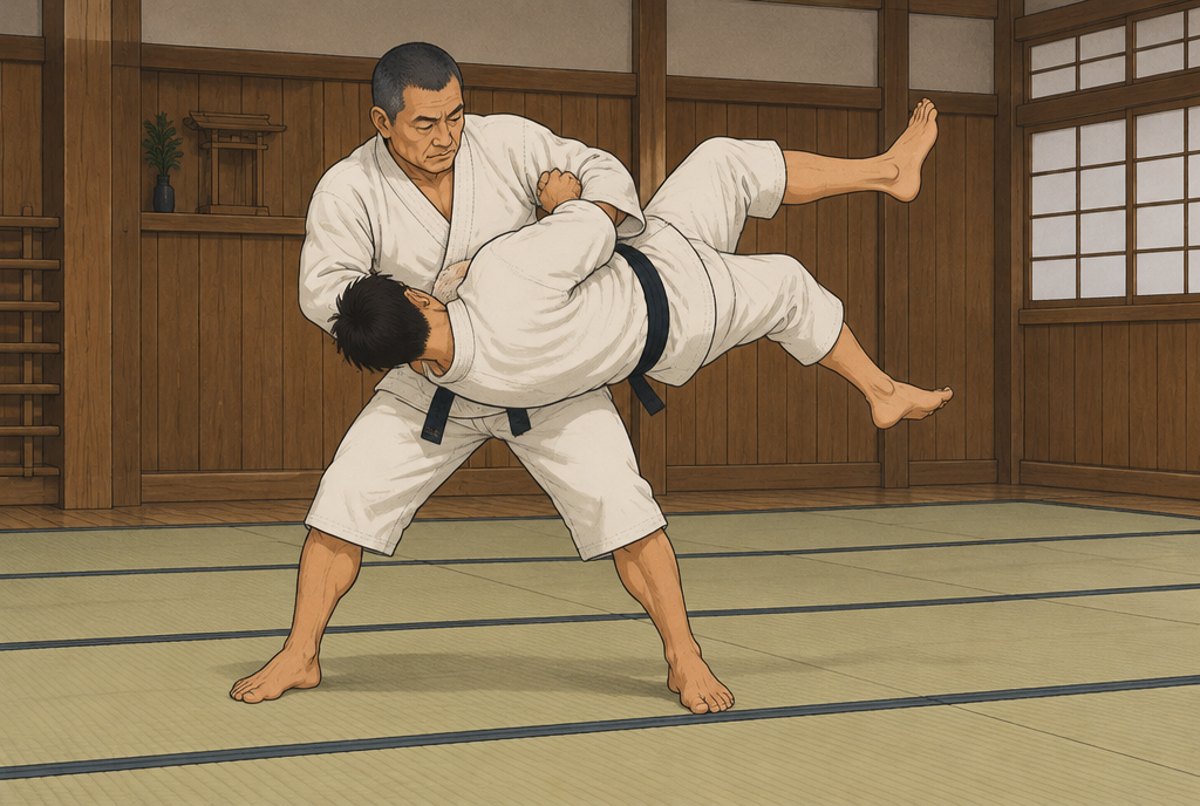
Kito-ryu had a link to a word, too. Kan'emon Terada, an earlier Kito-ryu master, had used the word judo earlier, for his own Jikishin-ryu. 2
What he kept, and what he changed
The Kodokan's own account says Kano mastered both schools, added ideas from other fighting arts and some of his own, and turned the old jujutsu idea of "defeating strength through flexibility" into a wider principle, the "maximum efficient use of physical and mental energy". 66 Put more simply, judo joined Kito-ryu throwing to the pins and strangles of Tenjin Shin'yo-ryu. 2
The old schools are still visible in judo, in two kata. 26,68
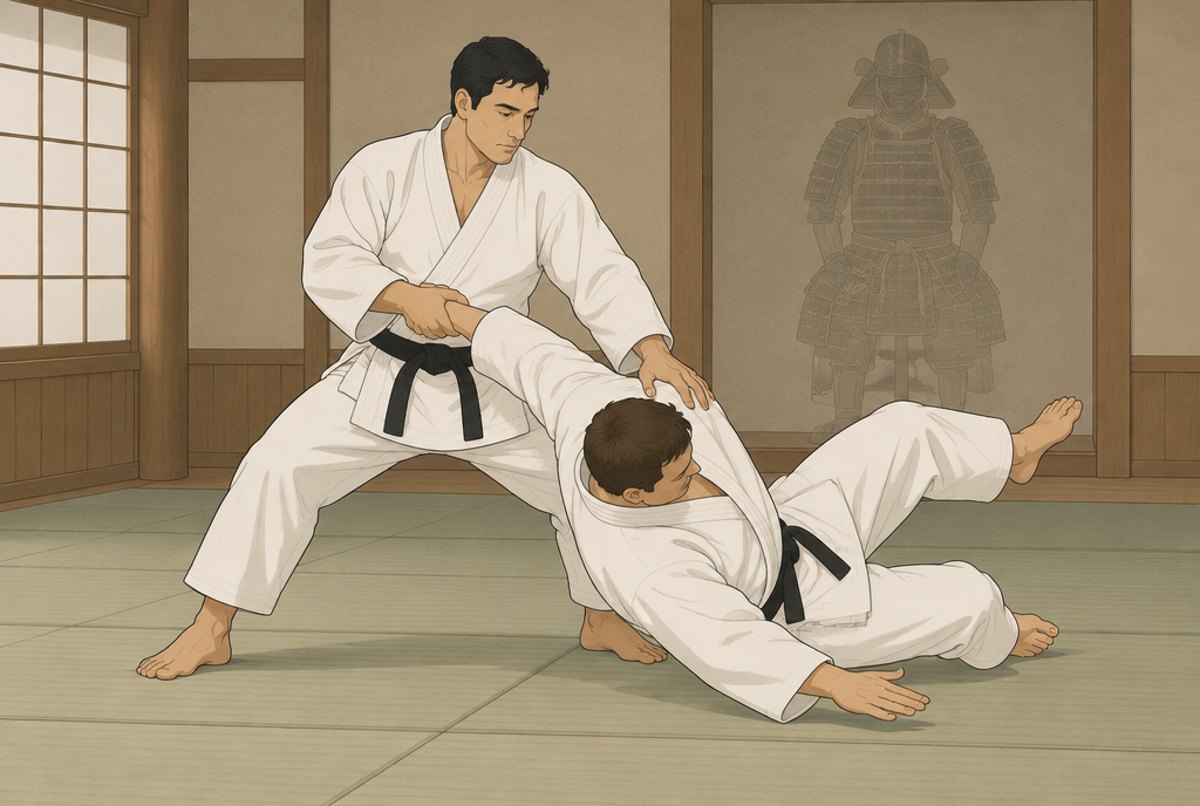
Koshiki-no-kata, the "antique forms", comes from Kito-ryu. Its throws were designed for warriors in armour, it is performed as if both partners wore armour, and Kano kept it almost unchanged to preserve judo's roots. 26,68 It has 21 techniques, 14 in its first part and seven in its second. 68 In British Judo it is the kata added for 6th Dan, and in IJF kata competition the thrower must be at least 6th Dan to perform it. 60,86 So a form older than the Kodokan itself is kept for judo's most senior grades.
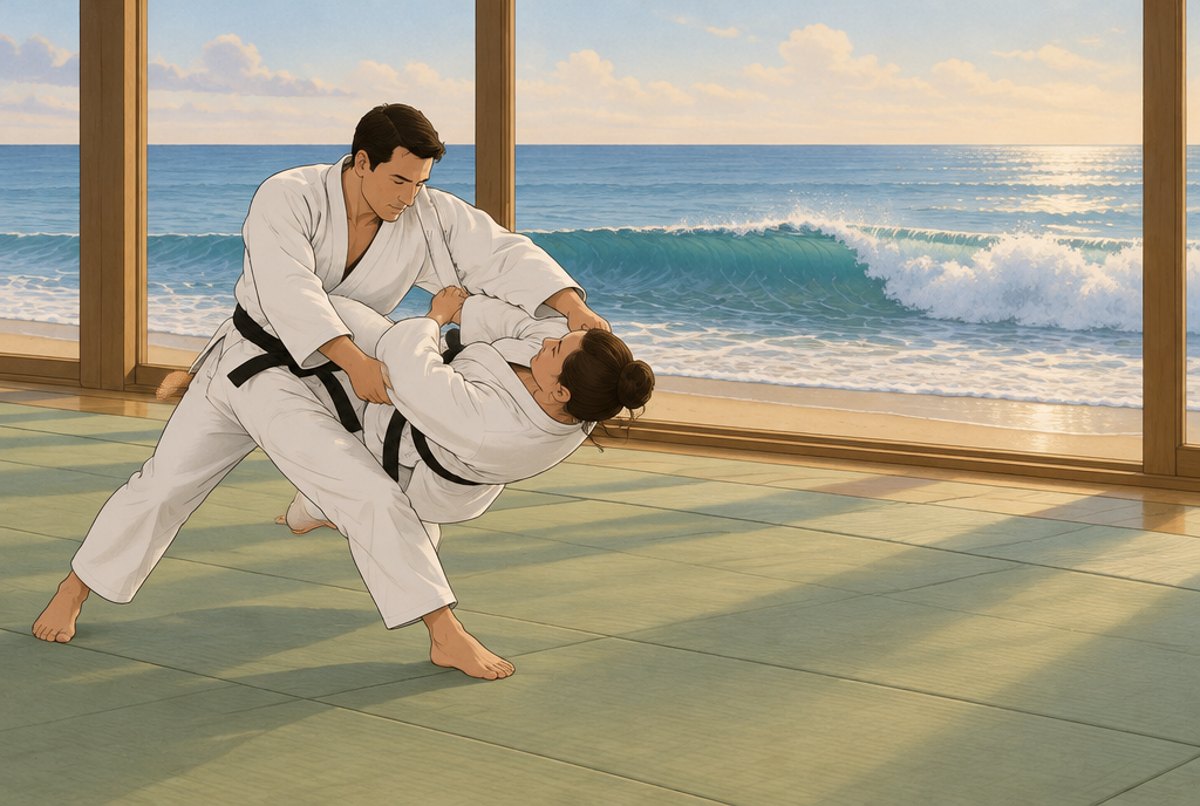
Itsutsu-no-kata, "the five forms", has five unnamed techniques that express forces of nature, such as a wave sweeping the shore. 26,68 It is considered advanced: British Judo's dan syllabus does not require it, and in IJF competition the thrower must be at least 6th Dan. 60,68,86 Where it came from is disputed.
A school of his own
By 1882 Kano had studied under three masters of two schools, in a country where many such masters had stopped teaching. 1,2 He was in his early twenties. That year, in a temple in Tokyo, he began to teach something of his own. 1,2