

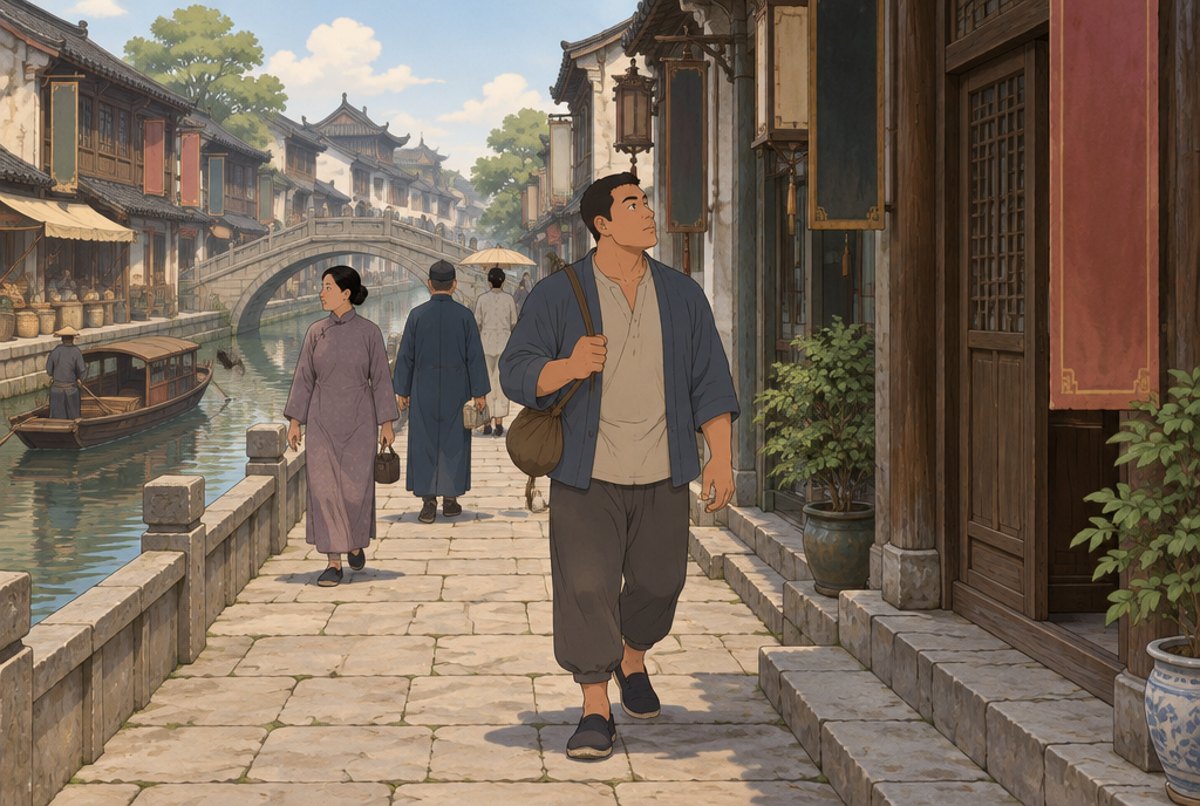
After Higaonna died, Chojun Miyagi did what his teacher had done: he travelled to Fuzhou himself. 6,26 He had begun under Higaonna at 14 and trained with him for about 13 years. 6,26,96 Now, in his late twenties, he went to the city where Naha-te had been learned. 6,26
Miyagi: hard and soft
Miyagi, who lived from 1888 to 1953, built on what he brought back. 26 He created the soft kata Tensho, adapted from a Fujian White Crane exercise, as a partner to the hard breathing kata . 6,43 His karate put breathing at the centre of every kata, hardened the body with traditional equipment training, , and gave nearly every kata a set two person drill to show its use. 1,6
It did not yet have a name. In 1929 one of his students, Jin'an Shinzato, was asked at a demonstration in Kyoto what the style was called, and improvised "Hanko-ryu", half hard style. 6 Miyagi then chose a proper one: Goju-ryu, from go, hard, and ju, soft, taken from a line in an old Chinese text, the Bubishi, about breathing in soft and out hard. 6
Around 1940 he made the Gekisai kata to teach basics to Okinawan schoolchildren, Itosu's idea again. 6 Goju-ryu was recognised by the Dai Nippon Butoku Kai in 1933 and, in 1998, as a traditional art by the Nippon Kobudo Kyokai. 6 After Miyagi died in 1953 his succession was disputed: a committee of senior students voted for Eiichi Miyazato in 1954, but some sources say Miyagi named no successor. 6
Mabuni: the keeper of kata
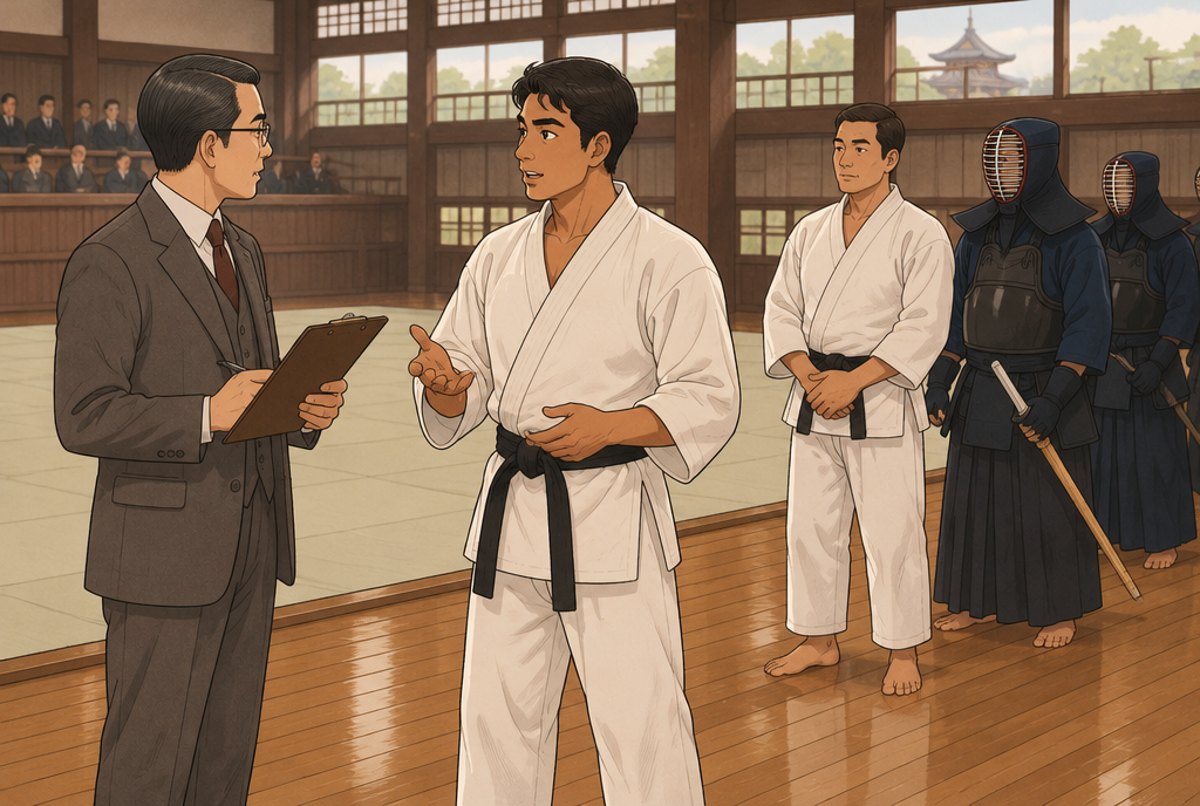
Kenwa Mabuni, who lived from 1889 to 1952, had learned Shuri-te from Itosu and Naha-te from Higaonna, and by the 1920s was seen as the leading authority on Okinawan kata. 7,27 He taught as a police officer and in schools, then in 1929 moved to Osaka to teach full time; Osaka is still the centre of Shito-ryu in Japan. 7 He first called his style Hanko-ryu, the same name Miyagi's student had improvised in Kyoto, then Shito-ryu, joining the first characters of Itosu and Higaonna; the new name dates from about 1934. 7,27
His style carries more kata than almost any other, listed in two halves to show its two lineages, with some, such as Aoyagi, made by Mabuni himself as a women's self-defence kata. 7 It fights from a high upright stance and names five principles of defence: blocking with full force, flowing round the attack, springing back, moving off the line, and countering while deflecting. 7 Mabuni said the idea of different styles came from outsiders. 1 After his death his two sons disputed the succession, and two lines continue today, one under each son's family. 7
Otsuka: the jujutsu man
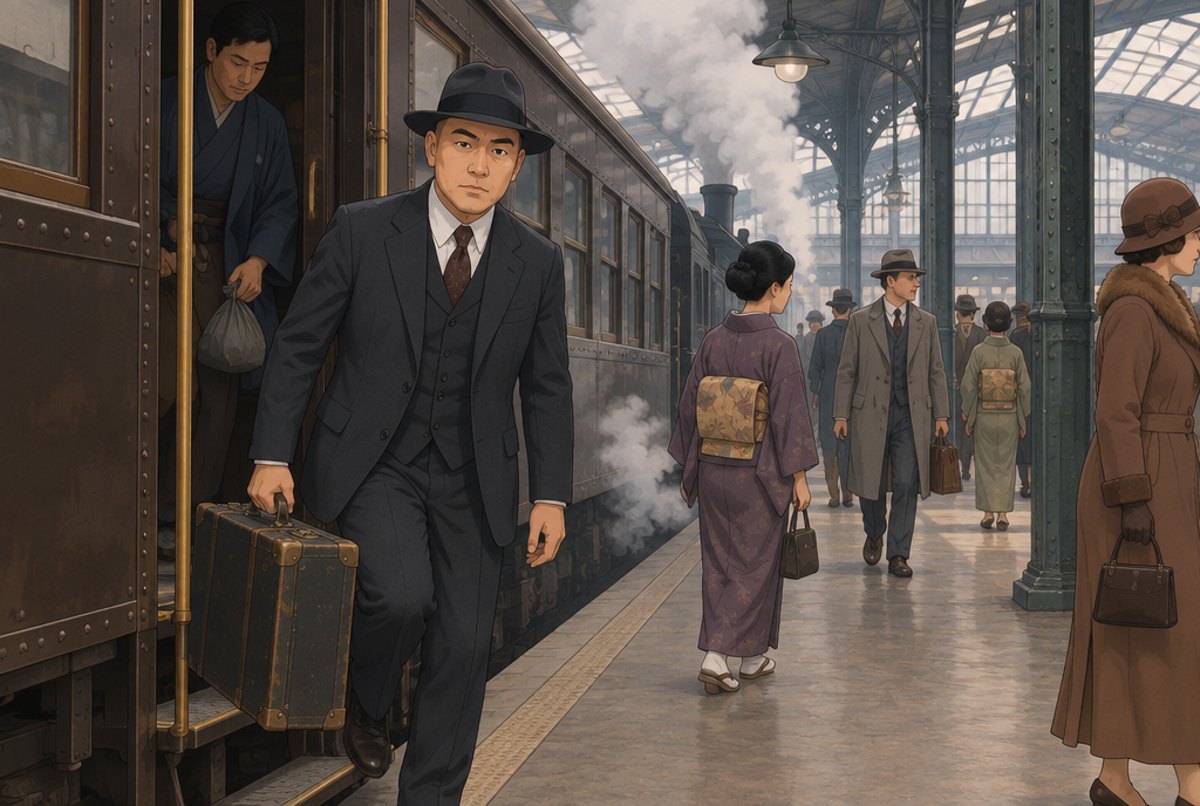
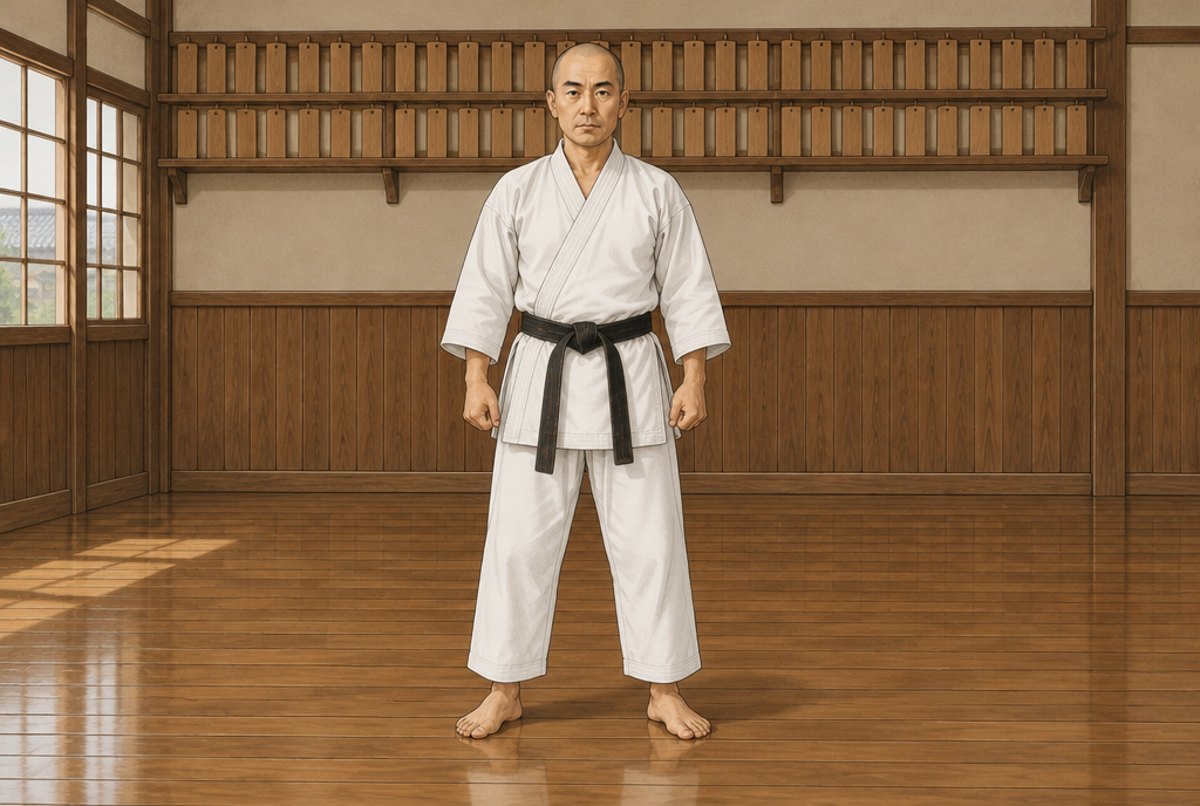
Hironori Otsuka, who lived from 1892 to 1982, came to karate already a master of something else. 5 He had studied Shindo Yoshin-ryu jujutsu from 1897, when he started school, and in 1920 received its highest licence. 99 He trained under Funakoshi from 1922, was among his first black belts in 1924, then studied with Mabuni and Choki Motobu as well. 5
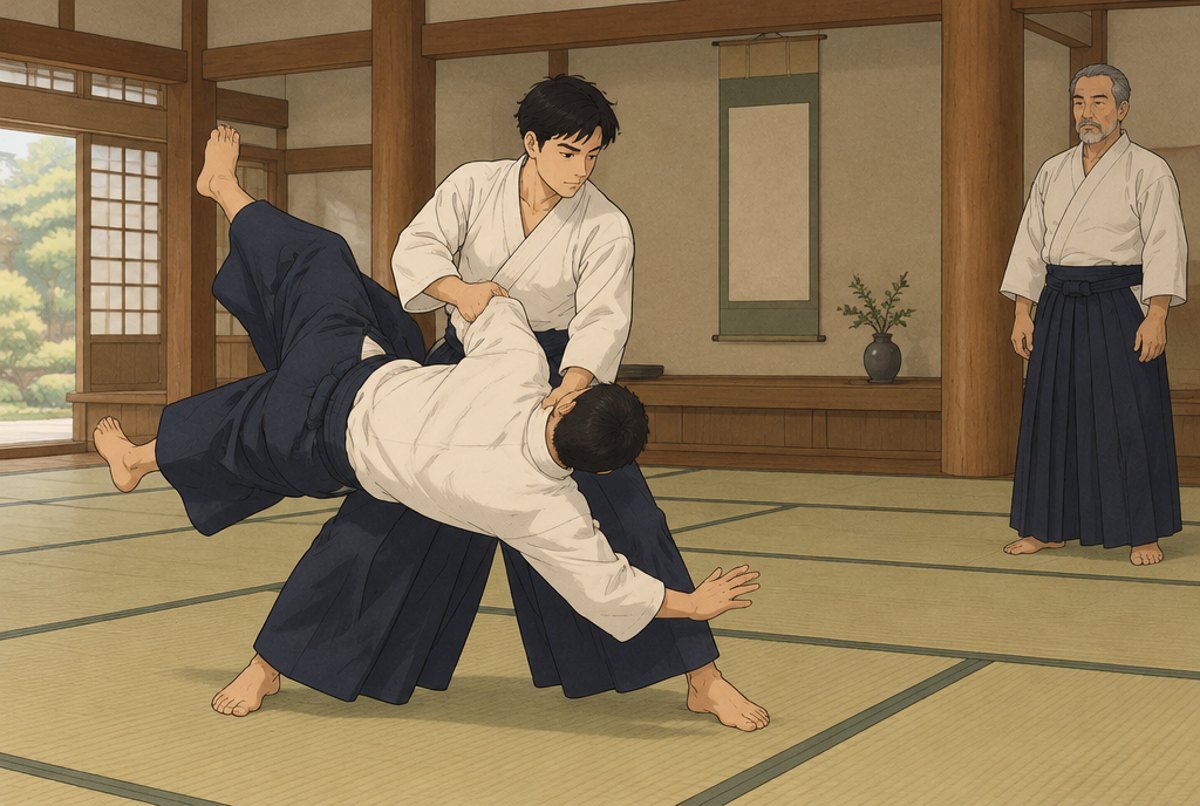
What he built joined the two. The core idea is , moving the body so that both defender and attacker are taken out of harm's way, then countering at the same moment; defences parry and deflect rather than block hard, and many schools practise partner kata that show the jujutsu roots. 5 He named it Wado-ryu in 1934, the way of harmony, where harmony means that giving way can beat brute strength, not pacifism. 5
He registered it with the Dai Nippon Butoku Kai in 1938, and in 1963 sent three instructors abroad to spread it, one of them to Britain. 5,22 After a falling out with the Wadokai organisation in 1980 he founded the Wado-ryu Karatedo Renmei in 1981, and today Wado-ryu is split between three independent organisations. 5
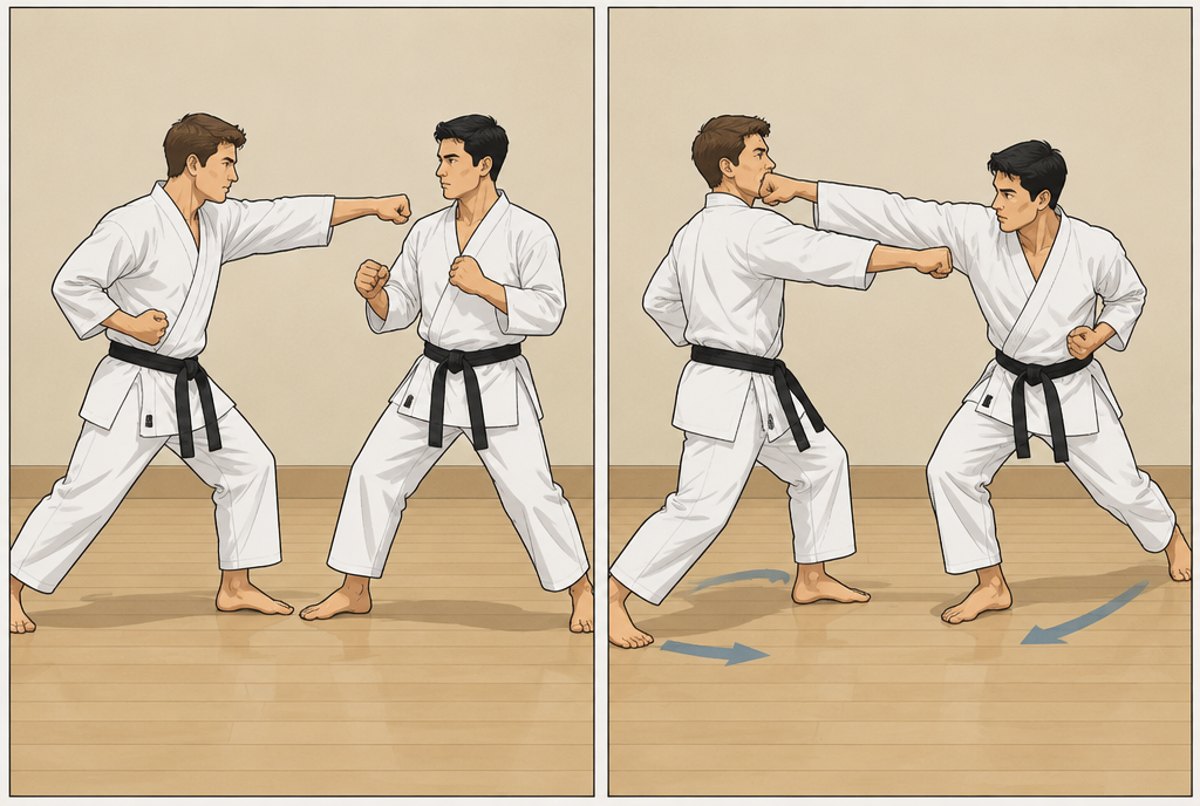
Oyama: contact
Masutatsu Oyama, who lived from 1923 to 1994, was born Choi Yeong-eui in Gimje, Korea. 28 He studied Shotokan and Goju-ryu, and in 1953 opened his first official dojo in a small building behind Rikkyo University in Tokyo, at first teaching Goju-ryu. 1,8 His teaching drifted towards hard contact sparring that hit the body for real, unlike most karate of the time. 8
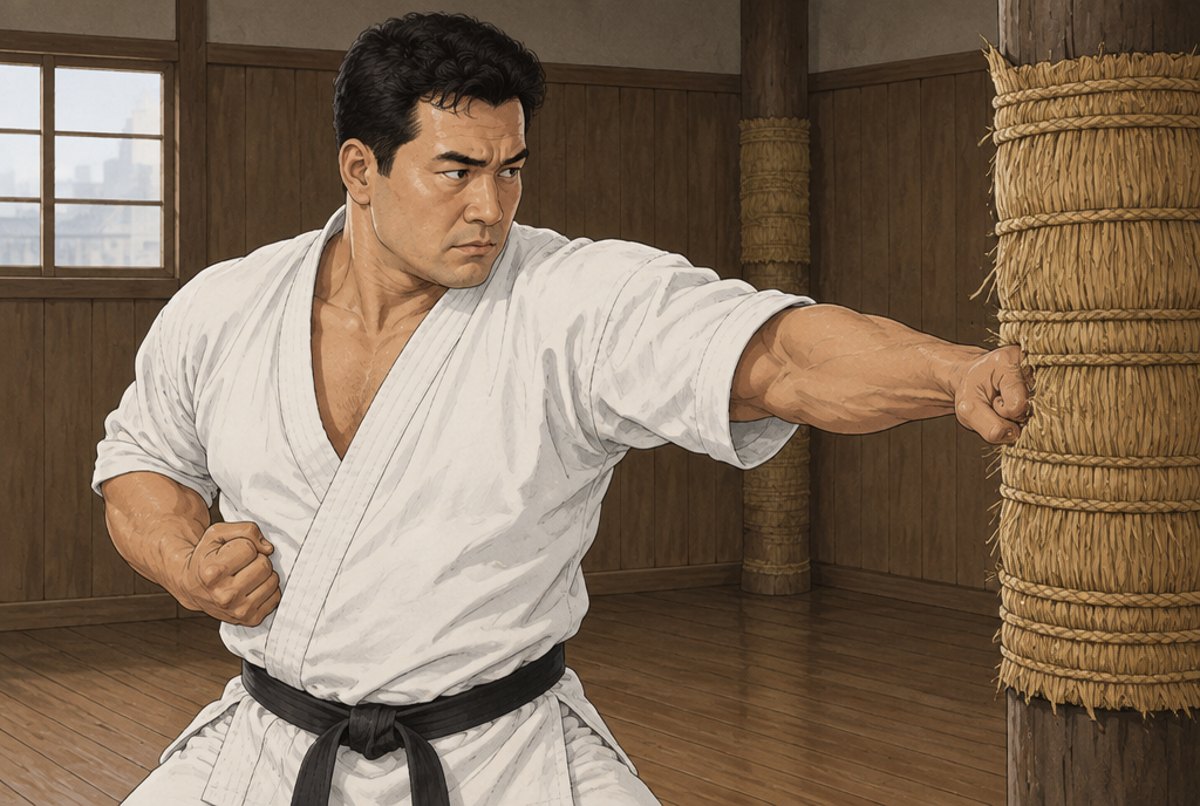
In April 1964 he founded the International Karate Organization Kyokushinkaikan. 8 Kyokushin is usually translated "the ultimate truth". 8 The first All Japan Full Contact Open was held in 1969 and the first World Open in Tokyo in 1975. 8
Its famous extreme test is the 100 man kumite, 100 rounds against fresh opponents, completed by very few. 8,23 Oyama opposed karate splitting into schools, yet after he died in 1994 without a settled successor his organisation split into several groups that all use the Kyokushin name. 1,8
Accounts give different years: one says Kyokushin was founded in 1957, another dates the dojo to 1953 and the organisation to 1964. 1,8
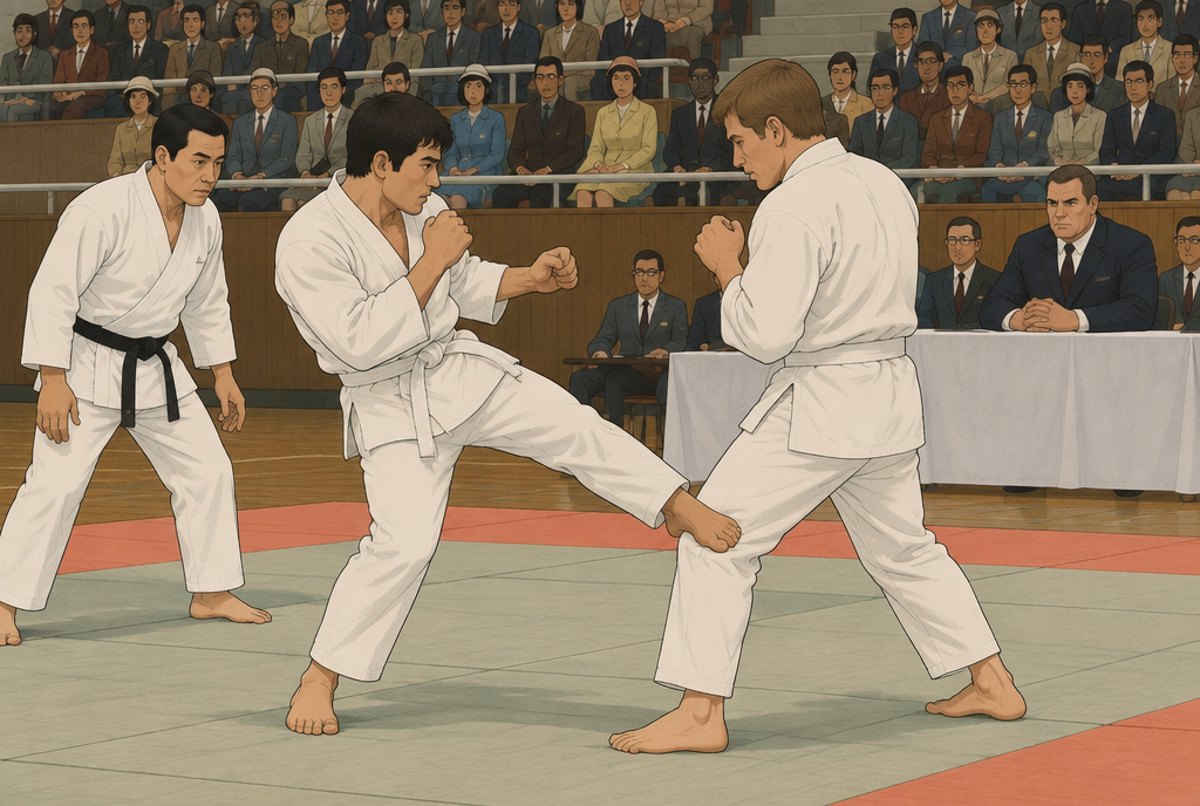
Three more
Chojiro Tani, who lived from 1921 to 1998, trained in Goju-ryu under Miyagi at university, was recommended by Miyagi to Mabuni, and in 1946 received a certificate of succession from him. 9 His Kobe dojo carried the name Shukokai; he studied body mechanics to get the most force from the least effort, and the style is known for its high stance and double hip twist. 9 Kanbun Uechi, who had refused to teach at all when he first came home from China, moved to Wakayama on the mainland for work in 1924, was persuaded to teach a man he worked with, and in 1932 opened a public school that was renamed Uechi-ryu in his honour in 1940. 1,10 And after Funakoshi's death Shigeru Egami built the Shotokai way of practising on relaxation rather than tension, keeping Funakoshi's view that there are no contests in karate. 12
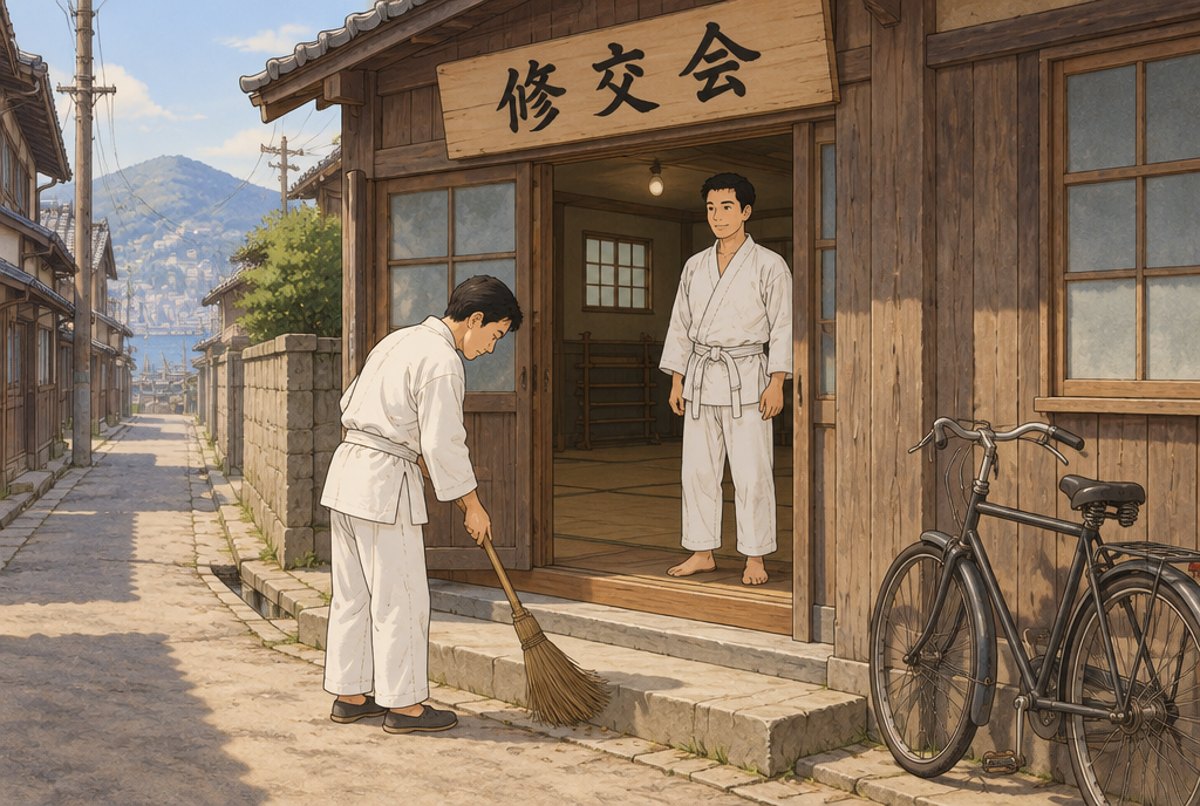
By the 1980s the four main styles on the Japanese mainland were Goju-ryu, Shotokan, Shito-ryu and Wado-ryu. 1,32 Every one of them, with Kyokushin and Shukokai beside them, was about to leave Japan in the hands of a few travelling teachers. 1,5,8,9