

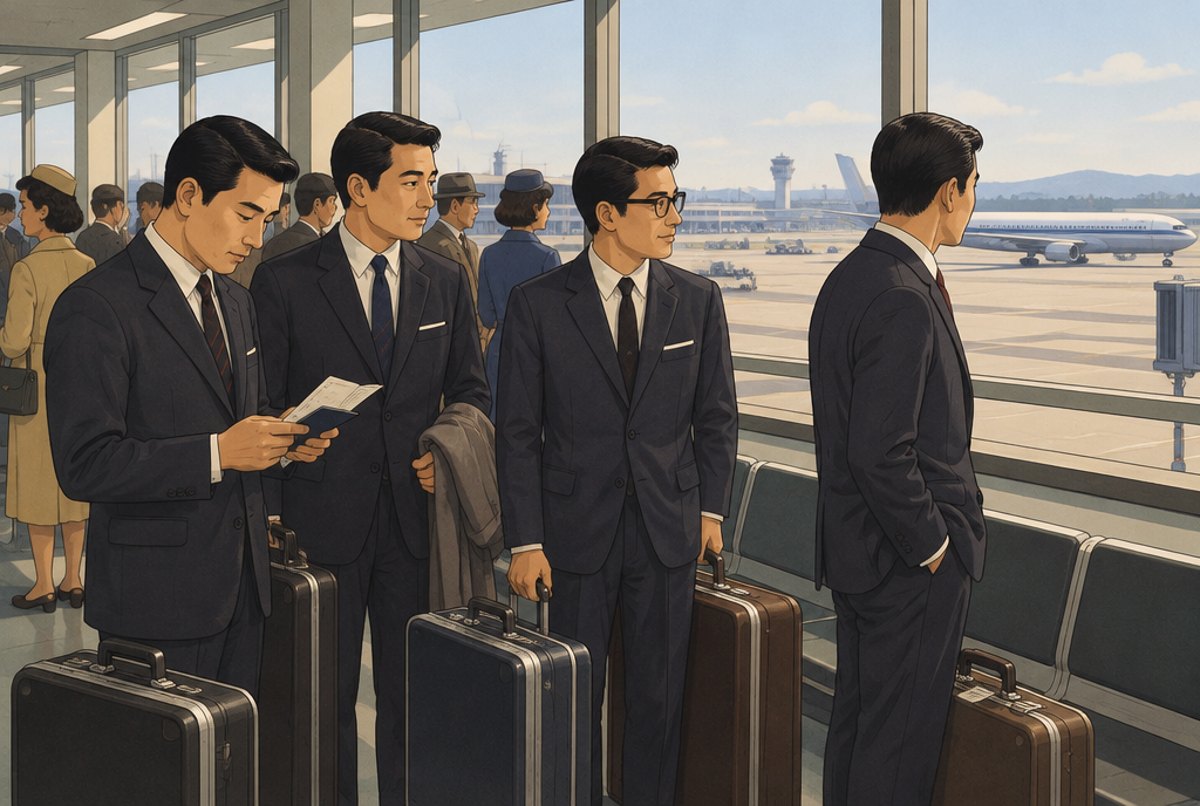
In 1965 the Japan Karate Association sent four of its instructors to Europe: Taiji Kase, Keinosuke Enoeda, Hirokazu Kanazawa and Hiroshi Shirai. 1 They did not all come back. Kase settled in France, Enoeda in England and Shirai in Italy. 1 Each built something that outlasted the journey: Enoeda led the Karate Union of Great Britain from 1968 until his death in 2003; Kanazawa founded his own world body, the Shotokan Karate-do International Federation, SKIF, in 1977; Kase and Shirai founded the World Shotokan Karate-do Academy in 1989, renamed the Kase-Ha Shotokan-Ryu Karate-do Academy after Kase's death in 2004. 1,21,62
The first travellers
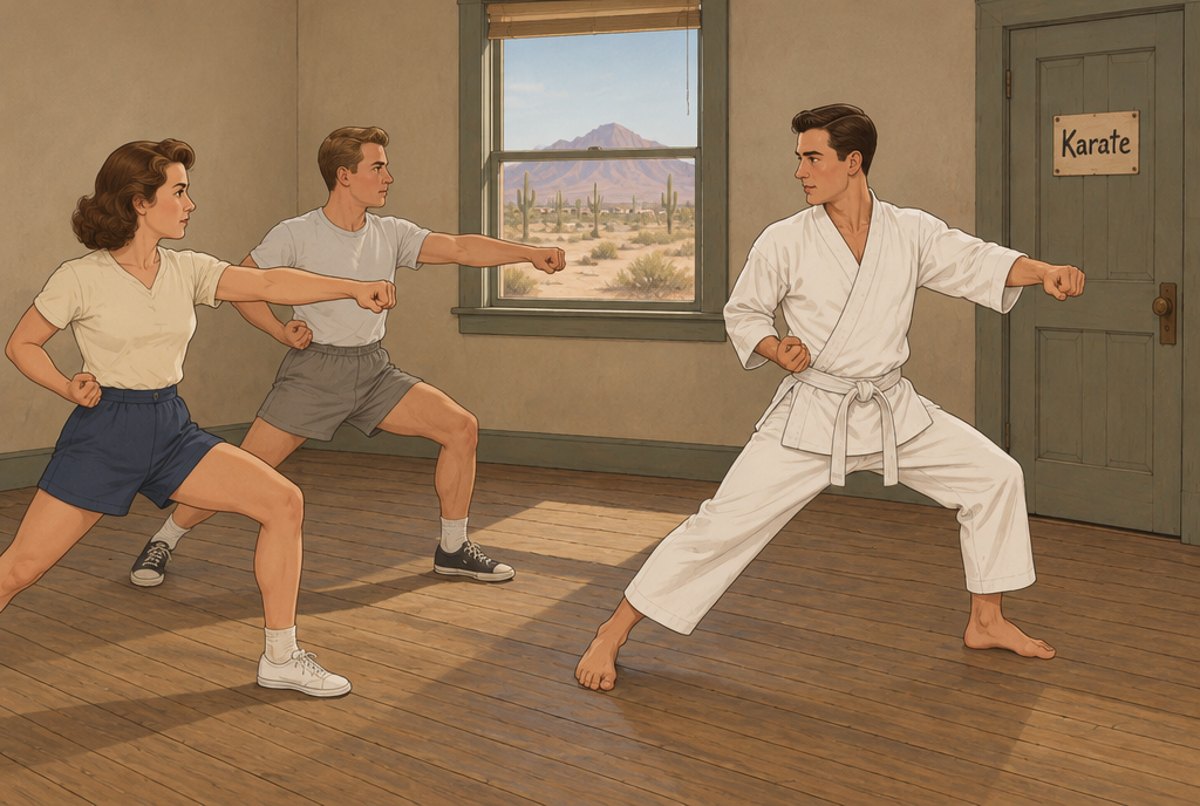
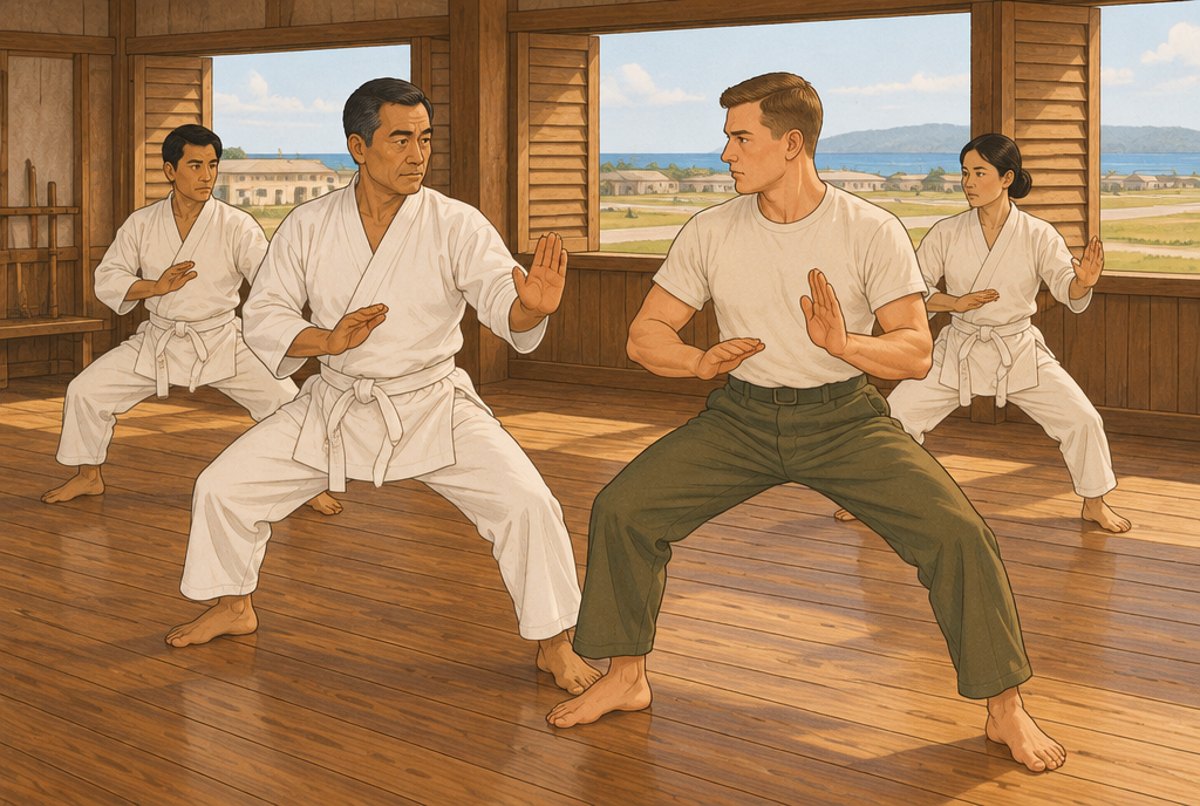
They were not the first. After the Second World War many US service personnel learned karate in Okinawa and Japan and took it home. 1 In 1945 Robert Trias opened what is said to be the first dojo in the United States, in Phoenix, Arizona, and many teachers followed in the 1950s and 1960s. 1 In Okinawa, Kanbun Uechi's son Kanei, teaching in Futenma, is remembered as the first Okinawan teacher to agree to teach foreigners, and through an American serviceman, George Mattson, his style spread in the United States. 10
Japanese teachers began teaching in Europe in the 1950s. 1 Each founder sent his own people. Otsuka sent Tatsuo Suzuki, Toru Arakawa and Hajimu Takashima abroad in 1963. 5,22 Oyama sent instructors to open dojos, and many foreign students came to train with him in Tokyo. 8
Shukokai's Shigeru Kimura left Japan in 1965 to teach in Africa, then Europe, and settled in the United States in 1970. 9 Yoshinao Nanbu, a student of Tani, was invited to Paris by Henri Plée in 1964, coached the French national team, and founded Sankukai there in 1971. 9,84
Building a sport
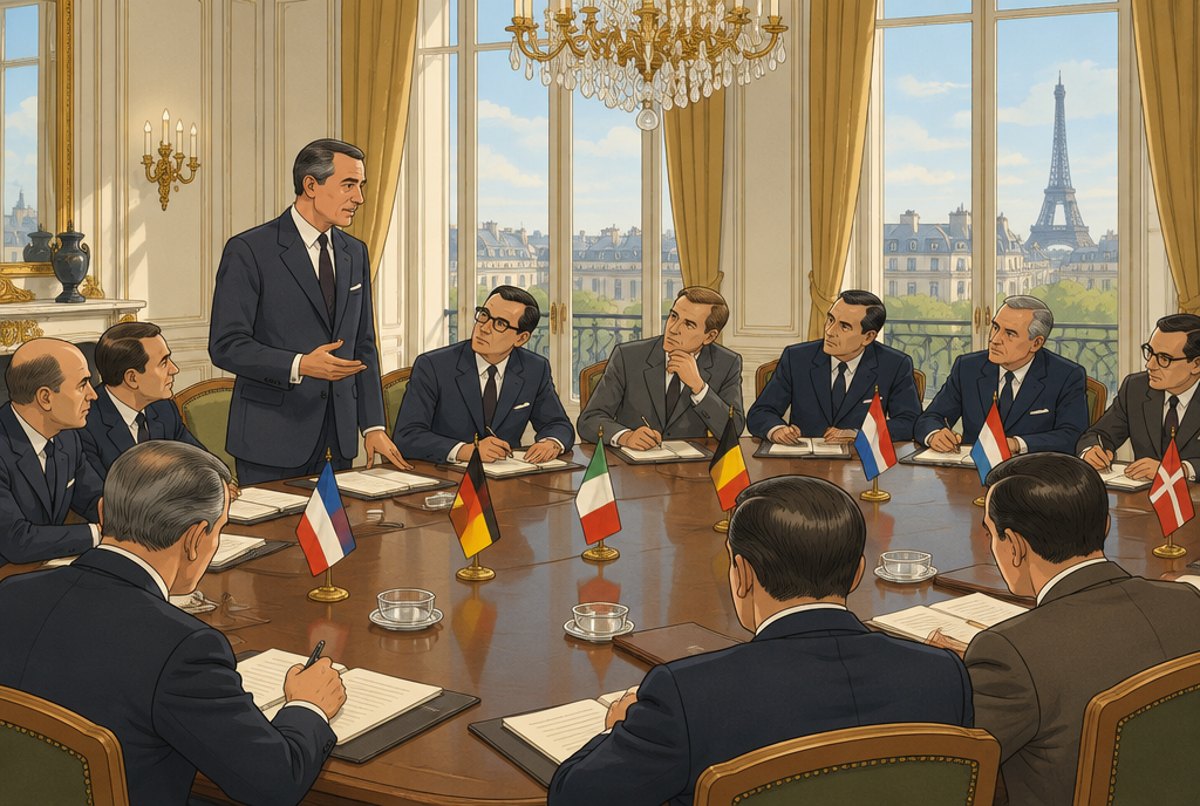
Wherever teachers settled, federations followed. European federations met in Paris in 1963 and formed the European Karate Union. 16 A world body, the World Union of Karate-do Organisations, followed on 10 October 1970; it was renamed the World Karate Federation on 20 December 1992, and in 1999 the International Olympic Committee recognised it as the sole world body for sport karate. 16,54 Its World Championships are held every two years, and women first competed in 1980. 31
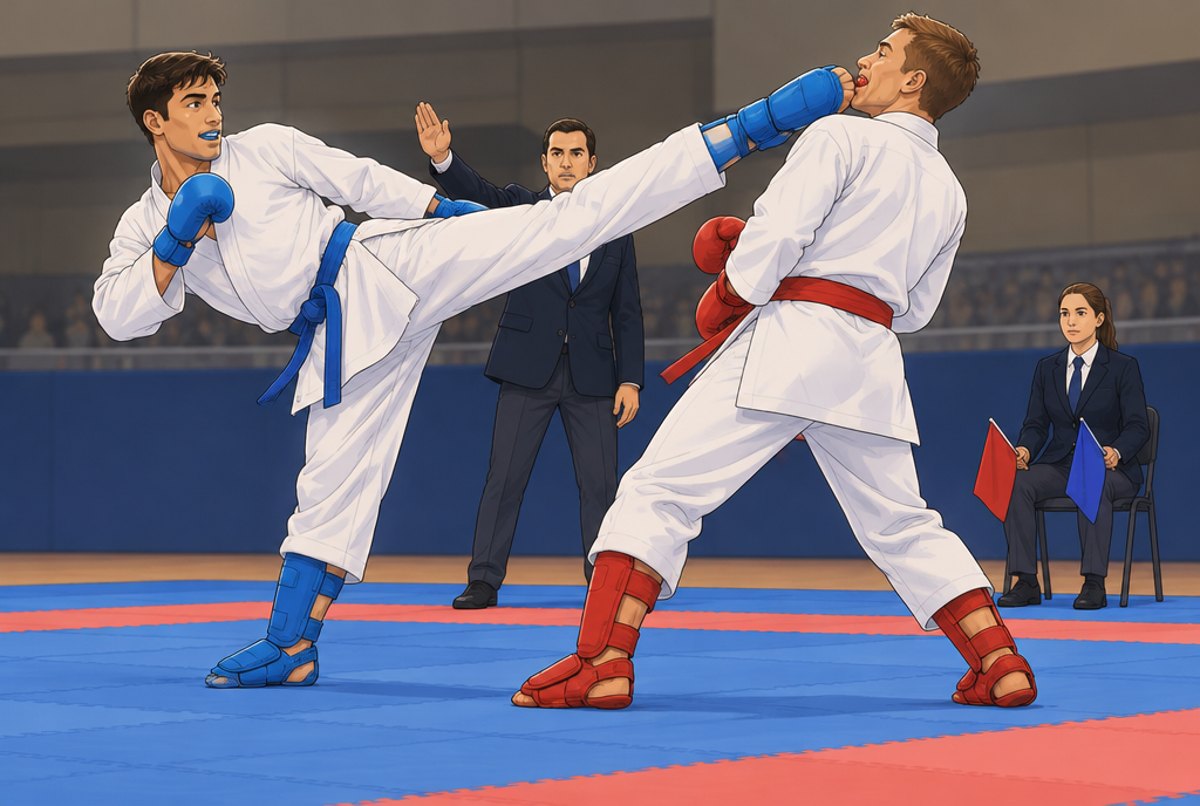
The sport has two disciplines. Kata is a solo or team performance of a form, judged by a panel; kumite is sparring between two competitors, controlled by a referee and judges. 16,50,51 A kumite technique scores only if it shows good form, sporting attitude, vigorous application, , continued awareness, good timing and correct distance. 51
Kata judges look for stances, techniques, transitions, timing, breathing, , focus, consistency with basics, strength, speed and balance. 50 A , the short shout as a technique lands, is heard in both. 35
The rules shaped the art. In WKF kumite a punch to the head or body scores one point, a kick to the body two and a kick to the head three, so the sport rewards kicks, and control is written in: for adults a head kick must stop within 5 cm and a hand technique within 2 cm. 51 Para karate has had official World Championships since 2014, with events for athletes with visual impairments, intellectual impairments and wheelchair users. 16,31
Not everyone followed. Oyama's Kyokushin ran its own full contact tournaments on its own rules, with the first World Open in Tokyo in 1975. 8 Karate-do Shotokai takes no part in sport competition at all. 82 And the WKF allows only one national federation per country, so other world bodies exist for associations that want to compete outside it. 1,95
The long road to Tokyo
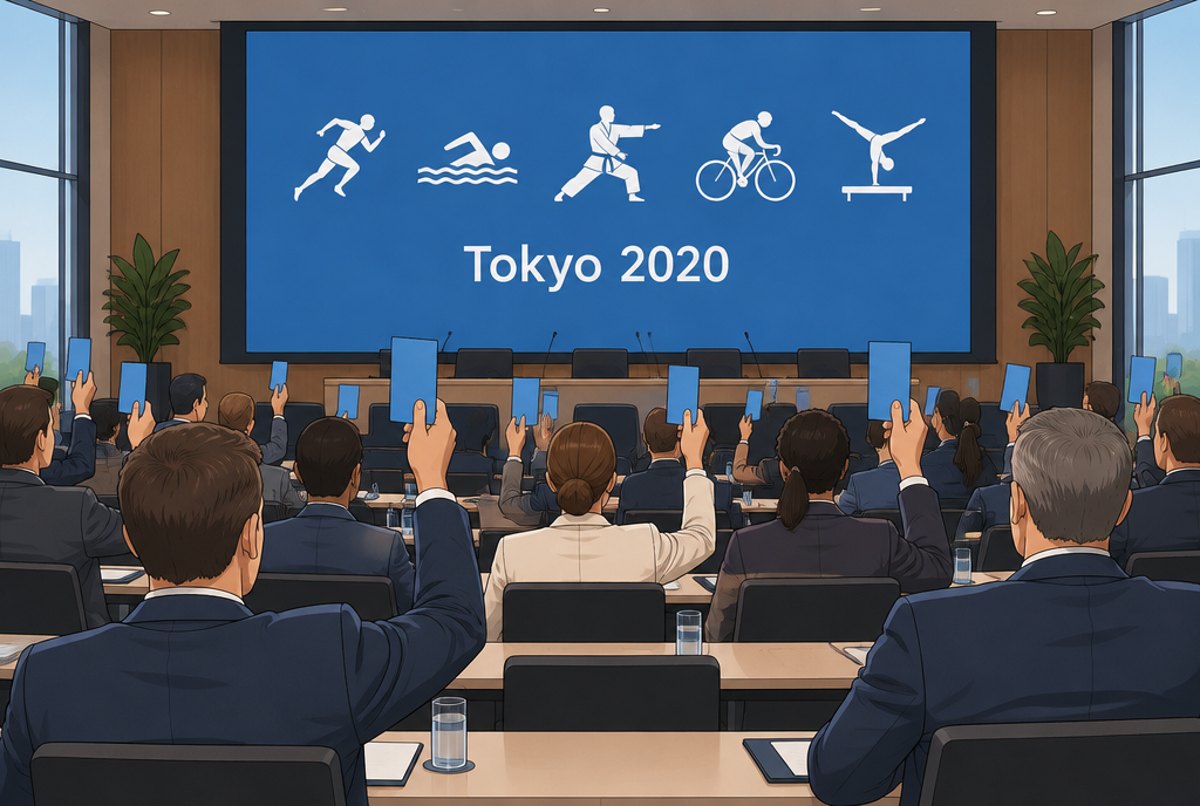
Efforts to bring karate into the Olympics began in the 1970s. 15 It lost a vote in 2009 and was not taken forward for 2020 in 2013. 15 In 2015 it was shortlisted with baseball and softball, skateboarding, surfing and sport climbing, and on 3 August 2016 the IOC approved all five for Tokyo 2020, as additional sports for those Games only. 1,15 Karate had already appeared at the 2018 Youth Olympic Games in Buenos Aires. 1
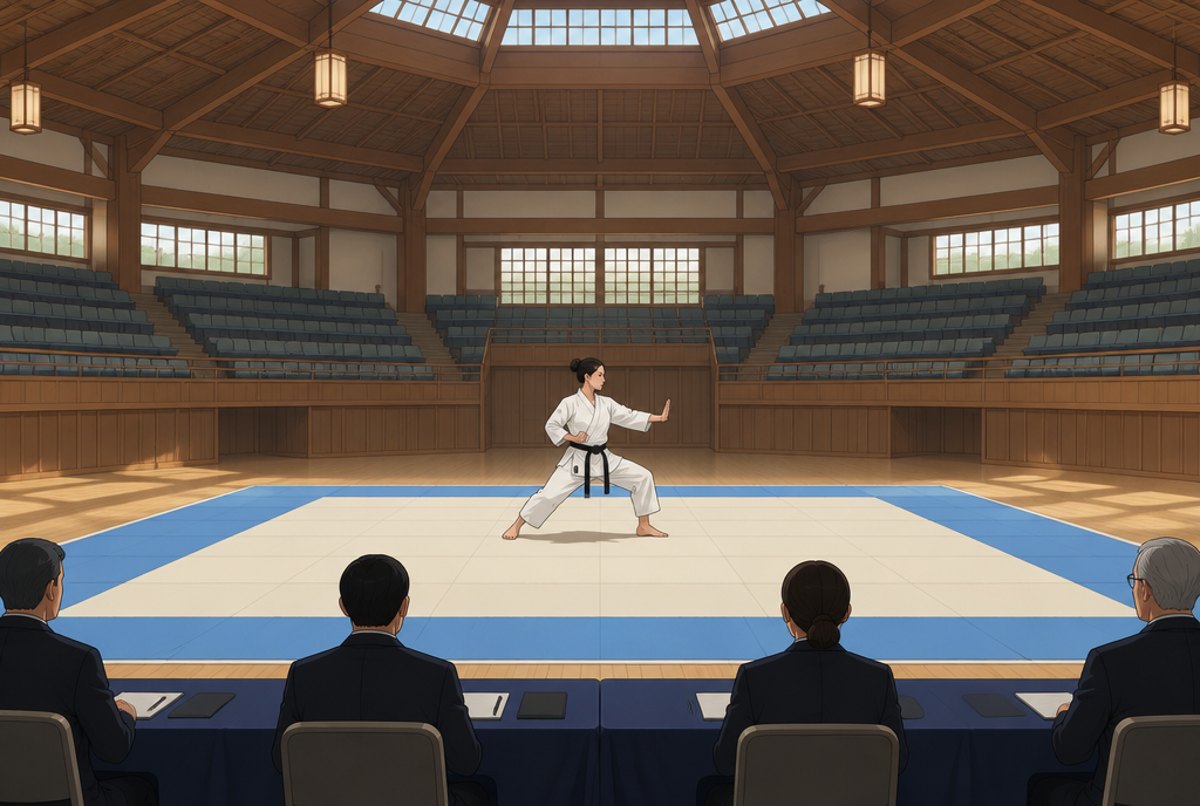
The Games were held in 2021: eight events, 80 athletes, kumite in three weight classes for each sex and kata in one event for each. 15 On the floor of the Nippon Budokan each kata competitor performed alone before seven judges; the two highest and two lowest marks were dropped, and the total was weighted 70% technical and 30% athletic. 15,58 The champions were Sandra Sánchez of Spain and Ryo Kiyuna of Japan. 58 What they could perform was fixed too: only kata on the WKF's official list, which holds the main kata of Shotokan, Goju-ryu, Shito-ryu and Wado-ryu alongside Okinawan forms, and the 2026 rules still require a different kata in each round. 50
Then the door closed again. Paris 2024 did not include karate. 1,15 For Los Angeles 2028 it was shortlisted in 2022 but not selected. 15,57
The WKF is working towards Brisbane 2032, where karate is not yet on the programme. 55 Karate is on the programme of the Youth Olympic Games in Dakar in 2026. 56
Nobody knows how many people practise it: a Japanese government backed estimate says 50 million and the WKF says 100 million, and both are estimates made by interested parties. 1
One of the four men sent to Europe in 1965 stepped onto a stage in Kensington that April and stayed in England for the rest of his life. 1,20,62 His story, and the Essex judo teacher who had started it all nine years earlier, is the last chapter. 1,19