

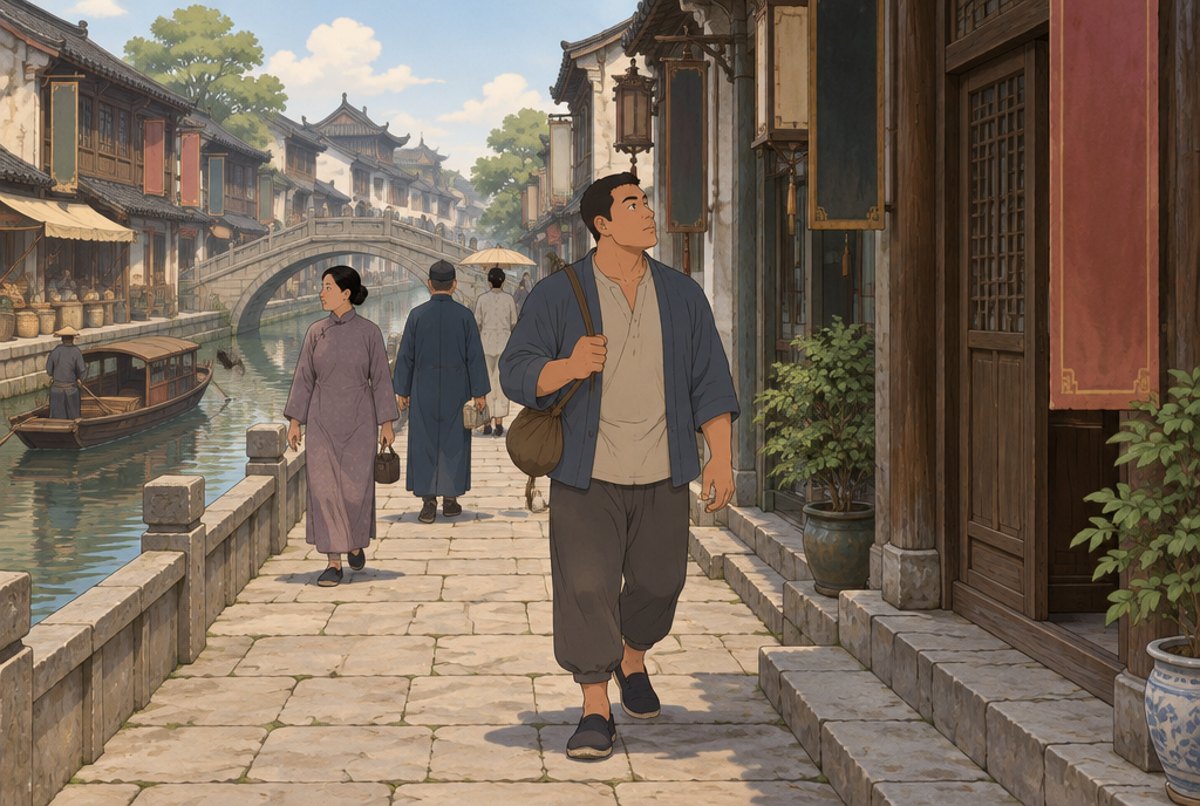
Remember Chojun Miyagi, the boy who trained with Higaonna? When Higaonna died, Miyagi did what his teacher had done. He went to Fuzhou in China himself. 6,26
Miyagi: hard and soft
Miyagi lived from 1888 to 1953. 26 His karate was all about breathing, strong bodies, and fighting up close. 6 In 1929 one of his students was asked at a show in Kyoto what their style was called. He had no answer, so he made one up on the spot: "hanko-ryu", half hard style! 6 Miyagi decided a real name was needed. He chose Goju-ryu. Go means hard and ju means soft. It comes from a line in an old Chinese book about breathing in softly and out hard. 6
Mabuni: the kata keeper
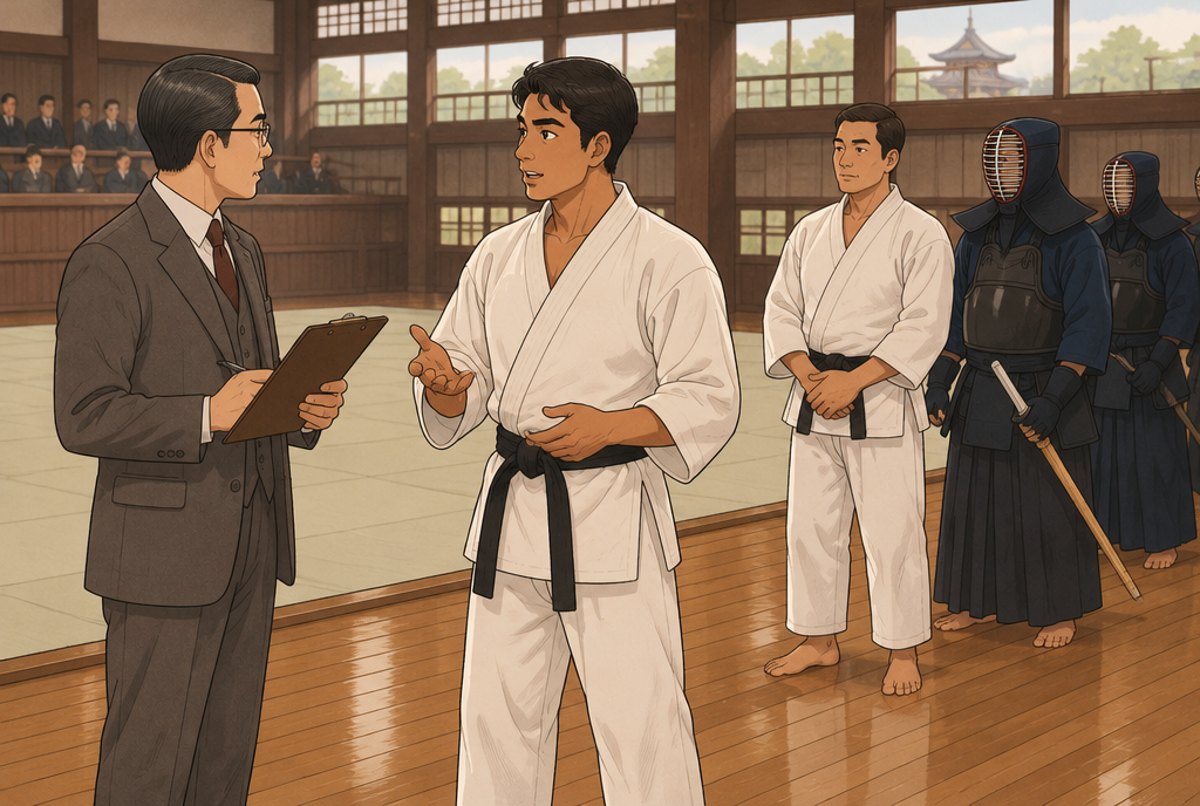
Kenwa Mabuni lived from 1889 to 1952. 27 He had learned from Itosu in Shuri and from Higaonna in Naha, and by the 1920s people saw him as the person who knew the most about Okinawan kata. 7 In 1929 he moved to Osaka in Japan to teach full time. 7 His style, Shito-ryu, has more kata than almost any other. 7 Mabuni said the idea of different styles came from outsiders. 1
Otsuka: the jujutsu expert
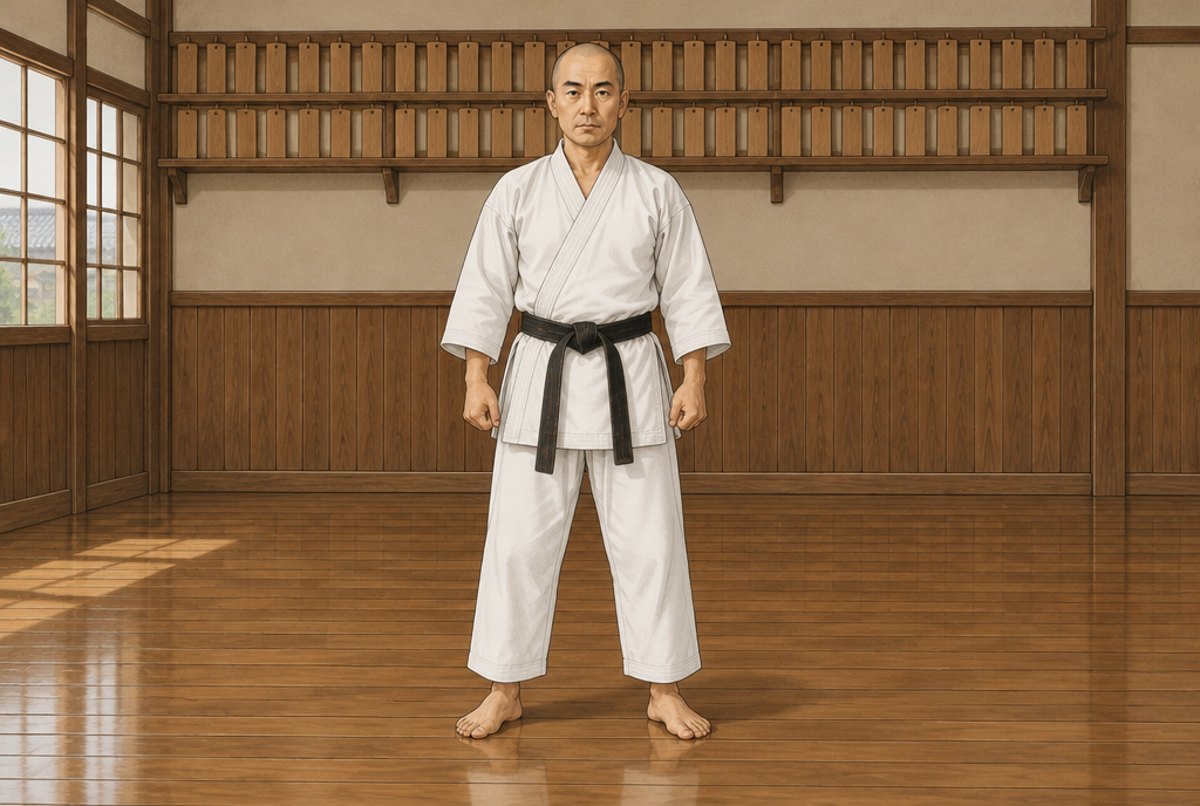
Hironori Otsuka lived from 1892 to 1982. 5 Before karate he spent more than 20 years learning jujutsu, from his first school days, and in 1920 he earned its highest licence. 99 Then he learned karate from Funakoshi, Mabuni and Choki Motobu. 5 He put the two together. His big idea was : move your body out of the way of an attack, then hit back at the same moment. 5 In 1934 he named his style Wado-ryu, "the way of harmony". Harmony here means that giving way can beat brute strength. 5
Oyama: real contact
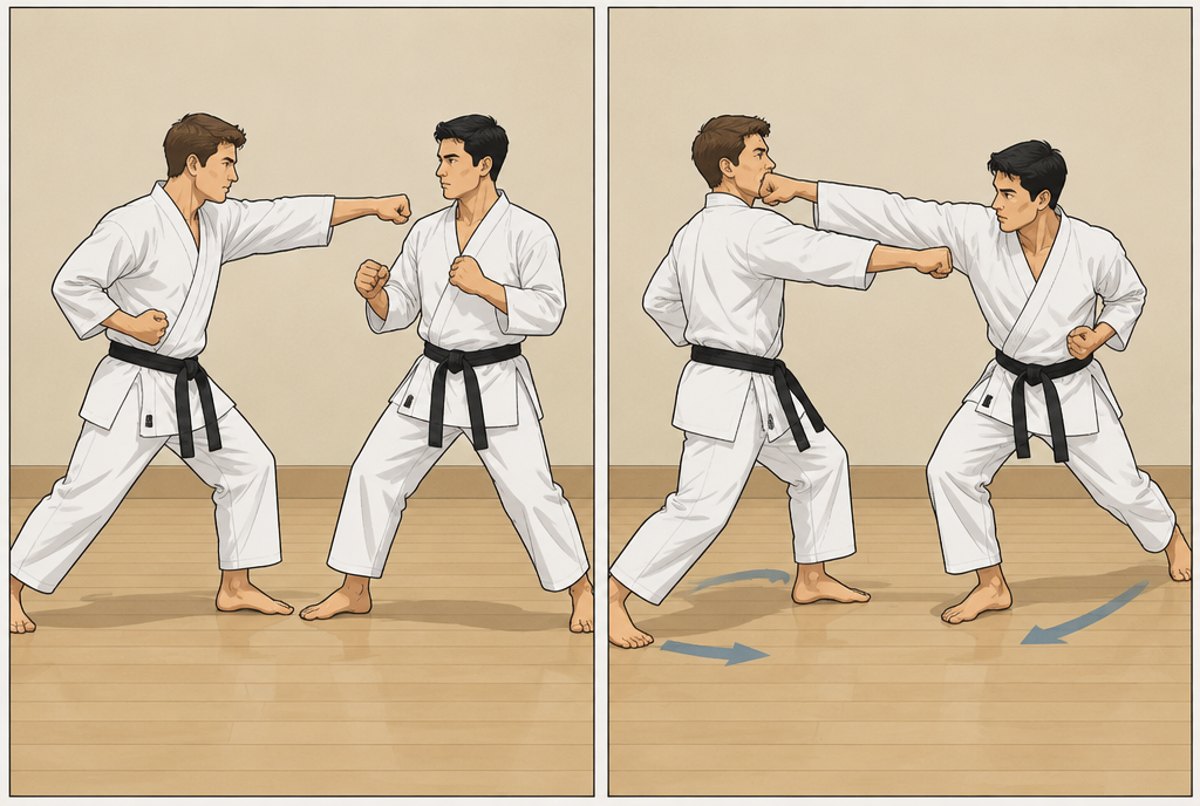
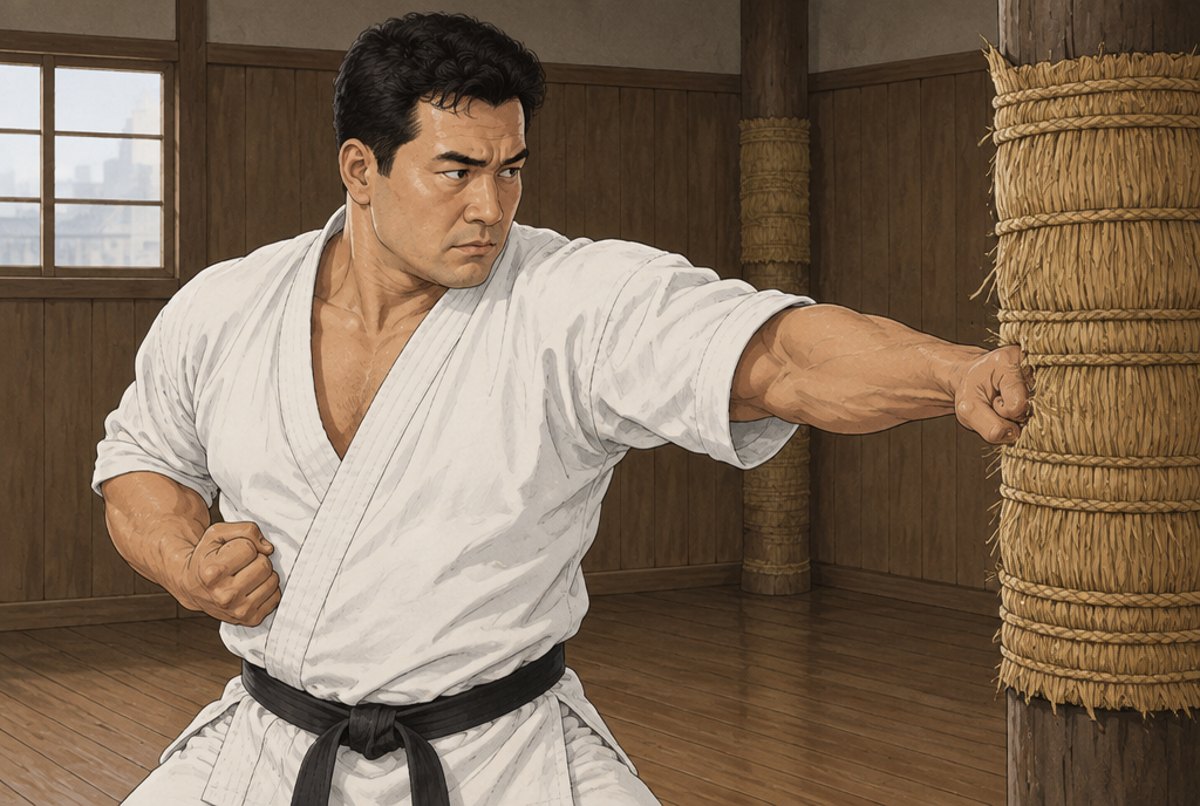
Masutatsu Oyama lived from 1923 to 1994. He was born in Korea, where his name was Choi Yeong-eui. 28 He learned Shotokan and Goju-ryu, then in 1953 opened his own dojo in a small building behind a university in Tokyo. 1,8 When his students practised , sparring, they hit each other's bodies for real. Most karate of the time did not do that. 8 In 1964 he started the International Karate Organization, and his style is called Kyokushin, "the ultimate truth". 8 Its hardest test is the 100 man kumite: 100 fights in a row against fresh opponents. Very few people have ever finished it. 8,23
And a few more
Chojiro Tani learned from Miyagi and then from Mabuni, and put the name Shukokai on his dojo in Kobe. 9 Kanbun Uechi, another Okinawan who had studied in China, had a school that was renamed Uechi-ryu after him in 1940. 10 After Funakoshi died, Shigeru Egami built the Shotokai way: relaxed, flowing, and no contests. 12
By the 1980s the four big styles in Japan were Goju-ryu, Shotokan, Shito-ryu and Wado-ryu. 1,32 Soon all of them were heading out across the world, carried by a few travelling teachers. 1