

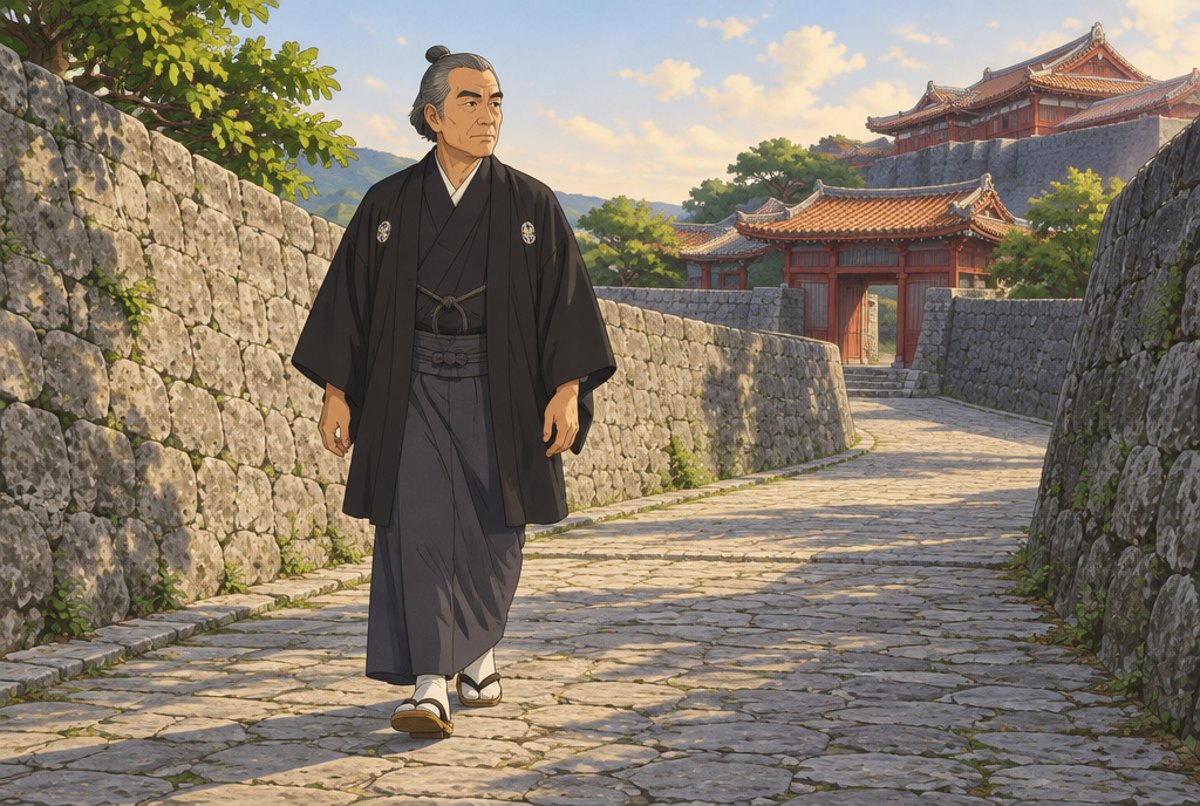
Anko Itosu was 48 when the kingdom ended in 1879, and he had spent his life in the art of Shuri. 1 He had learned it from Sokon Matsumura, and he had kept it the way te had always been kept: a teacher, a few students, each teacher with his own method. 1 Now the warrior families who had carried it were losing their place, and the art was at risk of going with them. 1,11
Into the schools
What saved it was a change of room. Karate recovered once it was taught in Okinawan schools, and Itosu is credited with helping to bring that about. 1
That changed the art itself. Something passed from one man to a handful of chosen students was now taught to rows of pupils, in order, in a group. 1 A school needs a syllabus, something that can be learned step by step by everyone in the room, and te had never had one. 1,30
Accounts differ on the year: one says karate entered Okinawan schools in 1905, another that the Pinan kata entered the school system in 1895. 1,30
Five kata for beginners
A class cannot learn the way a chosen student learns. So Itosu made five new kata, simpler forms for beginners and for children, and called them , "peaceful and safe". 1,30 They are numbered Shodan to Godan, first to fifth, and learned in order. 30 That is still how kata are taught: in stages, with students repeating the earlier ones at a higher standard as they progress. 13
The Pinan are a syllabus in miniature. In Shotokan, Heian Shodan is where a student first meets back stance, , with most of the weight on the bent rear leg, and Heian Sandan uses the crescent kick, , as a kicking block. 33,46 The forms are built on the stances and blocks of the basic lines, so a kata grading tests the same things a basics grading does, joined up and turned in four directions. 1,4
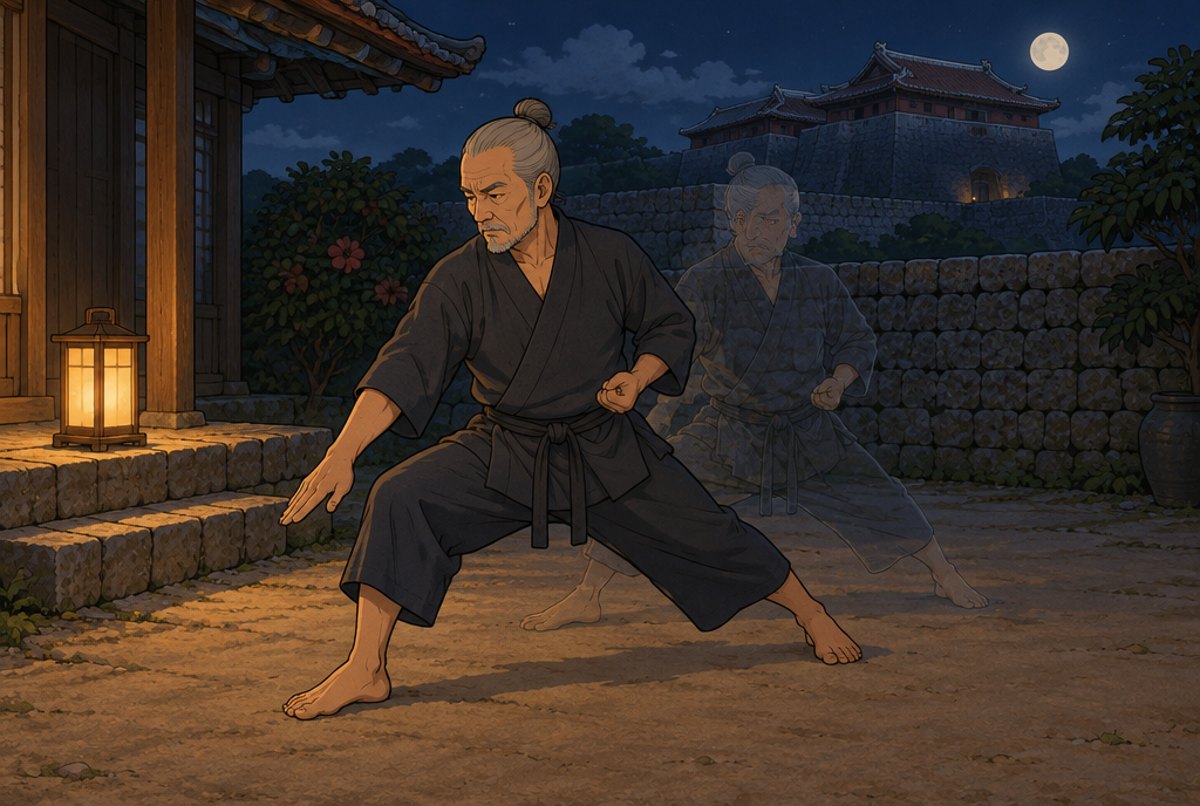
The idea outlived him. In Tokyo, Gichin Funakoshi's son Yoshitaka, also called Gigo, made the Taikyoku kata, simpler still, on the floor pattern of the first Heian. 4,43 In Naha, around 1940, Chojun Miyagi created the Gekisai kata to teach basics to Okinawan schoolchildren, and the Fukyugata "promotional" kata were made in Okinawa the same year for the same purpose. 6,11 Every one of them is a teacher asking Itosu's question again: what is the simplest form that still teaches the real thing?
The students
Itosu taught many of the men who later founded their own styles. 1 Two matter most to this story. Gichin Funakoshi, born in Shuri in 1868, learned from Anko Asato and from Itosu. 3 Asato was the teacher who held that te had grown out of an old Okinawan dance, and who linked tode to Sakugawa; Funakoshi took the dance theory from him. 1
Kenwa Mabuni, born in Shuri in 1889, began Shuri-te under Itosu at 13, and would later teach as a police officer and in schools himself. 7 On Okinawa, the Shuri line carried on as Shorin-ryu, the name Choshin Chibana, a top student of Itosu, gave his style in 1933. 11
Mabuni had a friend from Naha, Chojun Miyagi, a year older than him, who was training under Higaonna. 7,26,27 Miyagi introduced his friend to his teacher, and so Mabuni learned Naha-te as well as Shuri-te. 7 He went on to study with a Chinese White Crane teacher too, Wu Xiangui, known in Japan as Go Kenki, and by the 1920s he was seen as the leading authority on Okinawan kata. 7 That double inheritance from Itosu and Higaonna is the whole idea of Shito-ryu, the style he founded, and its name joins the first characters of his two teachers' names. 7,27
Two names, several orders
When Funakoshi took karate to Tokyo he renamed many Okinawan kata to make them easier to say and more acceptable in Japan at the time. 5,13,43 Pinan became , which means the same thing. 13,30 So a Shotokan student does Heian and most other styles do Pinan, and they are Itosu's five kata either way, allowing for each style's own version. 13,30
Even the order differs. Shotokan's Heian Shodan is what Shito-ryu calls Pinan Nidan, and vice versa; Wado-ryu and Shukokai teach Pinan Nidan first because it is the easier form; some Shito-ryu dojos teach Pinan Shodan last. 30 Kyokushin numbers them Pinan Sono Ichi to Sono Go, and Sankukai has its own version called Heiwa. 75,84 In the Karate Union of Great Britain's Shotokan syllabus a student learns one Heian per grade from 8th Kyu to 4th Kyu; in the Shukokai Karate Federation the five carry a student from yellow belt to purple. 61,80
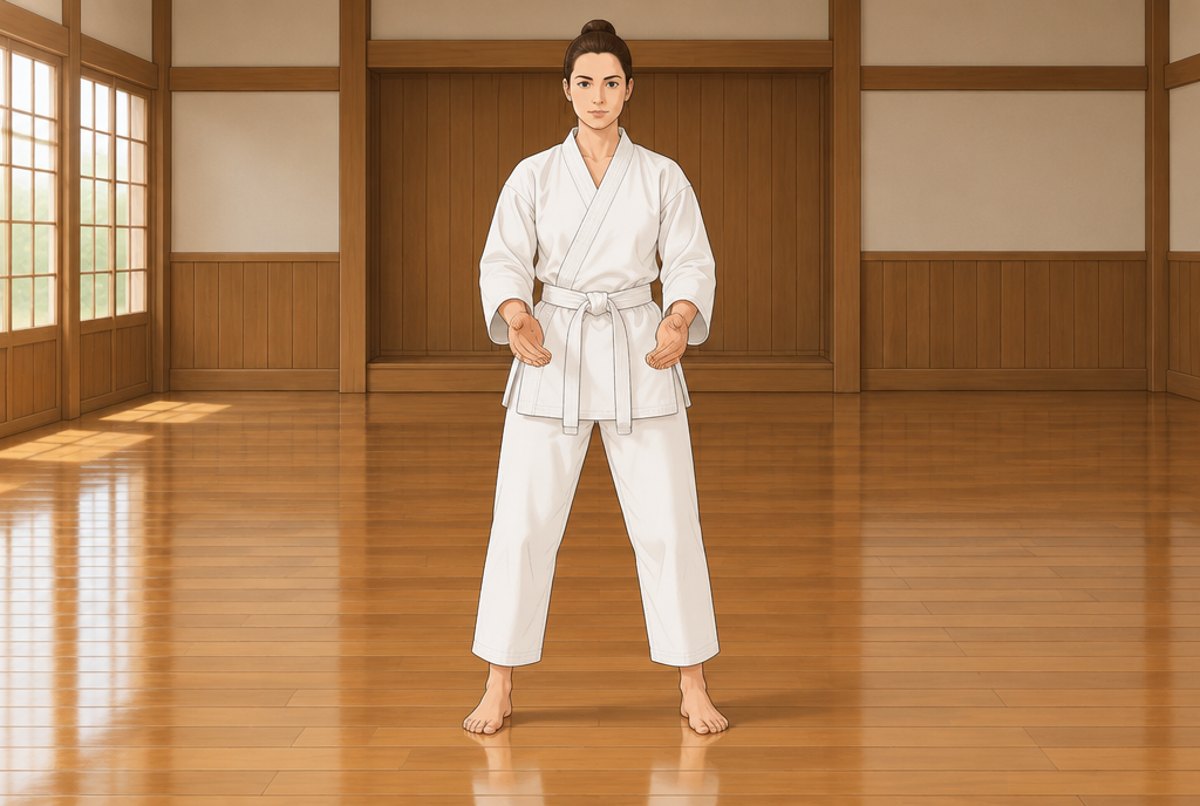
Itosu died in 1915. 1 Beyond his dates, his teacher and his students, the record of his life is almost silent. The five kata are his record, and anyone who has learned a Pinan or a Heian has read it.
The student who sailed
In 1922 Gichin Funakoshi, one of those students, left Okinawa for Tokyo to show karate to Japan. 1,3 He was in his fifties, and that same year he would publish the first book ever written on the art. 1,3 The word , school or style, would soon attach itself to karate for the first time. Funakoshi never used it for his own: he just called it karate. 1,4