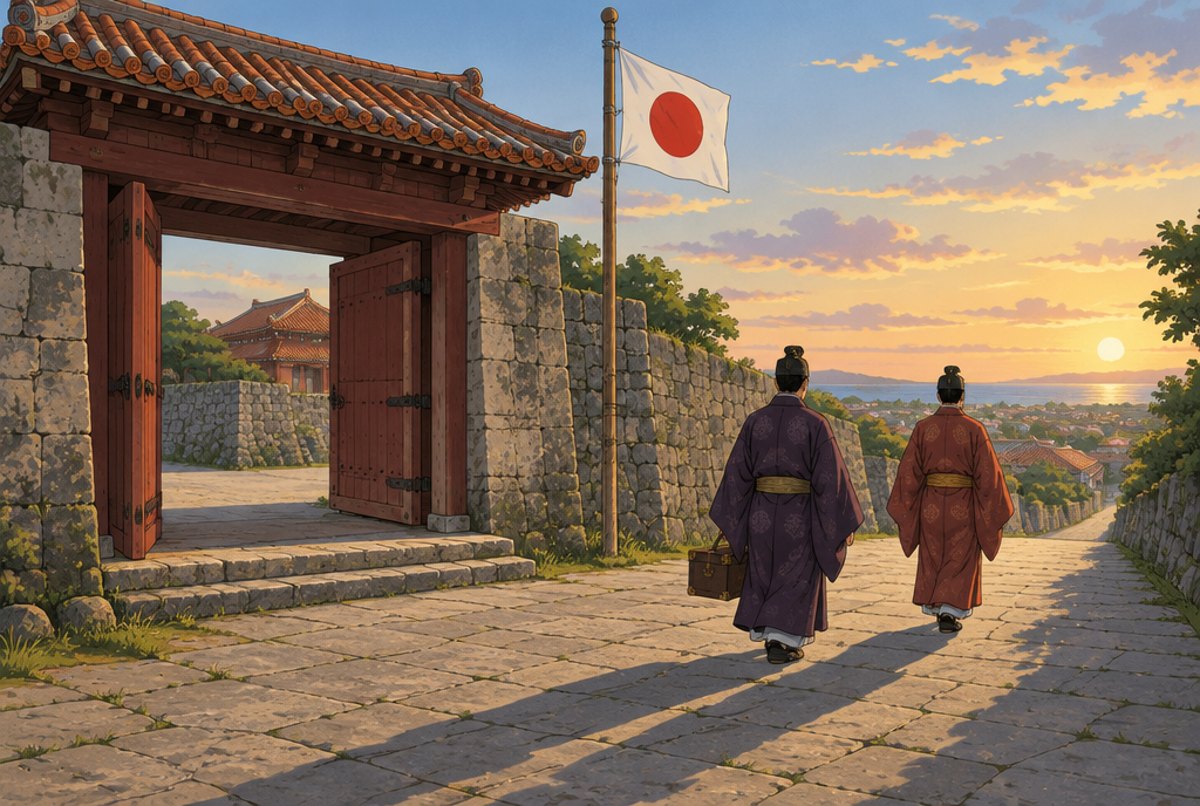
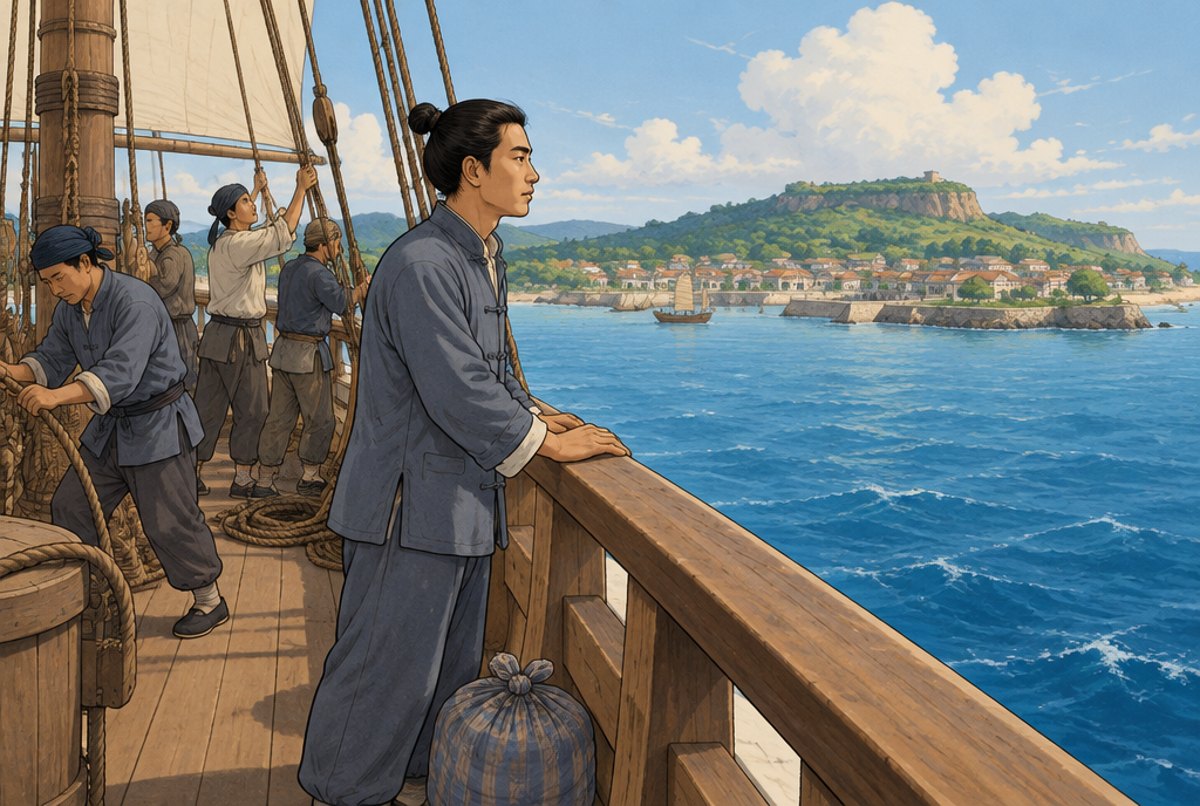
In 1873 a young man from Naha, the port town of the Ryukyu Kingdom, sailed for Fuzhou in China to study the fighting arts there. 6 His name was Kanryo Higaonna. He had been born in 1853, so he was about 20 when he left. 6 He would stay in China for years, and what he brought home would become one of the roots of . 1,6
The world he sailed from was small and old. The Ryukyu Kingdom, a chain of islands between Japan and China that is now Okinawa Prefecture, had kept close ties with China for centuries through envoys, traders and students. 1 It had been under the Japanese Satsuma domain since 1609, but it was still a kingdom with a king. 1 Its people had a fighting method of their own, which they called , simply "hand". 1
Te had no schools and no styles. Many individual teachers practised their own methods and passed them to a few students. 1 In the nineteenth century a Chinese influenced method called , "Tang hand", meaning Chinese hand, spread alongside it; Anko Asato linked tode to Kanga Sakugawa, who lived from 1786 to 1867 and had trained in China. 1 The two slowly merged into what became karate. 1
Shuri: Matsumura and his student
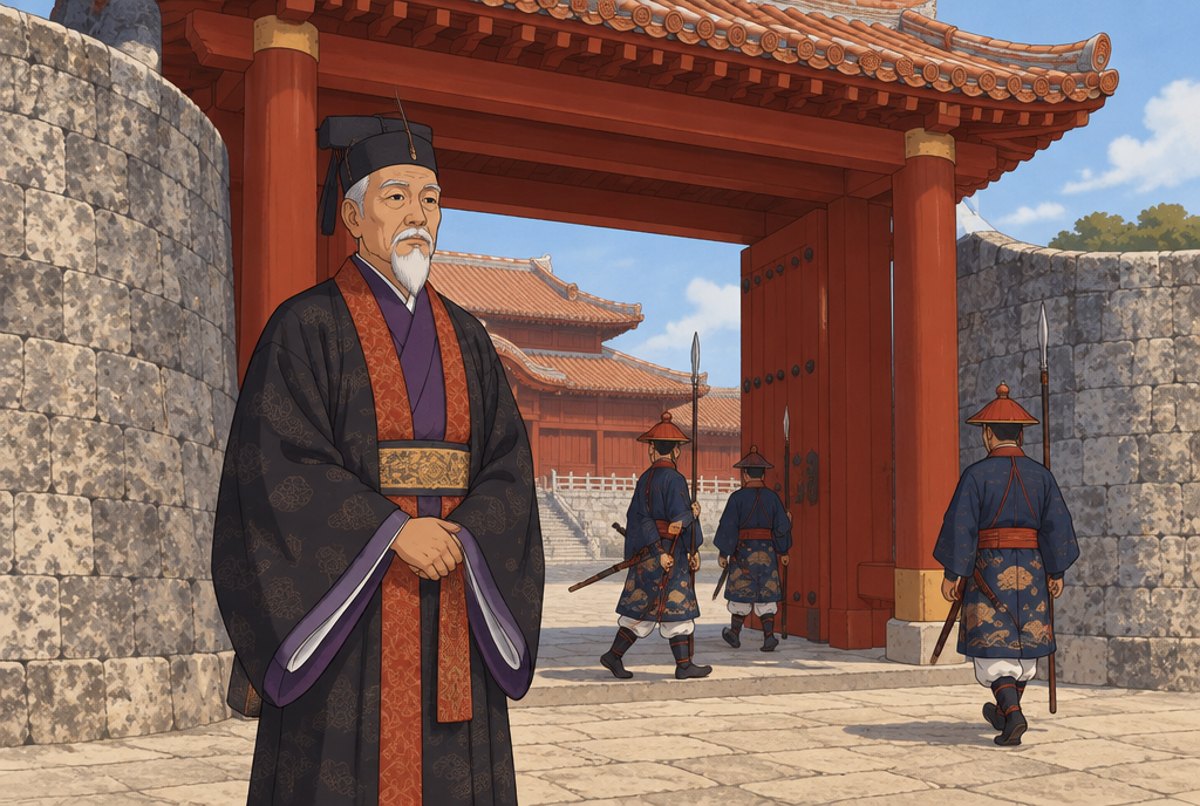
Up the hill from Naha stood Shuri, the royal capital. Its fighting art belonged to the noble warrior class, the palace guards and officials, not to farmers. 11
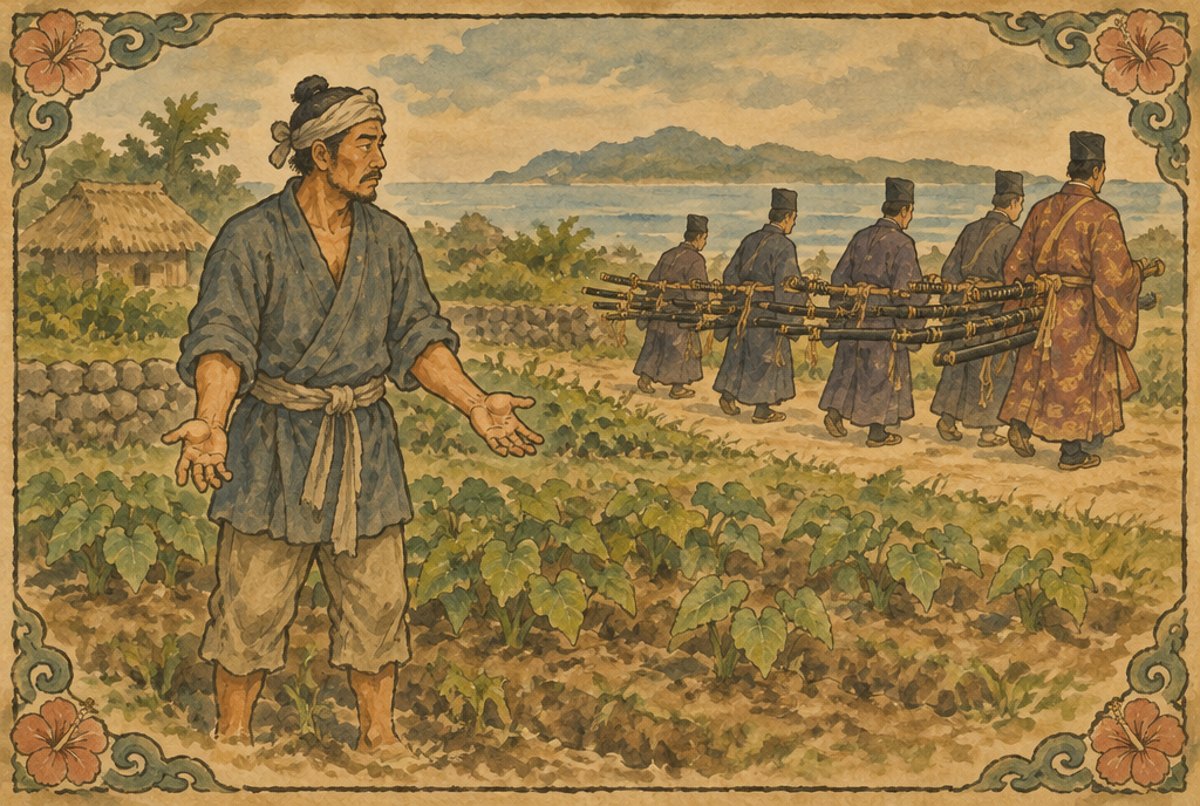
The man most Shuri schools look back to is Sokon Matsumura. He was born in 1809 and lived until 1899, 90 years that ran from the old kingdom into the new prefecture. 1 His student Anko Itosu, born in 1831, would carry Shuri's art through the hardest years it ever faced, and the next chapter is his. 1
Each town's teachers practised their own : a set sequence of moves, stepping and turning, performed alone or in pairs, not as a mock fight but to build correct form and the imagined use of each technique. 1,13 That is why early karate is usually sorted by three towns, each with its own kata and emphasis: Shuri-te from the capital, Naha-te from the port, and Tomari-te from a smaller town nearby. 1 Tomari's teachers left kata still widely taught today, such as Wanshu, Rohai and Wankan. 43
Shuri's line runs furthest. It is the root of Shotokan, Wado-ryu, Shorin-ryu and half of Shito-ryu, and its kata are performed at world championships today: the World Karate Federation's official list of 102 competition kata includes Okinawan forms named for their teachers, such as Matsumura Bassai, Kyan no Chinto and Chibana no Kushanku. 1,7,11,50 A competitor on an Olympic mat may be performing a form that carries the name of a man born in 1809. 1,50
Naha: Higaonna comes home
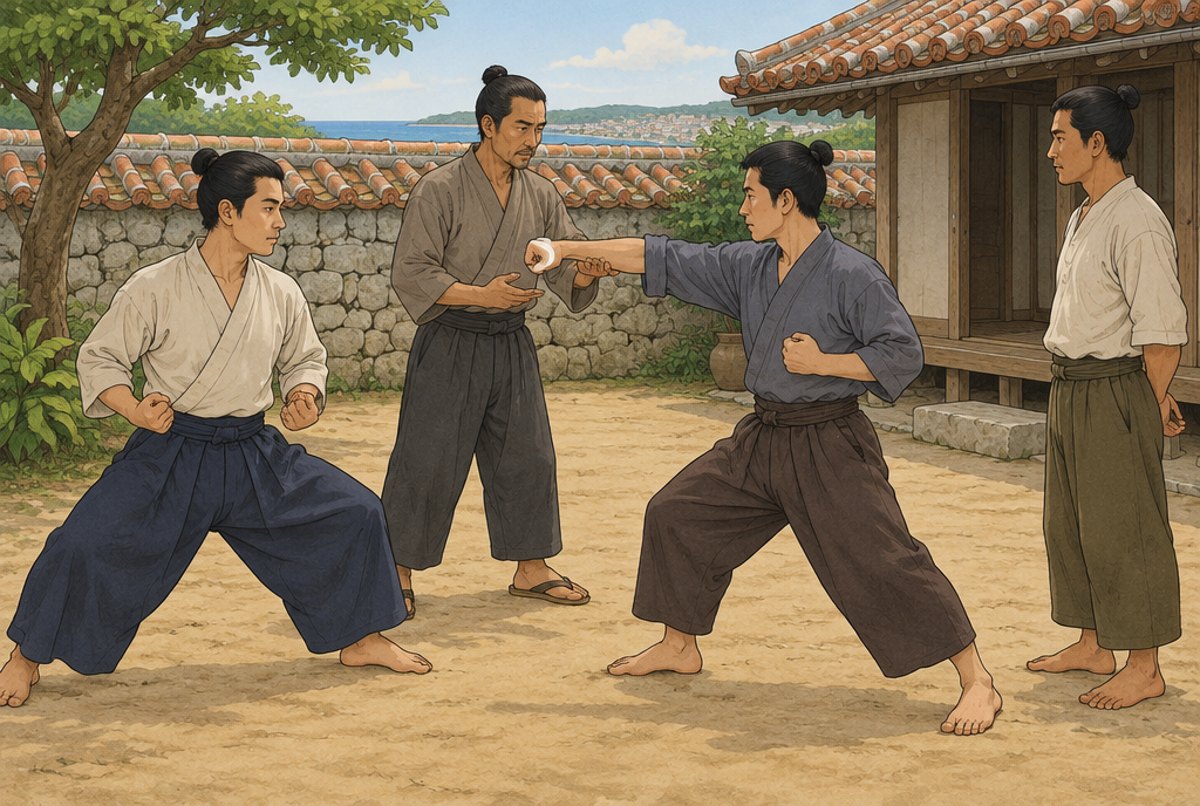
Higaonna came home from Fuzhou in the early 1880s and began to teach. 1,6 What he taught was new to the island: a system that mixed hard and soft methods, strong straight attacks with circular blocks and controls, and close attention to breathing. 1,6 This became Naha-te. 1
His best known student was a boy of 14 called Chojun Miyagi, who stayed with him for about 13 years, until Higaonna died in 1915. 6,26,96 Miyagi would one day found Goju-ryu, and his story belongs to chapter four. 6 Through Miyagi a second future founder, Kenwa Mabuni, also came to train under Higaonna, so two of karate's styles trace back to this one yard in Naha. 6,7
A visitor, a dance, and a mystery
Where did te itself come from? Nobody knows, and the people who study karate history still argue. 1 Asato and his student Gichin Funakoshi believed it grew out of an old Okinawan martial dance called mekata. 1
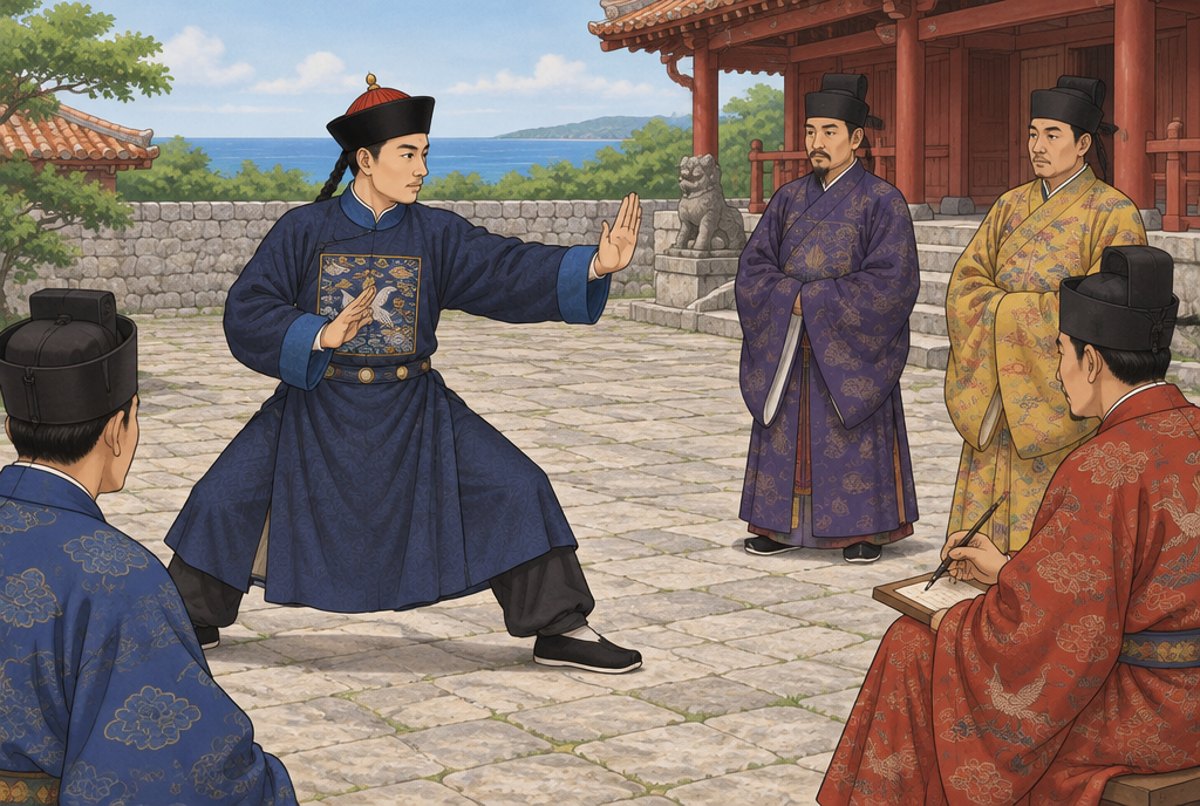
Others point to Chinese families who settled in Kume village in Naha in 1392, to the years after the Satsuma invasion of 1609, or to a Chinese military officer called Kusanku, whose visit around 1756 is recorded in a Japanese account of 1762. 1,43 Several kata still carry Kusanku's name. 43 Others again say it grew from Okinawan wrestling, from jujutsu, or from village fighting. 1
Historians have put forward several theories, and none of them is proven. 1
A fourth line of teaching stood a little apart. Kanbun Uechi, who lived from 1877 to 1948, went to Fuzhou at 19 or 20, studied there for about 10 years, opened a school in Nanjing in 1906, and on his return to Okinawa at first refused to teach at all. 1,10 What he eventually built from three Chinese forms, Sanchin, Seisan and Sanseiryu, became Uechi-ryu. 1,10
The year the kingdom ended
In 1879 Japan formally annexed the islands as Okinawa Prefecture. 1 The old warrior class lost its position, and with it the reason for a court fighting art. 1,11 The men who had guarded the palace had no palace to guard, and karate was at risk of dying out. 1
Matsumura was 70 that year. Itosu was 48. 1 What Itosu did next is why the art survived. 1