

Picture a big hall in Tokyo in May 1922, full of a physical education exhibition. Among the displays hang two scrolls with pictures of karate. They were brought by a man in his fifties, Gichin Funakoshi, from Shuri. 1,3
The next month he was invited to the Kodokan. That was the judo school of Jigoro Kano, the man who invented judo. 1,3 Kano had seen karate once before, in 1908, when school pupils from Okinawa showed it in Kyoto. 1 Now Funakoshi showed it at Kano's own school. 1,3 That same year Funakoshi wrote the very first book about karate. 1,3
Funakoshi stayed in Tokyo and taught at university clubs. 3 Other Okinawan teachers came over too, including Mabuni and Miyagi. 1 One of Funakoshi's first students in Tokyo was Hironori Otsuka, who was already an expert in jujutsu, a Japanese art of throws and locks. 5
Borrowed from judo
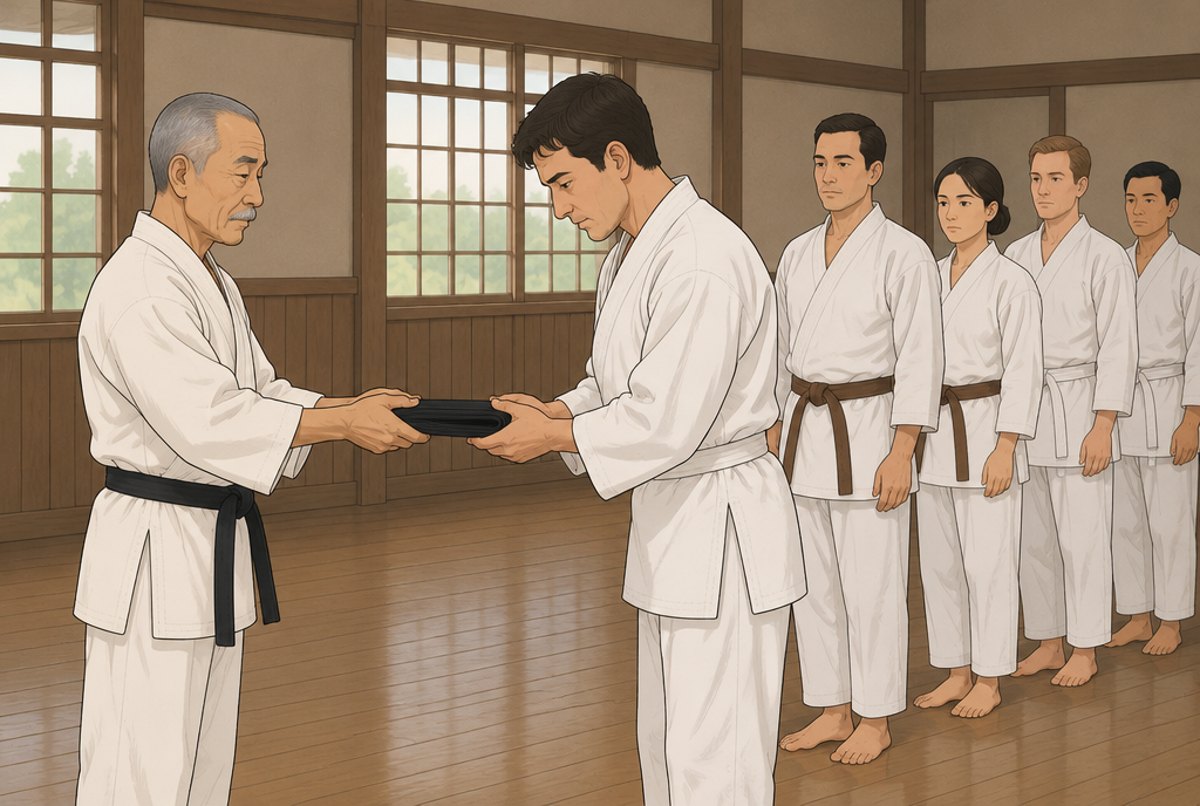
Judo students wore a white uniform and were graded in and grades. Kyu grades count down to 1st Kyu. Dan grades are the black belt grades, and they count up. 14 In 1924 Funakoshi borrowed all of it for karate. 1,4 His belts were simple: white, then brown for the top three Kyu grades, then black. 4 Otsuka was one of the very first black belts. 5 All the other colours came later, and every club chose its own. 4
Empty hand
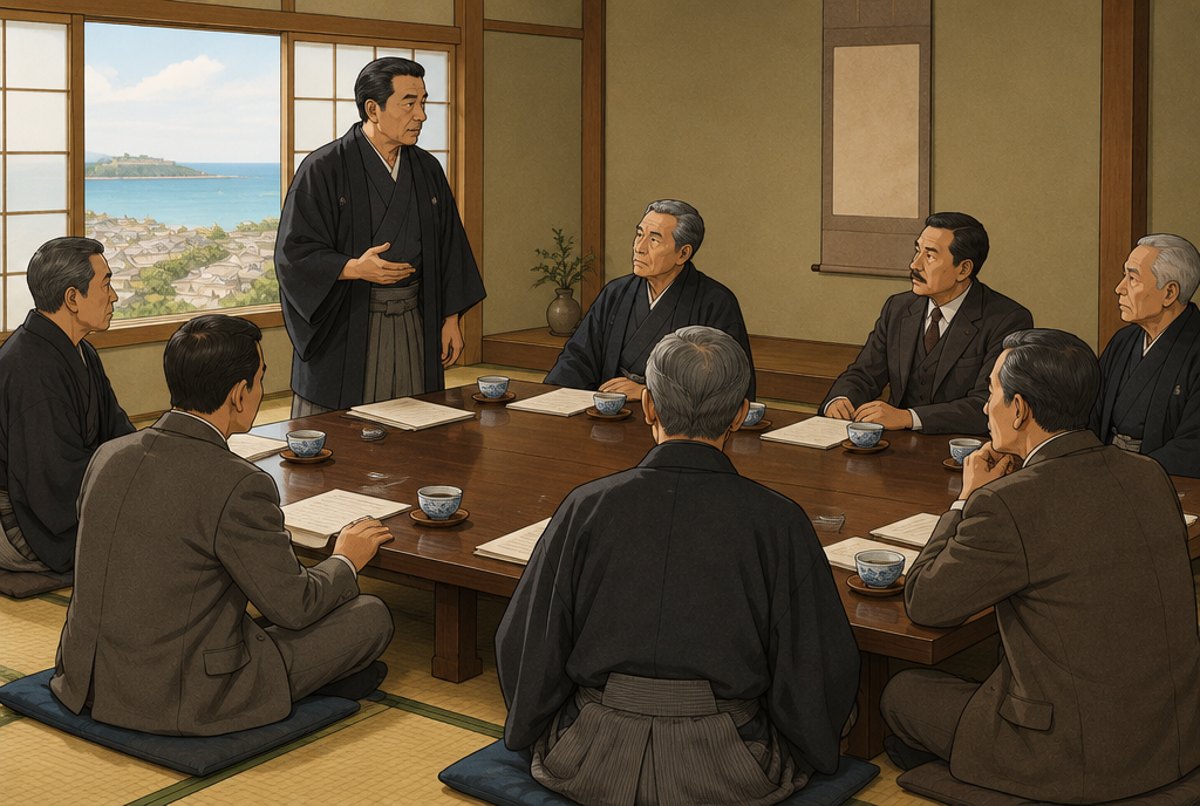
Now for the big one. Karate was written with two signs. The second meant "hand". The first meant "Tang", an old name for China. So karate meant "Chinese hand". 1 Some writers had started using a different sign that sounds the same but means "empty". 1 Then, on 25 October 1936, a group of Okinawan masters met in Naha and agreed: karate means "empty hand". 1 Okinawa now calls 25 October "Karate Day". 1
Teachers also added , which means "way". means karate is a way to grow as a person, not just a way to fight. 1
The sign over the door
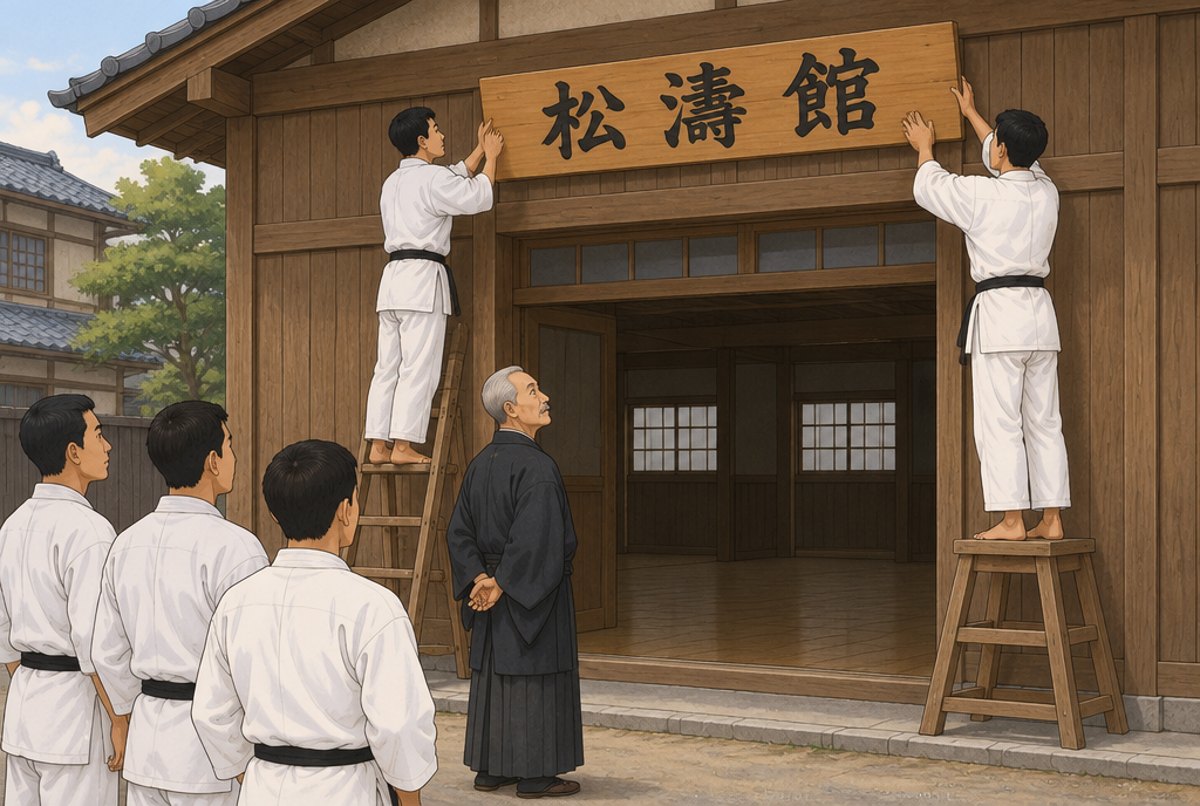
In 1939 Funakoshi's first proper , a training hall, was built in Tokyo. 97 His pen name was Shoto, which means "pine waves". His students hung a sign over the door: Shotokan, the hall of Shoto. 1,4 Soon everyone called his karate Shotokan. Funakoshi never did. He just called it karate. 4
Funakoshi wrote 20 rules for his students. The most famous one says "there is no first attack in karate". 3 He also wrote that there are no contests in karate. 1,12 But some of his younger students, Otsuka among them, were working out , sparring, in the 1930s. 1 Not everyone agreed with the old master. What they built instead is the next chapter.