

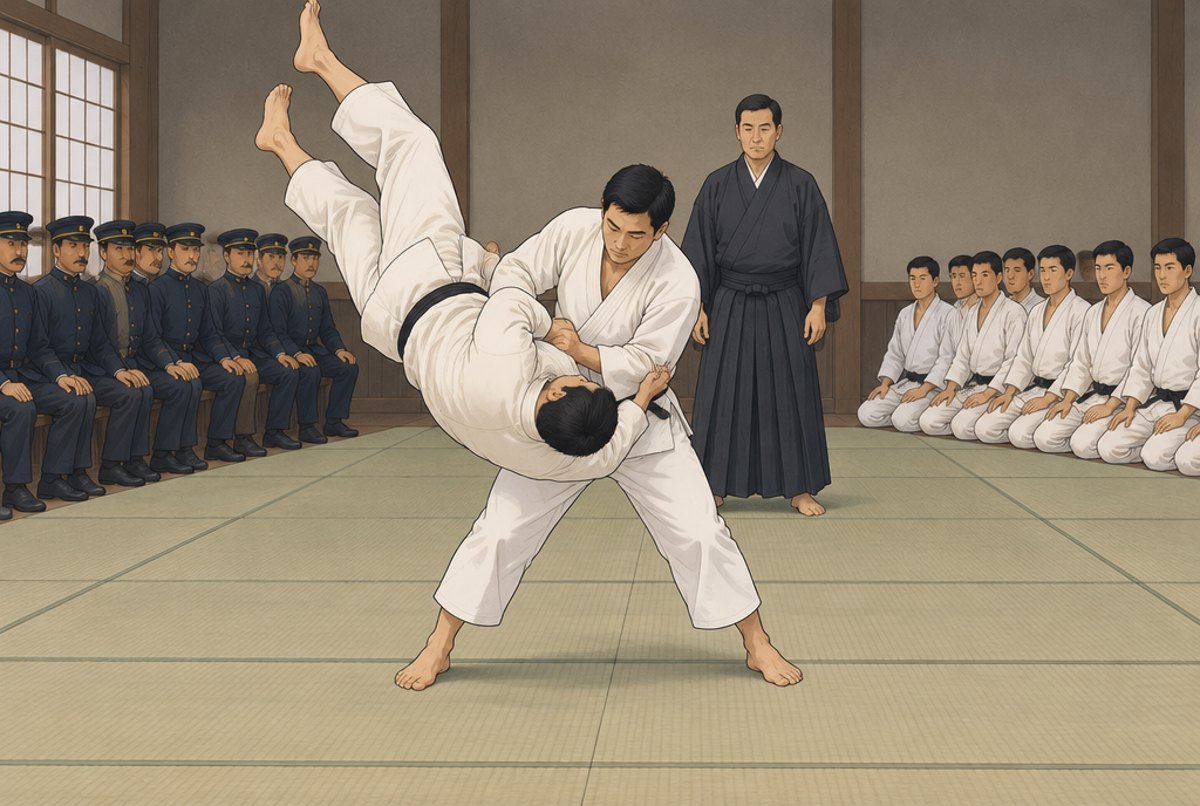
A new school had to show that its method worked. Kano's students tested theirs in contests against police jujutsu teams. 1,2 Imagine what was at stake for a young school with a new name, on a mat where a result could not be argued with. Judo did so well in the Tokyo Metropolitan Police tournaments that the police took it up. 1,2
The first written rules
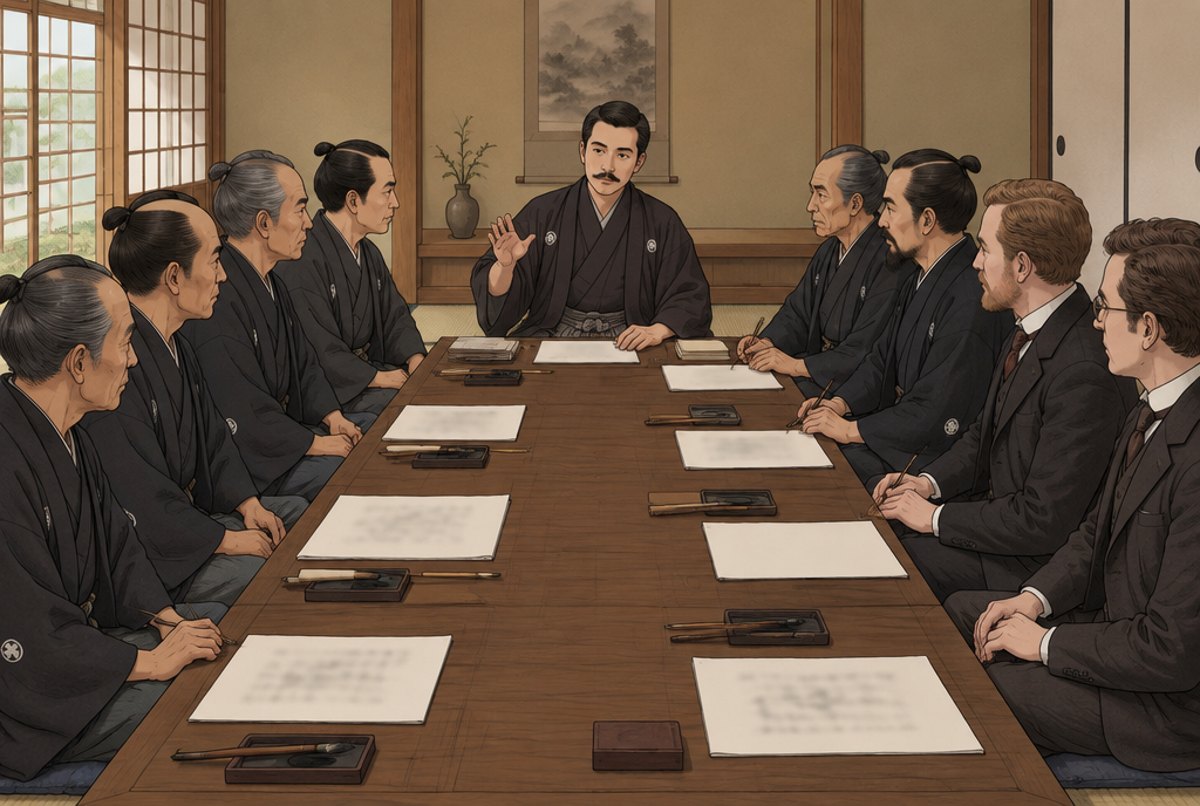
In 1899 Kano chaired a committee of the Dai Nippon Butoku Kai that wrote the first formal contest rules for jujutsu. 1 A contest lasted 15 minutes and was won by two . 1 The Kodokan adopted its own amended rules in 1900, banning joint locks for Kyu grades and wrist locks for Dan grades. 1
More bans followed in 1916 and 1925, including the knee lock ashi-garami, neck locks and do-jime, a squeeze of the trunk with the legs. 1 Over time, joint locks other than on the elbow, and some strangles, left contest altogether. 1 The direction has held. Under the IJF's rules of 14 August 2026, a lock on any joint but the elbow, or do-jime, means disqualification, and so do kawazu-gake, falling back into a partner with a leg wrapped round theirs, and kani-basami, the scissors throw. 60
Kime-no-kata: the old fighting forms
Techniques too dangerous for randori were not lost. Kata let judoka practise them, including strikes and wrist locks. 1
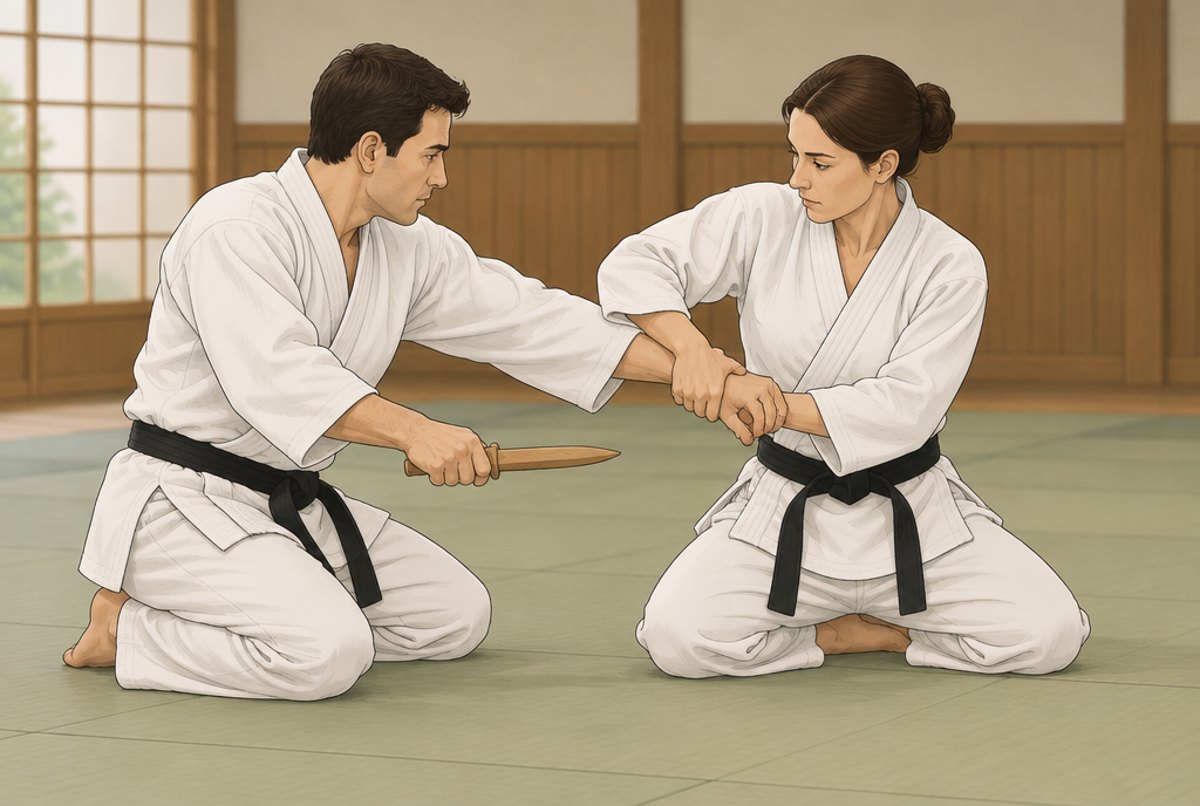
Kime-no-kata, the forms of decision, is self-defence against unarmed and armed attacks, with a dagger and a sword, and it includes strikes. 68 It has 20 techniques, eight kneeling and 12 standing, and was once called the kata of real fighting. 68 The Kodokan says Kano first made a 10 technique Shobu-no-kata soon after founding the Kodokan, and that the present 20 technique form was settled at a Butoku Kai meeting in 1906. Another account says around 1888. 26,68
The idea of keeping self-defence in kata did not stop with Kano. The Kodokan dates Kodokan Goshin-jutsu, its modern self-defence form, to January 1956, with defences against a dagger, a stick and a pistol. 68 A women's self-defence form, Joshi-goshinho, dates from 1943. 1
The head of a school
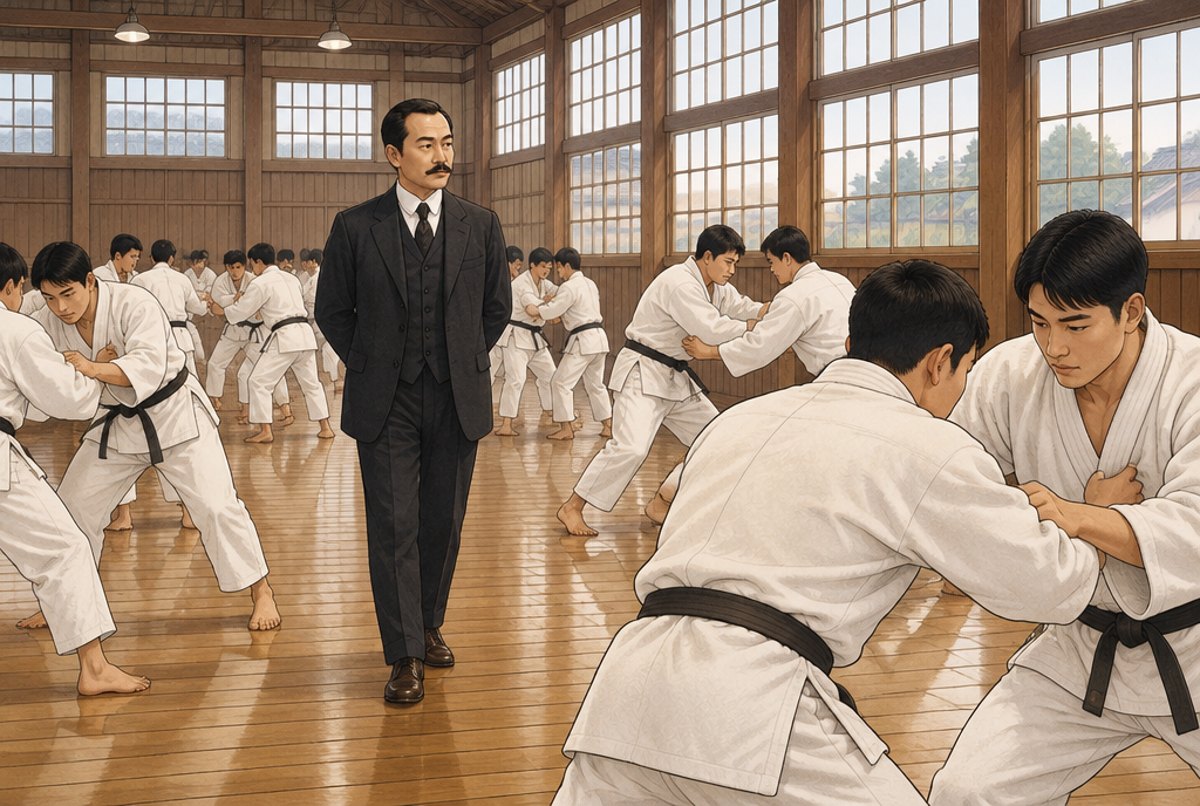
Kano's working life was not only in the dojo. For more than 20 years, between 1893 and 1920, in three terms, he was head of the Tokyo Higher Normal School, and he is called "the father of Japanese physical education". 2,66,174,175 Between 1906 and 1917 judo entered Japan's public schools, and kata and contest technique became more standardised. 2
In 1920 the Kodokan revised its throwing syllabus into the still usually taught: 40 throws, in five groups of eight. 67 The Kodokan notes that one of them, tsurikomi-goshi, was not in the 1895 list and seems to have been added around 1911. 67
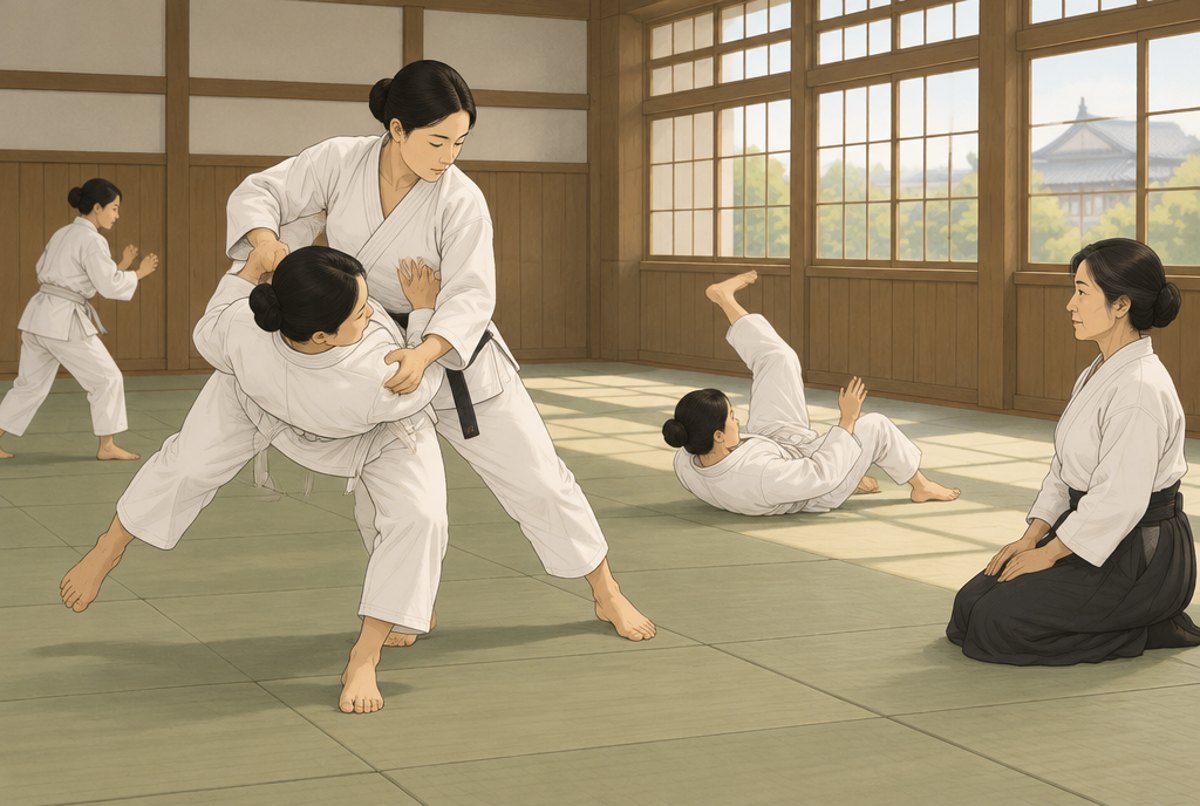
In 1923 the Kodokan opened a women's section. 64 It would be another 57 years before the first women's World Championships, in New York in 1980. 35,64
Two principles
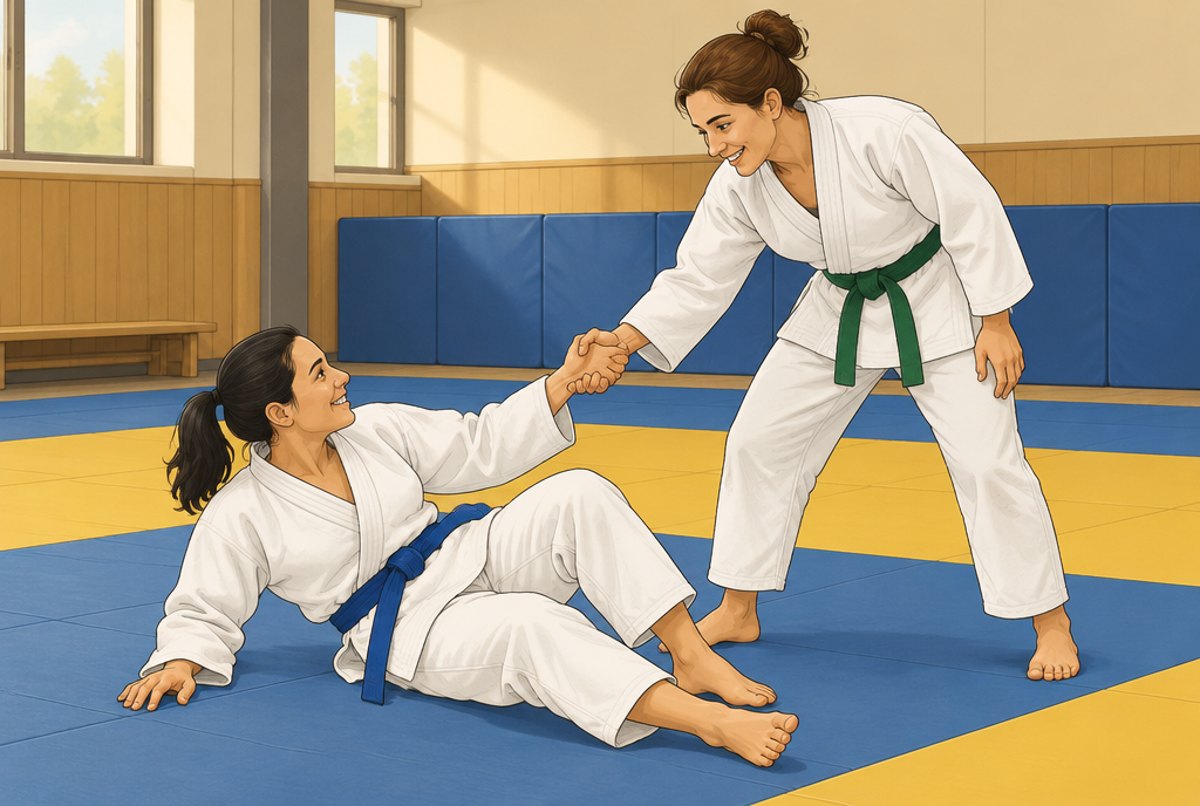
Kano gave judo two principles, which the Kodokan attributes to him. 1,66
- : the maximum efficient use of energy, of mind and body, in judo and in life.
- : mutual welfare and benefit, prospering together with others.
The Kodokan presents Kano's own statement of judo's purpose in three steps: strengthening the body through attack and defence, developing character by training the mind, and in the end serving society. 66
Kosen judo
Not all judo before the war looked the same. In Japan's higher schools a form of judo heavy on groundwork grew up before the Second World War. Kosen judo still has its own competitions. 29
By the 1920s judo was established at home. Kano had already begun carrying it abroad. 2,64,66