

Imagine the room: a space in a Tokyo temple, the Eisho-ji, with 12 mats on the floor. That is almost all anyone knows about the room where judo began. 2 In 1882 Jigoro Kano began teaching his own method there, to fewer than a dozen students. 2 Every account agrees on the year. They do not agree on the month.
What he kept
Kano kept the throws, holds, strangles and locks from jujutsu that could be practised safely at full effort. 1 That choice meant students could try their techniques at full effort against each other in randori, while techniques not allowed in randori could still be practised in kata. 1
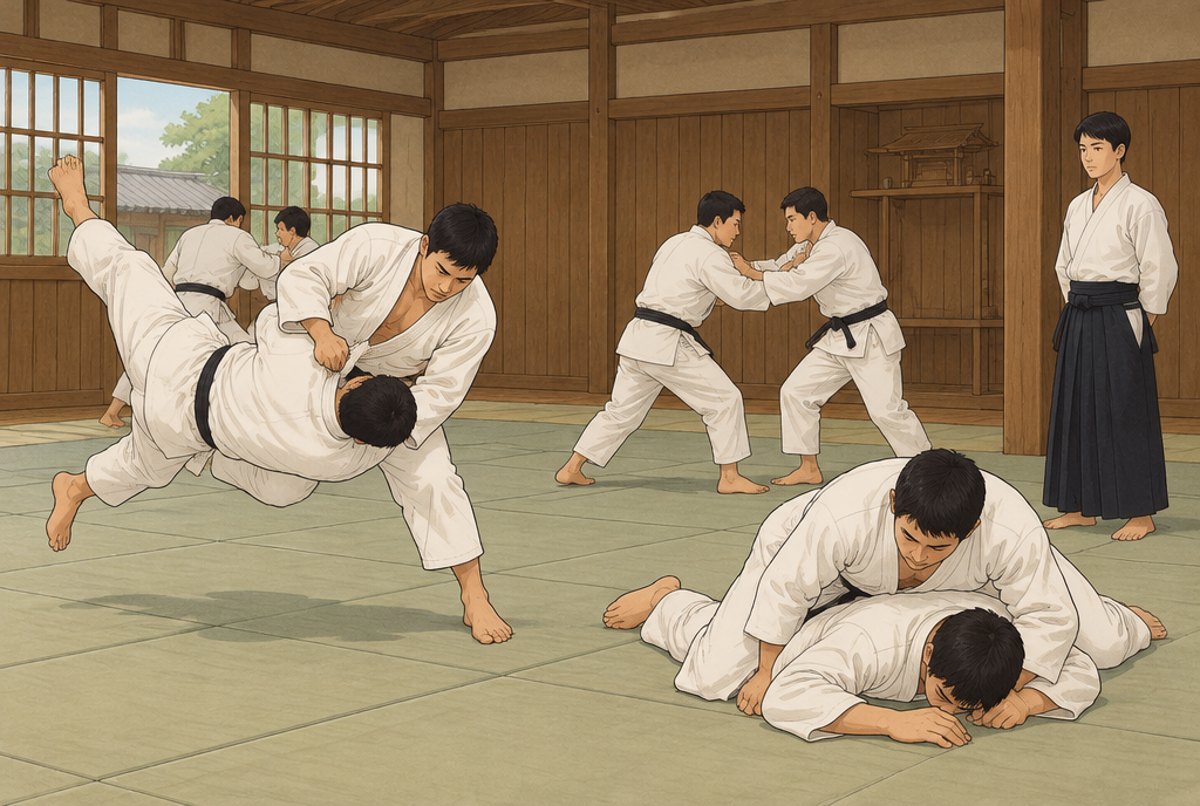
His techniques fell into three families, as they still do: , throwing; , grappling on the ground, meaning hold downs, strangles and armlocks; and atemi-waza, strikes, which appear only in some kata. 1
The name
Kano replaced , technique or art, with , way or path. 1,66 Jujutsu became , usually translated "the gentle way", from ju, gentle or yielding. 1,66 His hall he called the Ko-do-kan, which the itself explains as "a place to teach the path". 66 As chapter one showed, the word judo was not new; a Kito-ryu head had used it before. 2
Tomita, Saigo and the first Dan grades
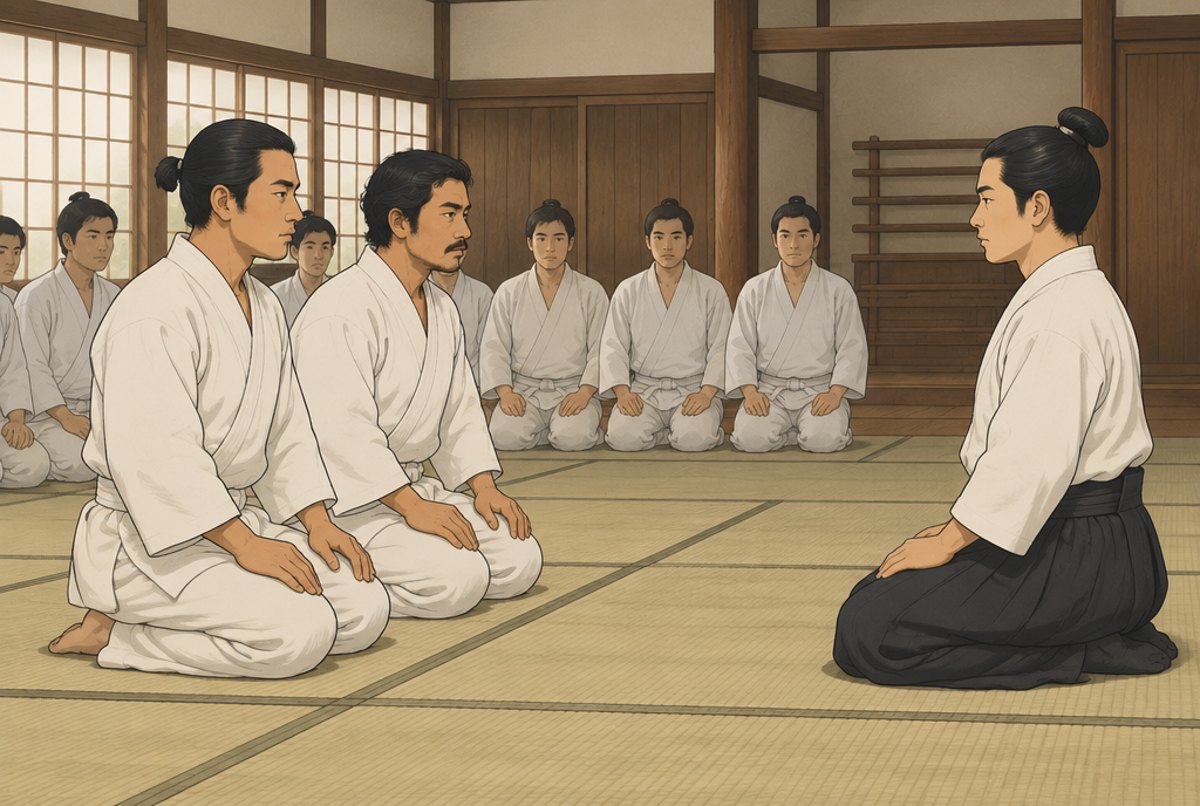
In 1883 Kano gave the first Dan grades in any martial art, to two of his students, Tsunejiro Tomita and Shiro Saigo, by one account in August 1883. 1,21 It was the beginning of the and grades now used across the martial arts. 1,21 Kyu grades count down to 1st Kyu; Dan grades count up from 1st Dan, , to 10th Dan, judan. 21,86 Those below black belt came to be called , and those with a Dan grade . 21
At first only two belt colours were worn, white and black. 1,21 Coloured belts for the grades below black came later, and the earliest records of them come from London, not Tokyo, as chapter five tells. 1,17,21 The top of the ladder stayed rare: only 15 people have been made 10th Dan by the Kodokan itself. 21
The randori kata
Kano also made forms to teach the principles behind free practice. Nage-no-kata, the forms of throwing, shows three representative throws from each of the five throwing groups, each done to the left and to the right. 68 Its first set is uki-otoshi, seoi-nage and kata-guruma, throws done mainly with the hands and arms. 67,68 Katame-no-kata, the forms of grappling, has five hold downs, five strangles and five joint locks, beginning with kesa-gatame, the scarf hold. 68 Together they are called the randori-no-kata, the free practice forms. 68
The Kodokan dates both to around 1885 to 1886. 68 Nage-no-kata is said to have begun with 10 throws and later grown to 15, and another account dates Katame-no-kata to between 1884 and 1887. 26
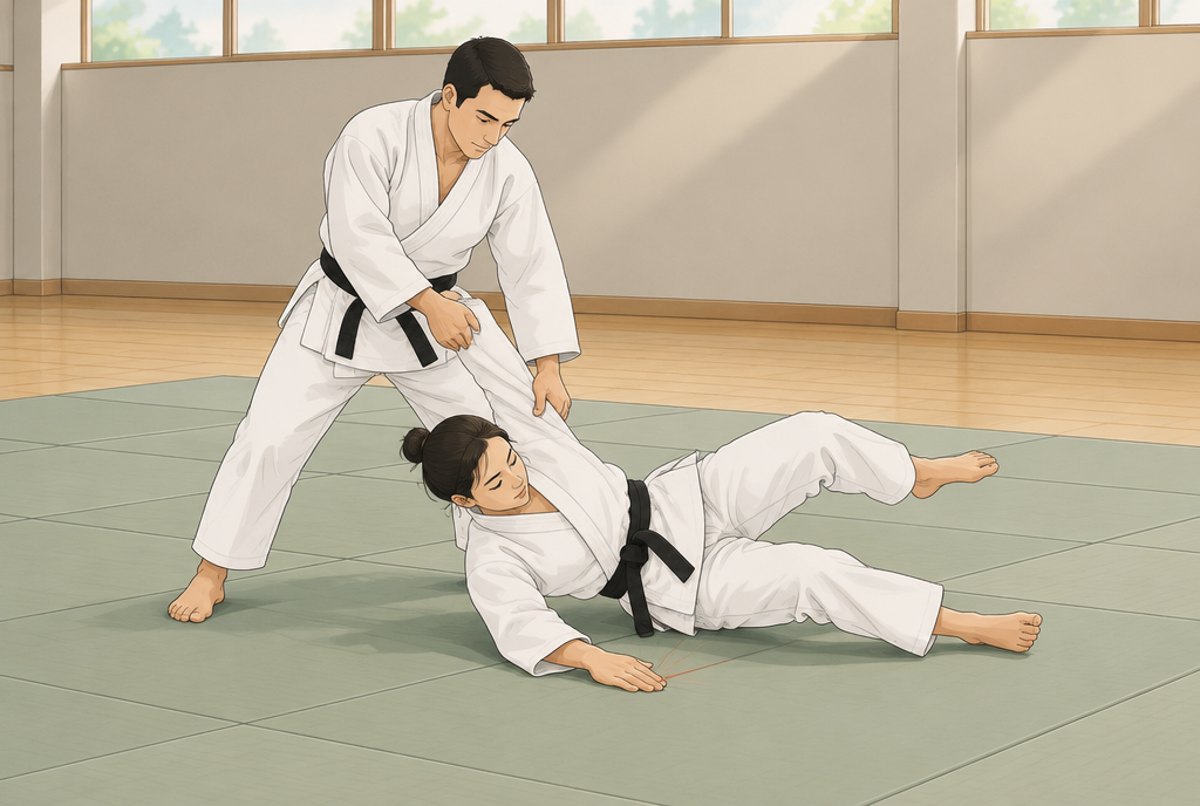
A third form, Ju-no-kata, the forms of gentleness, is made of slow, flowing movements of attack and defence, dated by one account to around 1887. 26 The Kodokan stresses that it can be done anywhere, in any clothes, by anyone of any age, because nobody is thrown. 68
A syllabus of throws
In 1895 the Kodokan published its first , a teaching list of 42 throws. 67 The order of the Gokyo follows how hard each throw is to fall from: the throws in the first group are the easiest to land from, and those in the last group the hardest. 1 In practice a beginner first meets the throws that are easiest to land from. 1 Today's first group, from the 1920 revision, still begins with de-ashi-harai, the advancing foot sweep, and ends with seoi-nage, the shoulder throw. 67
Growing
The Kodokan moved several times as it grew. 2 By 1911 it had more than a thousand Dan grades. 2 On 21 March 1934 it opened a hall of 510 mats, and its present eight storey building in Bunkyo, Tokyo, dates from 1958. 2
Some customs run through its year. Kangeiko and shochugeiko, winter and midsummer training, are Kodokan traditions. 2 And the Kodokan still awards its own Dan grades, including immediate promotion, batsugun, for a winning streak at its twice yearly Red and White contests. 69
Twelve mats had become 510. But first, judo had to show that it worked.