

In 1909 Jigoro Kano became the first Asian member of the International Olympic Committee. 2,66
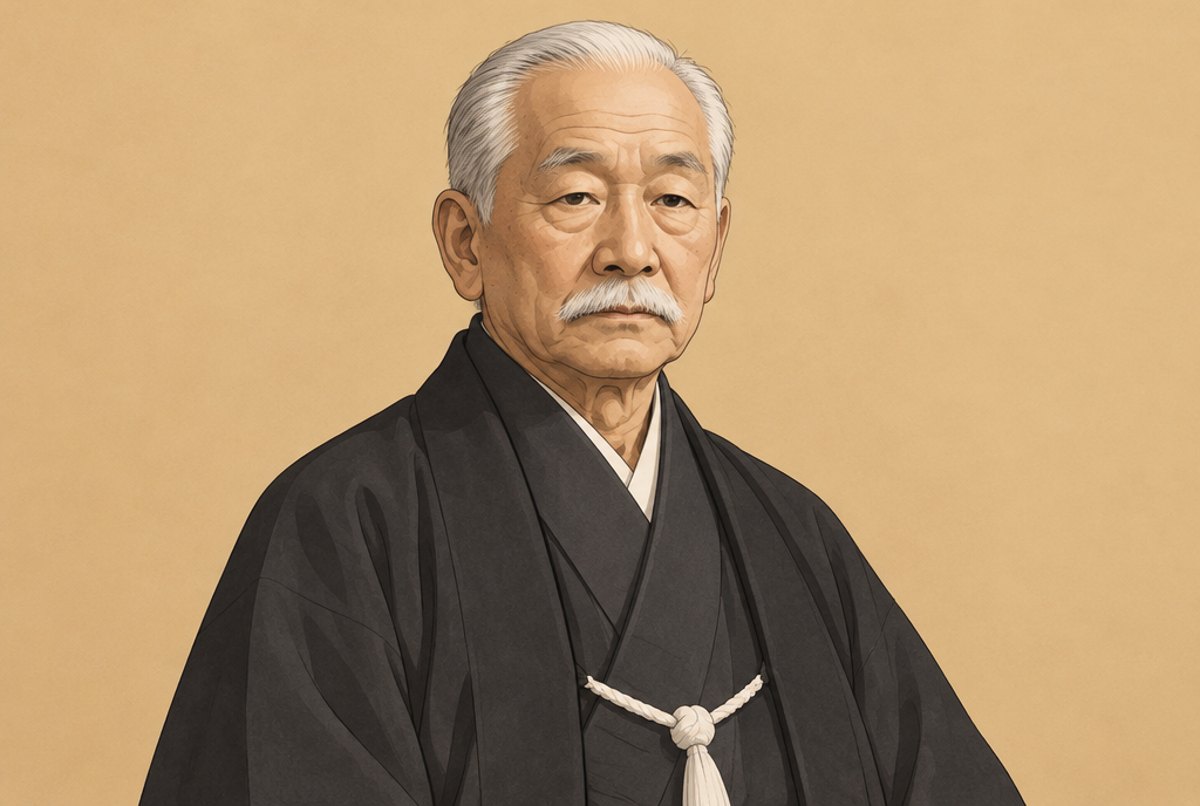
Over his life Kano travelled abroad 13 times to lecture on judo and to demonstrate it. 2,66 For more than 20 of those years he was also head of the Tokyo Higher Normal School, as chapter three told. 2,66,174,175 The IJF lists visits that include London and Paris in 1912 and 1920, and later years. 64
The masters beside him
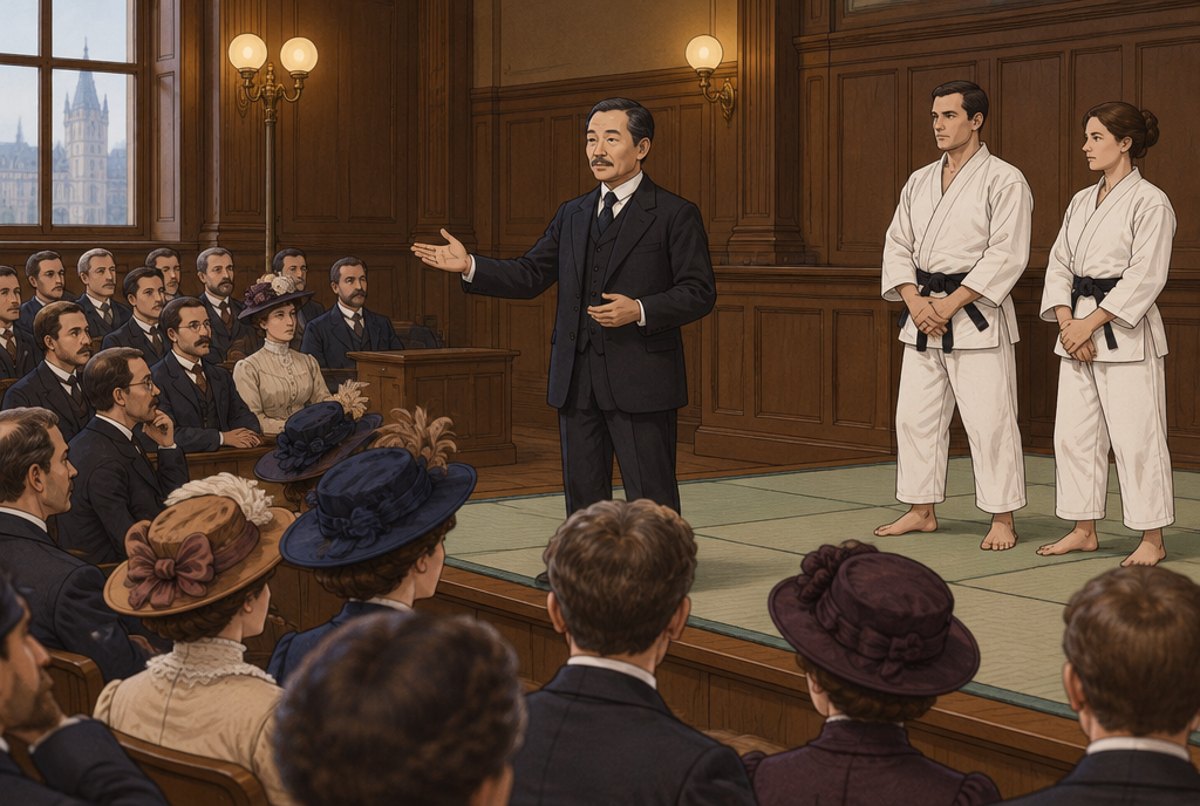
Kano did not build the Kodokan alone. One of the masters beside him was Kyuzo Mifune, and the two were pictured gripping each other in , the heavy cotton jacket, trousers and belt of judo. 25,170
Mifune's name is attached to a kata of counter throws, Nage-waza-ura-no-kata, which the Kodokan does not recognise as one of its own; a matching kata of groundwork counters, Katame-waza-ura-no-kata, is attributed to Kazuo Ito. 1
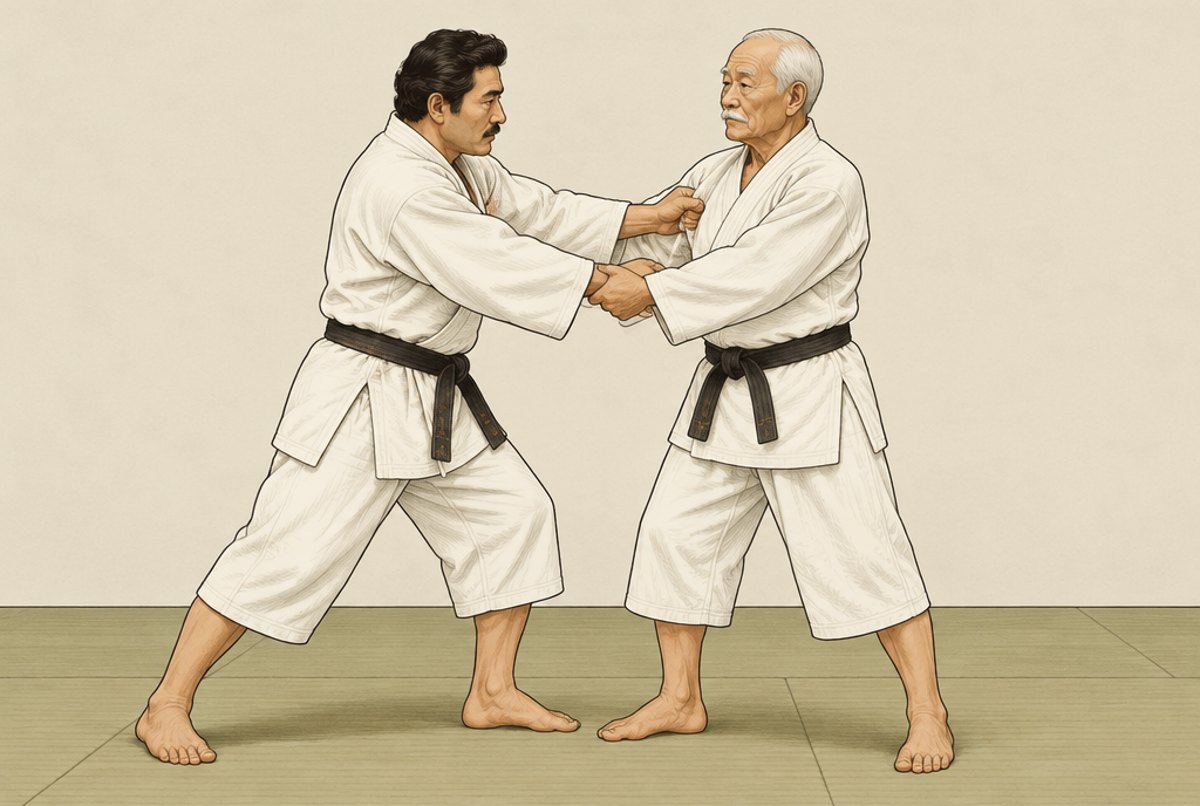
In 1933, in his seventies, Kano was still on the stage, giving a demonstration with Sumiyuki Kotani to a seated audience. 2,171
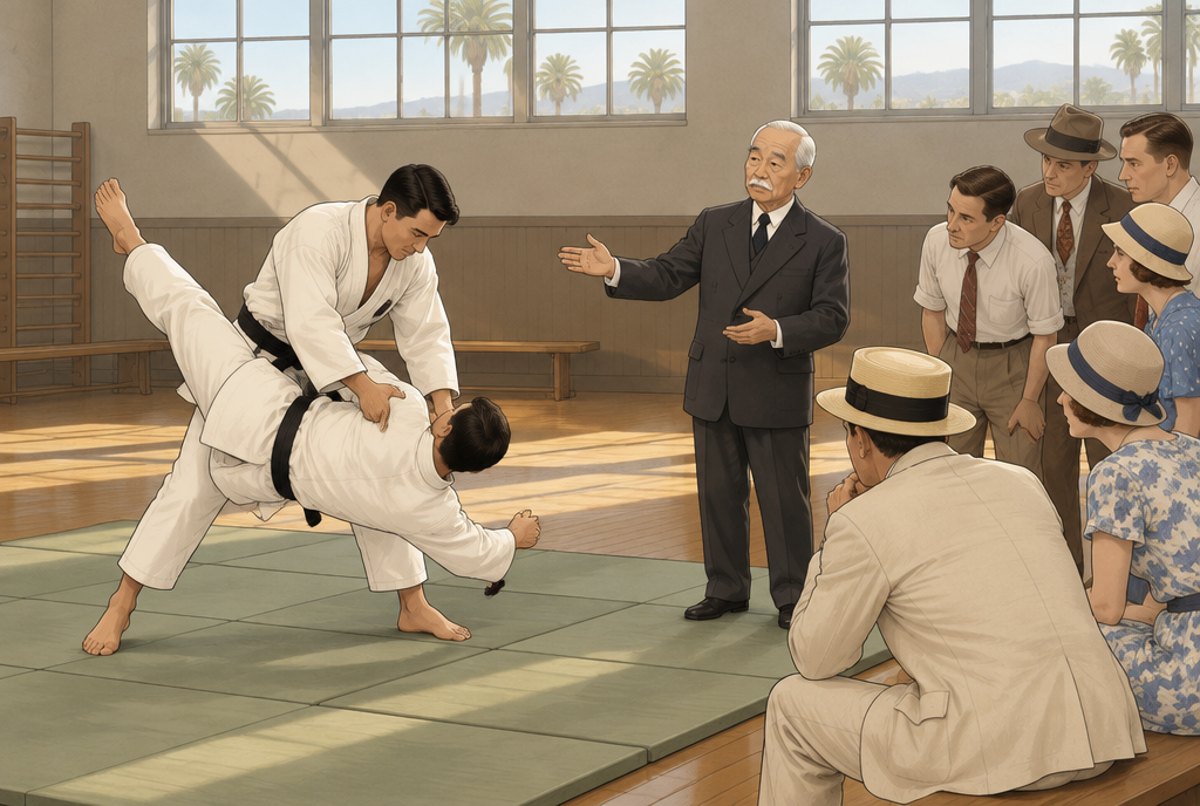
Los Angeles, 1932
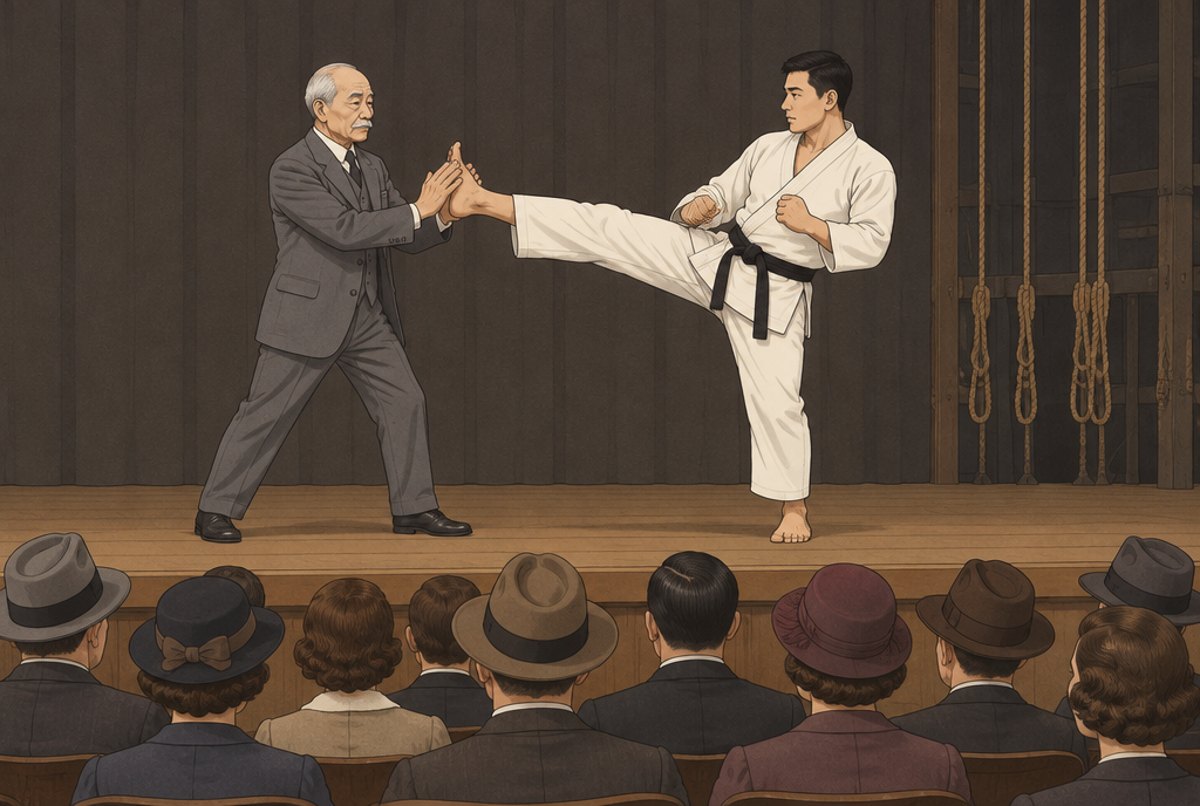
At the Los Angeles Olympic Games of 1932, Kano hosted an informal judo demonstration. 1 Judo was not yet an Olympic sport. For the 1940 Games in Tokyo it was chosen as a demonstration sport, but those Games were cancelled because of the war. 64,66
The same year, 1932, is the IJF's date for a European Judo Union: it records one created in Germany on 11 August 1932 and "reconstituted after World War II". 64 British accounts date today's European union to London in 1948 instead, as chapter six tells. 7,34,100
Kawaishi: from Liverpool to Paris
One teacher shows how judo moved through Europe in these years. Mikinosuke Kawaishi taught in Liverpool and London from 1928, and visited London's Budokwai that year. 1,17 In 1935 he moved to Paris, and in 1946 he helped to found the French judo federation and became its technical director. 17
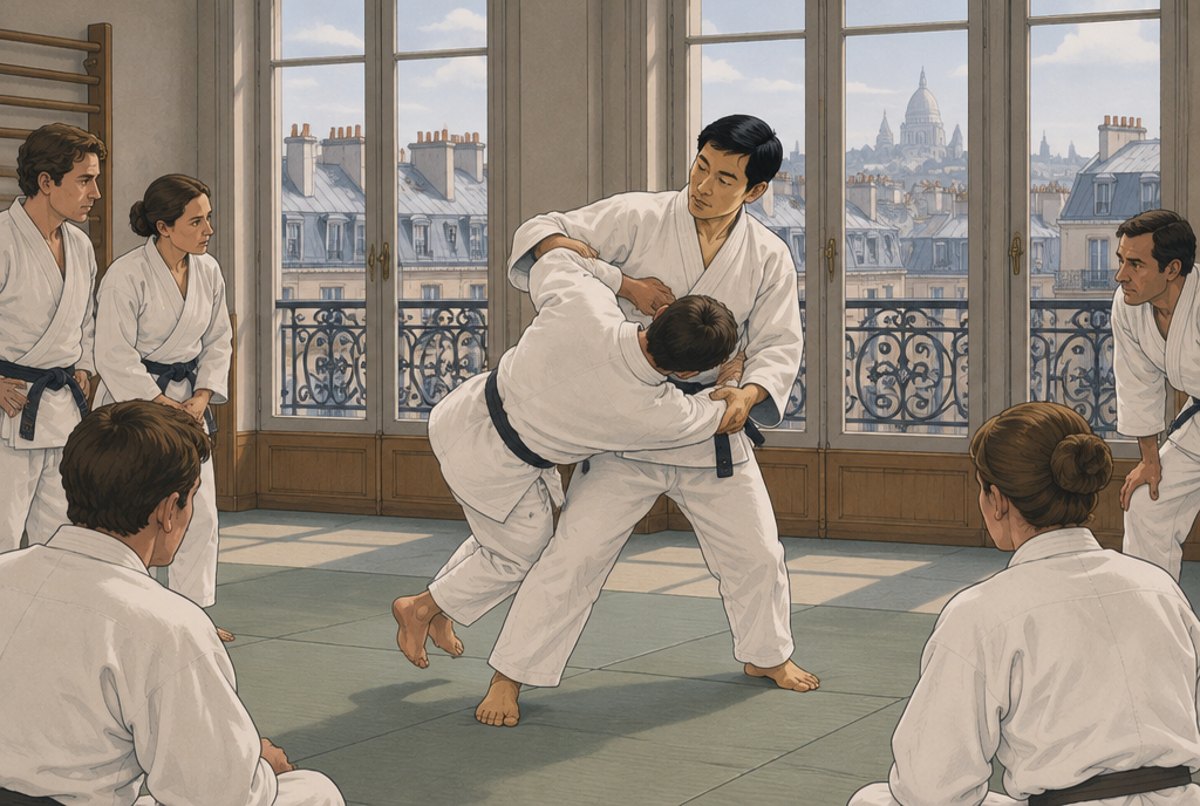
His own teaching system, the "Kawaishi method", became influential in France, and he may have taken the Budokwai's coloured belts there, as chapter five tells. 1,17 He also spread in the West a kata of counter throws, Go-no-sen-no-kata, which is said to be unknown in Japan. 1 It still turns up in some UK syllabi: the Amateur Judo Association asks for it at 2nd Dan. 131
The last years
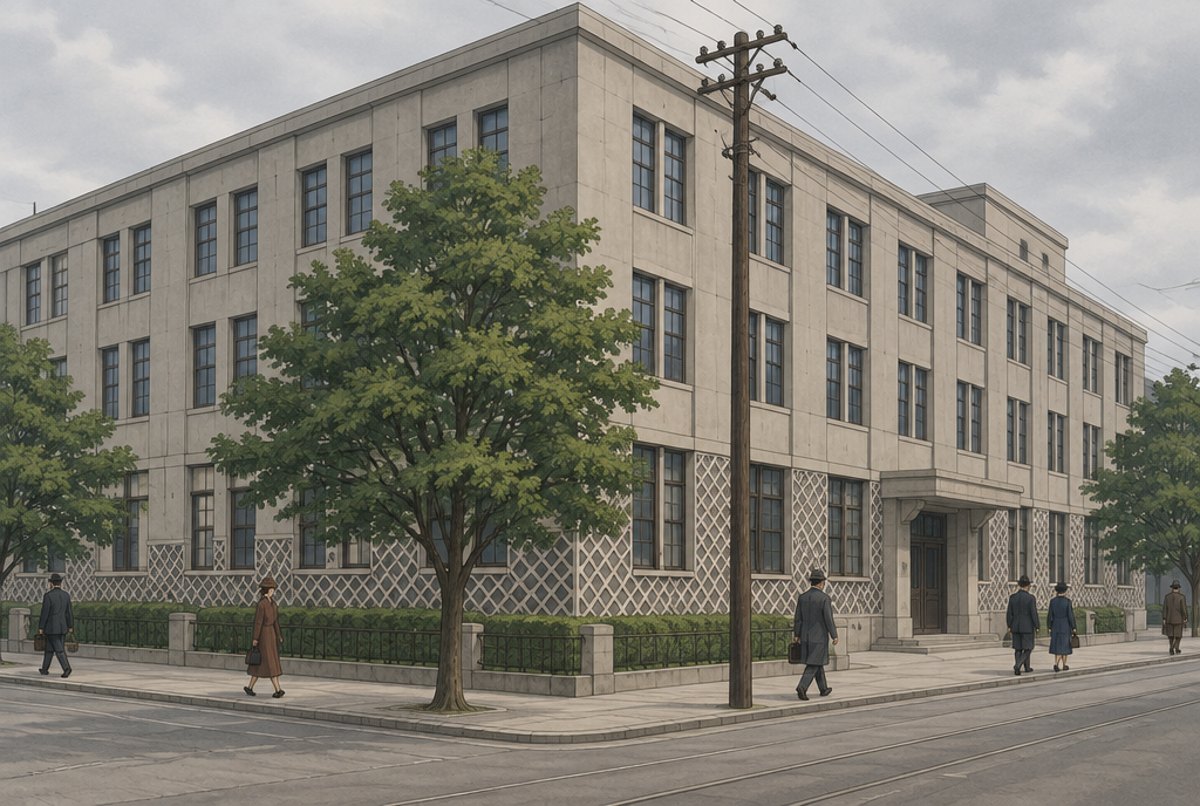
Kano's school kept growing, and by 1937 the Kodokan stood at Suidobashi in Tokyo. 172 Kano died on 4 May 1938. 2
What he left
The Kodokan is now a public interest foundation in Bunkyo, Tokyo, in a building that dates from 1958. 2,65 It publishes the official list of 100 judo techniques, 68 throws and 32 grappling techniques, and English textbooks for its seven kata, and it certifies its own Dan grades. 65,67,68,69 The IJF's contest rules only score techniques on the Kodokan's list, or recognised variations of them. 60 British Judo points its Dan grade candidates to the Kodokan's technique videos. 85
The Kodokan says judo has spread to about 200 countries and regions, and that people from 6 to over 80 train in its halls. 65,66 Every year on 28 October, World Judo Day marks Kano's birth. 1
Judo has spread so far that people now talk of national "styles" of it, such as Georgian, Russian or Cuban judo. These are the competitive habits of national teams, not separate organisations, and almost every club still follows the Kodokan's techniques and the IJF's rules. 1,60
By the time Kano died, judo had a second home. In London, Japanese jujutsu teachers had been at work since 1900. 9