

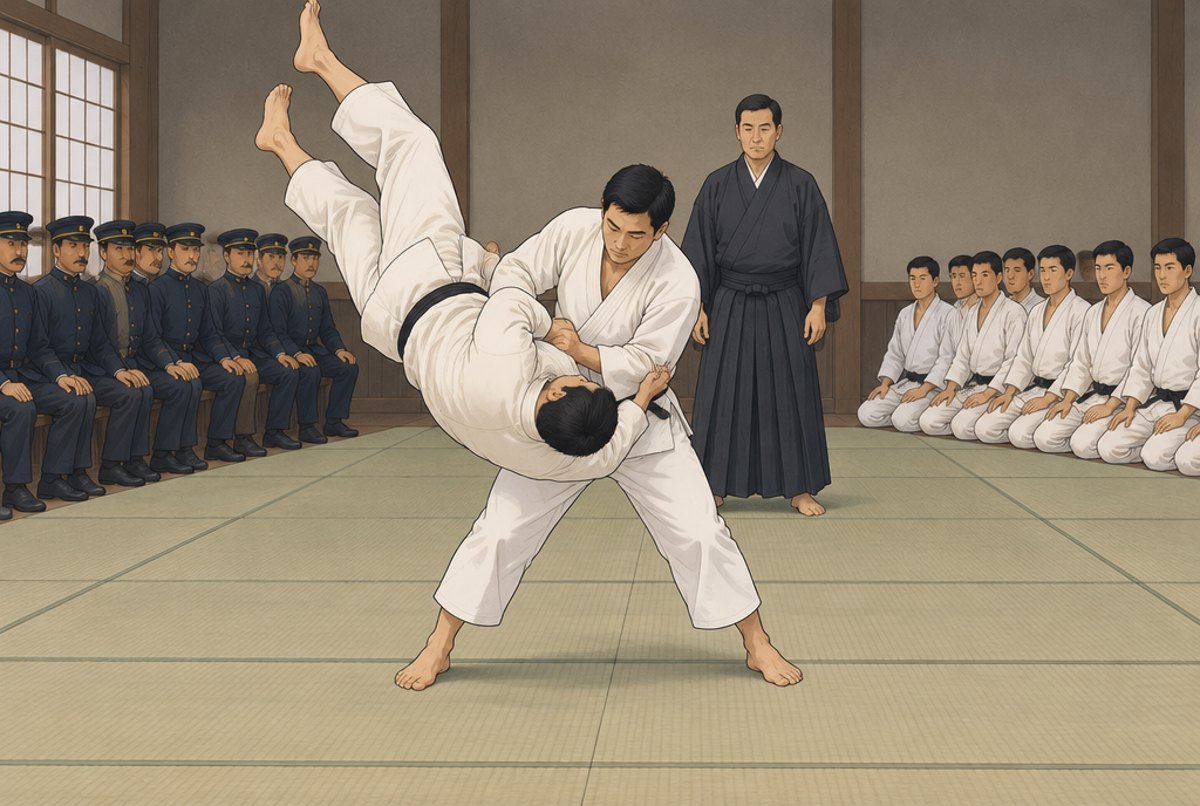
A new school has to show that its way works. Kano's students tested judo in contests against police jujutsu teams. 1,2 Judo did so well in the Tokyo Metropolitan Police tournaments that the police took up judo for themselves. 1,2
Writing the rules
A contest needs rules, so that everyone knows what counts. In 1899 Kano led a committee of the Dai Nippon Butoku Kai that wrote the first proper rules for jujutsu contests. 1 A contest lasted 15 minutes, and you won by scoring two . 1 An ippon is a full point. Today a single ippon wins the contest straight away. 60
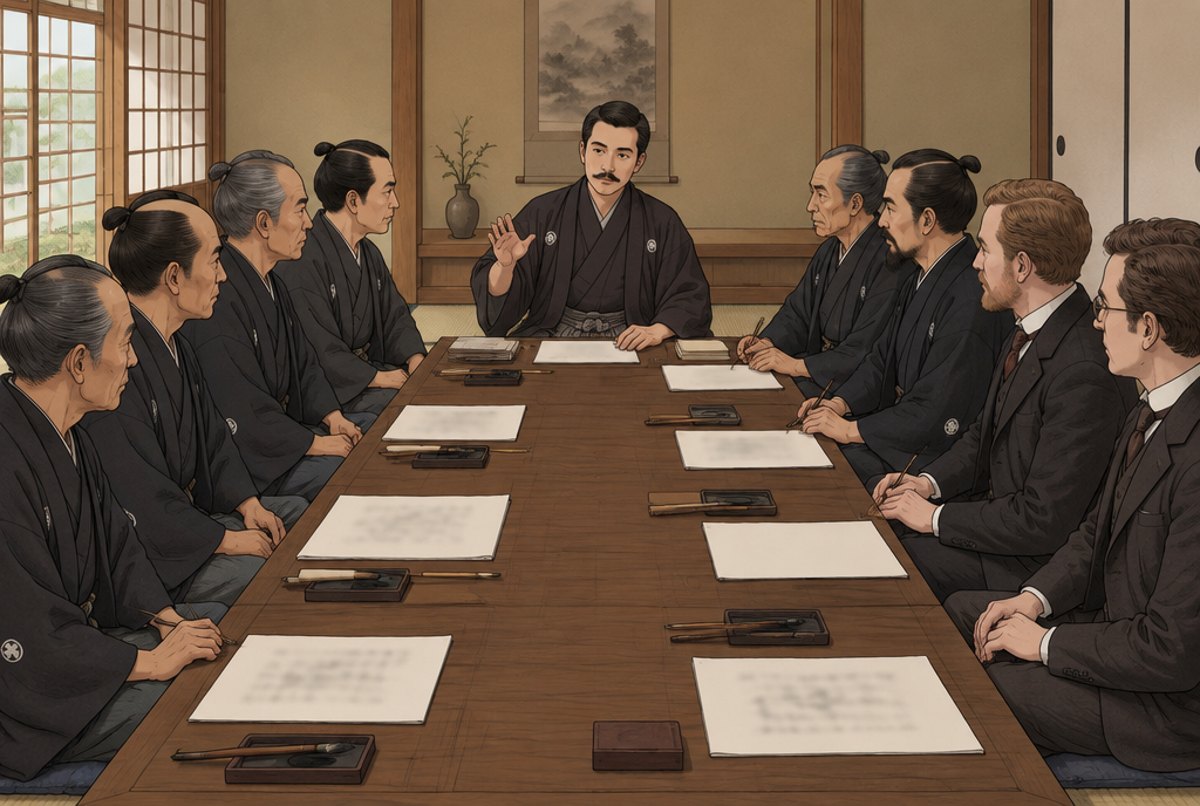
In 1900 the Kodokan made its own contest rules, and students below black belt were not allowed joint locks at all. 1 Over the years more techniques were banned from contests to keep people safe, such as locks on the knee and squeezing someone's body with your legs. 1 Today the only joint you may lock in a contest is the elbow. 60
The kata of real fighting
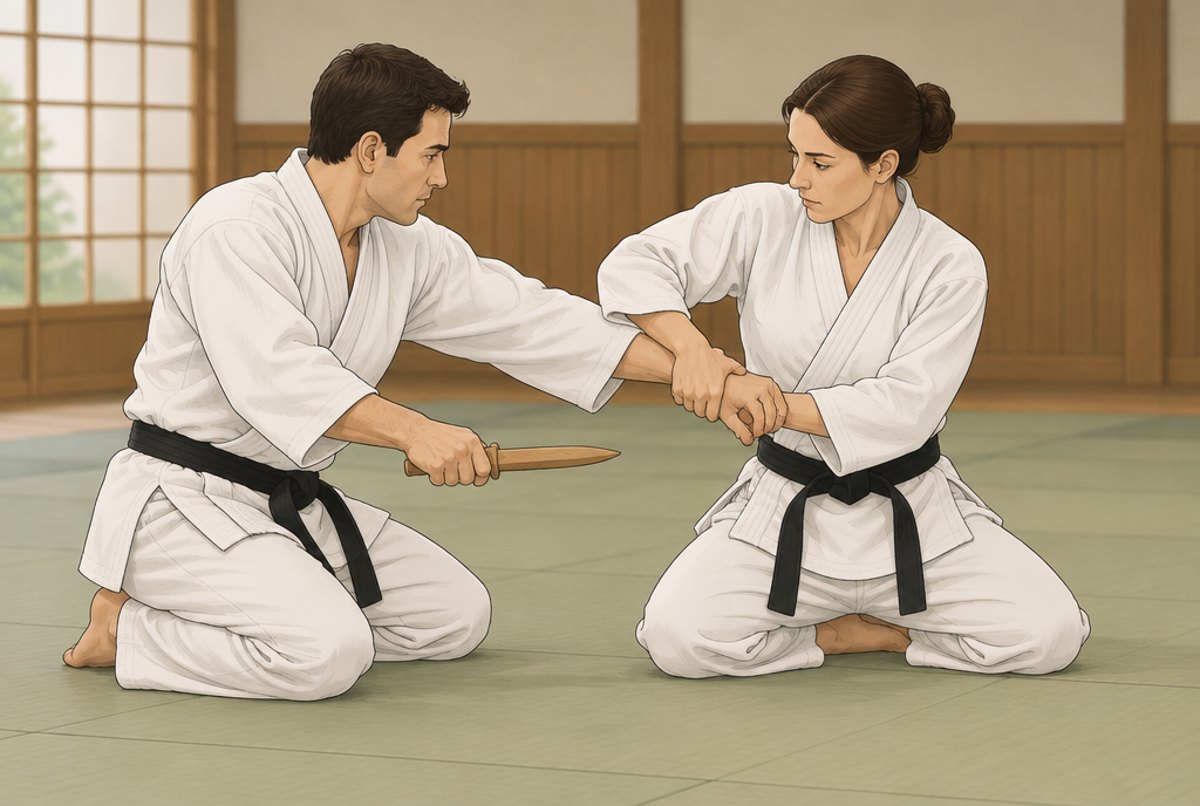
What happened to the dangerous moves? They were kept in kata, where partners practise them in a set order. 1,96 Kime-no-kata, the forms of decision, even has defences against a dagger and a sword. 68 Pairs who perform it in competition bring their own practice weapons. 60 People once called it the kata of real fighting. 68
The head teacher
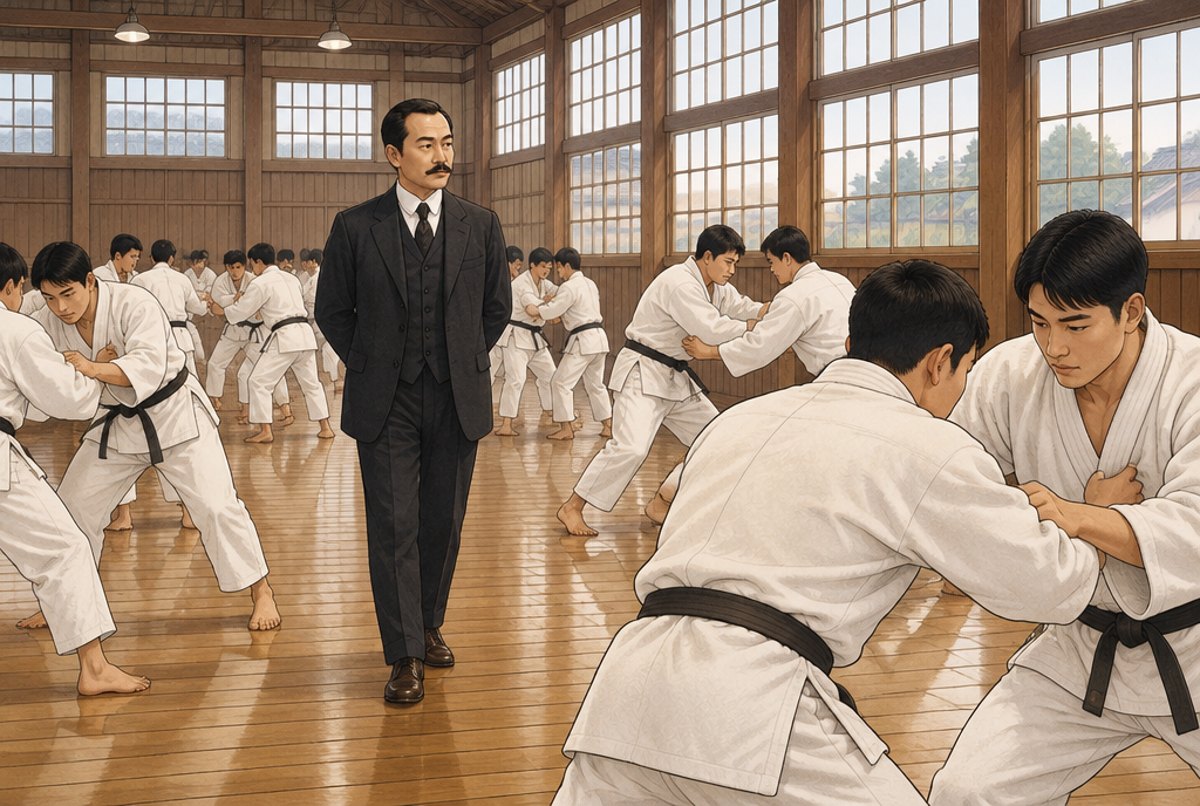
Kano was not only a judo teacher. For more than 20 years, between 1893 and 1920, he was head of the Tokyo Higher Normal School. 2,66,174,175 People call him "the father of Japanese physical education". 2,66 Between 1906 and 1917, judo went into Japan's public schools. 2
Two big ideas
Kano summed up judo in two ideas. 1,66
- : use your energy, of mind and body, in the most efficient way.
- : mutual welfare and benefit, which means doing well together with other people.
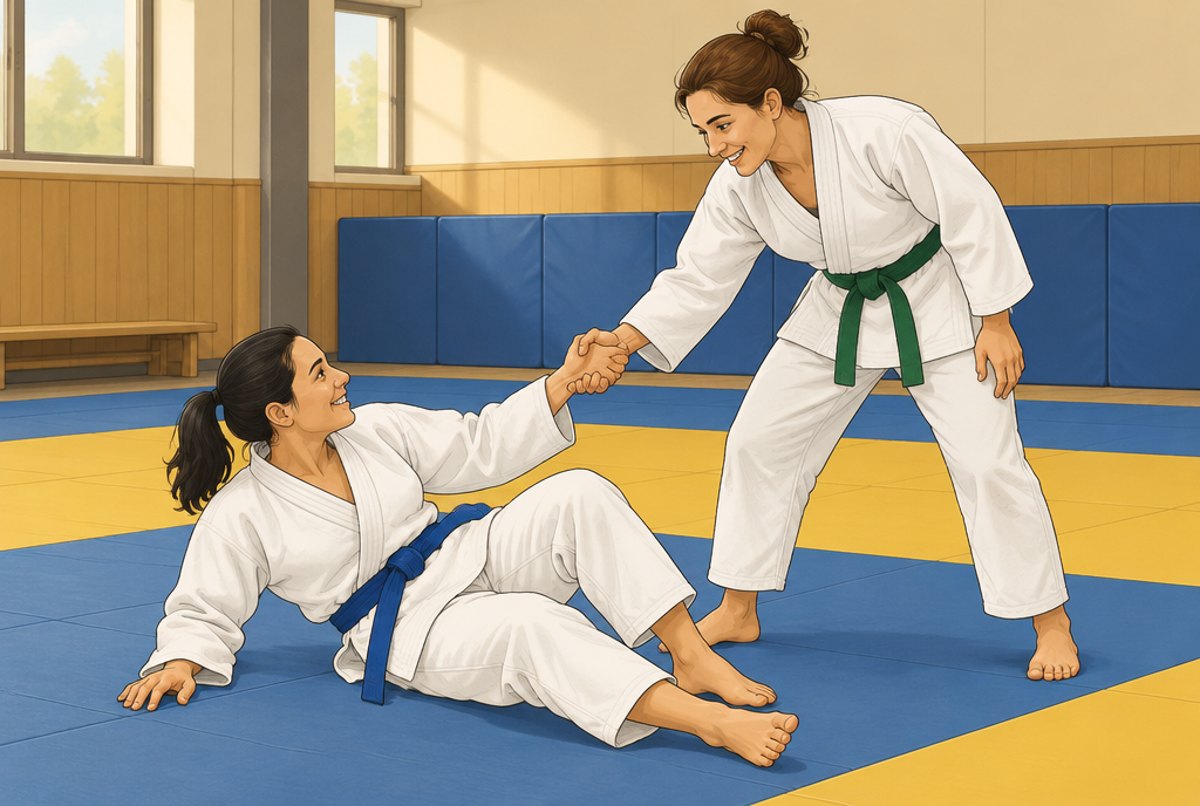
Think about randori. You need a partner to practise with, and your partner needs you. Helping your partner up after a throw is one small way to show jita kyoei.
The Kodokan gives Kano's own words on what judo is for: to make the body strong, to build character by training the mind, and in the end to serve society. 66
Forty throws, and women at the Kodokan
In 1920 the Kodokan revised its list of throws: 40 throws, in five groups of eight. It is still the list most clubs teach from today. 67
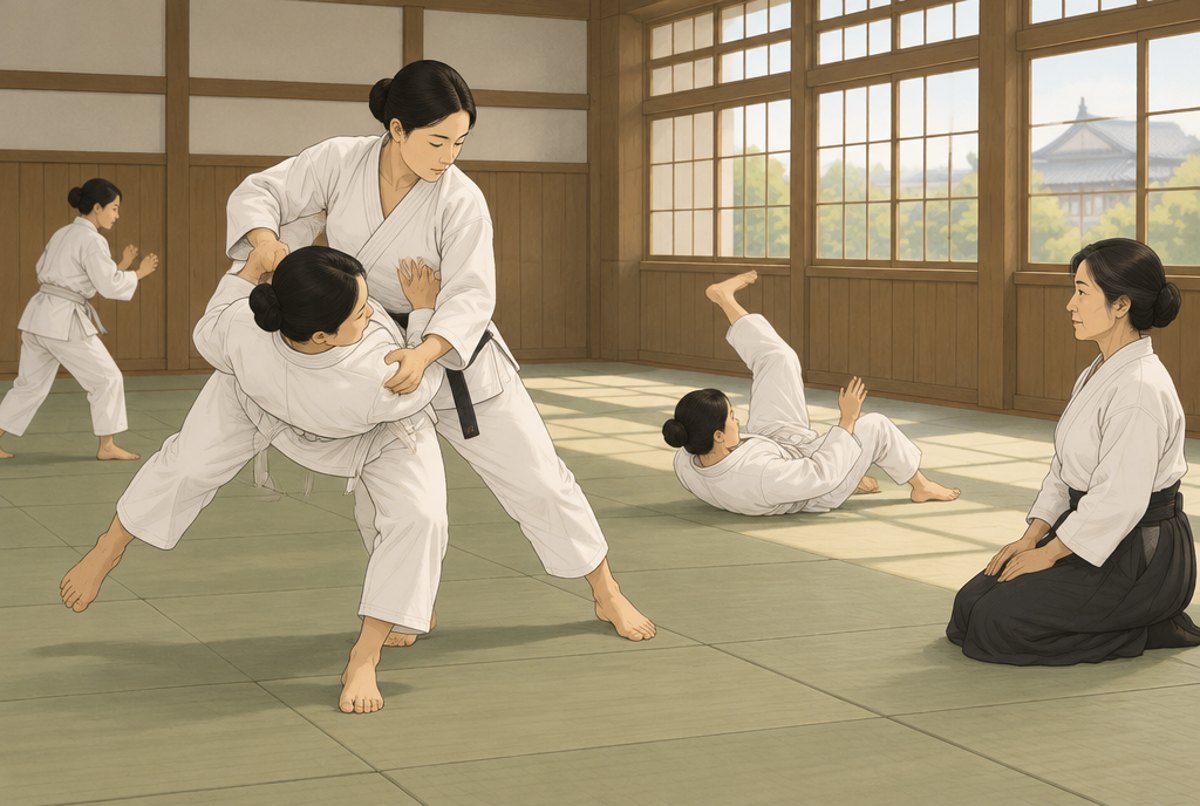
In 1923 the Kodokan opened a women's section. 64
Judo was strong in Japan now. Next, Kano carried it round the world. 2,66