

Imagine a London music hall around 1900: a stage, an audience, and a Japanese teacher inviting anyone who dares to come up and wrestle him. That is how Yukio Tani became famous in London. 9 His story begins with one Englishman.
Edward William Barton-Wright had studied jujutsu in Japan. In 1898 he created a self-defence method of his own, Bartitsu, and in 1900 he opened a school in Soho, in London. 10 To teach there he invited Japanese jujutsu teachers: Yukio Tani, Tani's brother Kaneo, and Seizo Yamamoto, who came in 1900. 9 Bartitsu itself lasted only from 1898 to 1902. 10 Tani stayed. 9
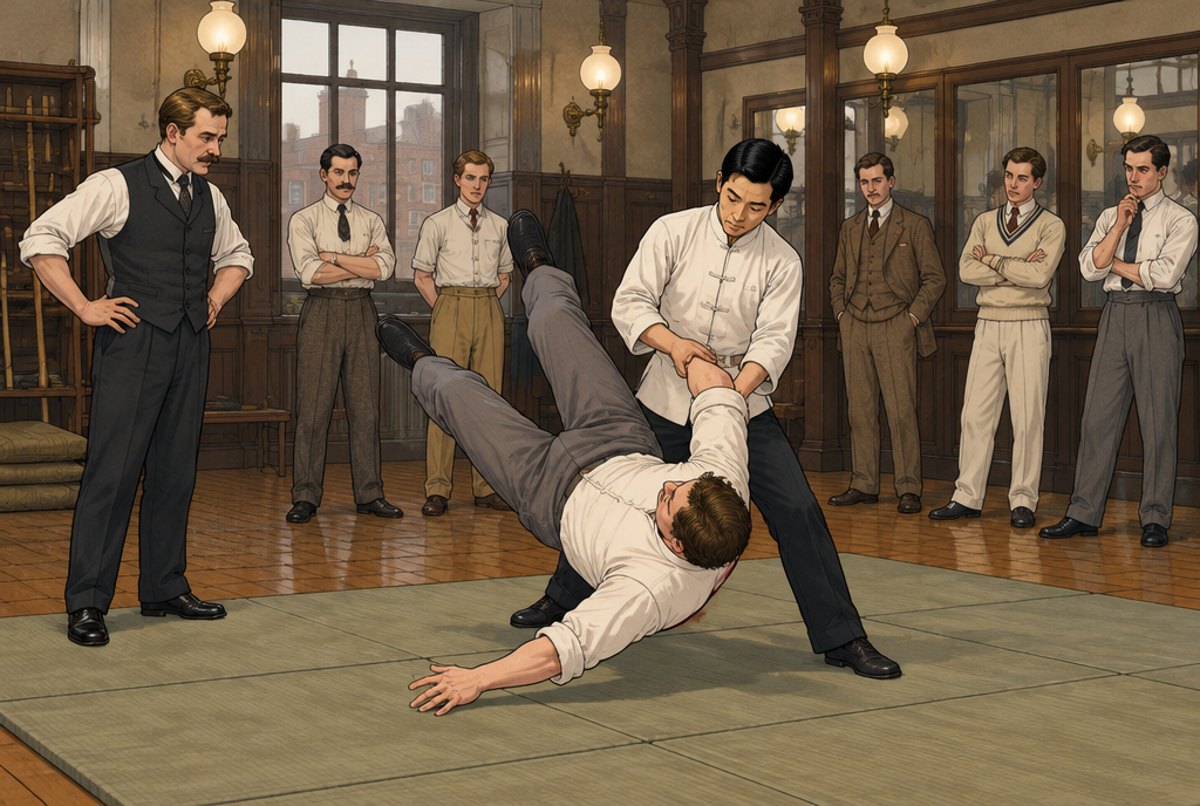
Tani of the music halls
Tani taught at the Bartitsu school, and he became famous for wrestling all comers in the music halls. 9 It was , not judo, that London met first; Tani himself moved over to judo only in 1920. 7,9
In 1904 Tani and Taro Miyake opened a Japanese School of Jujutsu on Oxford Street. 9
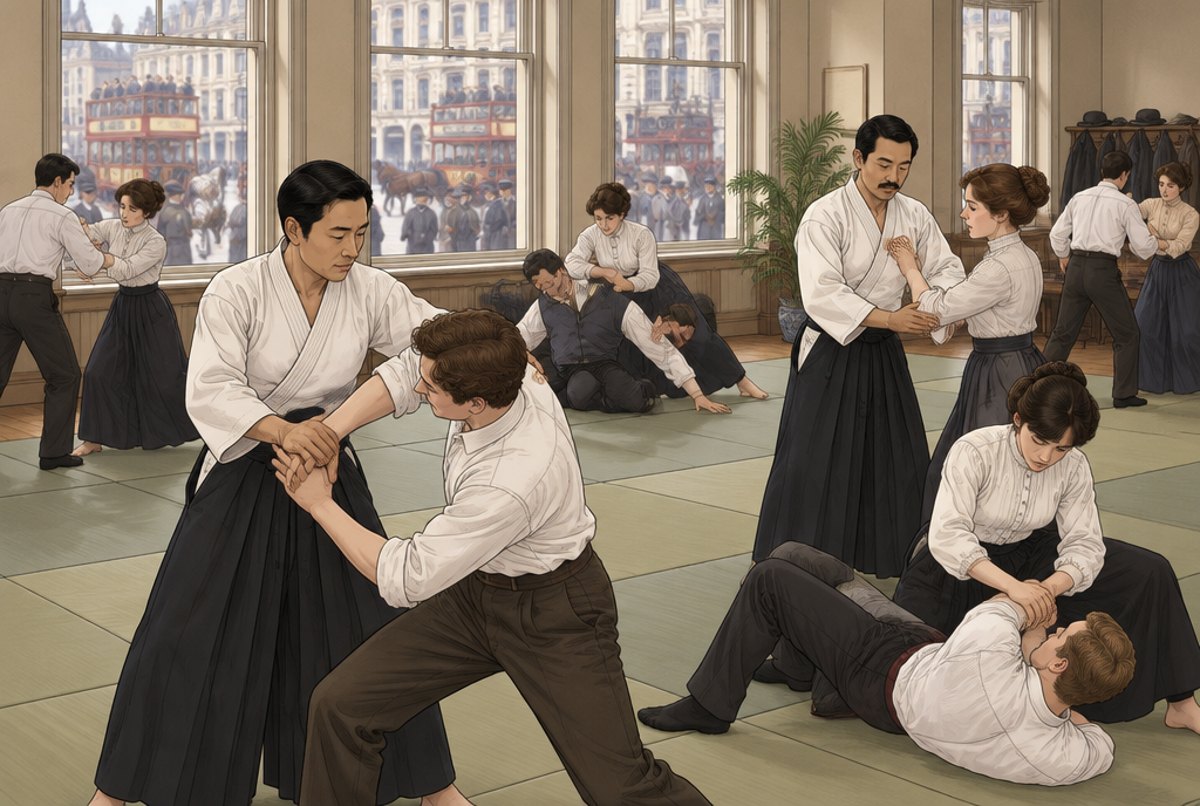
Koizumi
Gunji Koizumi arrived in Britain on 4 May 1906 and taught jujutsu in Liverpool and in London. 8 Twelve years later he founded the club at the heart of this chapter.
Kano himself was travelling by then. The IJF lists London among his visits in 1912, eight years before the visit that changed the Budokwai. 64
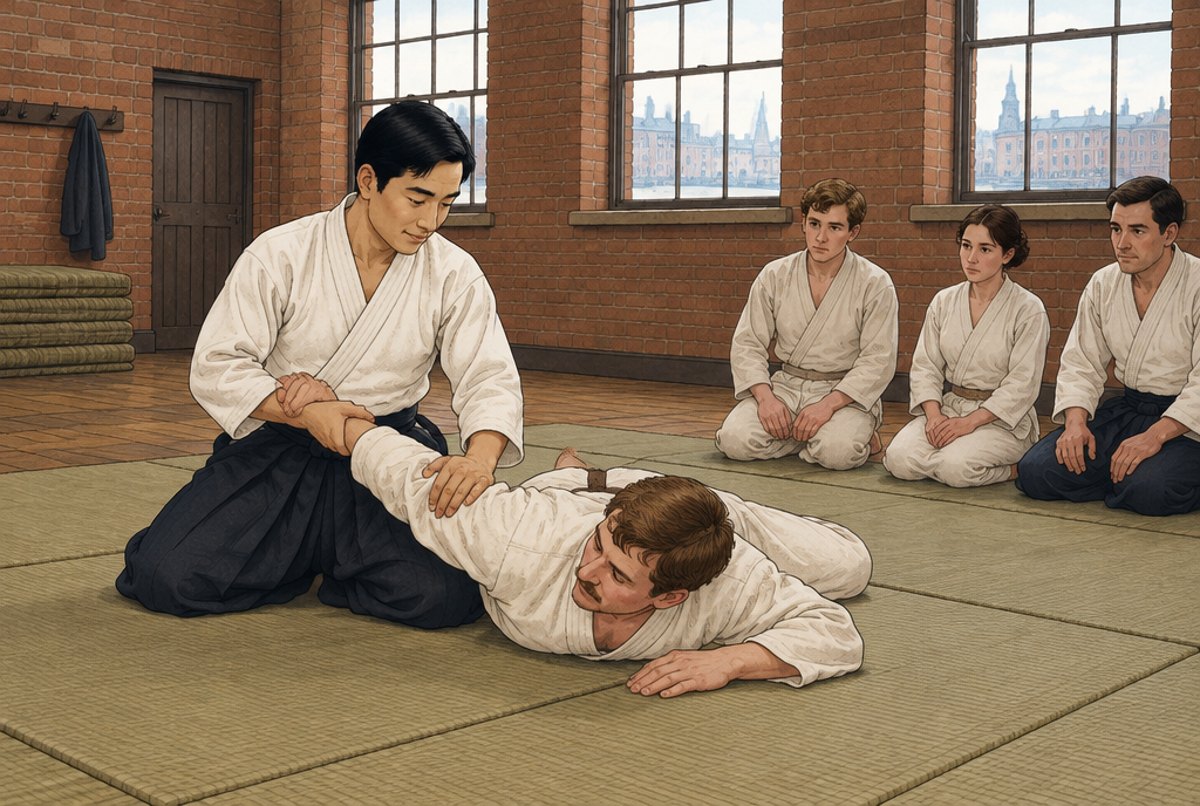
The Budokwai, 1918
Koizumi founded the Budokwai, the "way of knighthood society", at Lower Grosvenor Place in London. It opened on Saturday 26 January 1918 with 12 members, offering jujutsu, kendo and other Japanese arts, and Tani was its chief instructor. 7,8,100,136 The Budokwai and British Judo both describe it as Europe's oldest Japanese martial arts club. 7,100
Masutaro Otani came to Britain in 1919 and trained at the Budokwai under Tani. He became Tani's leading student and taught at Oxford and Cambridge. 14,15 Chapter six follows him further.
A hundred years on, on 26 January 2018, British Judo marked the centenary of the Budokwai and of British judo together. 100 The club still teaches today, with classes listed by age. 136
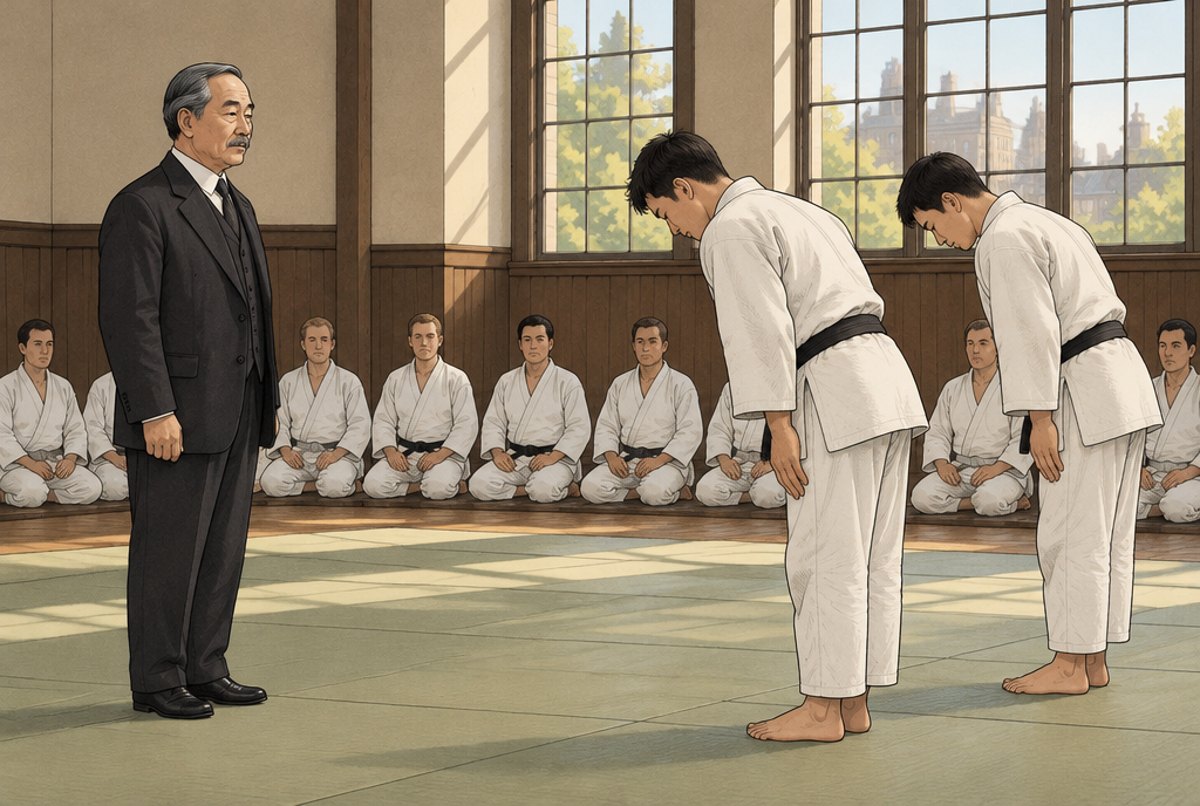
July 1920: Kano at the Budokwai
In July 1920 Jigoro Kano visited the Budokwai. 7,8,9 Koizumi and Tani agreed to move over to the judo system, and Kano awarded them both 2nd Dan. 7,8,9
Colours on the mat
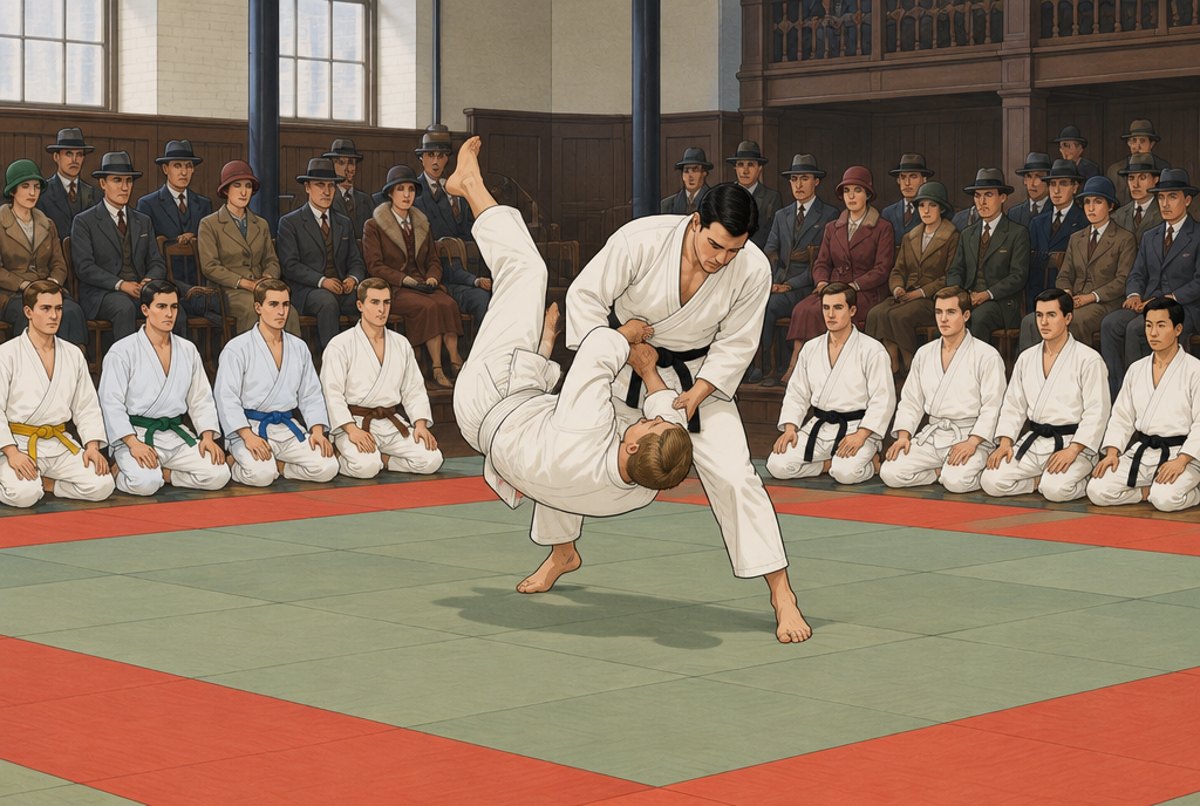
The Budokwai's records hold one of judo's most visible changes. Coloured belts for the grades below black appear at its display in 1926 and in its committee minutes of June 1927. 1,17 Kawaishi, who visited in 1928, may have taken the idea to France. 1,17 Kawaishi had come to teach in Liverpool and London that year, before moving to Paris in 1935. 17
The colour of an , a belt, still depends on who is grading: British Judo's first coloured belt for seniors is red, while the British Judo Council and the Amateur Judo Association start with yellow. 81,123,131 Japan itself is said to use only a few colours today: light blue for 6th Kyu, white for 5th and 4th, and brown for 3rd to 1st, with purple for juniors. 21 The belts and grades page sets the orders side by side.
Sarah Mayer
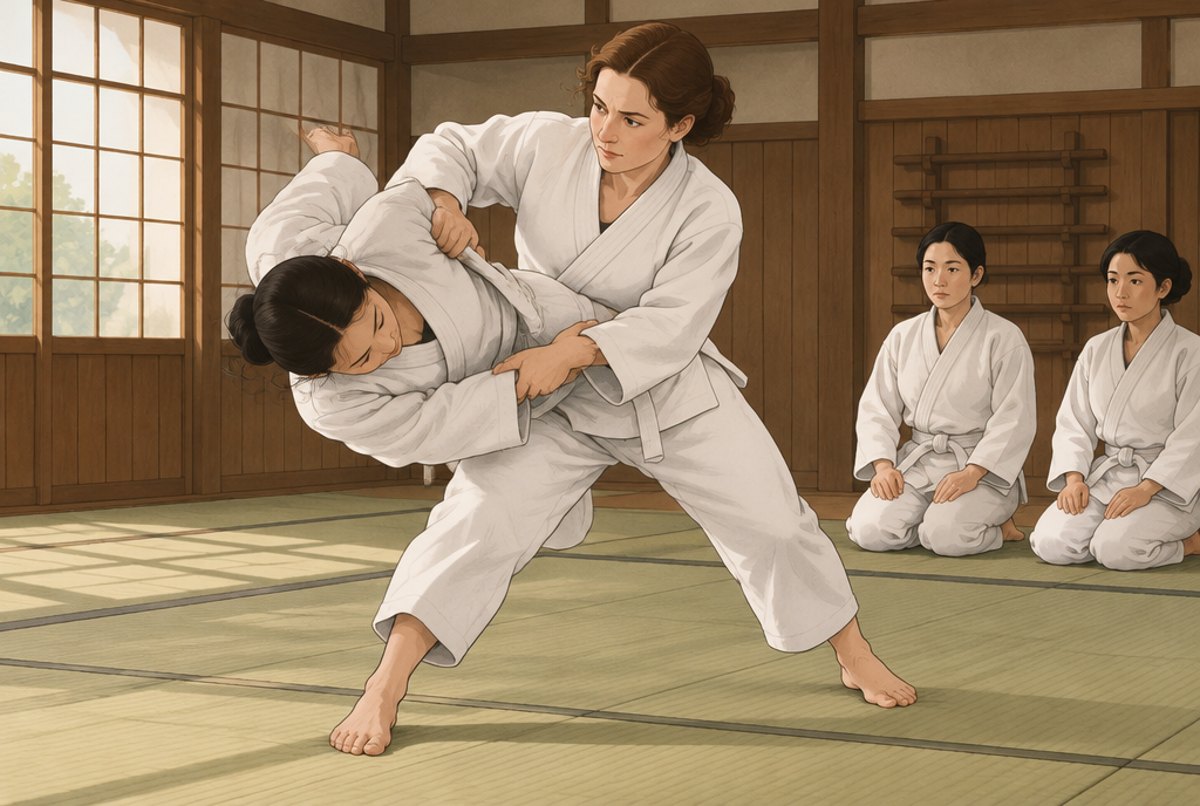
Sarah Mayer began judo at the Budokwai in the 1920s and went on to become the first non-Japanese woman to earn a judo black belt, in Japan. 7,18 Accounts give two dates: 23 February 1935 and March 1936. 7,18
By the late 1940s the Budokwai would do more than teach. It would call the meetings that founded British and European judo. 7,13,34,100