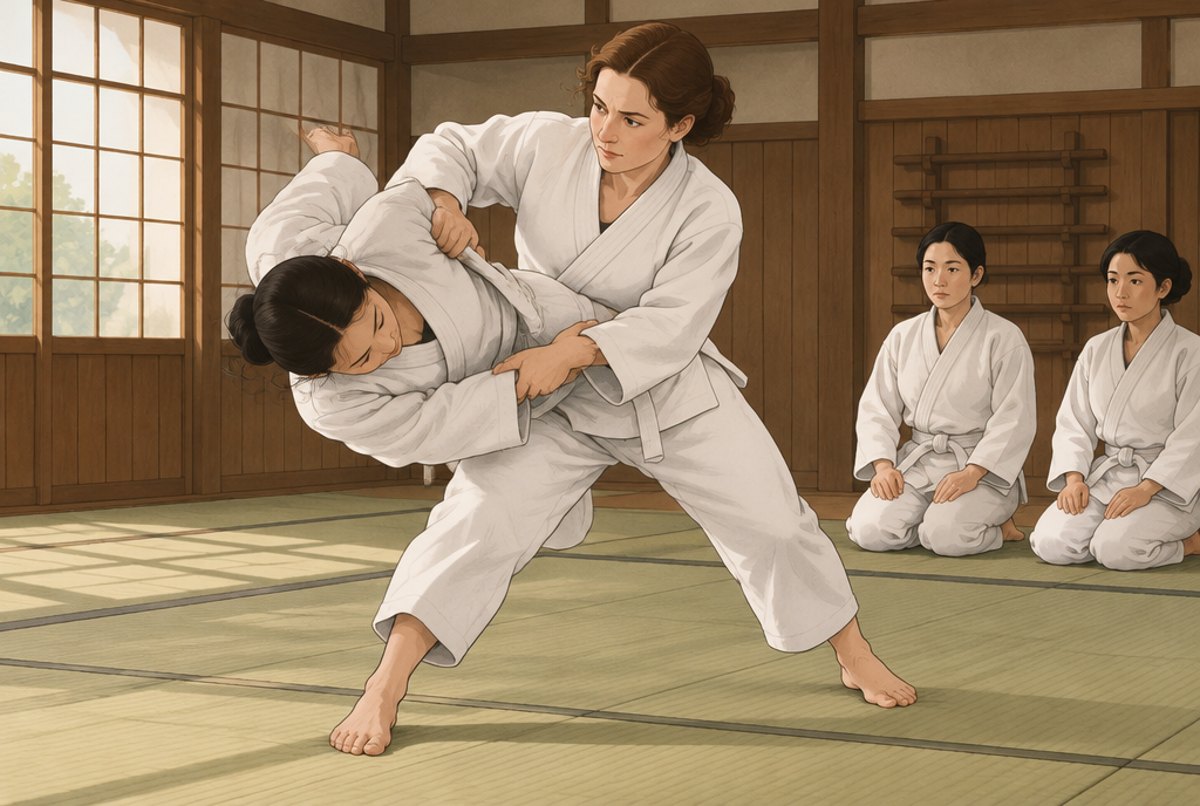
Imagine a London theatre around 1900. A Japanese teacher on the stage is inviting anyone brave enough to come up and wrestle him. That is where this chapter is heading. 9
In 1898 an Englishman called Edward William Barton-Wright, who had studied jujutsu in Japan, made up his own way of defending yourself. He called it Bartitsu. 10 In 1900 he opened a school in Soho, in London. 10 Bartitsu itself did not last long, only until 1902. 10 But the teachers he brought to London are where this story really begins.
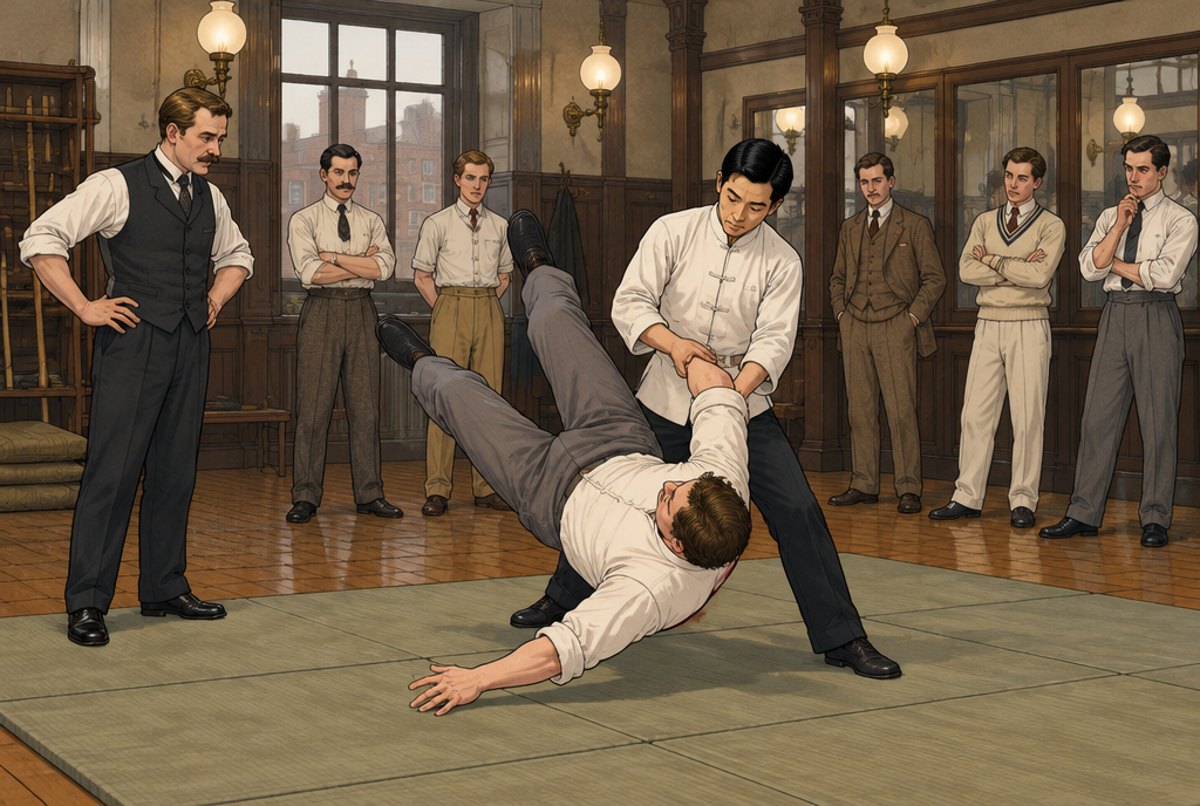
He invited three Japanese jujutsu teachers to London: Yukio Tani, Tani's brother Kaneo, and Seizo Yamamoto. 9 Yukio Tani stayed. 9
On the music hall stage
Tani taught at the Bartitsu school. He also became famous for wrestling all comers in London's music halls, the popular theatres of the day. 9 All comers means anyone who wanted to have a go!
In 1904 Tani and another Japanese teacher, Taro Miyake, opened a Japanese School of Jujutsu on Oxford Street. 9
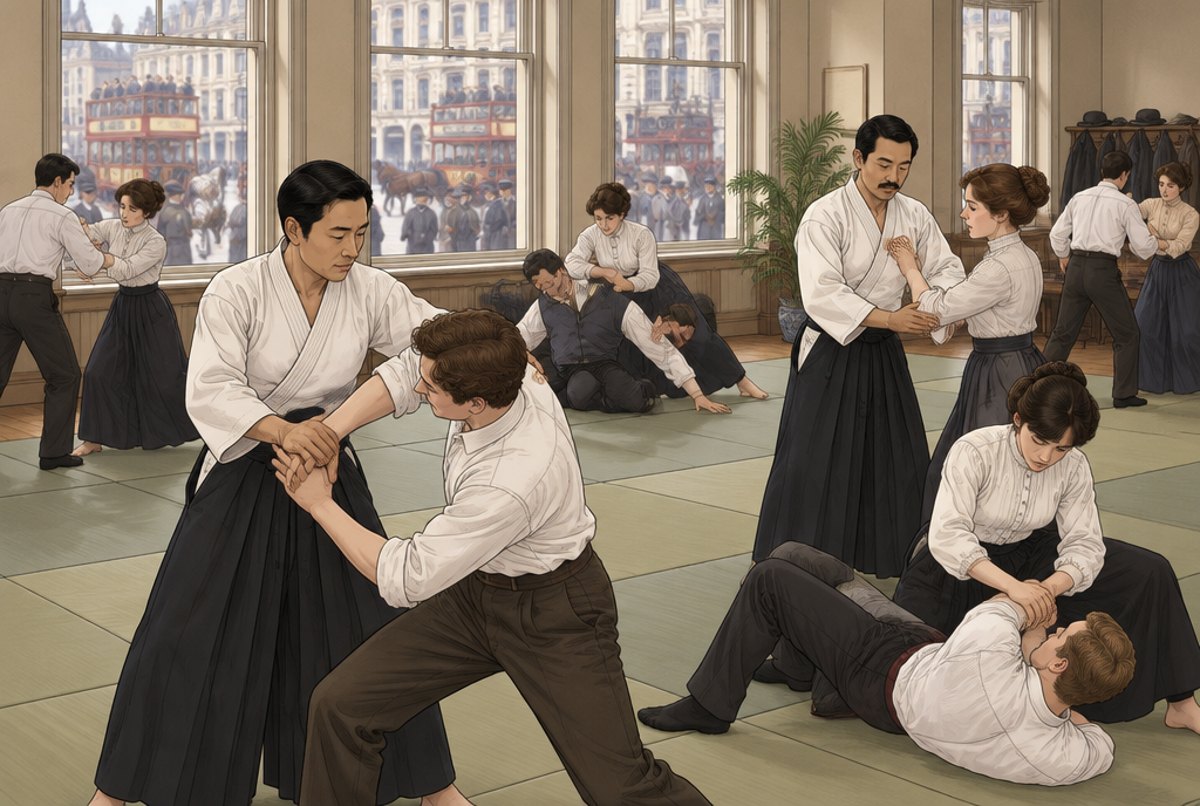
Another teacher arrived on 4 May 1906: Gunji Koizumi. He taught jujutsu in Liverpool and in London. 8
Twelve members
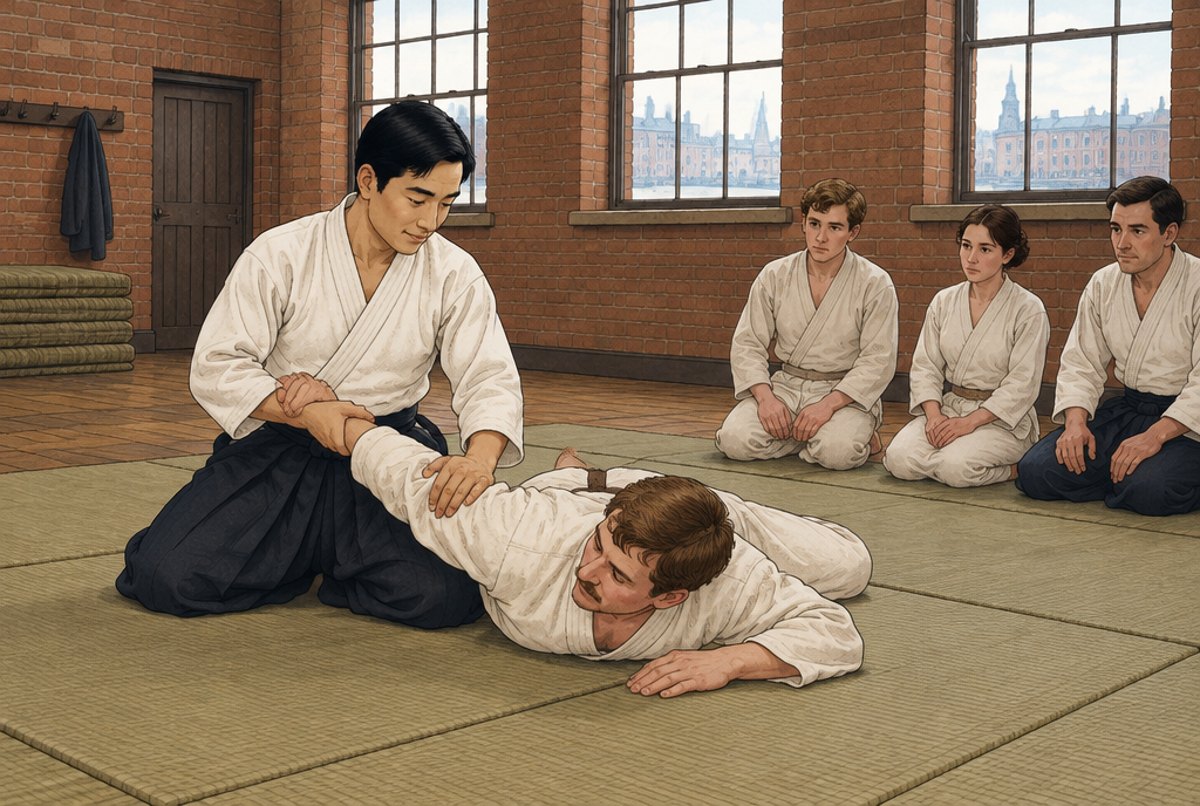
On Saturday 26 January 1918, Koizumi opened a club at Lower Grosvenor Place in London. He called it the Budokwai, which means "way of knighthood society". 7,8,136 It had 12 members, and Tani was the chief instructor. 7,8,136 Twelve members in London, and 12 mats in Tokyo!
The Budokwai taught jujutsu, kendo and other Japanese arts. 7 The Budokwai and British Judo both say it is the oldest Japanese martial arts club in Europe. 7,100
In 1919 Masutaro Otani came to Britain. He trained at the Budokwai and became Tani's leading student. 14,15 Remember his name for the next chapter.
A visitor from Tokyo
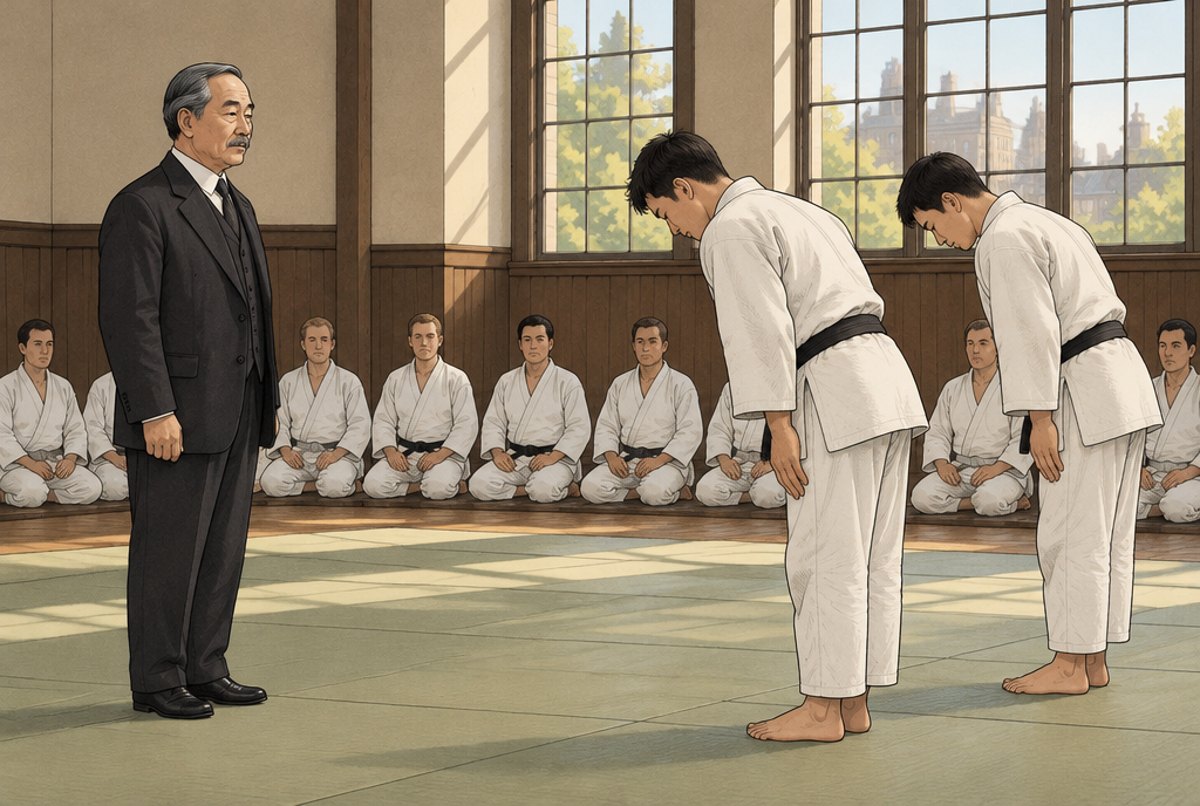
In July 1920 Jigoro Kano himself came to the Budokwai. 7,8,9 Koizumi and Tani agreed to change over to judo, and Kano gave them both 2nd Dan. 7,8,9
Colours, and a first for women
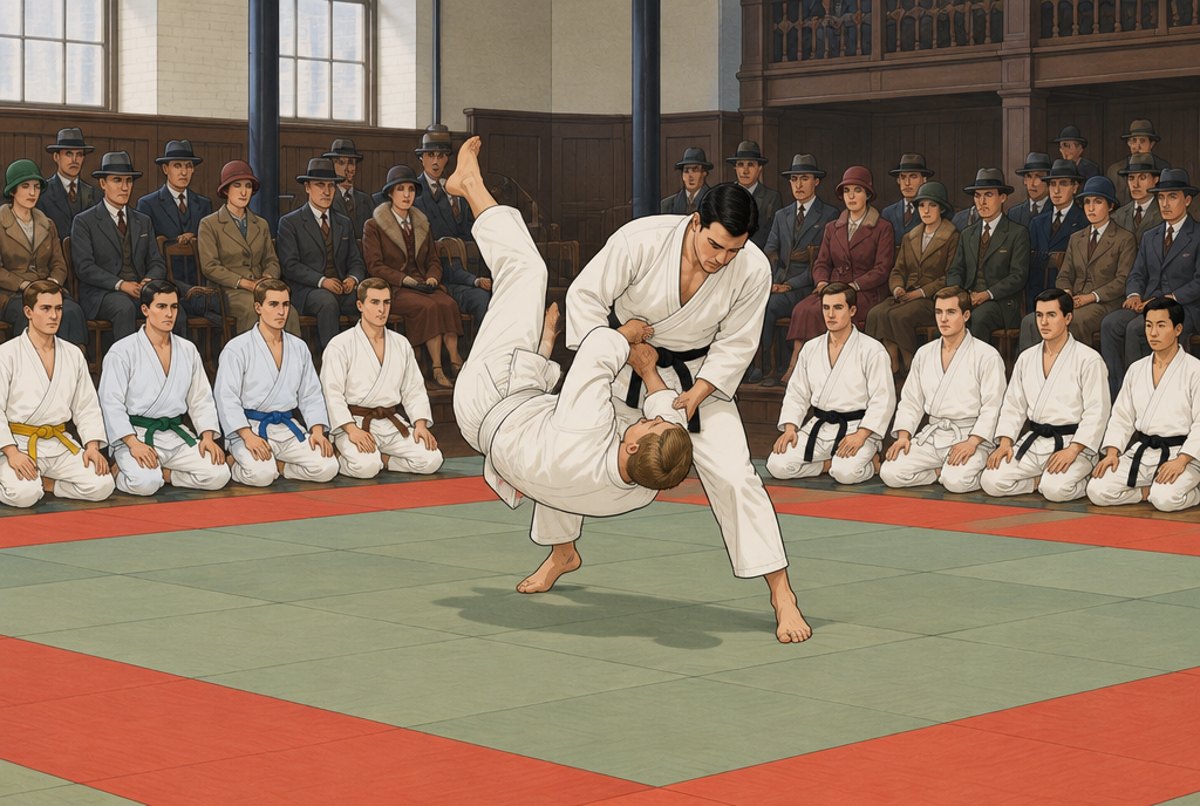
Remember judo's white and black belts, or ? At the Budokwai, coloured belts for the grades below black turn up at a display in 1926 and in the club committee's notes of June 1927. 1,17 A visiting teacher, Mikinosuke Kawaishi, may have taken the coloured belt idea to France. 1,17
Sarah Mayer started judo at the Budokwai in the 1920s. She went to Japan and became the first woman from outside Japan to earn a judo black belt. 7,18