

Picture a quiet room in a temple in Tokyo called the Eisho-ji. On the floor are 12 , the mats people train on. It is 1882, and Jigoro Kano has just started his own school here. 2 At first he has fewer than a dozen students. 2
A new name
Kano did not call his art jujutsu. He changed the end of the word. means technique, and means way or path. So he called his art , "the gentle way". 1,66 He named his hall the . The Kodokan explains the name as "a place to teach the path". 66
Was Kano the first person to use the word judo? Not quite! A Kito-ryu teacher called Kan'emon Terada had used it earlier, for his own school. 2
Safe enough to do for real
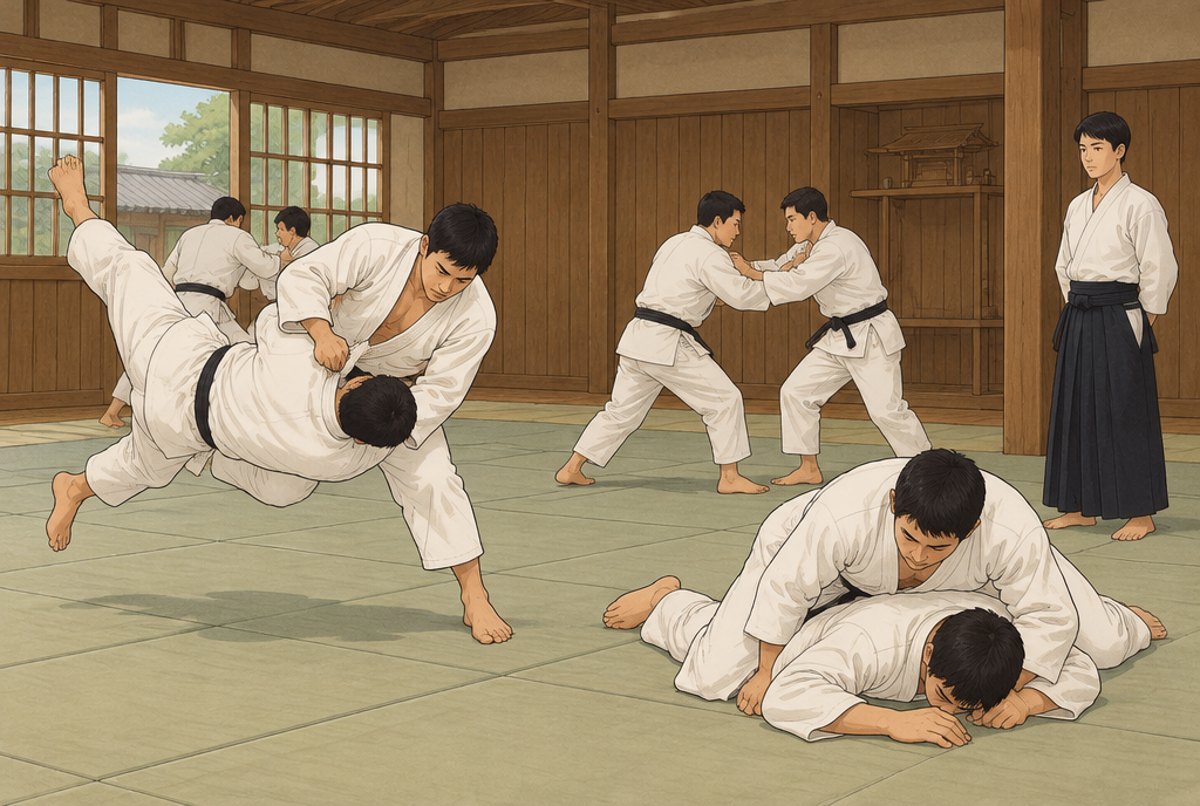
Kano kept the throws, holds, strangles and locks that could be practised safely at full effort. 1 That meant his students could try their techniques at full effort in randori. They learned kata too. 1
The first Dan grades
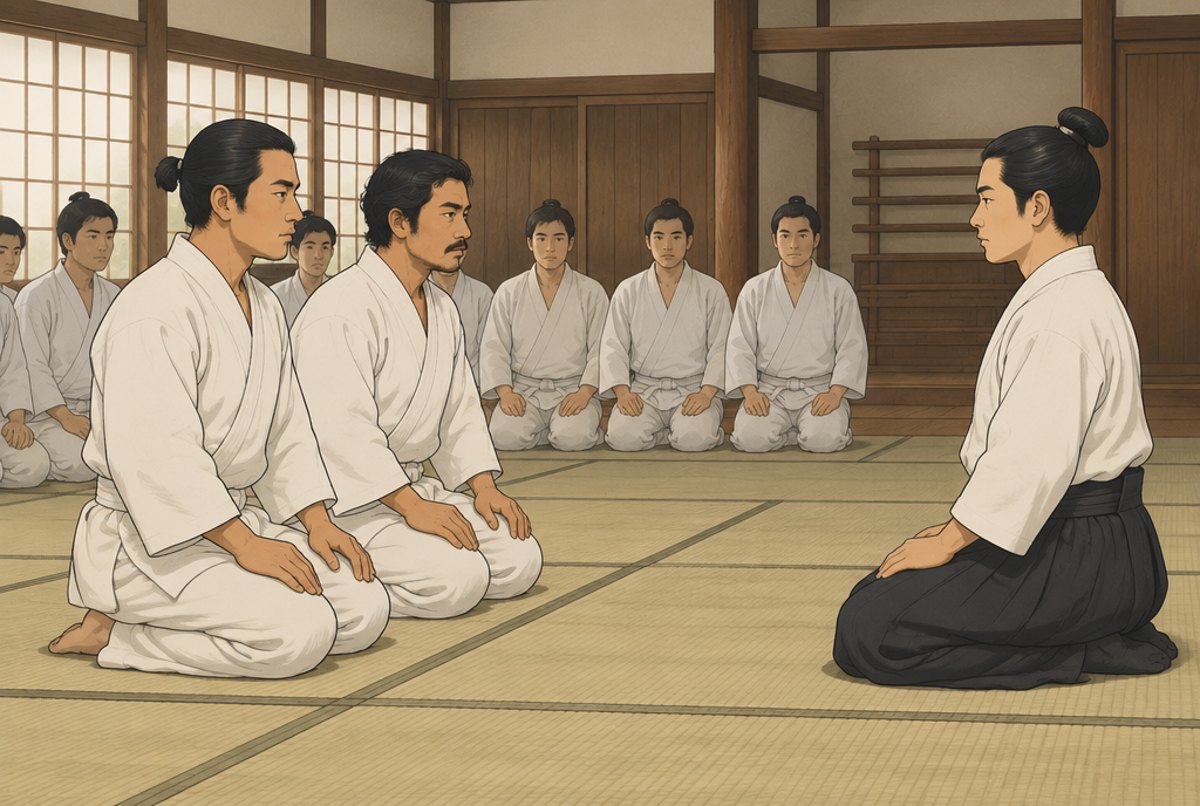
In 1883 Kano did something no martial art had done before. He gave two of his students the first grades. Their names were Tsunejiro Tomita and Shiro Saigo. 1,21
Dan grades are the black belt grades, and they count up, from 1st Dan to 10th Dan. 21,86 The grades below them are grades, and they count down to 1st Kyu. 21,81 Kyu and Dan grades are now used across the martial arts, and they began here. 1,21
At first judo had only two belt colours, white and black. 1,21 Coloured belts came later. You will meet them again in London, in chapter five.
Forms and lists
Kano made kata to teach the main ideas of judo. Around 1885 to 1886 came Nage-no-kata, the forms of throwing, and Katame-no-kata, the forms of grappling. 68 Later came Ju-no-kata, the forms of gentleness. In that one nobody is thrown at all, so the Kodokan says anyone of any age can do it, anywhere, in any clothes. 26,68
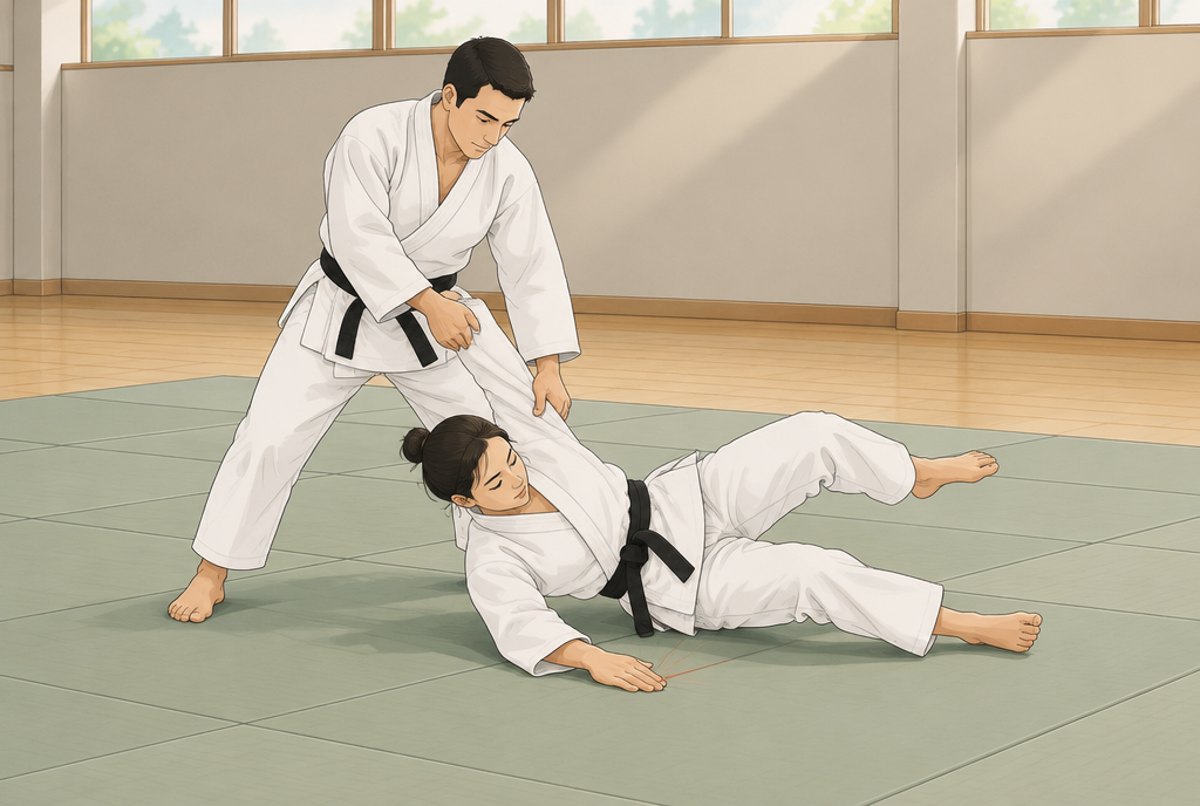
In 1895 the Kodokan published a list of throws to learn in groups, called the . 67 The throws in the first group are the easiest to fall from. 1
Growing and growing
The Kodokan moved to bigger halls several times. 2 By 1911 it had more than a thousand Dan grades. 2 In 1934 it opened a hall with 510 mats. Remember, it started with 12! 2
Some Kodokan traditions follow the seasons. Kangeiko is winter training, and shochugeiko is midsummer training. 2 And twice a year the Kodokan holds its Red and White contests, where a long winning streak can earn an instant promotion, called batsugun. 69
The very top grade, 10th Dan, is rare. Only 15 people have ever been made 10th Dan by the Kodokan itself. 21
But a new school has to show that its way works. That is the next chapter.