

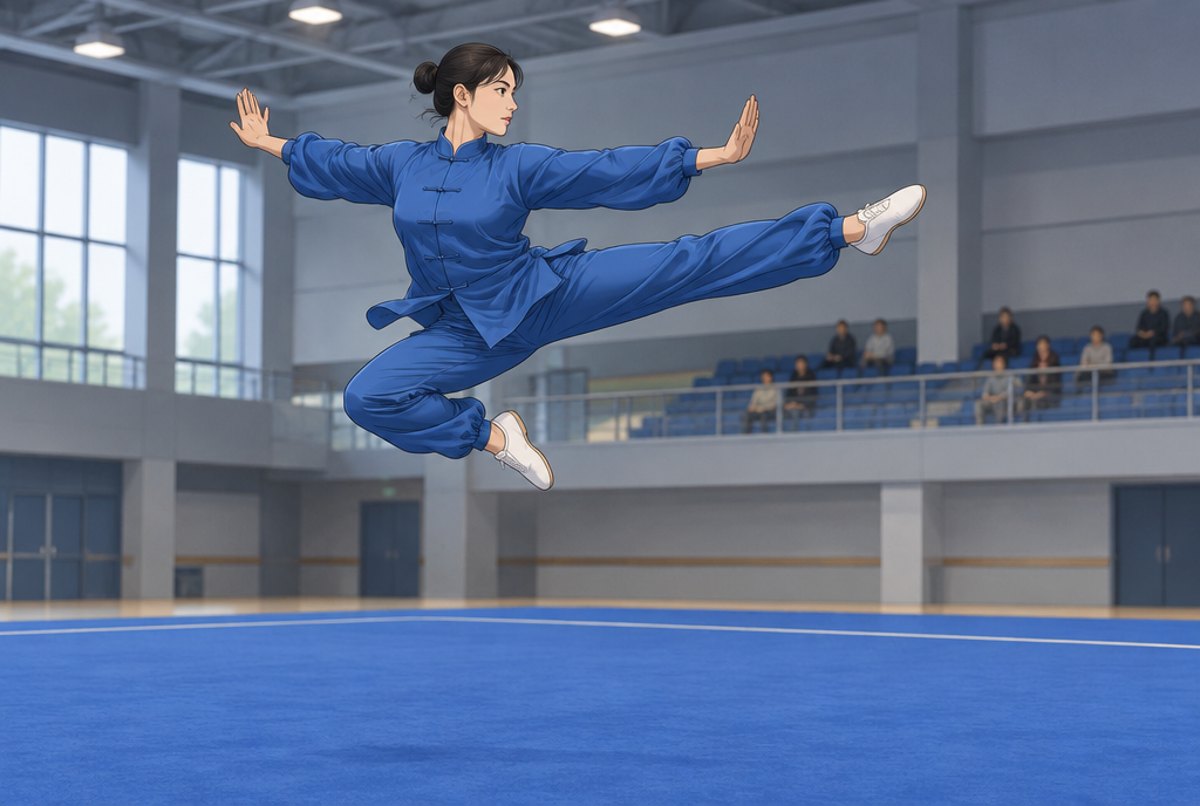
Chinese styles are often divided roughly by the Yangtze River. Northern styles are usually described, by the IWUF among others, as using long, extended movements, many kicks, jumps and acrobatics, and southern styles as using low, stable stances, fewer kicks and powerful short arm techniques. 1,40 , long fist, is the classic northern family: fully extended kicks and strikes, large circular movements, and jumps and spins such as the butterfly, whirlwind and lotus kicks. 11 Some believe the high and flying kicks of karate and taekwondo owe something to northern Chinese styles of the early 20th century. 11
Chen village and the Yang family
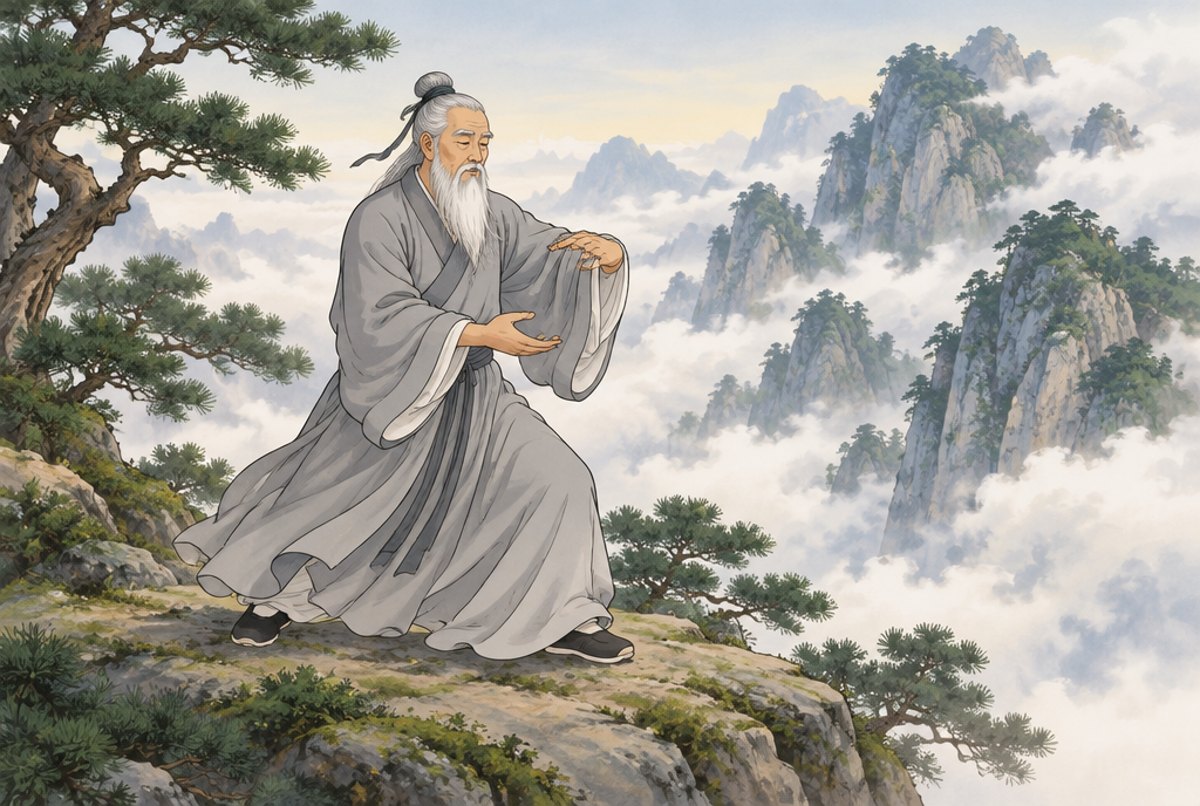
The earliest link between Zhang Sanfeng and martial arts dates from 1669, and other claims appear only from the 19th century, and the scholar Douglas Wile notes there is no record of Zhang Sanfeng in the Song dynasty. 13 The documented history begins with Chen Wangting of Chen village, after the fall of the Ming, and his art appears to draw on the boxing chapter of General Qi Jiguang's manual, met in chapter one. 13,18
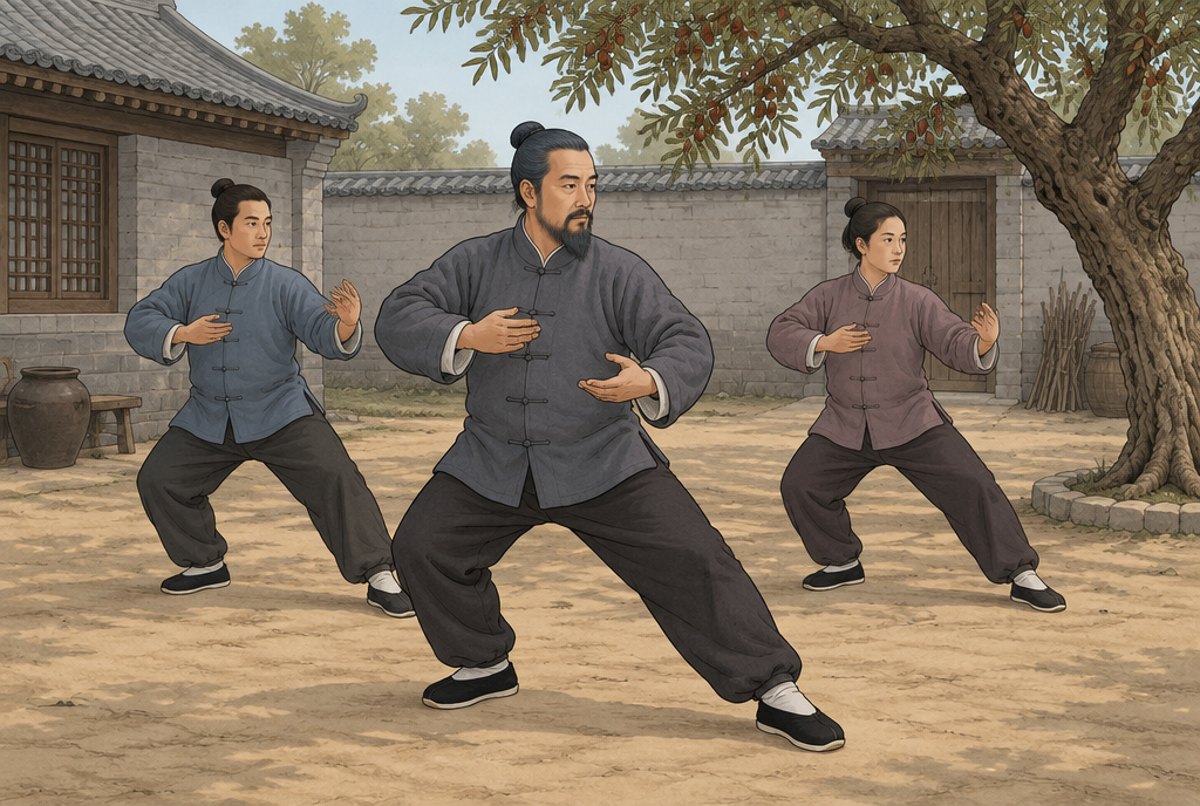
The next name is Yang Luchan, who studied under Chen Changxing from 1820; the Yang style descends from him. 13 The IWUF counts five family styles of tai chi: Chen, Yang, Wu Hao, Wu and Sun; the two Wu styles are different families. 13,40 Tai chi is one of the three internal arts, with xingyiquan and , which trains by walking in a circle. 13,40 The split between styles is simple to state: internal styles stress relaxation, breathing and whole body coordination, and external styles train strength, speed and conditioning. 1,13 The IWUF describes xingyi, bagua and taiji as emerging in the Qing dynasty, 1644 to 1911. 40
The mantis and the manual
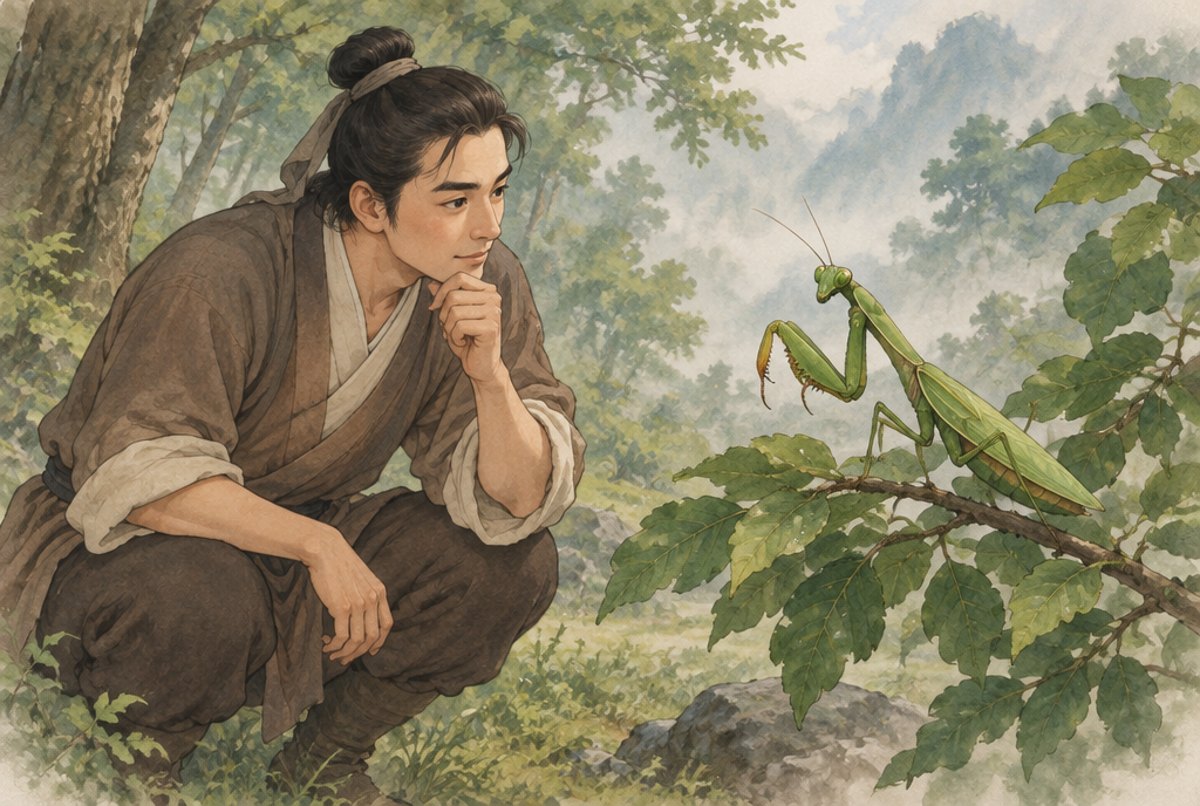
Many scholars doubt that Wang Lang existed and see Mantis as a mixture of local Shandong styles, and a third of the masters named in the old manual come from novels. 11 The style itself is real enough: fast continuous attacks, wrist and arm techniques, the , and three main branches, six harmony, eight step and seven star. 11
A national art
In the Republic of China, from 1912 to 1949, martial arts were promoted as a source of national strength. 1 The Athletic Association, also written Ching Wu or Chin Woo, was founded in Shanghai in 1910, and the government's Central Guoshu Institute in Nanjing in 1928; , national art, became the official name. 1,3,18
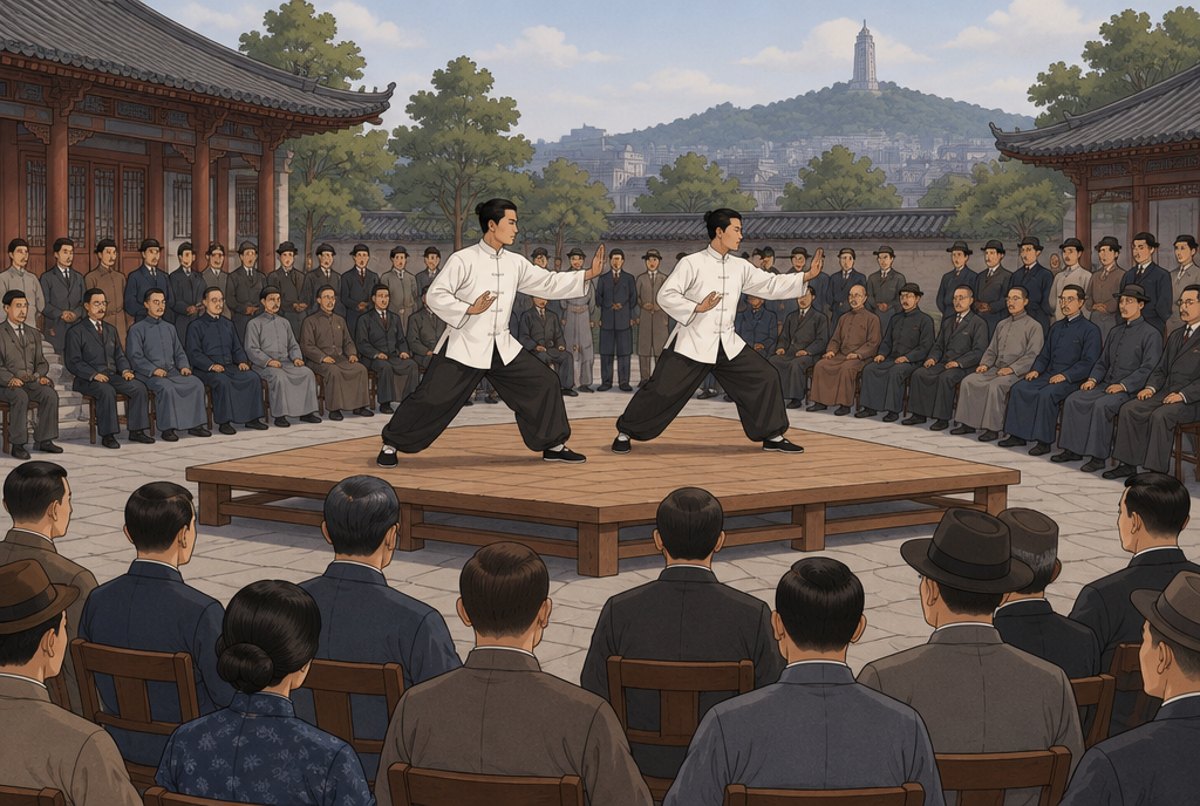
Among the martial artists gathered at the institute in 1928, Gu Ruzhang, who lived from 1894 to 1952, placed in the top 15, and he was one of the "Five Tigers" sent south. 11,18 His name is linked above all with , Northern Shaolin, with its 10 classical forms and introductory routines such as , springing legs. 11
In 1936 a Chinese team demonstrated at the Berlin Olympics. 1,40 Most of the traditional styles practised today became widely known in this period. 1
Then, in 1949, the story divides. On the mainland a new sport would be built, and many teachers left for Hong Kong, Taiwan and overseas. 1 One of them taught Wing Chun.