

After 1949 many teachers moved from mainland China to Hong Kong, Taiwan and overseas, and many of the UK's lines of kung fu trace back to teachers who settled in British Hong Kong. 1,6,7
Ip Man
Ip Man, who lived from 1893 to 1972, learned from Chan Wah-shun in Foshan, and later from Leung Bik in Hong Kong. He began teaching in Hong Kong in the early 1950s. 6,7
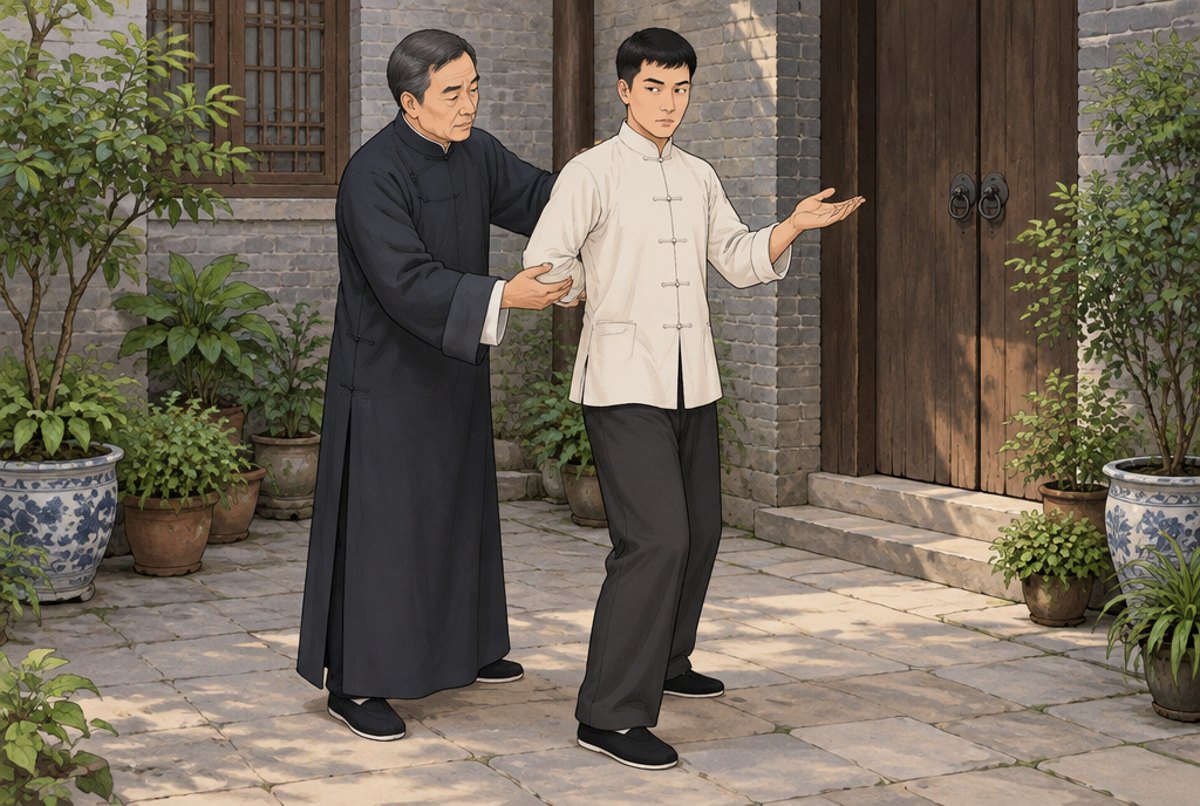
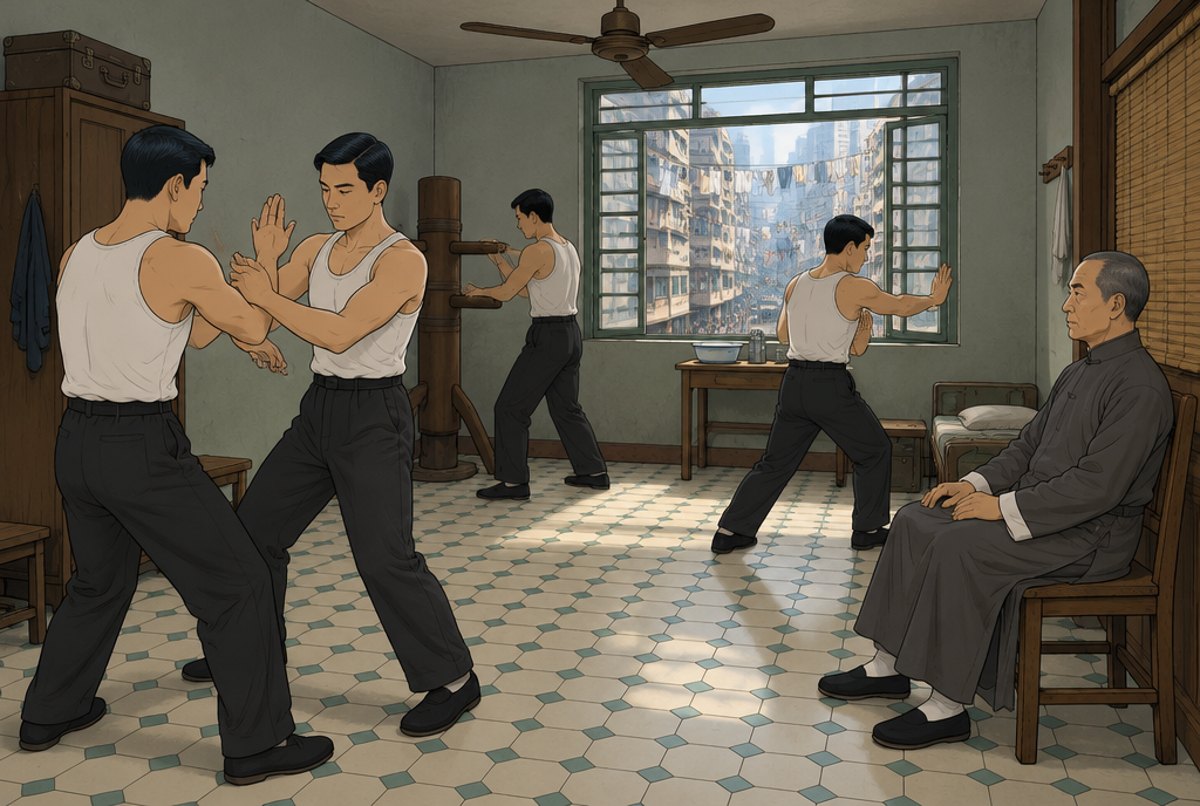
His students included Bruce Lee, Wong Shun-leung, Leung Ting and his own sons, Ip Chun and Ip Ching. 6,7 With his students he founded the , the Ving Tsun Athletic Association, in Hong Kong.
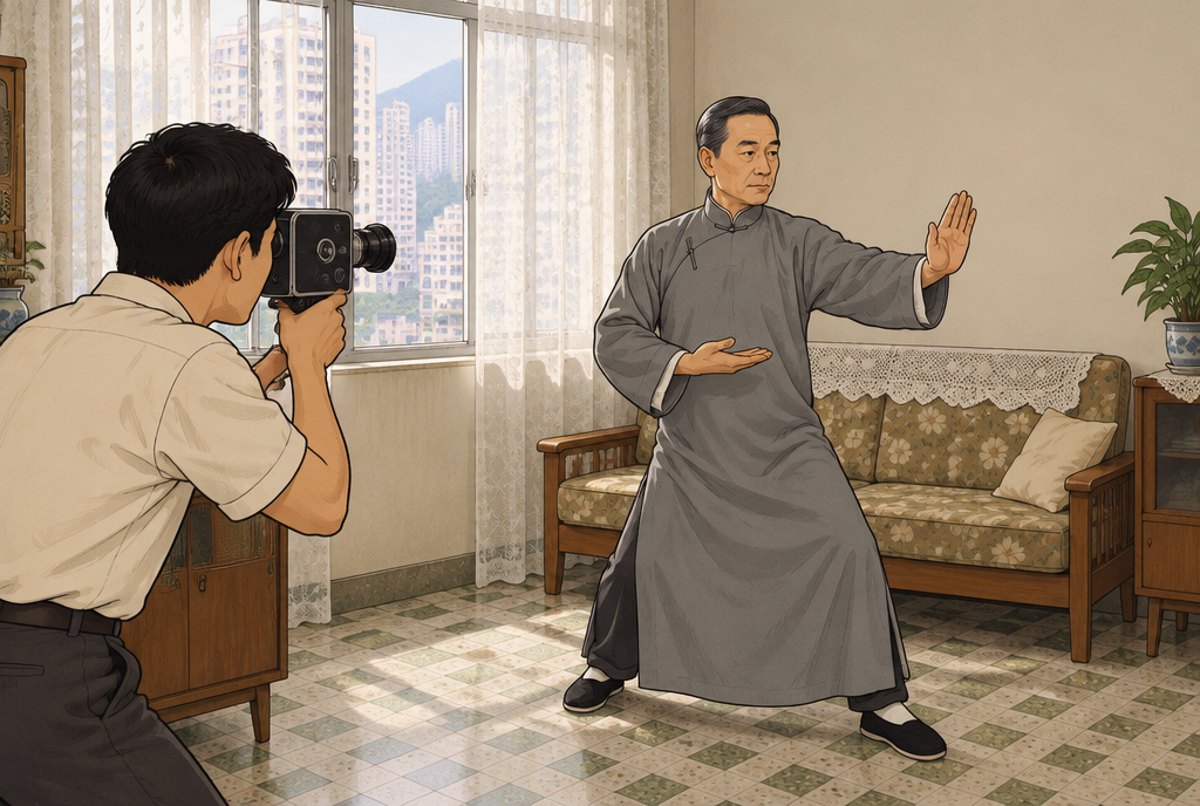
Before he died in 1972, Ip Man was filmed performing his forms, and the footage was left to his sons. 6,7
Samuel Kwok gives Ip Man's code of conduct, as displayed at the VTAA. In short, it asks students to be disciplined and courteous, to avoid fights and to help the weak. 103
What his line teaches
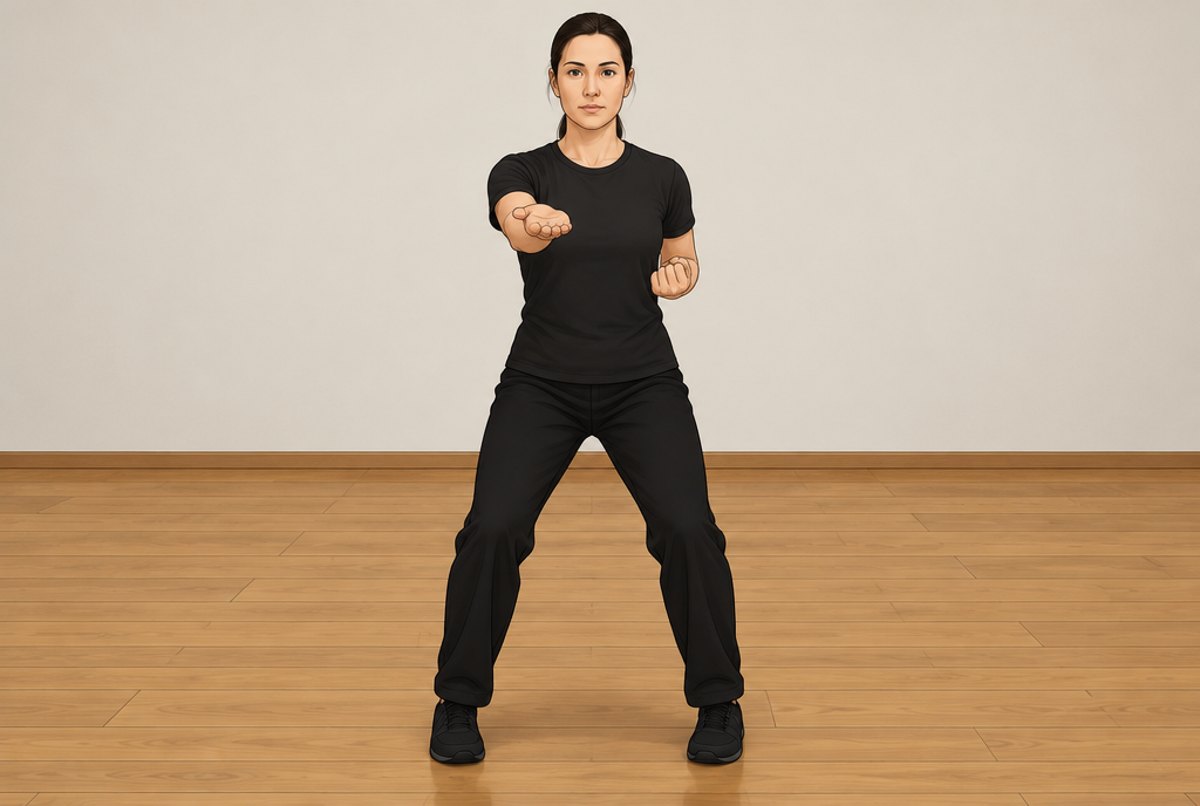
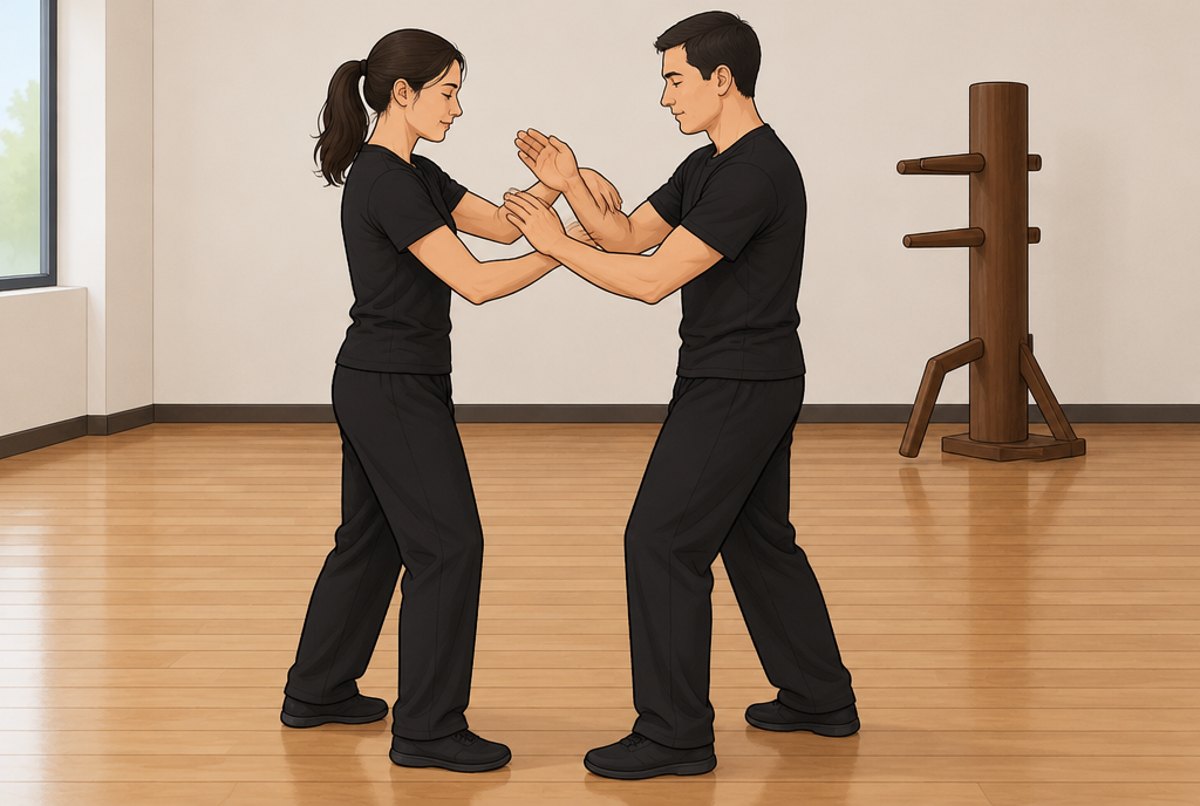
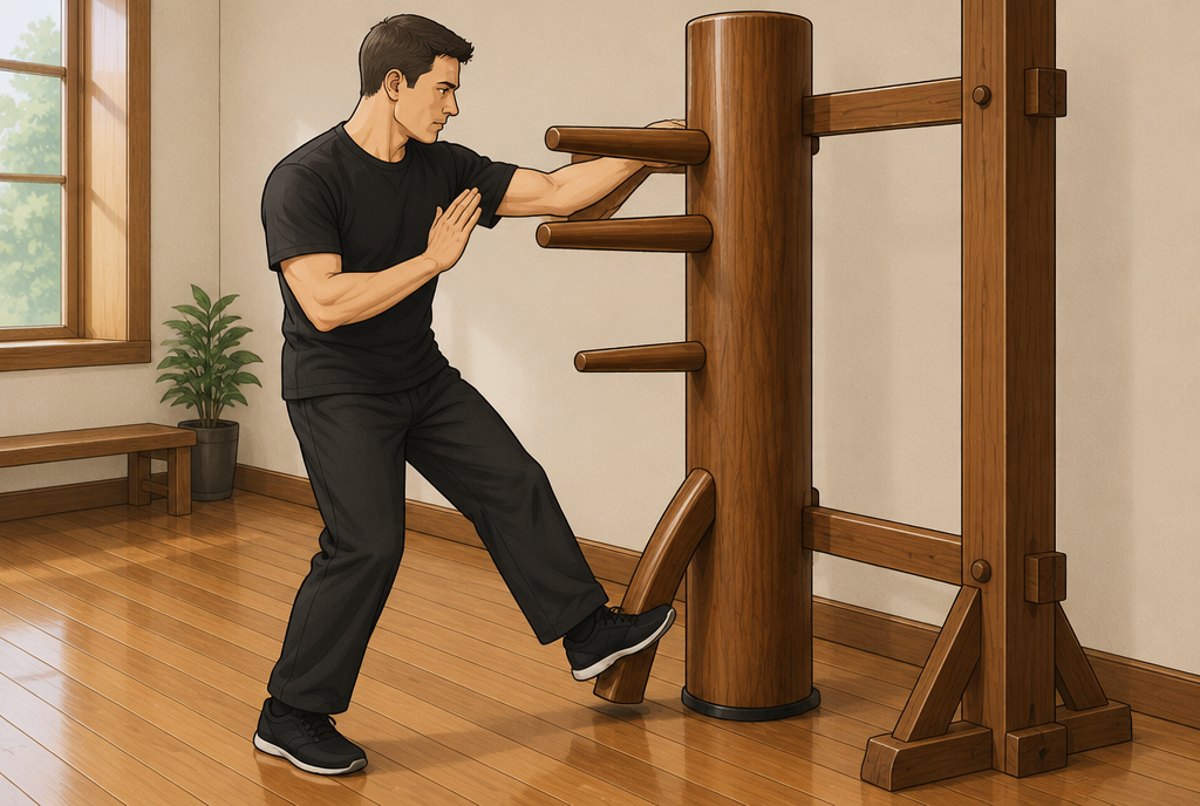
Wing Chun works at close range. Its key ideas are the centre line, attacking and defending at the same time, relaxation, and sensitivity built through , sticky hands. 6,105 Many schools keep their kicks low, and some avoid high kicks altogether. 6 Most lineages have six forms. 6,103,105
- , little idea: stance, structure and the basic hand positions, practised for life.
- , seeking the bridge: turning, stepping, kicks and elbows.
- , darting fingers: emergency techniques to recover a lost position.
- The wooden dummy form, on the .
- The long pole.
- , the butterfly swords, usually the last form taught; Samuel Kwok says Ip Man taught it to only seven students. 6,103
One art, many spellings
There are at least eight Wing Chun lineages, and the spelling often shows which one: Ving Tsun for Ip Man's line as the VTAA uses it, Wing Tsun for Leung Ting's line. Leung Ting founded the International WingTsun Association. 6,7 Even within one branch there are competing family trees. 6
Bruce Lee and the film boom
Bruce Lee, who lived from 1940 to 1973 and was a student of Ip Man in Hong Kong, starred in The Big Boss in 1971 and Enter the Dragon in 1973, released six days after his death; Enter the Dragon is often called the most successful martial arts film ever. 16 His films did much to start the first burst of popularity of Chinese martial arts in the West in the 1970s. 2 Hong Kong studios such as Shaw Brothers and Golden Harvest released dubbed kung fu films in Europe and the United States, and the American television series Kung Fu began in 1972. 16 Bruce Lee's own approach, , is not a traditional Chinese style. 16
Much later, the Ip Man films of 2008 to 2019 revived interest in Wing Chun; the first takes a number of liberties with his life. 6,7,16 Films are fiction, and many popular histories of styles mix fact and film. 6
The Wing Chun his students carried reached Britain within a few years, along with other styles.