

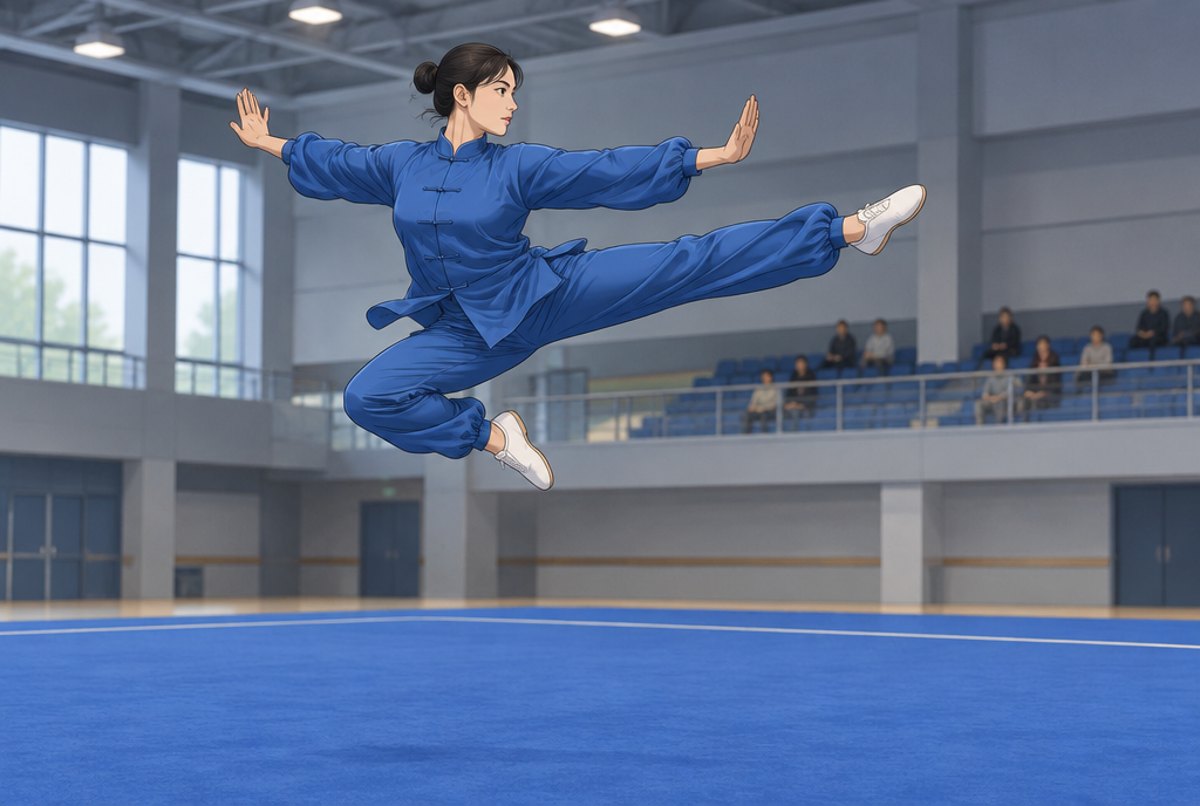
China is a huge country, and a great river, the Yangtze, runs across it. People often sort kung fu styles into those from north of the river and those from the south. 1 Northern styles use long movements, lots of kicks and big jumps. 1,40 The best known is , long fist, whose fighters leap and spin in kicks with names like the butterfly kick, the whirlwind kick and the lotus kick. 11
The village of tai chi
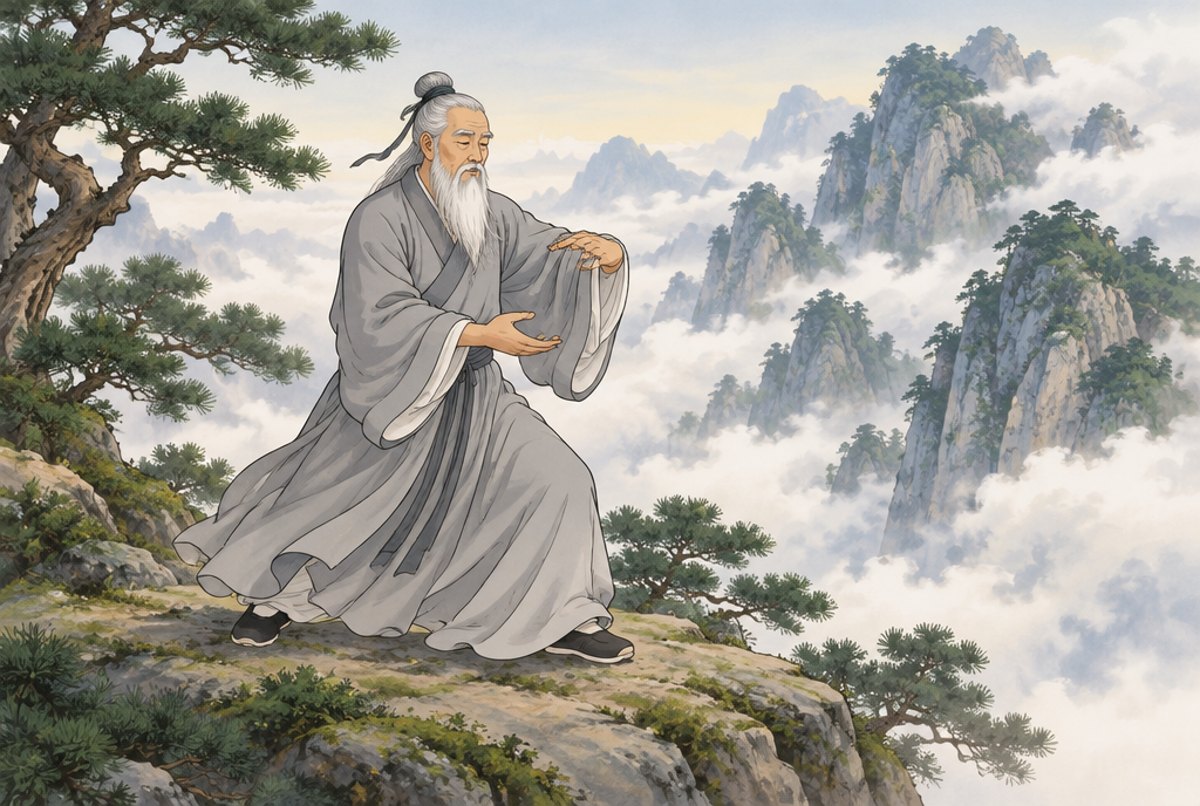
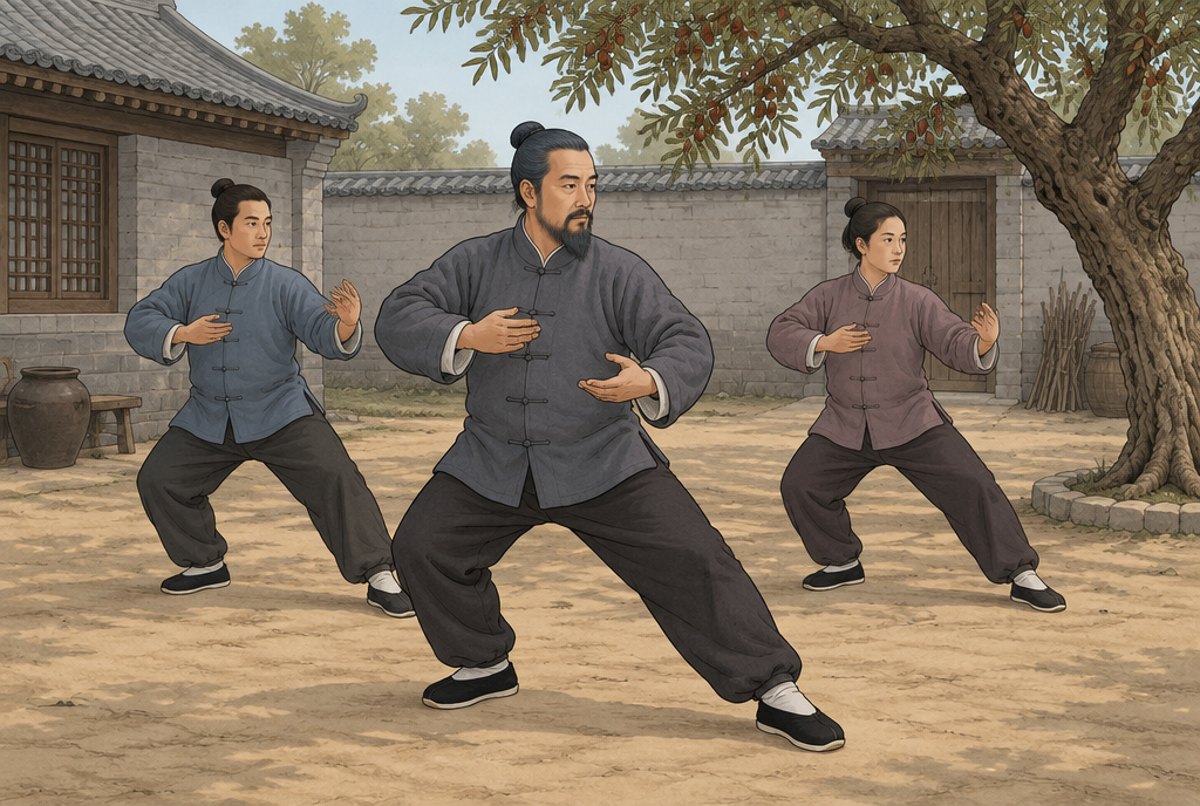
Historians say the real records begin with a man called Chen Wangting of Chen village, after the Ming emperors had lost power. His art seems to use ideas from General Qi Jiguang's book, the one from chapter one. 13
From 1820 a man called Yang Luchan learned from Chen Changxing, and the Yang style of tai chi grew from him. 13 Tai chi is one of the internal arts, which train relaxation and breathing. 1,13 Another internal art, , is trained by walking in a circle. 40
The man and the mantis
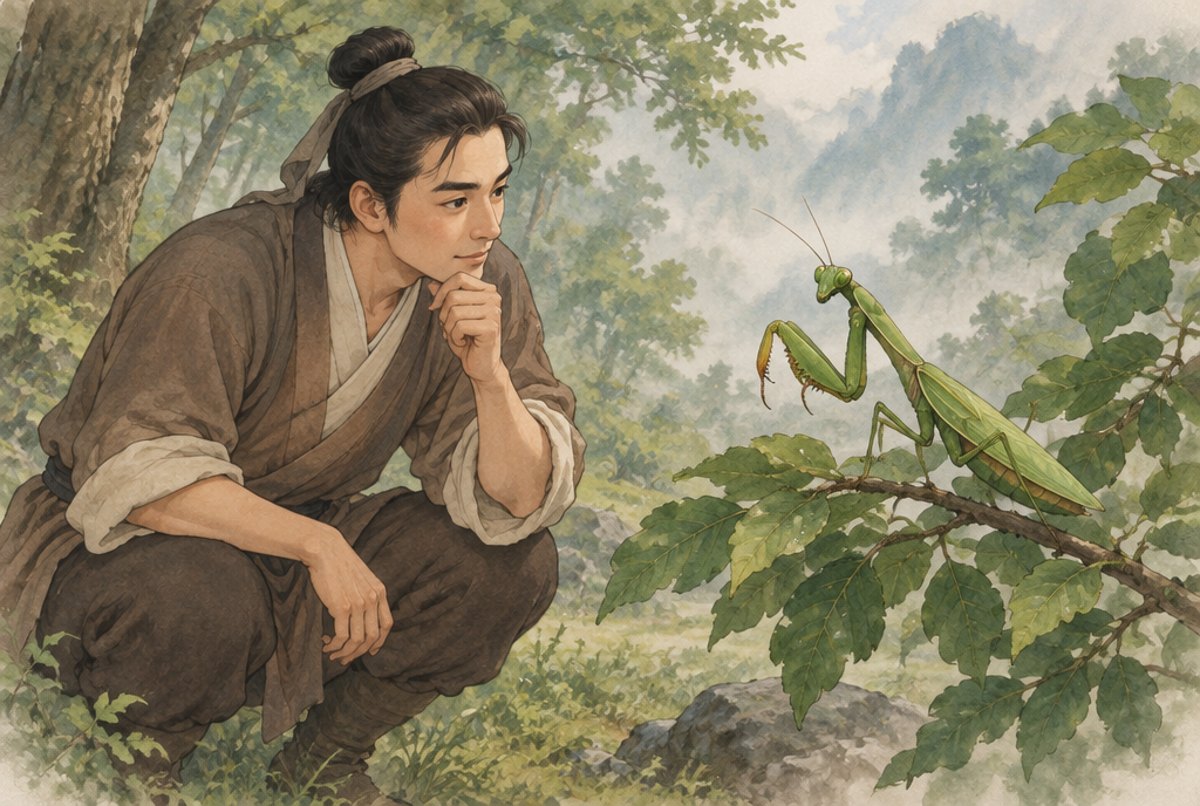
Many scholars doubt that Wang Lang ever lived. 11 The style itself is real: Mantis fighters attack fast, again and again, with a hand shape called the . 11
Nanjing, 1928
In 1910 the Jing Wu Athletic Association was founded in Shanghai. 1,18 In 1928 the government opened the Central Guoshu Institute in the city of Nanjing. means national art. 1,3,18
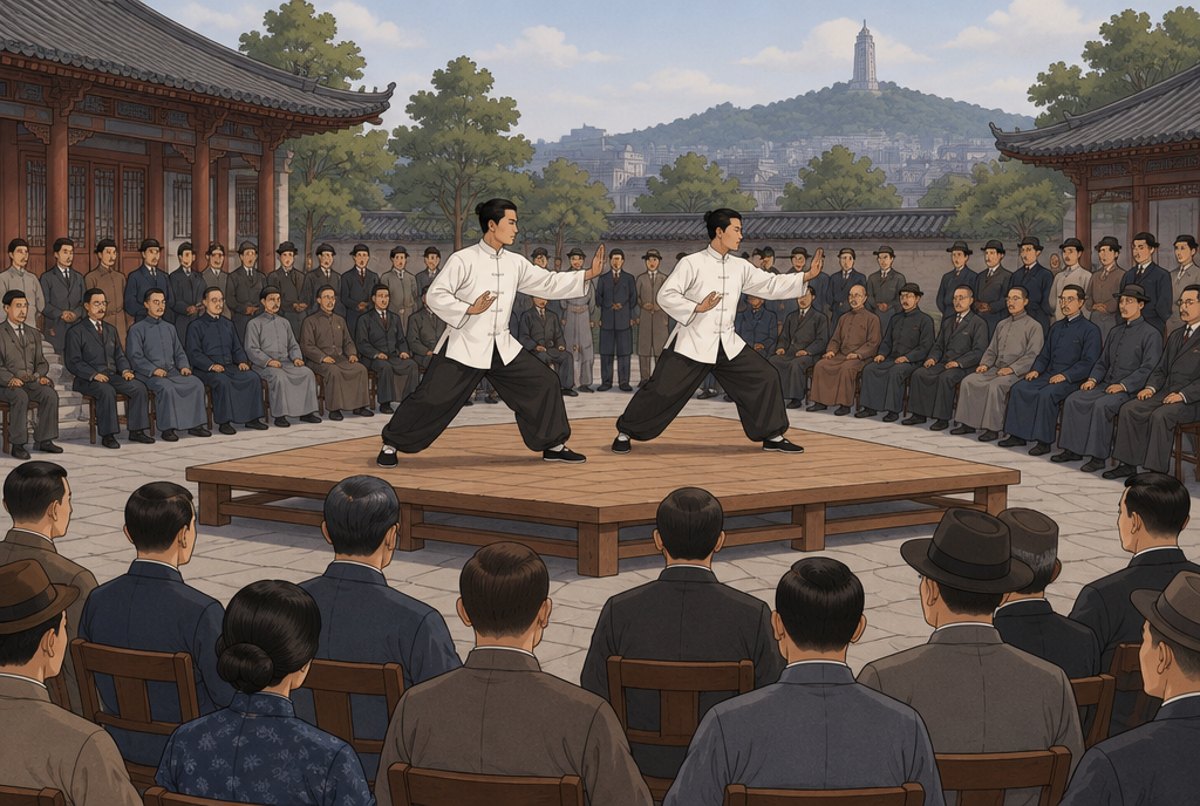
That year martial artists gathered at the institute. One of them, Gu Ruzhang, came in the top 15. He was one of the Five Tigers sent to the south, and his name is linked above all with , Northern Shaolin. 11,18
In 1936 a Chinese team showed wushu at the Olympic Games in Berlin. 1,40 Kung fu had become China's national art. Soon many of its teachers would find a new home in Hong Kong.