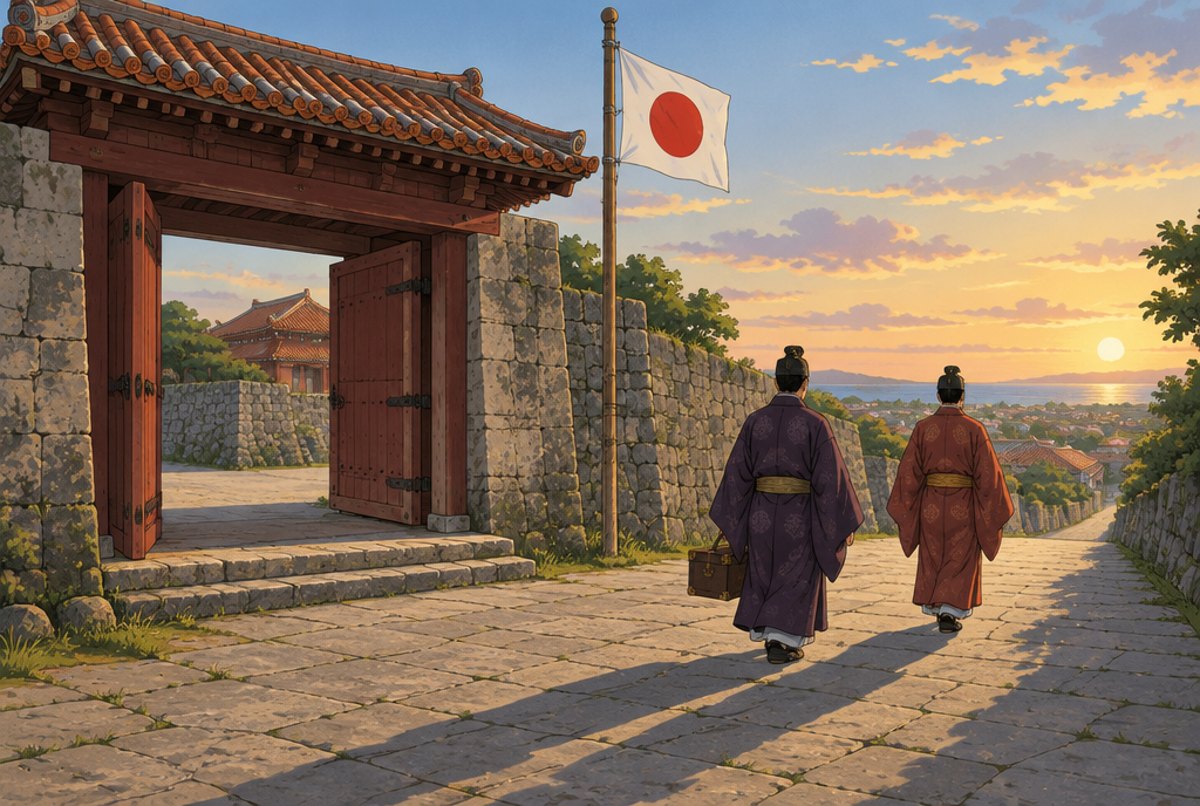
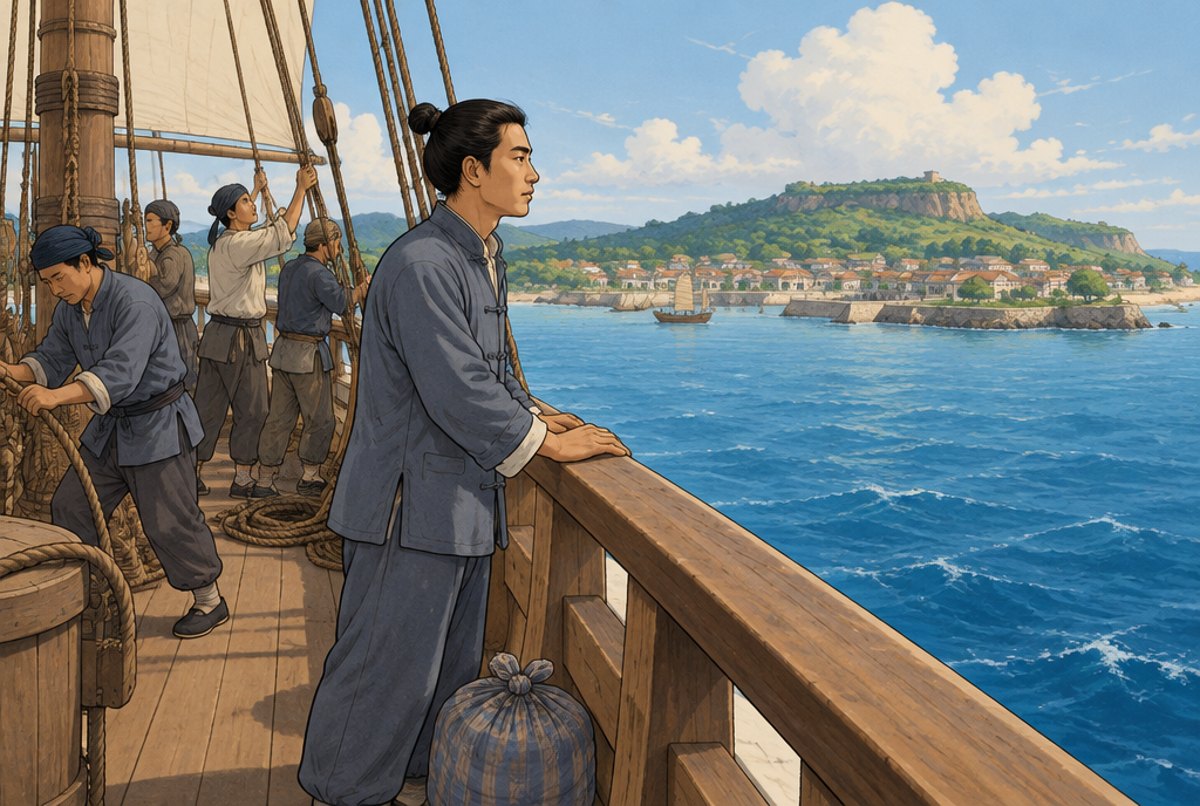
Imagine standing on a harbour wall in 1873. A ship is leaving for China, and on it is a young man from this town, Naha. His name is Kanryo Higaonna. He is about 20 years old, and he is going to Fuzhou to learn how the Chinese fight. 6
Naha was in the Ryukyu Kingdom, a chain of islands between Japan and China. Today the biggest island is called Okinawa, and it is part of Japan. 1 For hundreds of years, ships like this one had gone to China and back. 1 And for a long time the islanders had their own way of fighting with their hands. They called it , which just means "hand". 1
Te was not taught in big schools. Each teacher had his own way and taught a few students. 1 In the 1800s a Chinese style called , "Chinese hand", spread too, and slowly te and tode mixed together. That mix became . 1
Shuri, the castle town
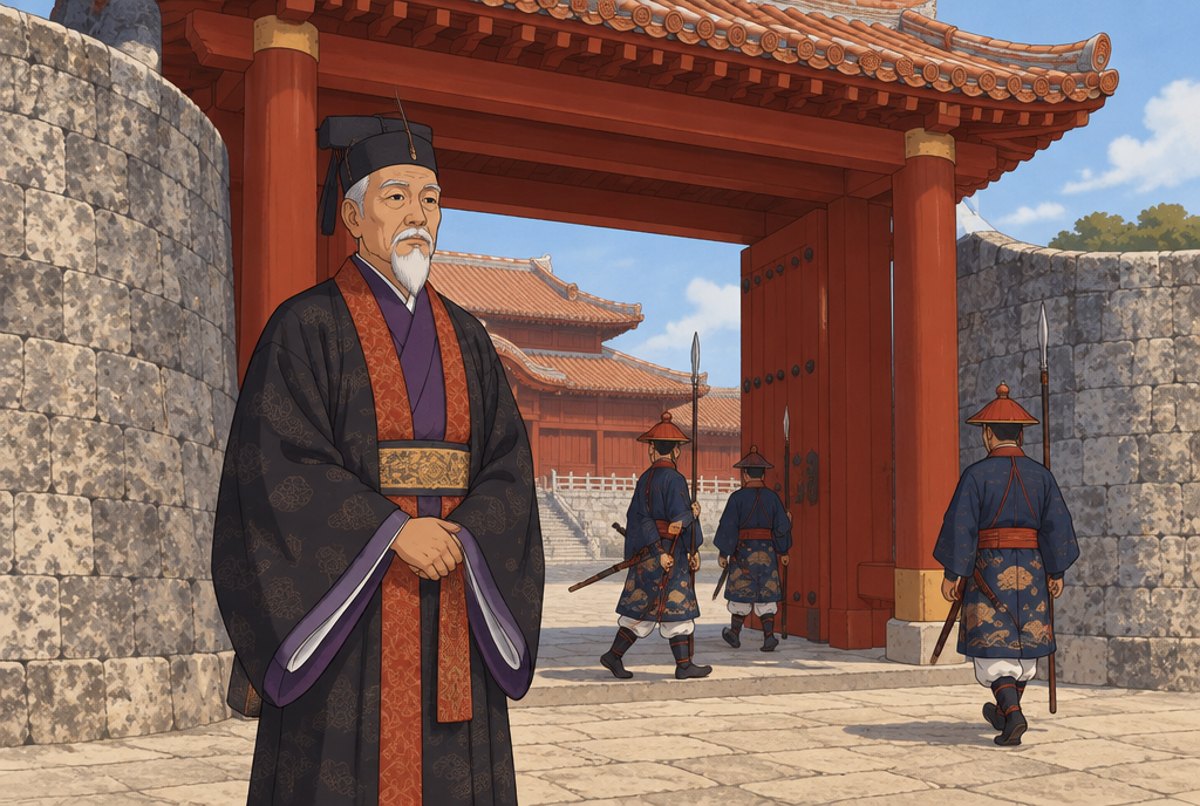
Up the hill from Naha was Shuri, where the king lived. The fighting art there belonged to the palace guards and the noble families, not to farmers. 11 The most famous Shuri master was Sokon Matsumura. He was born in 1809 and lived to be 90. 1 Many Shuri schools say their karate goes back to him. 1
Matsumura had a student called Anko Itosu, born in 1831. 1 Remember him. The next chapter is his.
Each town had its own favourite moves and its own . A kata is a set pattern of punches, kicks, blocks and turns that you practise on your own. 1,13 So people talk about Shuri-te, Naha-te, and Tomari-te from a smaller town nearby. 1
Higaonna comes home
Years later, Higaonna sailed back to Naha. 1,6 What he had learned was new: hard punches, but also soft, round blocks, and special ways of breathing. 1,6 People called it Naha-te. 1 When a boy called Chojun Miyagi was 14, he started training with Higaonna, and he stayed with him for about 13 years, until Higaonna died in 1915. 6,26,96 You will meet Miyagi again when he is grown up.
Where did te come from in the first place? Nobody knows! Some say it came from an old dance. Some say Chinese families brought it. Some say a Chinese officer called Kusanku showed it off around 1756. 1,43 Grown ups who study history still argue about it. 1
The year everything changed
In 1879 the kingdom ended. The islands became part of Japan. 1 The palace guards had no palace to guard, and the noble families lost their place. 1,11 Karate could have disappeared. 1
Matsumura was 70. Itosu was 48. 1 What Itosu did next saved karate. 1