

Not every line of Brazilian jiu-jitsu runs through the Gracie family. One begins with a man named Luiz França and continues with a marine who taught anyone who turned up, for nothing, in the open air. 8
Luiz França
Luiz França was born in 1910 and died in 1982. He founded a lineage outside the Gracie family, and his lineage says he learned Kodokan judo from three Japanese teachers: Nobushiro Satake in Manaus, Mitsuyo Maeda in Belém, at the same time as Carlos Gracie, and Geo Omori in São Paulo. 8
Drysdale is worth a word, because his name comes up whenever the old stories are questioned. He is a black belt promoted by Leo Vieira in 2004, before Vieira founded the Checkmat team, and he doubts both the Gracie family's account of Carlos and the França line's account of its own founder. 8,13
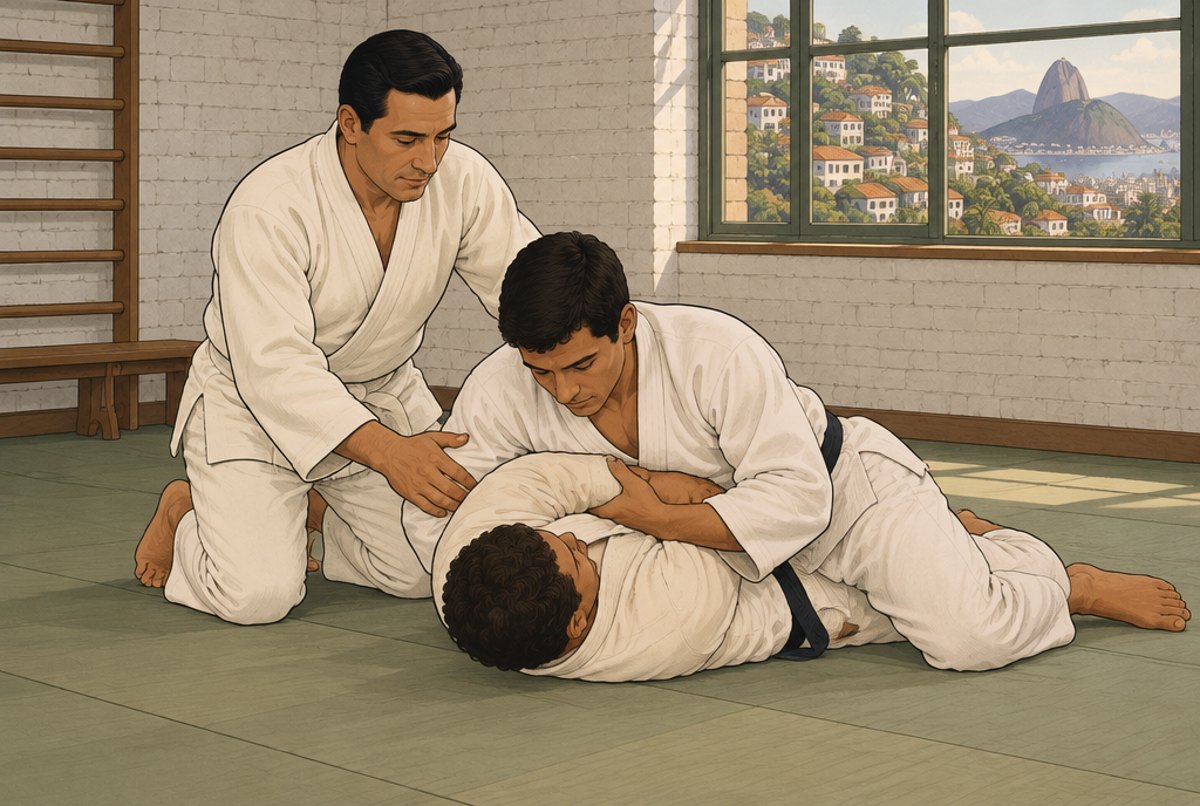
Oswaldo Fadda
Oswaldo Fadda was born on 1 August 1920. He was a marine, and França's student, and he received his black belt around 1942. 8
What made him different was where and how he taught. He gave classes free of charge in parks and on beaches, and he taught people with disabilities. 8
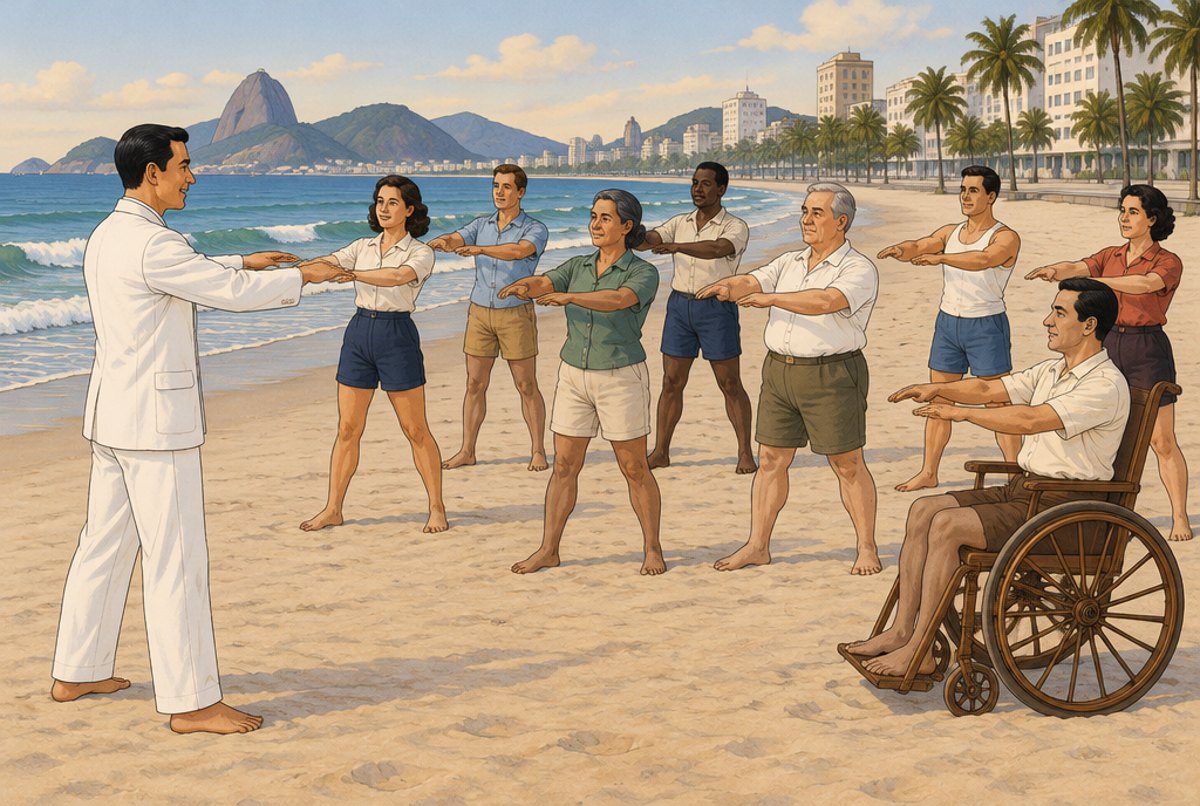
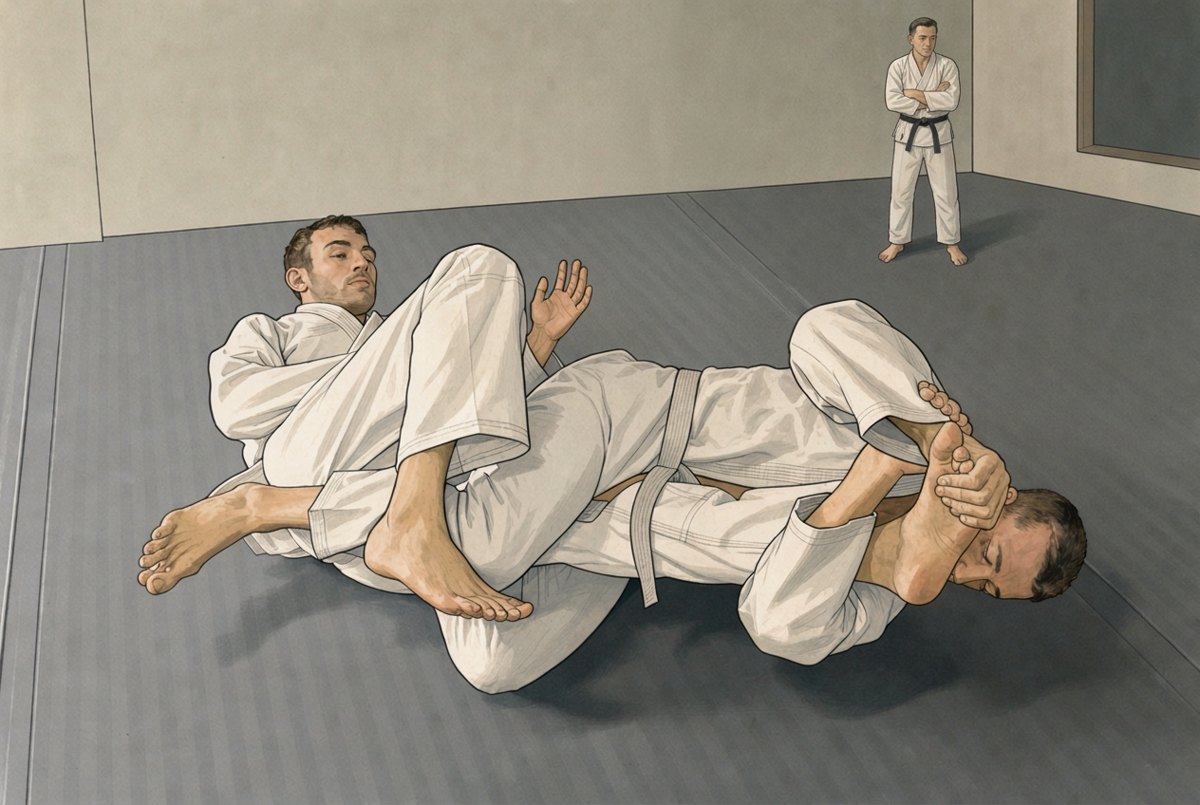
On 27 January 1950 he opened his own academy. 8 His school became known for attacking the feet and legs, the footlocks. The Gracie students had a mocking name for Fadda's students because of it: sapateiro, shoemaker. 8
The challenge
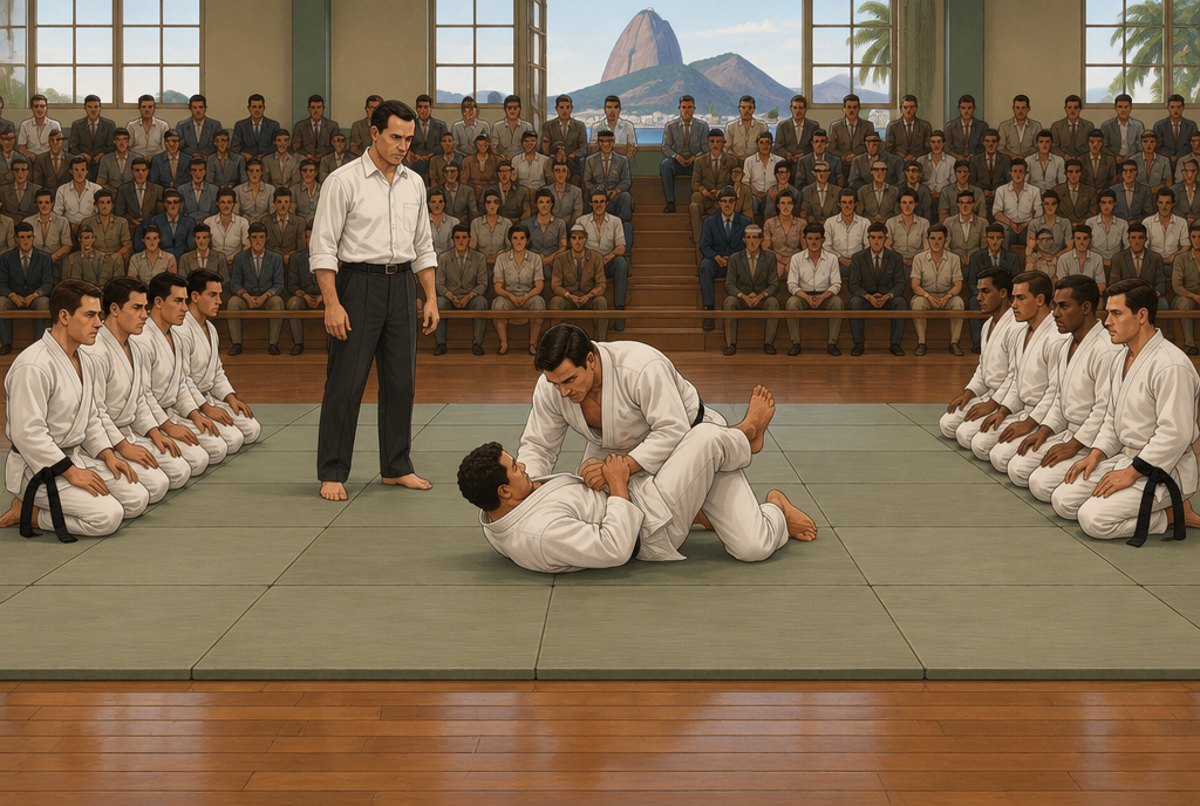
Fadda's school fought a challenge match against the Gracie academy, and both the date and the result are told differently.
Fadda died on 1 April 2005. On 20 September 2014, after his death, he was awarded the 10th degree, the red belt the IBJJF says was given only to the pioneers. 8,40 Three masters from outside the Gracie family hold that degree: Fadda, his teacher Luiz França, and Francisco Sá. 3 Today teams such as Nova União and GF Team trace part of their lineage to França and Fadda. 1,8
The first official belts
While the academies fought their challenges, the art was slowly becoming a sport with rules of its own. In 1967 the Jiu-Jitsu Federation of Guanabara, in Rio, today called the Jiu-Jitsu Federation of Rio de Janeiro, was set up. It introduced the first official belt ranking system, and it separated children's belts from adults'. 2,3,21 The federation became the body that approved black belt promotions in Gracie jiu-jitsu, and in June 1973 jiu-jitsu was officially recognised as a sport in Brazil. 21
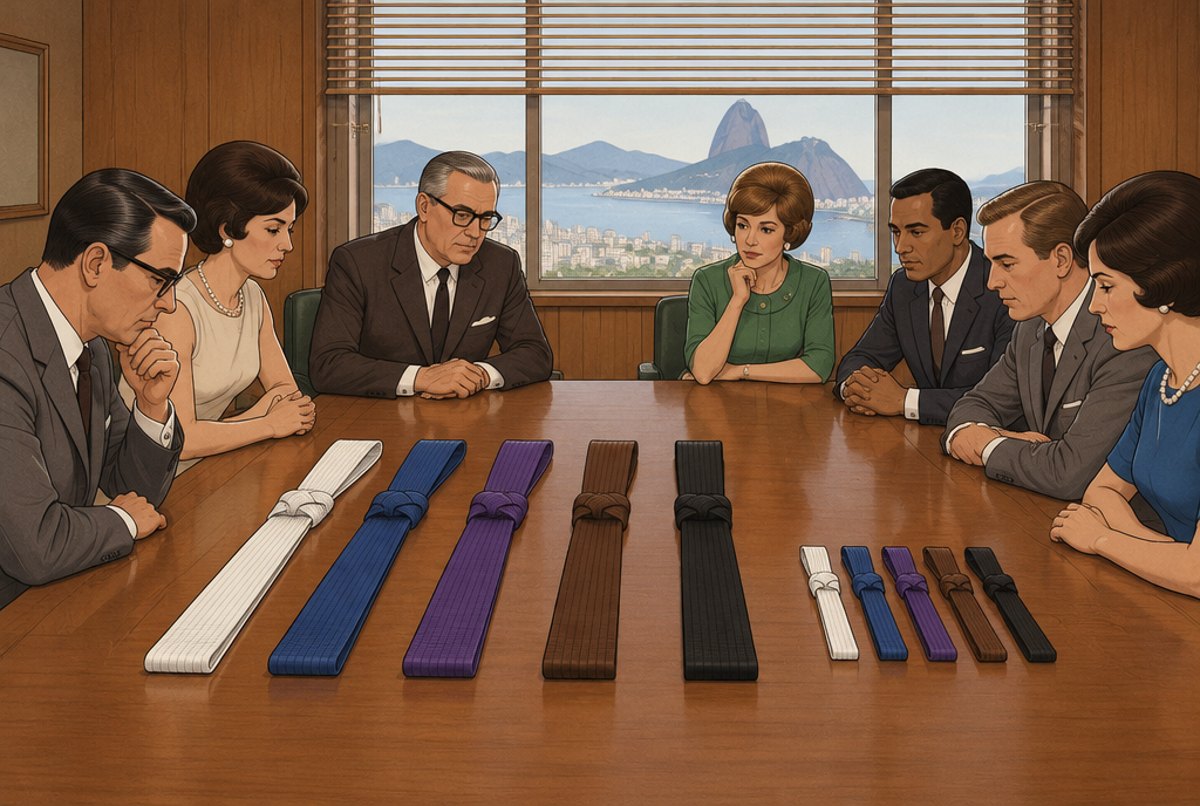
That 1967 system is the ancestor of the belts in every academy today: white, blue, purple, brown and black for adults, and a separate ladder for children. 2,40 Progress inside a belt is shown by stripes, called degrees, or in Portuguese grau; a black belt's degrees are counted the same way, as in nono grau, ninth degree. 2,8,40
What the other line means for you
If your academy belongs to Nova União, GF Team or another team of the França and Fadda line, your lineage runs back to a marine on a beach, not to a circus in Belém. 1,8 And if your instructor loves footlocks, you now know the old joke.
Meanwhile, in Rio, the Gracies were about to meet the strongest judoka of his generation.