

The Gracie family did not begin in Brazil. Its ancestors came from Paisley, in Scotland. 7 Gastão Gracie was a business partner in the American Circus in Belém. In 1916, by one account, the Queirolo Brothers staged circus shows in the town and presented Conde Koma, Mitsuyo Maeda. 5,7
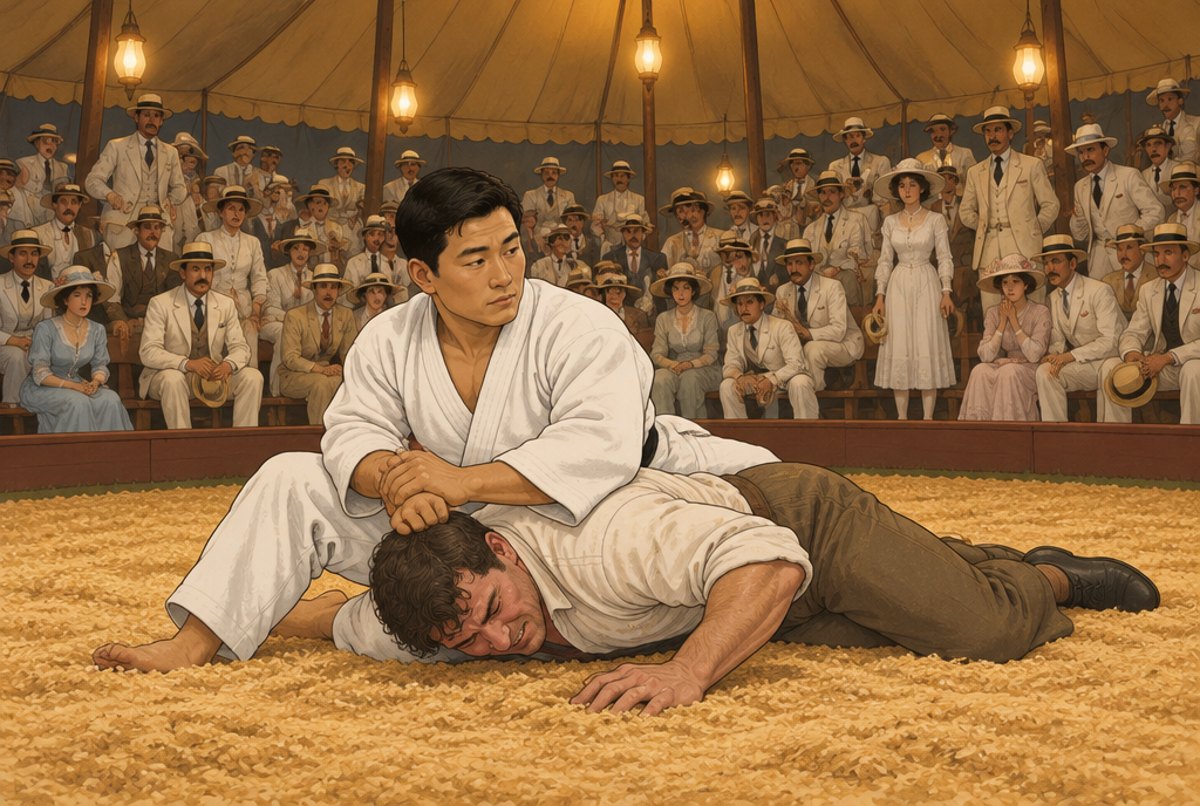
A boy in the audience
Gastão's eldest son, Carlos Gracie, was born on 14 September 1902. In 1917 he watched a Maeda demonstration and started to train. 5,7 He was 14 or 15, depending on the month, which is why accounts give both ages. 4,5
Who actually taught him is the first of the questions on which the family and the historians part company.
Rio de Janeiro
The family moved to Rio in 1921. 5,7 Gracie University, the organisation run by two of Hélio Gracie's grandsons, dates the first Gracie Jiu-Jitsu Academy in Rio to 1925. 15,106
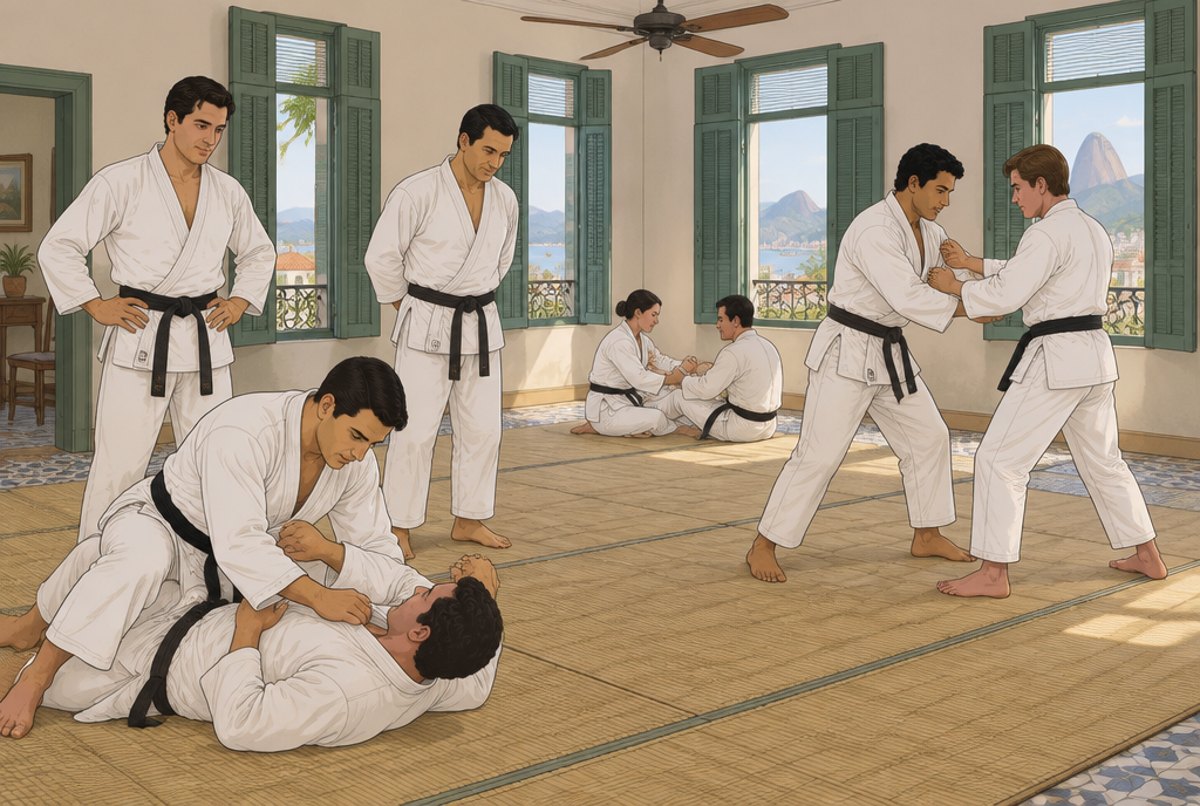
Whichever year it was, by 1930 the brothers were teaching in Rio. Four of them, Carlos, Oswaldo, Gastão Jr. and Hélio, are often named together as the founders of the art around 1925. 1
Hélio
Hélio Gracie, the youngest brother, was born on 1 October 1913. 6 He stands at the centre of the best known story in jiu-jitsu, and the story is told two ways.
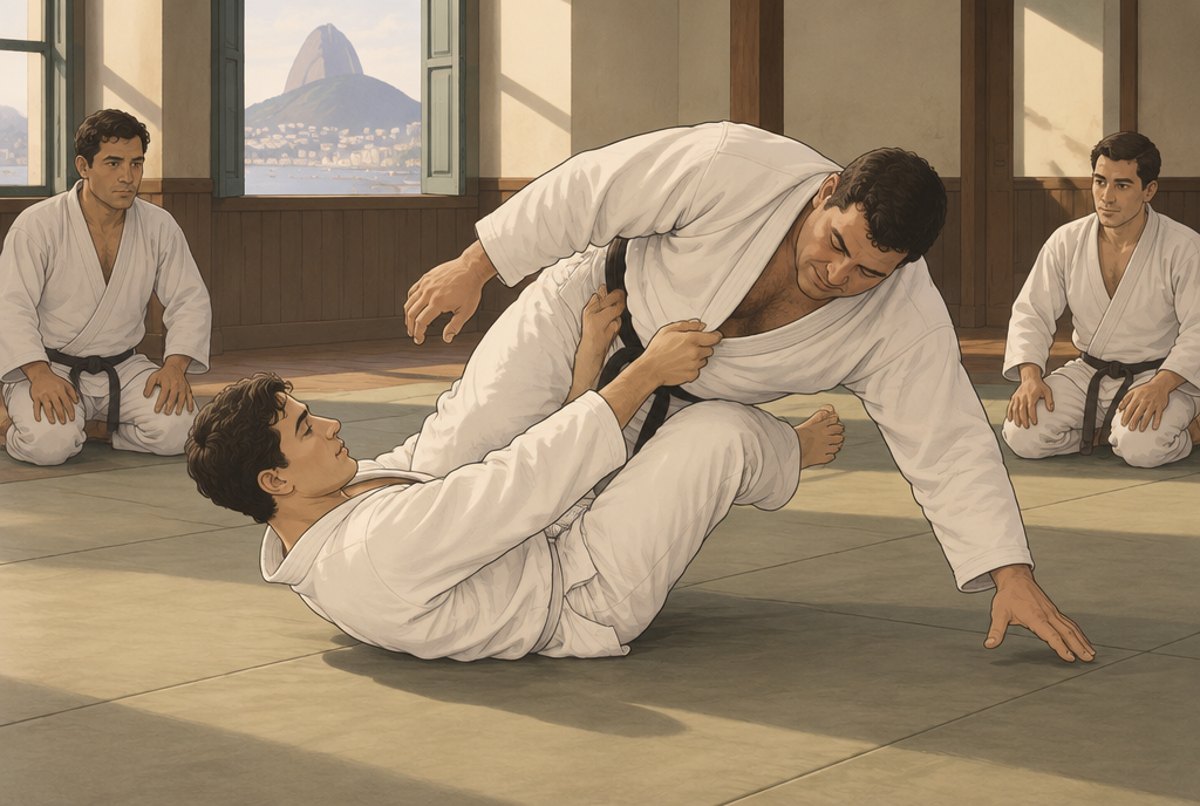
That agreement matters more than the disagreement. Whatever Hélio's strength, the techniques were adapted for a smaller person, and position and control sit at the centre of the art to this day. The IBJJF rulebook describes a match as "a progression of positions of technical control that ultimately result in a submission hold". 43 Hélio died on 29 January 2009. 6
Founder, co-founder, or five brothers?
Ask who founded Brazilian jiu-jitsu and you get several answers. The Roger Gracie Association lists Carlos Gracie as "Founder" and Hélio Gracie as "Co-founder". 105 Gracie University presents the art as Grandmaster Hélio Gracie's system. 106 Other histories simply name the brothers together. 1
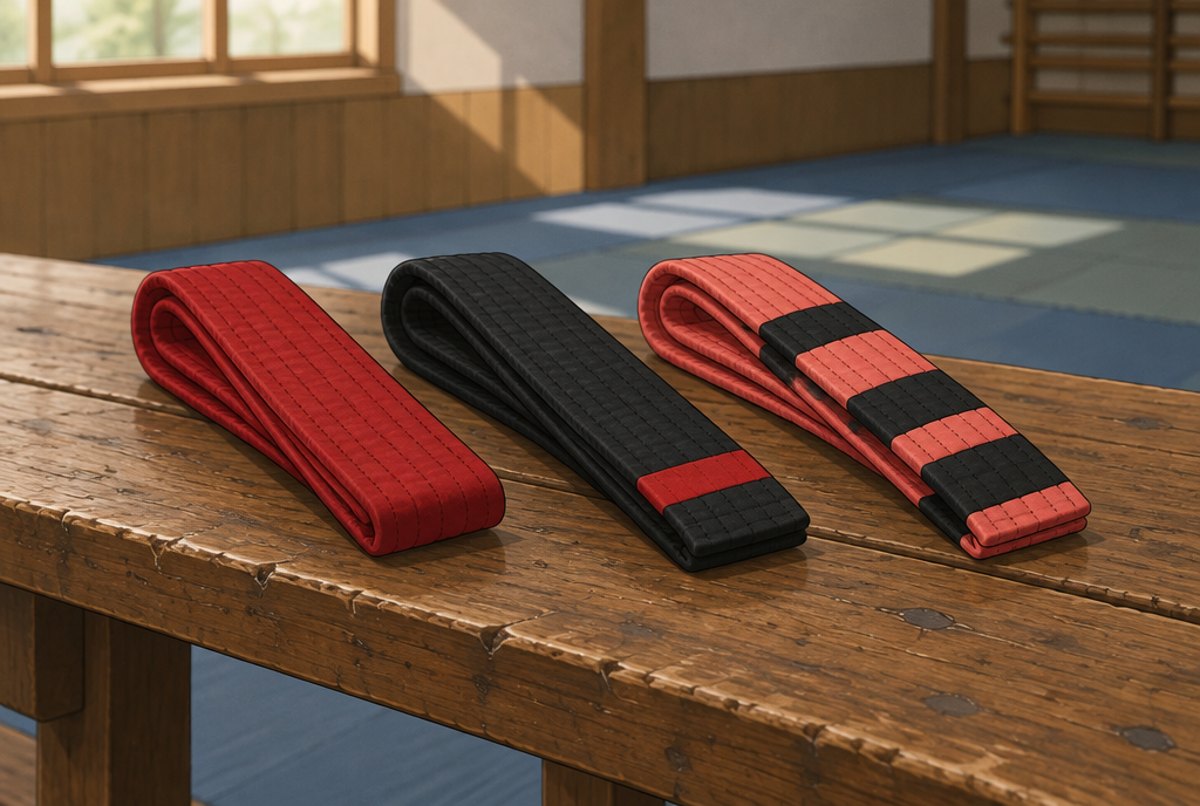
The International Brazilian Jiu-Jitsu Federation, the IBJJF, whose rules are the most widely used in the sport, gives another answer with a belt. Its highest rank, the 10th degree red belt, "was given only to the pioneers": the five brothers Carlos, Oswaldo, George, Gastão Jr. and Hélio Gracie. 40
The challenge
From early on, the Gracies issued an open invitation, later called the Gracie Challenge, for fighters of any style to test themselves against their jiu-jitsu in matches with no rules. 9 Accounts drawn from newspapers of the time are more critical of the brothers' early careers than the family's own histories. 5,6
Carlos Gracie died on 7 October 1994. 5 His brothers, his sons and his nephews would carry the art to every continent. But before that, there was another line, outside the family altogether, and it began on a beach.