

Not every jiu-jitsu teacher came from the Gracie family. One line of teachers started with a man called Luiz França, and carried on with a marine who taught for free in the open air. 8
Luiz França
Luiz França lived from 1910 to 1982. His students say he learned judo from Satake in Manaus, from Maeda in Belém, at the same time as Carlos Gracie, and from a teacher called Geo Omori in São Paulo. 8
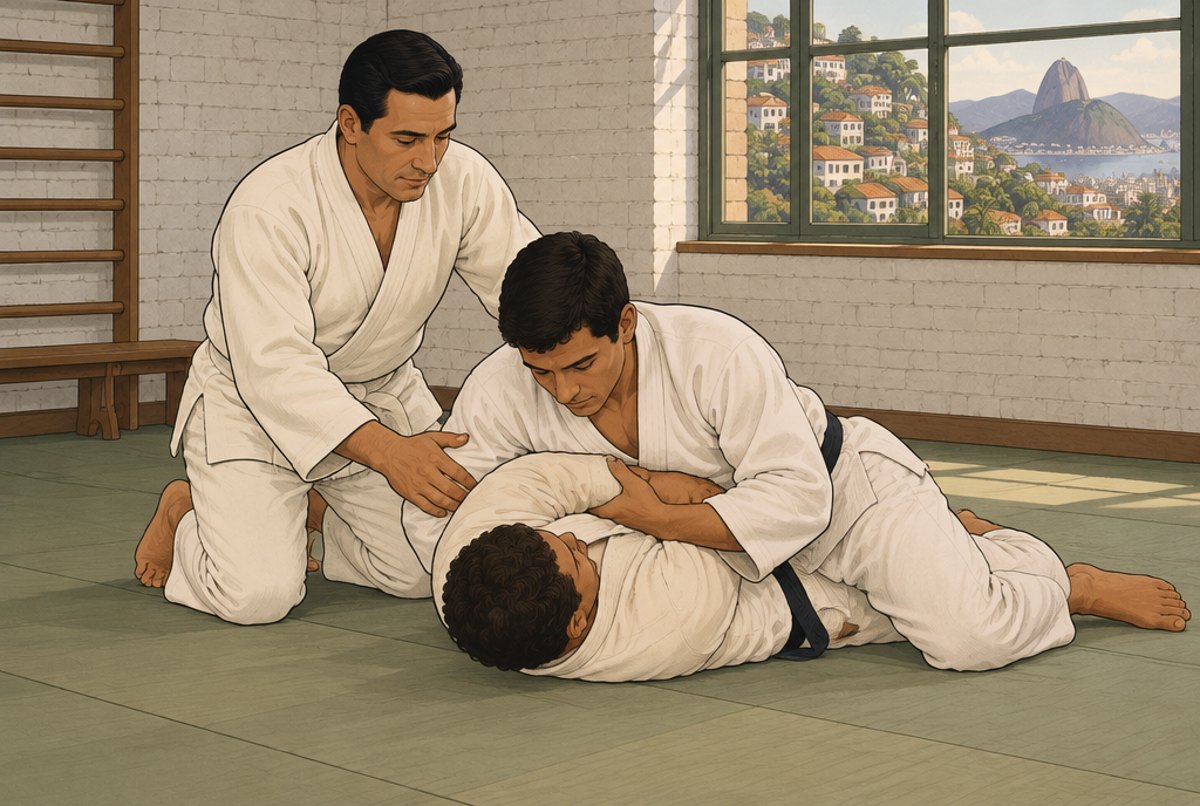
Oswaldo Fadda
Oswaldo Fadda was born on 1 August 1920. He was a marine and he was França's student. He got his black belt around 1942. 8
Fadda was different. He taught for free, in parks and on beaches, and he taught people with disabilities too. 8
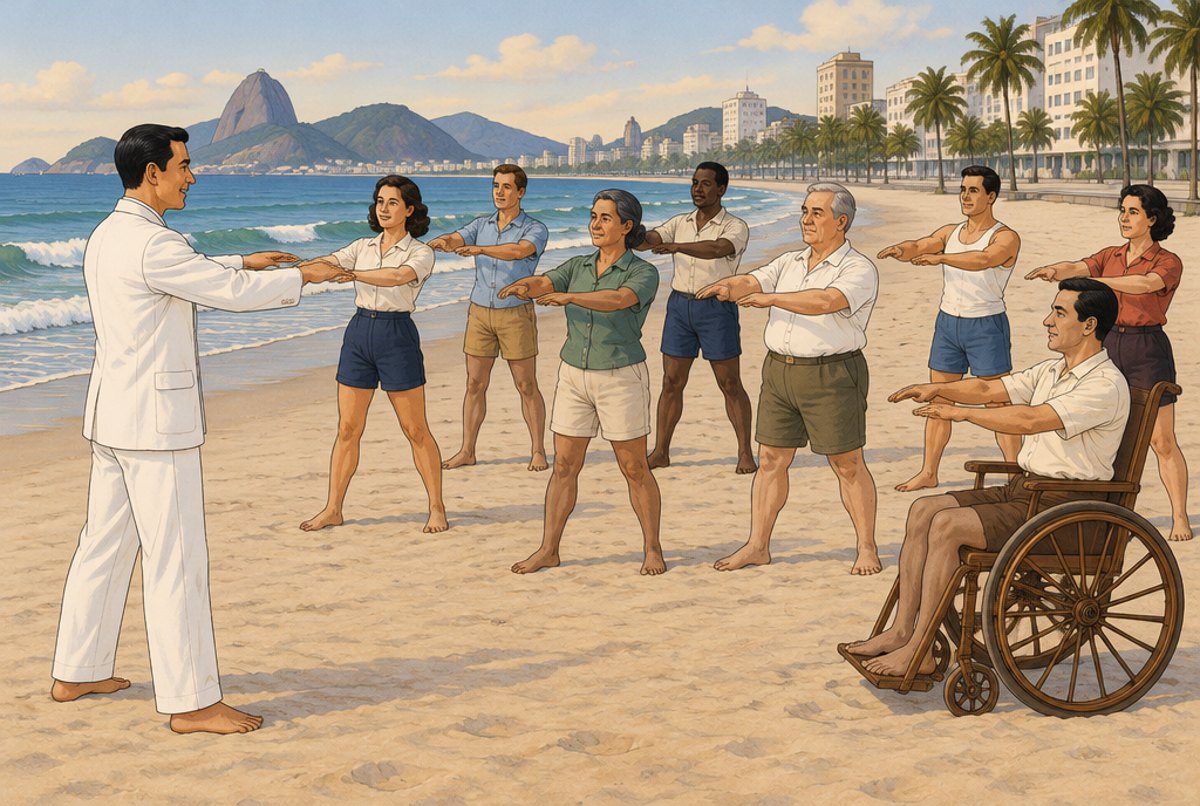
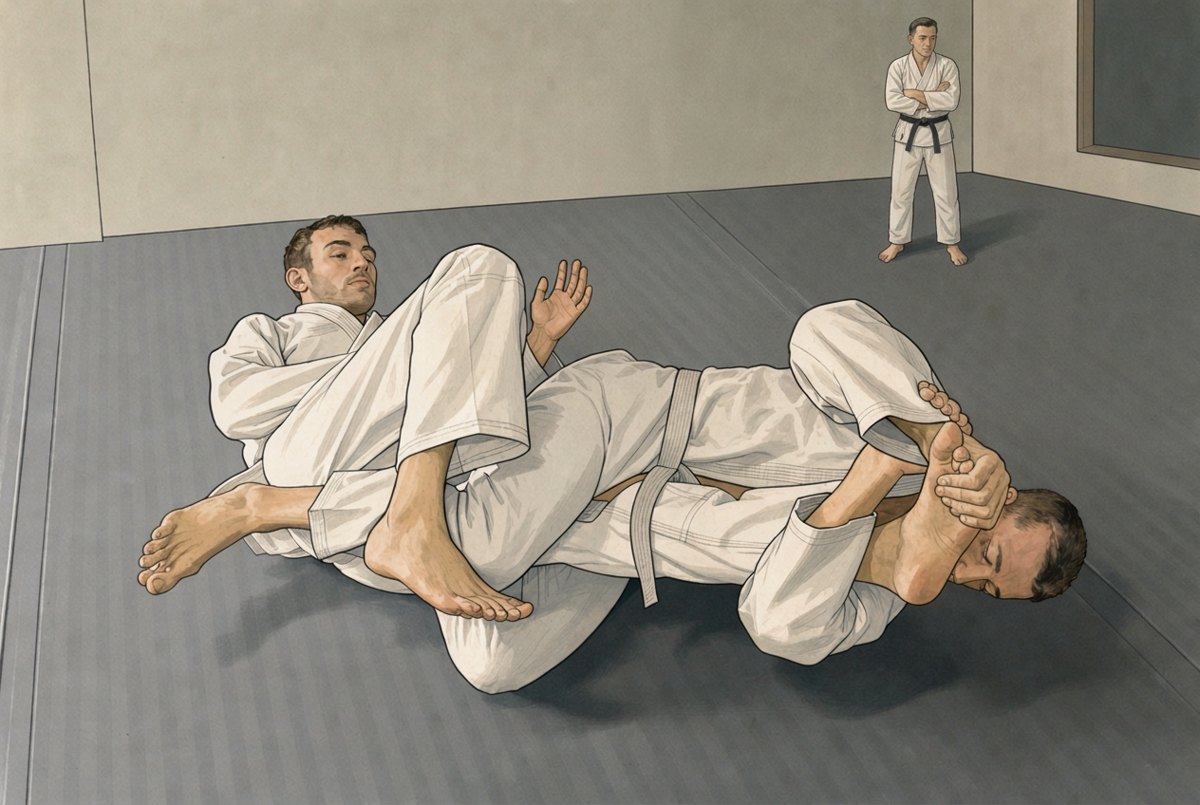
On 27 January 1950 he opened his own academy. 8 His students loved to attack the feet and legs with footlocks. The Gracie students made fun of them for it. They called them sapateiro, which means shoemaker. 8
The big match
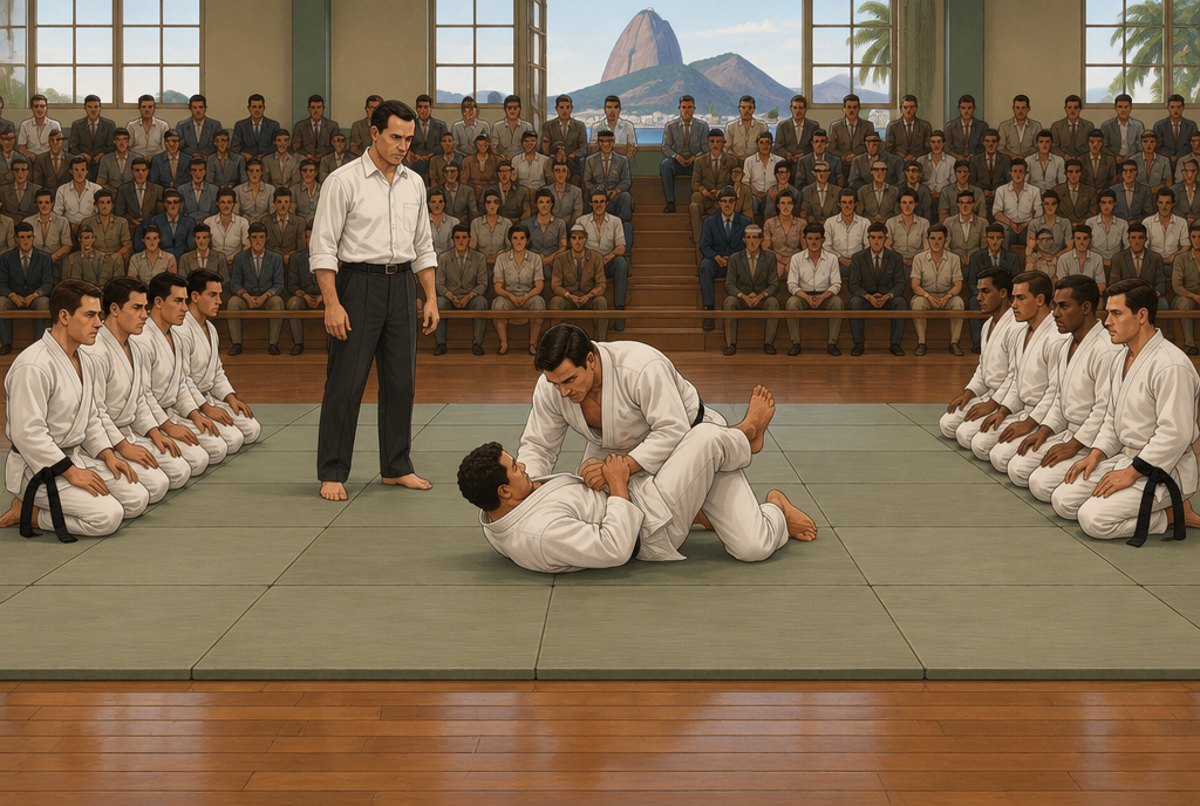
Fadda's school had a challenge match against the Gracie academy.
Fadda died on 1 April 2005. On 20 September 2014, after his death, he was given the 10th degree red belt, the one the IBJJF says is only for pioneers. 8,40 Three masters from outside the Gracie family have that belt: Luiz França, Oswaldo Fadda and Francisco Sá. 3 Today teams called Nova União and GF Team trace their line back to França and Fadda. 1,8
The first official belts
In 1967 the Jiu-Jitsu Federation of Guanabara, in Rio, made the first official belt system. It gave children their own belts, separate from adults. 2,3,21 In June 1973 jiu-jitsu was officially made a sport in Brazil. 21
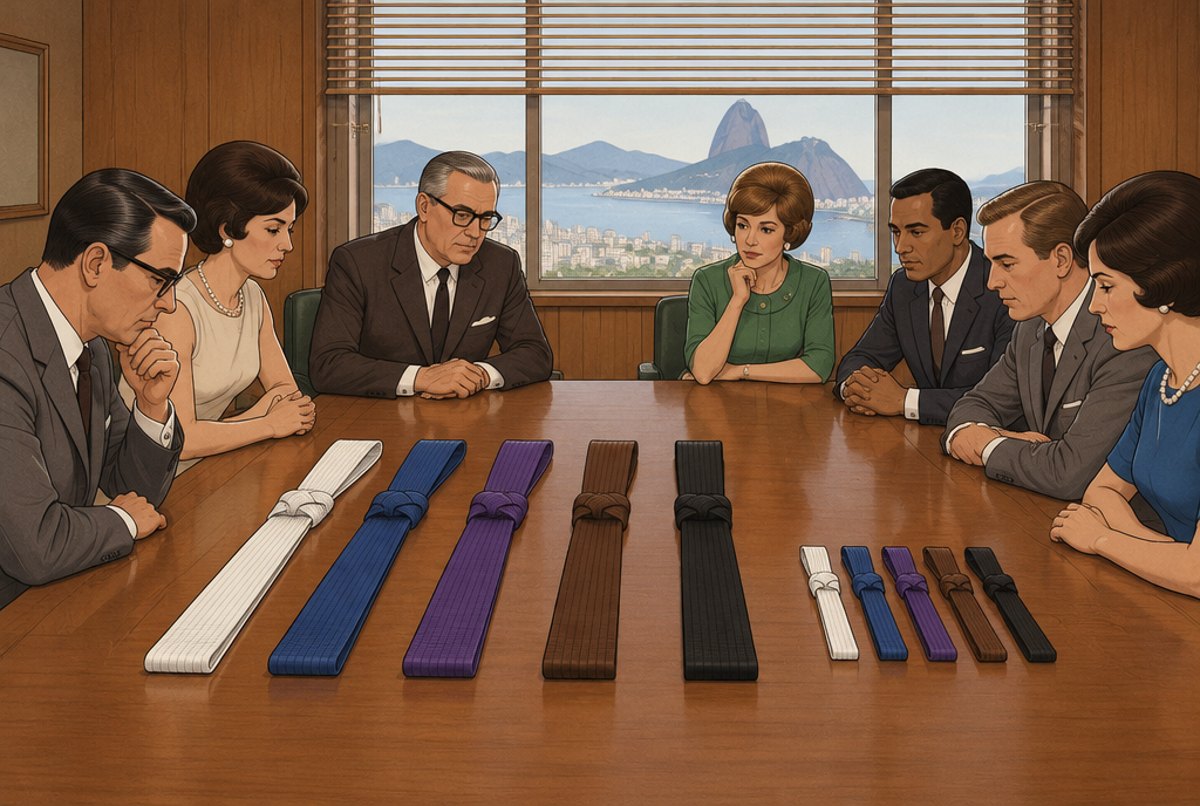
That 1967 system is the great grandparent of the belts in jiu-jitsu academies today. 2,40 The little stripes on a belt are called degrees, or grau in Portuguese. 2,8,40
Next, the Gracies met the strongest judo fighter of his time.