

Imagine a harbour in Brazil in 1914. A small, compact Japanese man in his mid thirties comes down the gangway. He has spent 10 years travelling the world, fighting anyone who would take him on. His name is Mitsuyo Maeda, and in the ring he is known as Conde Koma, Count Koma. 4 The art he carries is judo, but almost nobody in Brazil calls it that. The newspapers call it jiu-jitsu, and so the name sticks. 1,4
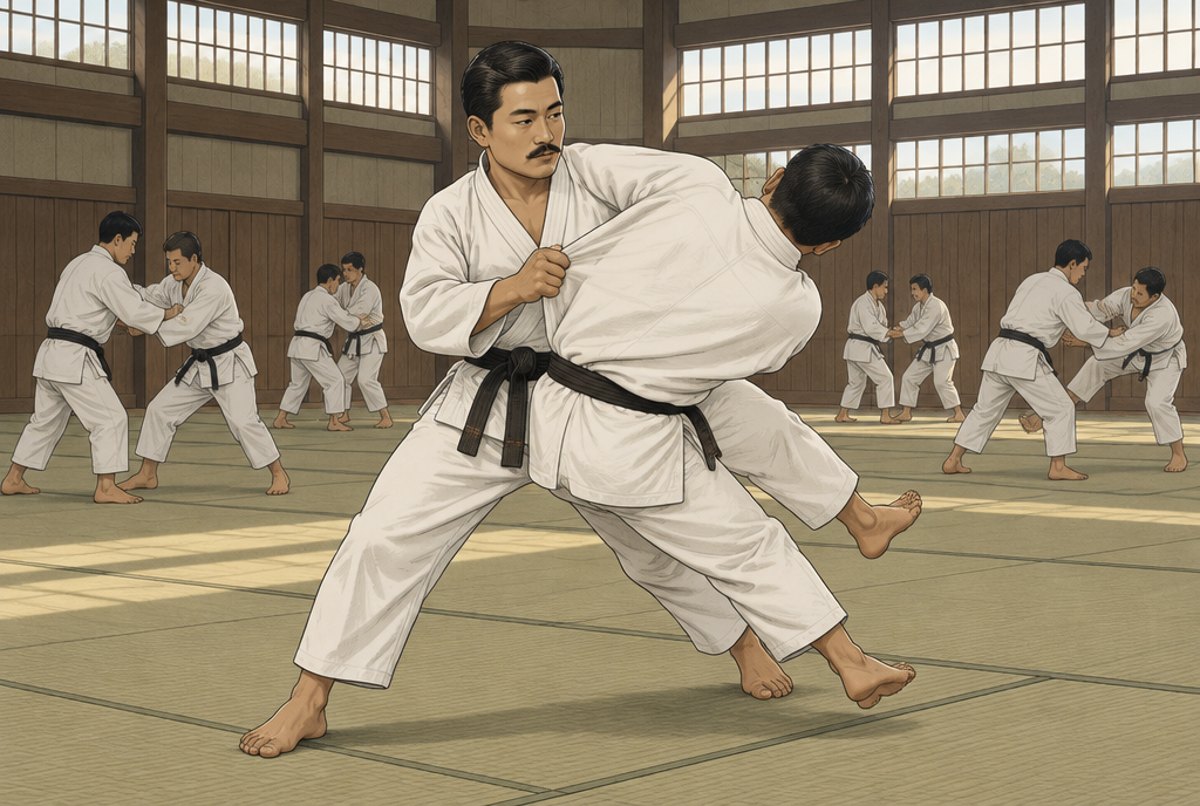
A student of the Kodokan
Maeda was born on 18 November 1878 and trained at the Kodokan, the school in Tokyo where judo was made. 4 In 1904 he left Japan to show judo abroad. Over the next decade he took on wrestlers, boxers and fighters of every kind in the United States, Europe, Cuba, Mexico and Central and South America. 4 By about 1910 he dressed as a gentleman of his day, in a long dark coat, with a neat moustache and a walking cane. 160
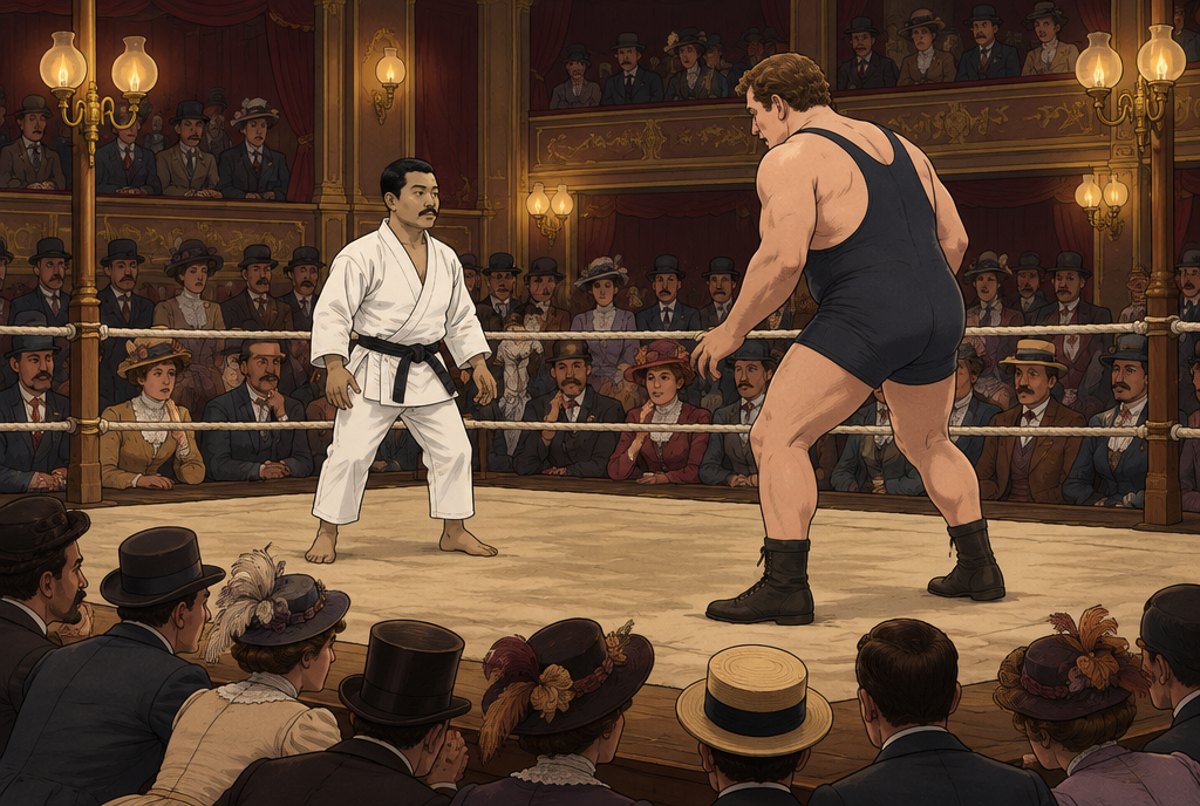
In Spain in 1908 he took the ring name that would follow him for the rest of his life: Conde Koma. 4 With a fellow judoka, Nobushiro Satake, he also helped to pioneer judo in Britain. 4
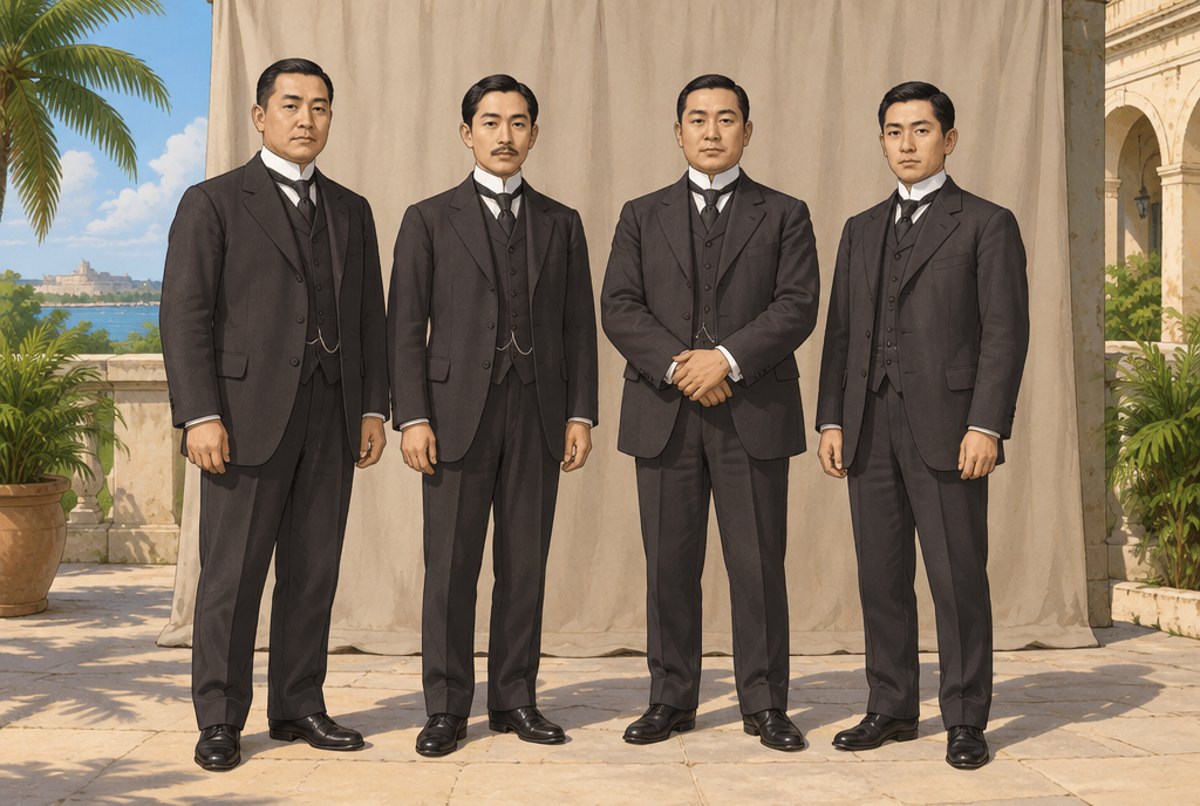
By 1911 he was in Cuba, and in the spring of 1912 three other Japanese judoka were there with him: Tokugoro Ito, Nobushiro Satake and Akitaro Ono. Together they gave judo shows, demonstrating techniques on each other, and the shows were popular in Cuba too. 4,162
Why "jiu-jitsu" and not "judo"
Here is a puzzle a newcomer meets at once. If Maeda was a judoka, why is the art he left behind called jiu-jitsu? The answer is in the name judo itself. When Maeda reached Brazil, judo was still widely called "Kano jiu-jitsu", after its founder Jigoro Kano, or simply jiu-jitsu, an older spelling of the Japanese word now written jujutsu. Brazilian newspapers used that name, and so the art kept it. 1,4
The word "Brazilian" came later, and mostly from outside Brazil. In the United States the Gracie family called it "Gracie Jiu-Jitsu", and other people said "Brazilian jiu-jitsu" to tell it apart from arts with similar names. 1 The Ju-Jitsu International Federation notes that the name "Brazilian Jiu-Jitsu" was never used in Brazil itself. 66
Brazil, 1914
Maeda gave a demonstration in Santos on 24 September 1914 and, according to a copy of his passport, arrived in Porto Alegre on 14 November 1914. That is why accounts give two dates for his arrival, September and November. 1,4
His troupe's first show in Belém, in the northern state of Pará, was on 20 December 1915. 4 Belém would become his home. He later took Brazilian citizenship and the name Otávio, and he died there on 28 November 1941. The Kodokan promoted him to 7th Dan, a senior black belt grade, the day before he died. 4
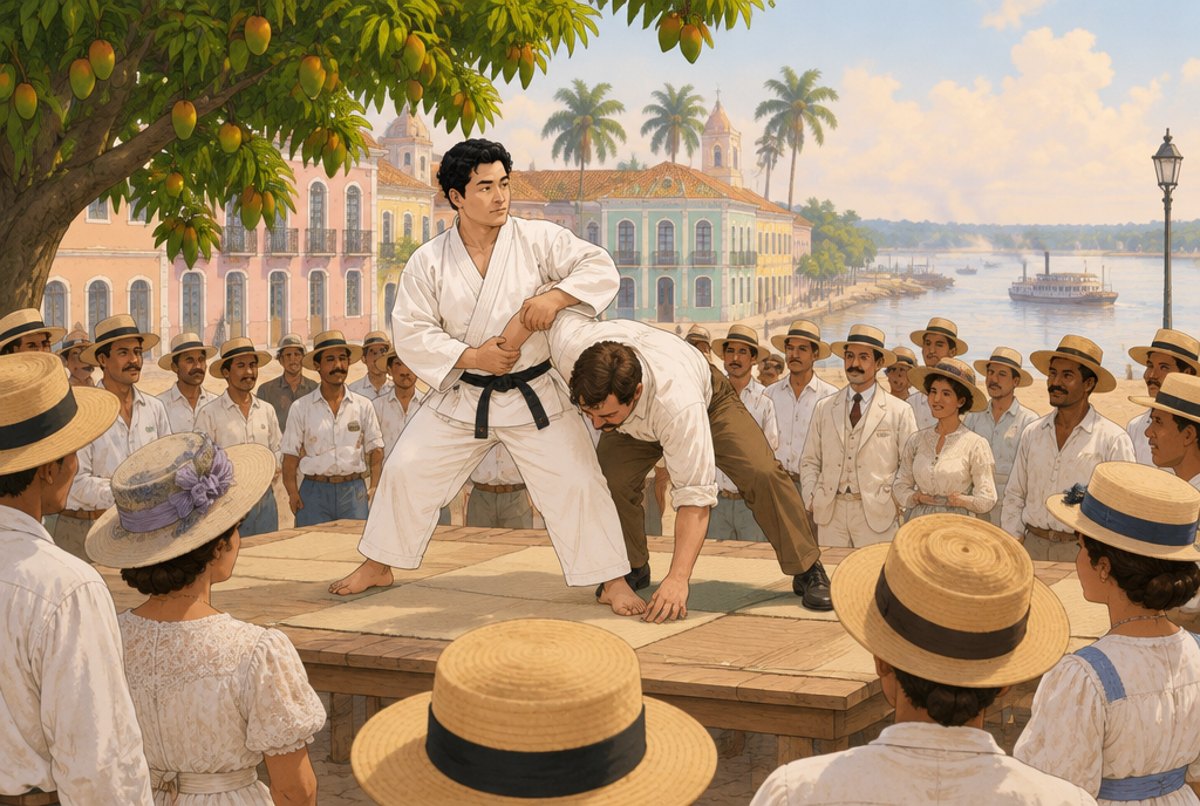
He was not the only judoka in the north of Brazil. Nobushiro Satake, one of the three who had been with him in Cuba, founded what is said to be the first registered judo academy in Brazil, in Manaus, in about 1916. 4,8
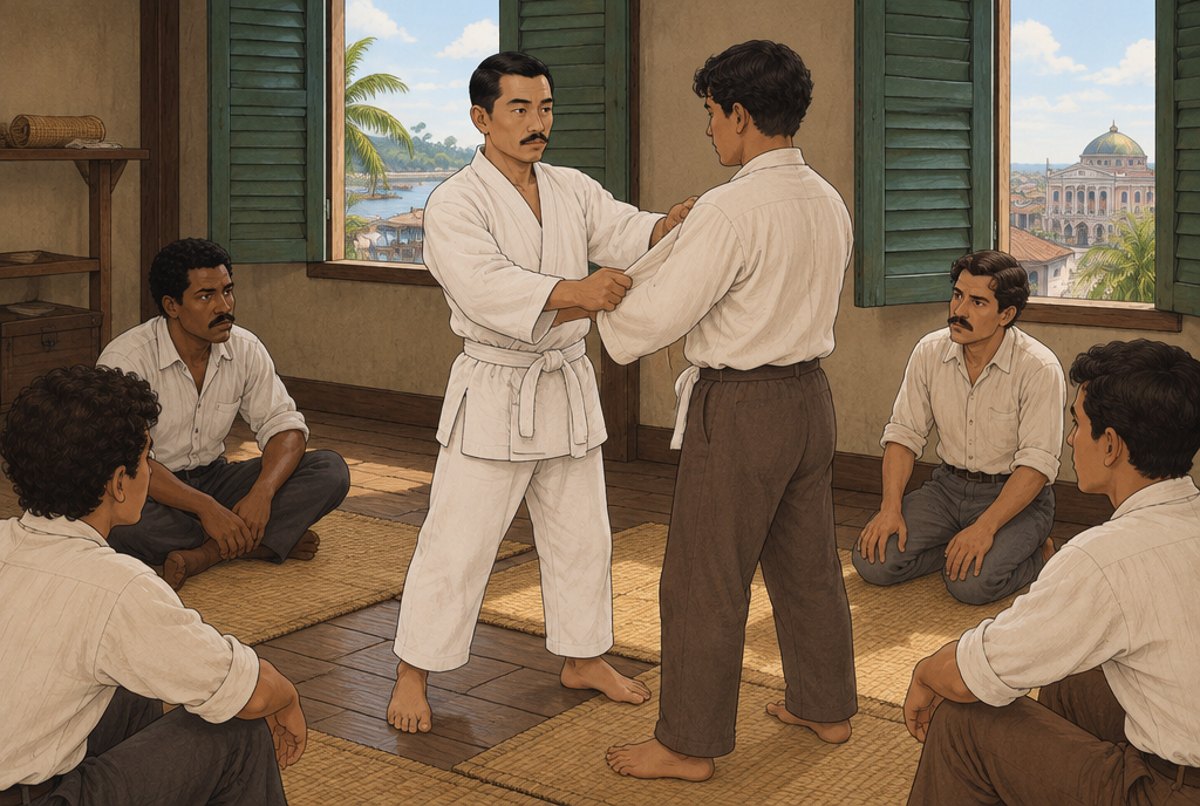
What he carried
What Maeda brought ashore was Kodokan judo, practised in a jacket that could be gripped. 1,4,23 The art that grew from it in Brazil is above all a ground fighting art: it takes a partner to the ground, controls them and finishes with a lock or a choke. That is why the Ju-Jitsu International Federation today calls its version "Jiu-Jitsu (Ne-Waza)", ne-waza being the Japanese for ground techniques. 1,43,66
In 1916, by one account, a circus presented Conde Koma to the public in Belém. A partner in one of the town's circuses had a teenage son, and the next year that son watched Maeda and began to train. 5,7 The next chapter is his.