

Thailand has an official history of Muay Thai, and it is very old. It is worth knowing what it says, who tells it, and what historians make of it.
The official story
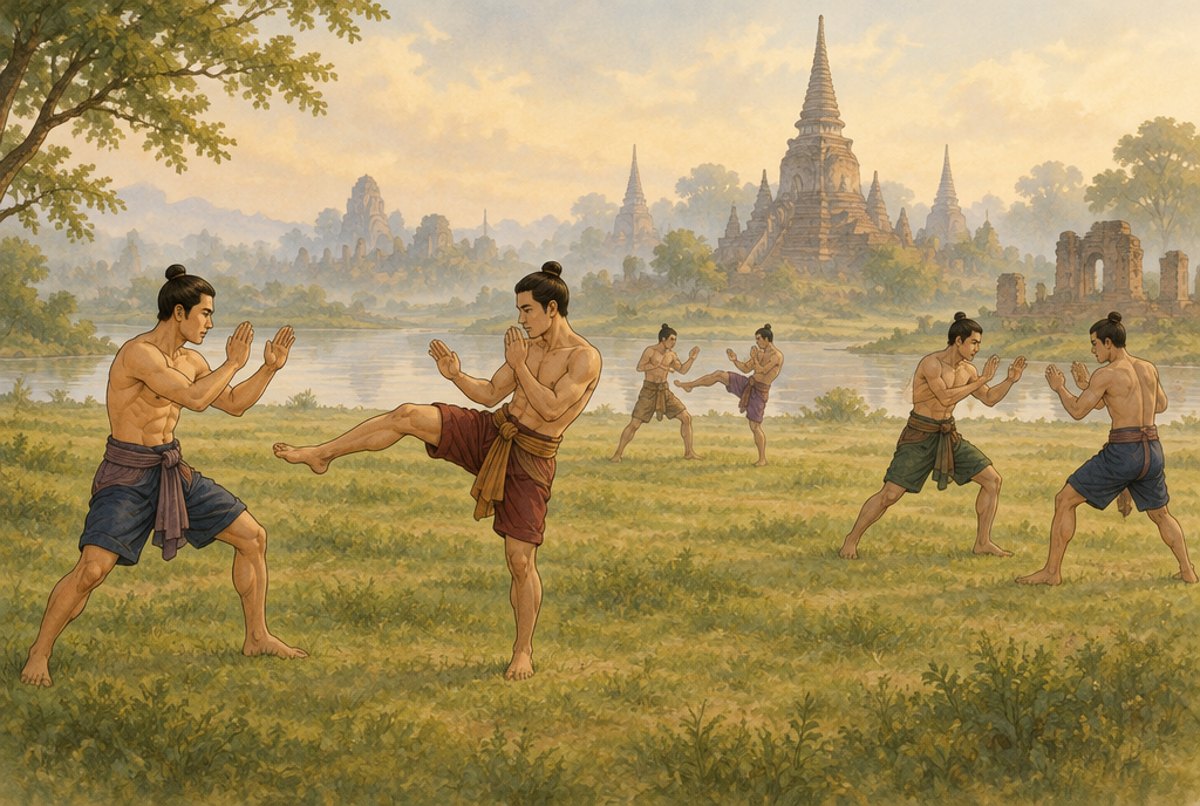
Many scholars describe much of this royalist and nationalist history as an invented tradition, built in the 20th century to support a national identity. 1,2 That does not make the stories worthless. It means they tell us about how Thailand has seen itself, and they should be read as traditional accounts, not as established fact. 1,2
The legend
Muay Thai Day
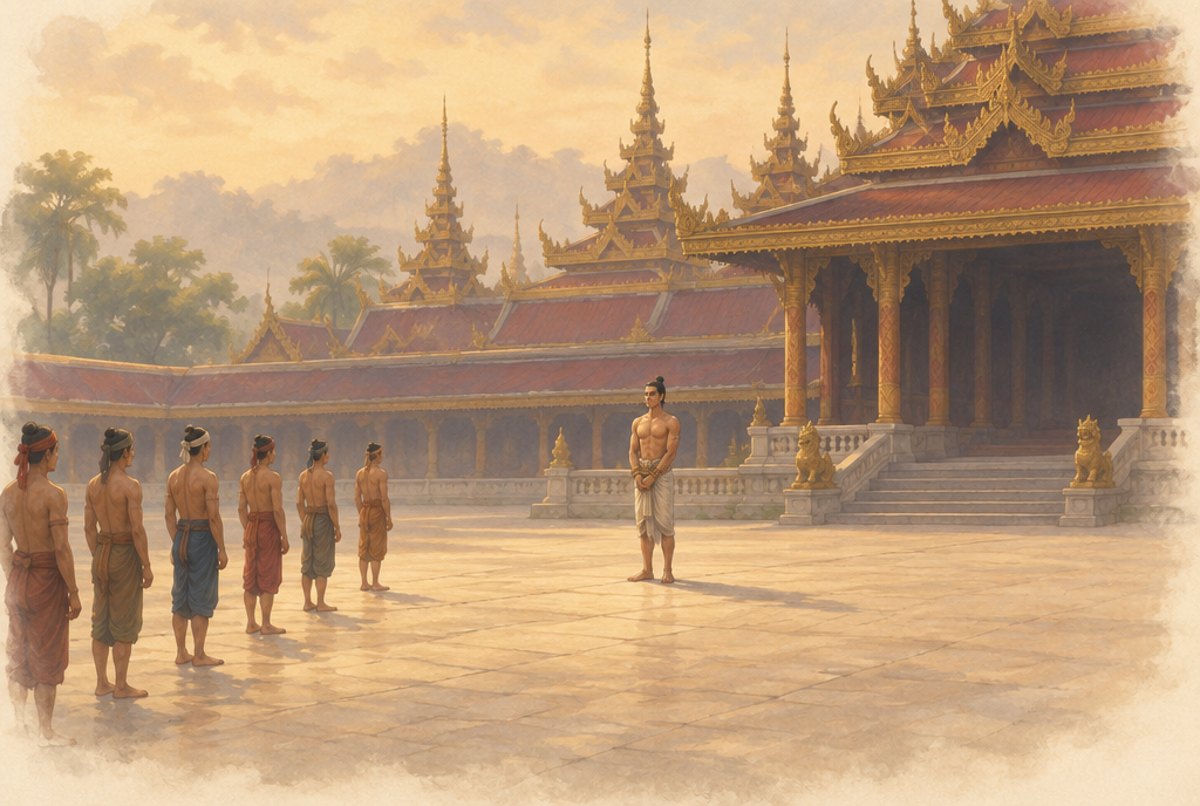
Every year on 17 March Thailand remembers the story with a festival and a ceremony of homage to teachers, and many people call that day . 1 The official Muay Thai Day is another date: in 2016 Thailand's cabinet made 6 February Muay Thai Day, the day King Sanphet VIII, remembered as Phra Chao Suea, the Tiger King, came to the throne. 104
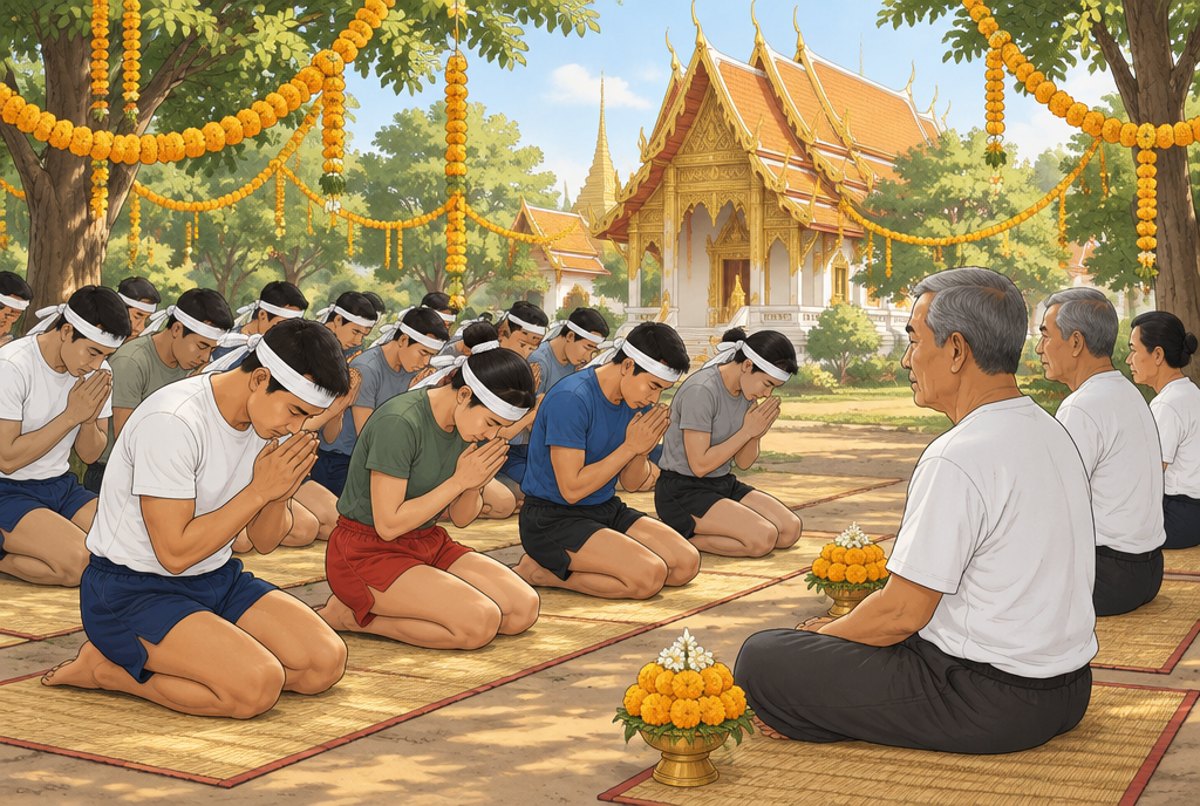
In Britain the UK Muaythai Federation, IFMA's UK member, says that the yearly homage to teachers is usually held on Muay Thai Day. 20,40 It describes teachers marking sacred symbols on a fighter's forehead at that ceremony, called . 40 Chapter five returns to the wai kru and the ceremonies that mark a student's life.
Why it is told this way
A newcomer to Muay Thai will hear the name Nai Khanom Tom sooner or later. Knowing that it is a loved legend, that it has a day of its own, and that historians read it as a symbol, lets a reader respect the story and still keep it apart from the record.
The record picks up again in the 19th century, with a king who turned boxing into royal sport, and with fighters whose hands were bound in rope.