

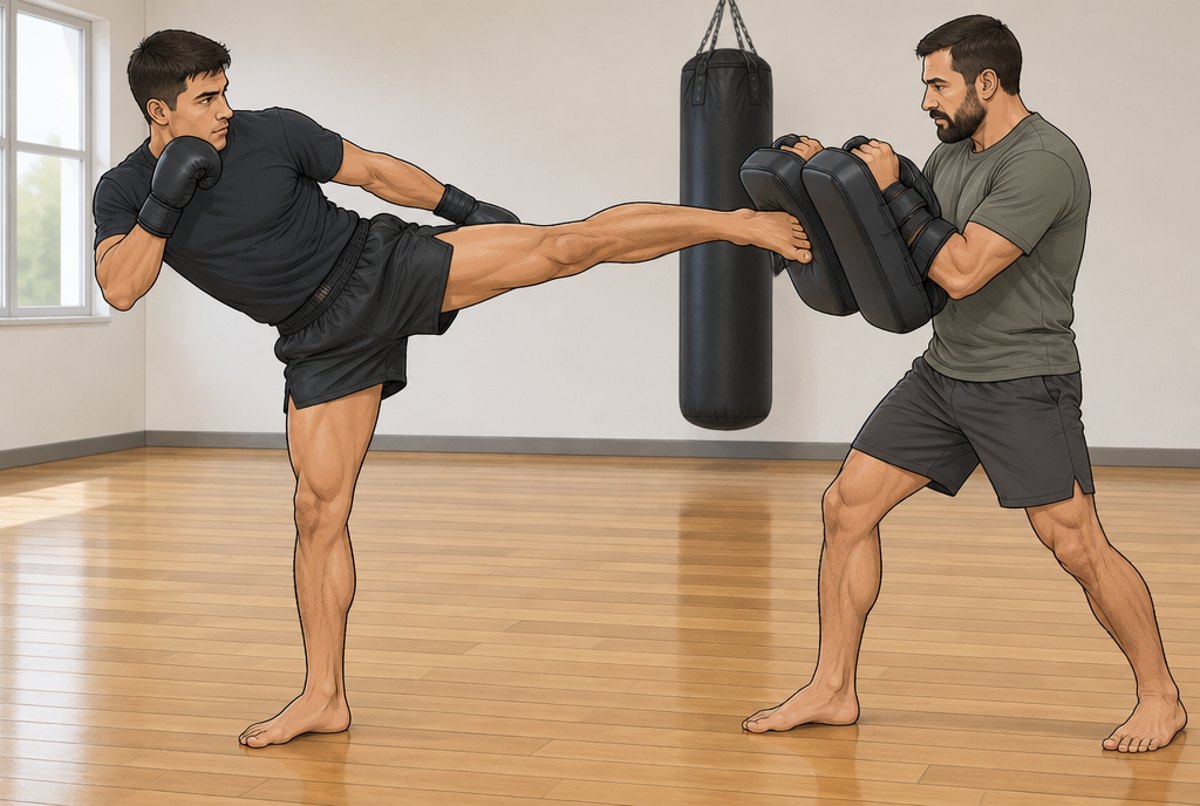
is Thailand's national combat sport and martial art. 1 Its nickname, the , counts its weapons: two fists, two elbows, two knees and two shins. 1 A Muay Thai fighter, a , may use all of them, and can also hold the opponent in the , called in Thai, to land knees and elbows or to unbalance them. 1,11 And every bout opens with a ritual dance of respect to the teacher, the wai kru. 1,21
The names
is simply the Thai word for boxing. The name Muay Thai came into use in the early 20th century to tell the Thai art apart from international boxing, . 1 In English it is also called Thai boxing. The world amateur body, IFMA, writes it as one word, Muaythai, and so do the bodies that work with it; most UK gyms write Muay Thai. 1,20,40 A foreign fighter who goes to train in Thailand is sometimes called a . 1
The first witnesses
The written record of Thai boxing starts with visitors and royal chronicles, and it is short.
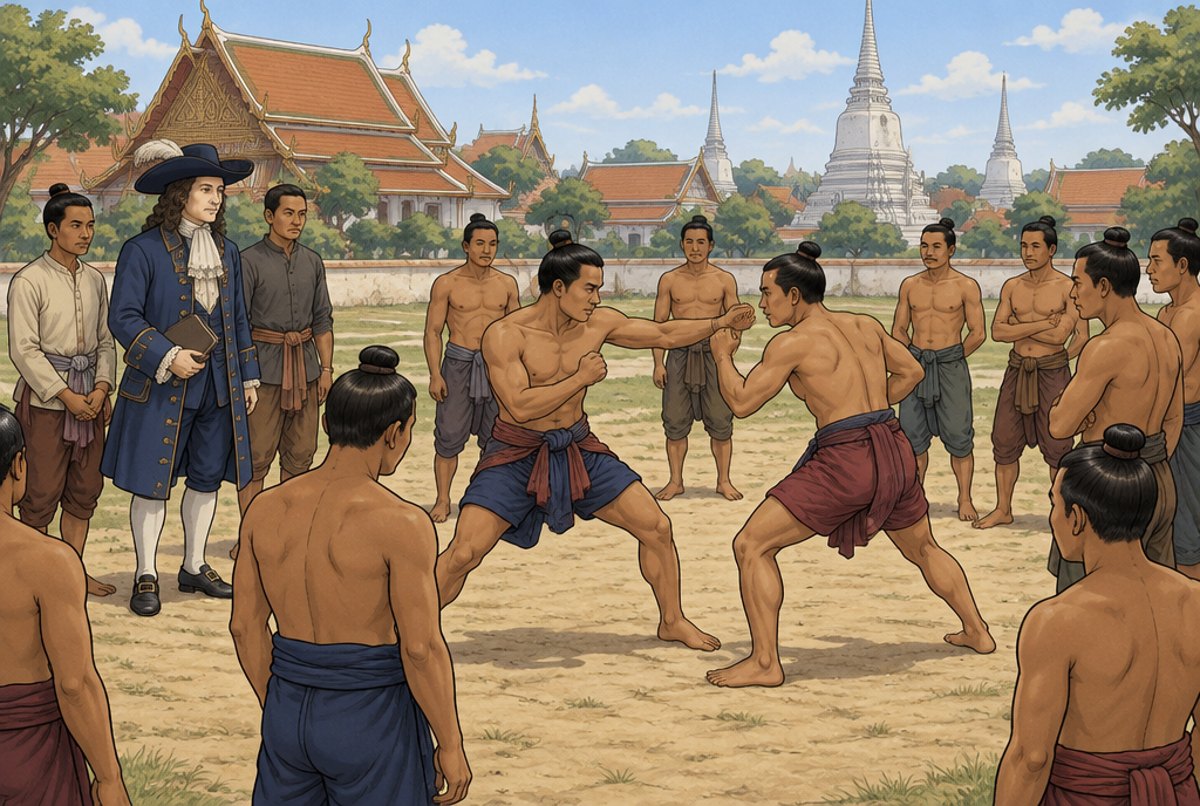
Simon de la Loubère, an envoy sent to Siam by the King of France, was there in 1687 and 1688, and in a book published in 1691 he wrote that wrestling and fighting with the fists and elbows were trades of entertainers there: people earned a living by fighting for crowds. 1,100
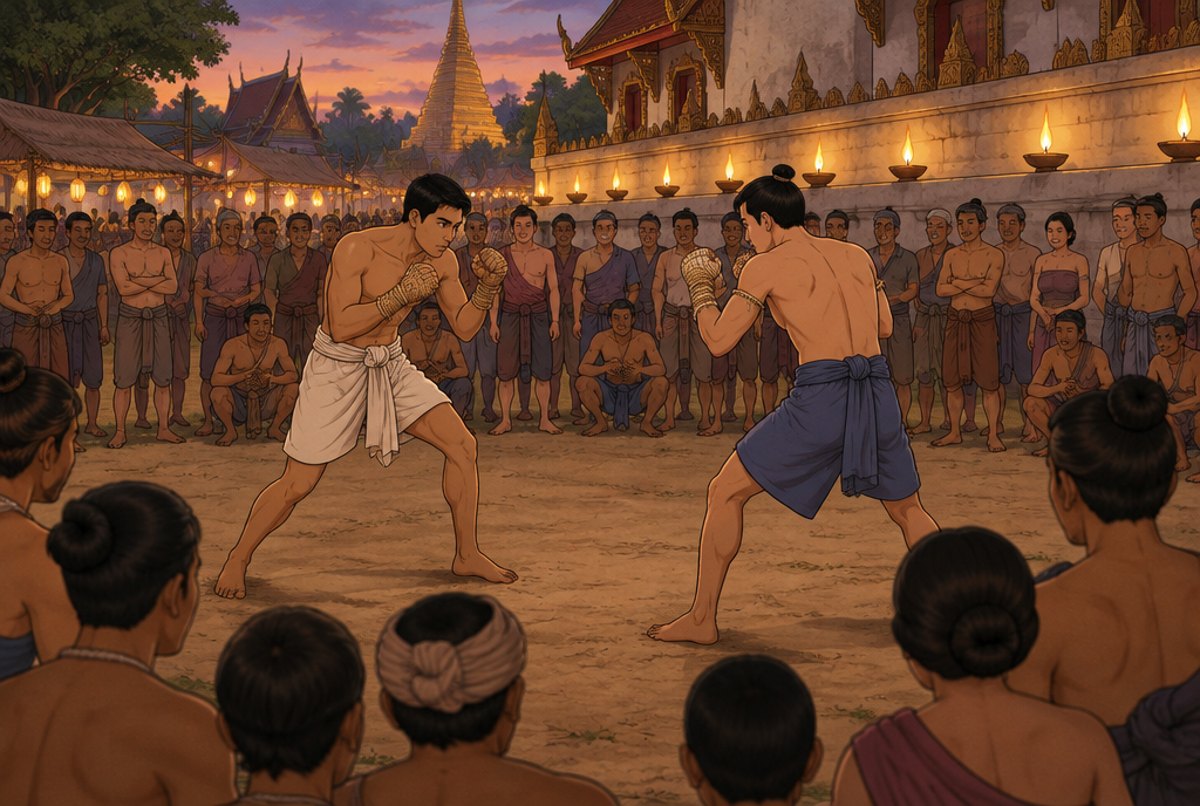
Siam's own royal chronicles add a king. In 1702, they record, King Suriyenthrathibodi went to a temple fair in disguise and boxed there. 1
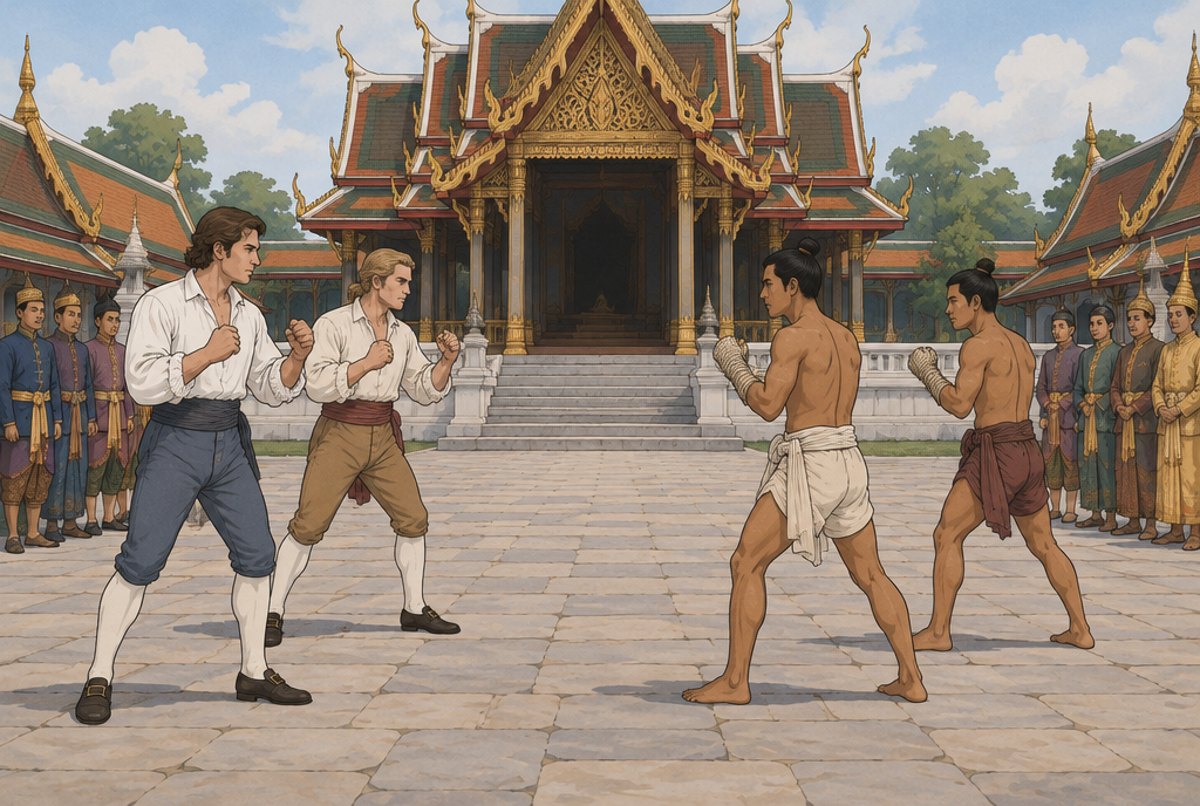
The chronicles also record a challenge in 1788 by two French boxers, made before King Rama I. 1
Records and stories
Those three moments are where the documents begin. Much older stories exist, and they matter, but they are a different kind of evidence. The next chapter tells the best known of them as what it is, a legend, and sets the historians' view beside it.
One more thing to know before going on: Muay Thai has neighbours. Myanmar, Cambodia and Laos have kickboxing arts of their own, Lethwei, Kun Khmer and Muay Lao. 10 Cambodia and Thailand disagree about some names and origins. 5,10
A bout today
The bout those first witnesses saw has changed a great deal, and the next chapters tell how. Today an adult amateur bout under IFMA's rules is three rounds of up to three minutes, in head guard, elbow and shin guards; top professional bouts are usually five rounds of three minutes, in gloves only. 20,21,31,44 Fighters may hold in the clinch, and the referee calls yaek, break, to separate them when neither is striking with power. 21 Judges score the round for effective, forceful Muay Thai skills, and strikes that land on a well placed guard do not count. 21
Japanese kickboxing, which has its own page, grew in the 1960s from karate fighters meeting Muay Thai. 61 So when a club says "kickboxing", it may mean something close to Muay Thai, or something quite different; the techniques and competition pages here set out the differences.