

This chapter is about a legend. A legend is a story that people tell and love, which may or may not have happened the way it is told.
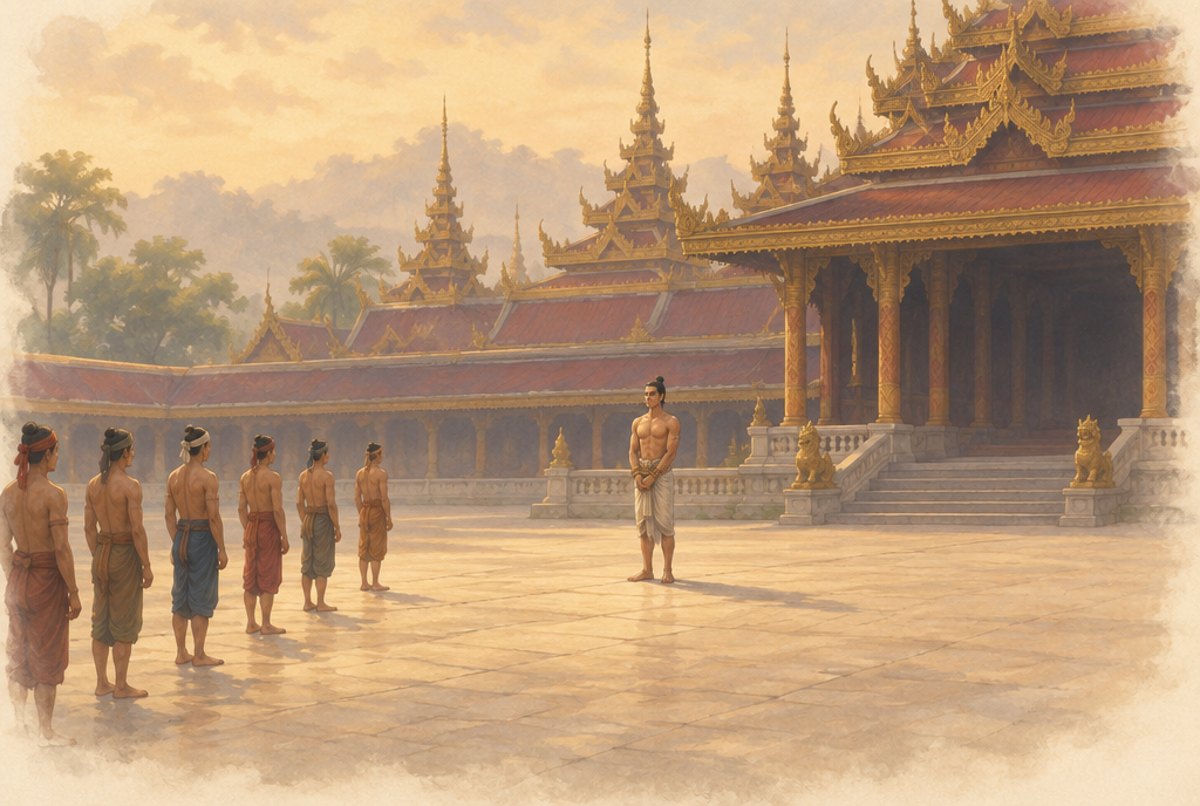
Who tells it?
The story is told all over Thailand. , the world body for Muay Thai, names Nai Khanom Tom among the warriors of its own history. 20
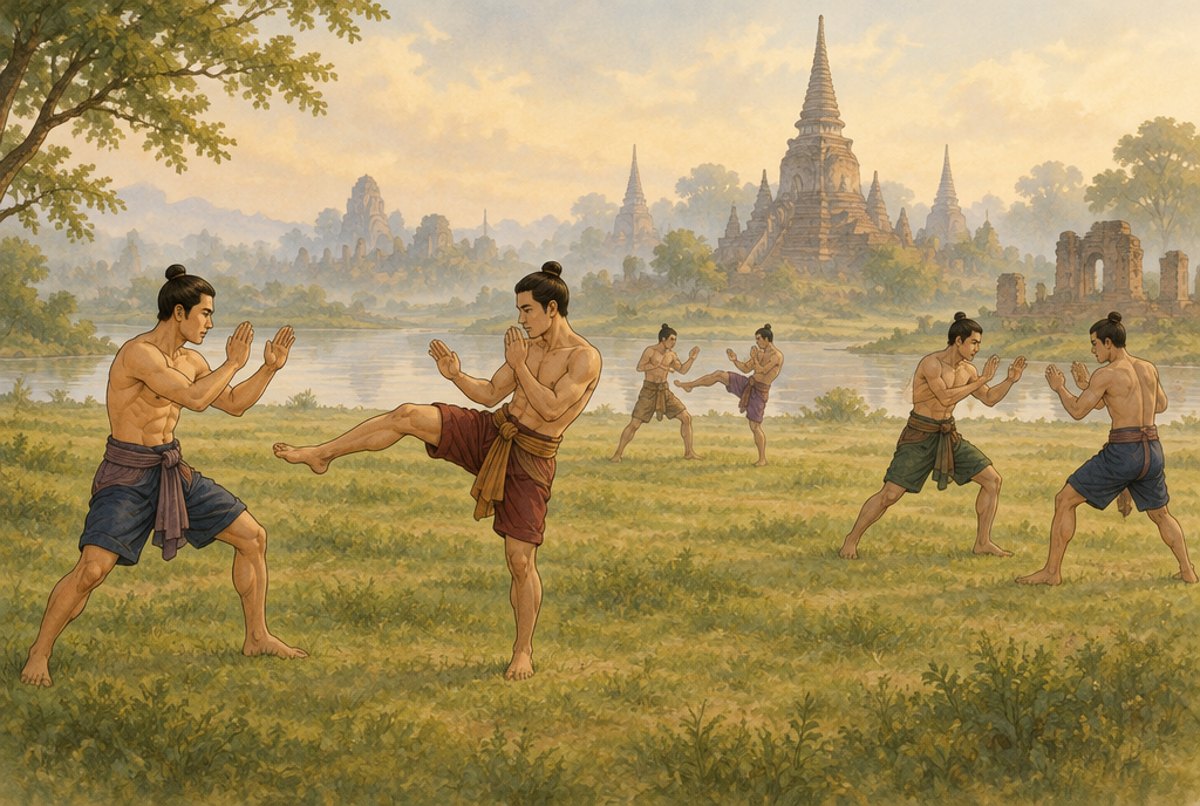
Every year on 17 March, Thailand remembers Nai Khanom Tom with a festival and a ceremony, a ceremony of thanks to teachers. Many people call that day . 1 Thailand's official Muay Thai Day is another date, 6 February, chosen by the government in 2016. 104
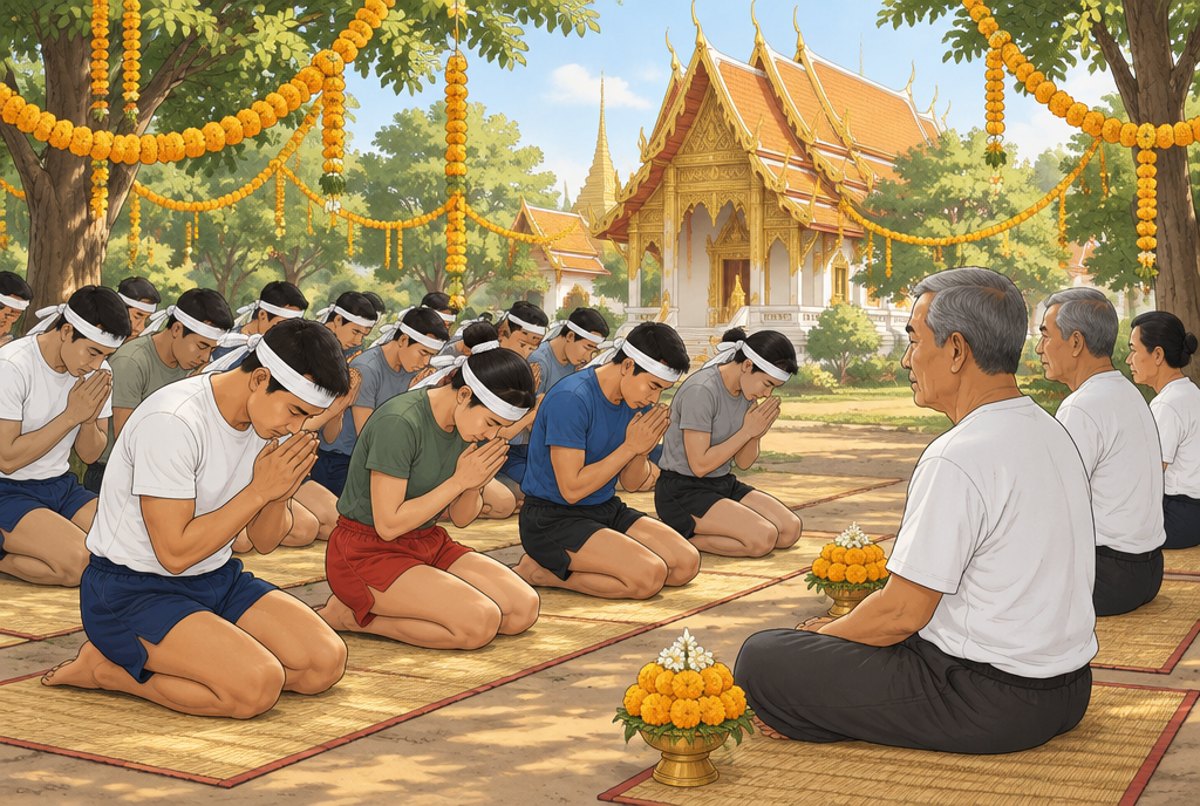
The UK Muaythai Federation says that the yearly ceremony of thanks to teachers is usually held on Muay Thai Day. 40 At that ceremony, it says, teachers may mark sacred symbols on a fighter's forehead. This is called . 40
What historians say
So is it true? Nobody can show it either way. What we can say is that people still tell it, and that Muay Thai Day is held every year. 1
Every legend here is marked in a box like the ones above, so you always know which parts are records and which parts are stories.
The next chapter goes back to the records. Before boxing gloves were invented, Thai boxers wrapped their hands in rope.