

British Muay Thai has named founders, and their own organisations tell their stories. Where those stories disagree, both versions are shown.
Master Toddy in Manchester
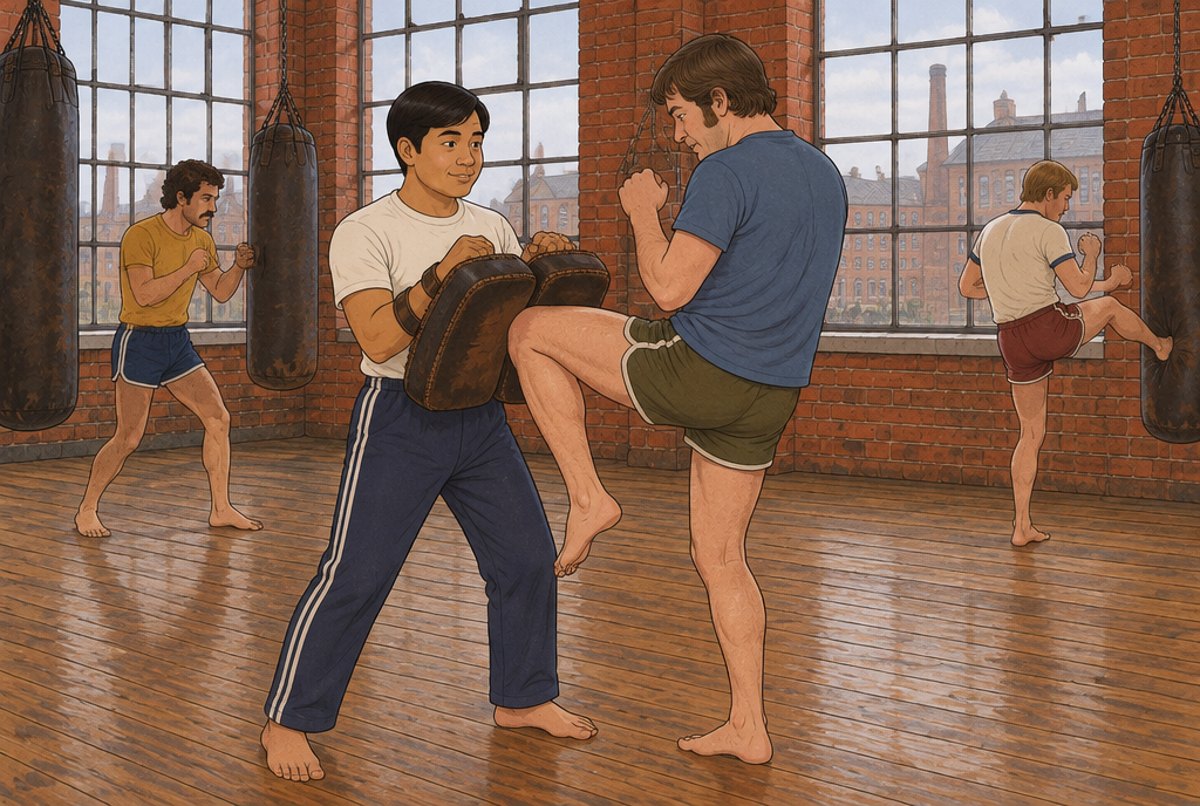
Thohsaphol Sitiwatjana, known as Master Toddy, came to England in 1975 and opened a gym in Manchester, and he is known as the "Father of English Muay Thai". 9
Three masters
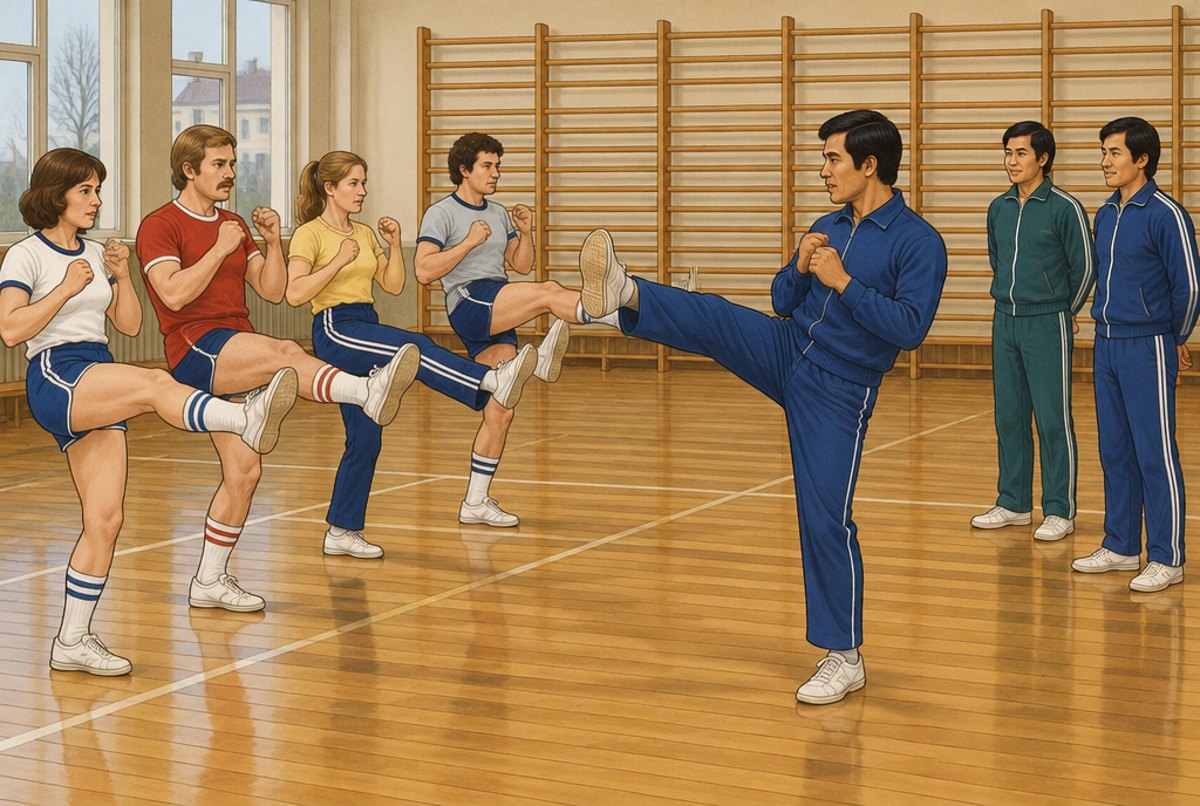
The Kru Muaythai Association in Bangkok tells a wider story: in 1975 the masters Woody, whose name is Chinawut Sirisompan, Toddy and Sken Kaewpadung began teaching Muay Thai in Europe. It says Woody was still living in England when the association was founded in 2003. 32
The first British bodies
The BTBC is run from Sitsiam Camp in Stalybridge, a founder member. It offers instructor training, seminars, rules and a grading structure from complete beginner to a "Gold standard" senior instructor, across Muay Thai, Muay Boran and krabi krabong. 46
Master Sken's own organisation began as SIMTA, the Sitnarong International Muay Thai Association. SIMTA's own history gives two dates, 1981 and 1986. Since 2010 it has been the Master Sken Association, the , based in Herefordshire, with academies in Stockport, Liverpool, Huddersfield, Bath, Leeds, Luton, Oxford, Hammersmith, Hayes, Exeter and elsewhere. 47
Armbands
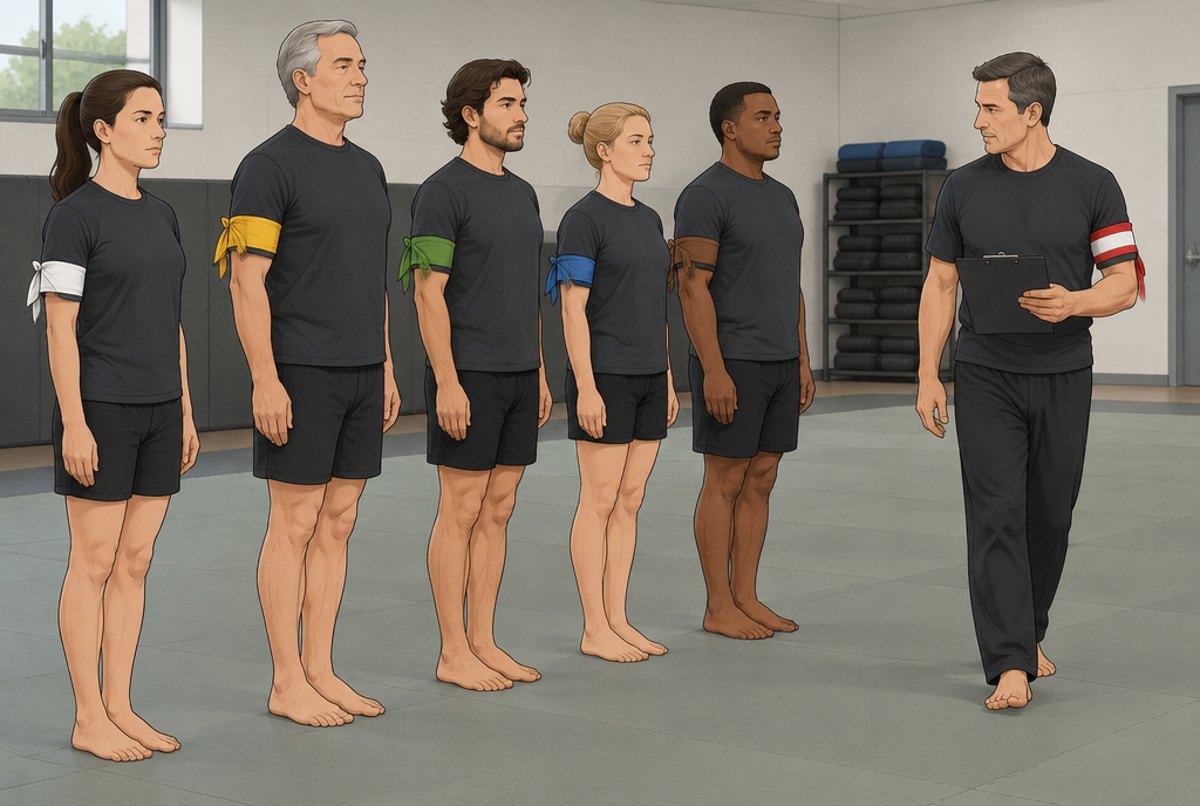
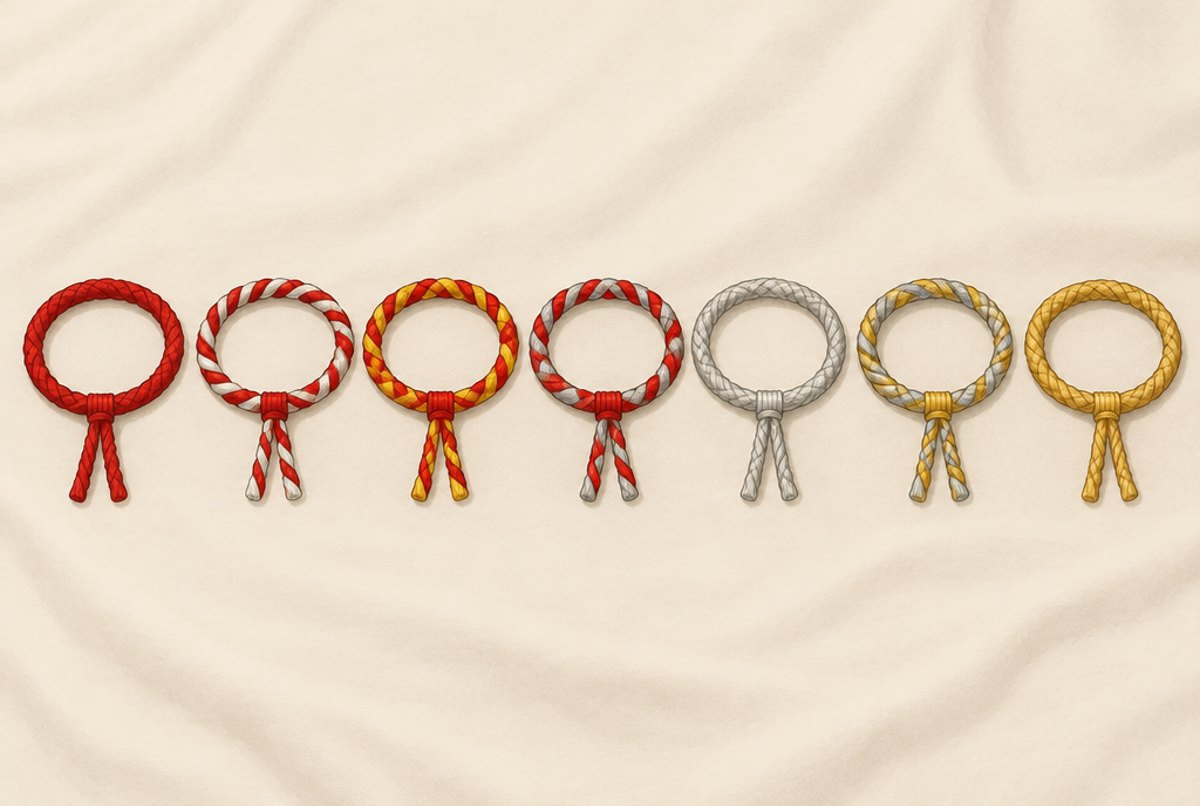
The MSA grades with coloured armbands: white, then yellow, green, blue and brown, with children able to go on to red. Each grade covers boxing, elbow, knee and kicking techniques, self-defence and muay boran, the MSA's pledge and rules, and history. Its instructors wear the armband it calls the Kruang Rang in red and white, red and yellow and red and silver, silver for masters and gold for the senior grandmaster. 47
The American line
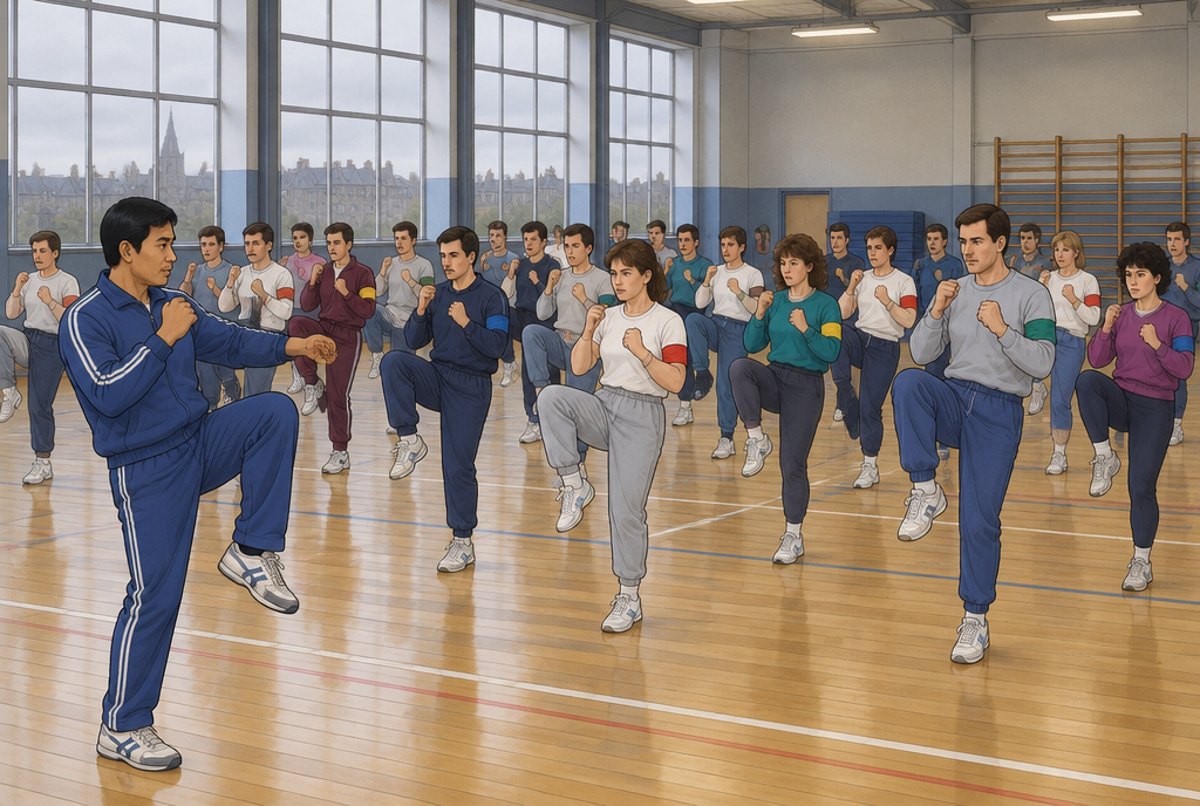
Ajarn Chai Sirisute founded the World Thai Boxing Association, the , in the United States; its own history calls him the first person to teach Muay Thai actively there, from 1968. The WTBA reached the UK with a seminar in Glasgow in 1989. It grades with armbands from white to black, in four phases of about three years of material. 33
A grading system for teachers
Traditional Thai camps had no uniform ranks. The says there were only two titles, kru, the teacher, and , the pupil, with age and skill deciding seniority among teachers. 32 The KMA's own system, which it says was developed by Grandmaster Woody, combines colour coded headbands with Thai amulets and ceremonies across 19 levels: red based headbands for the teaching ranks, silver for an , a master, at Khan 14, and gold for grandmasters. It lists 31 UK members on its register. 32
British students also travelled the other way. In 2017 students from Semtex Gym, a UK Muaythai Federation gym, trained in Thailand for IFMA's first grade, Khan 1. 27,40 By then Muay Thai had a world body, and the world body had a plan.