

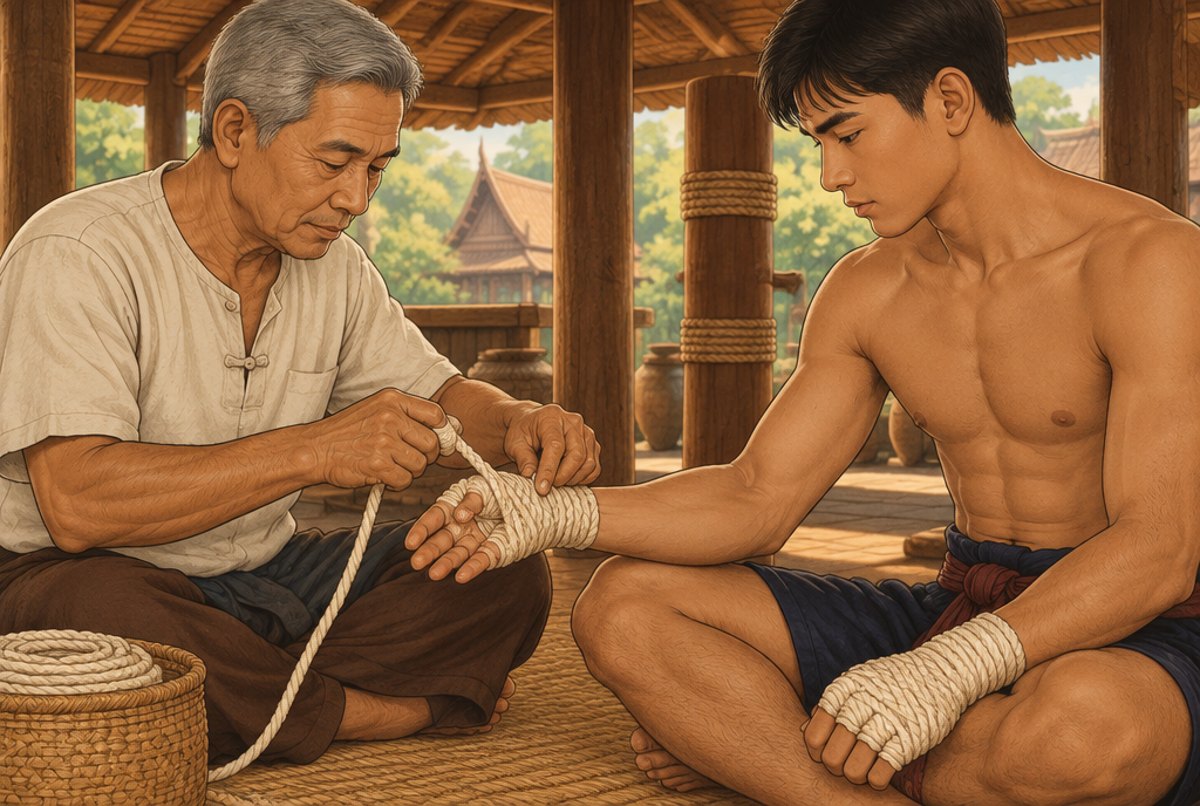
Imagine a boxer in Siam about 150 years ago, getting ready to fight. He has no gloves. Instead, his hands are wrapped in rope. Fighting with rope bound hands is called . 1,20
A king who loved boxing
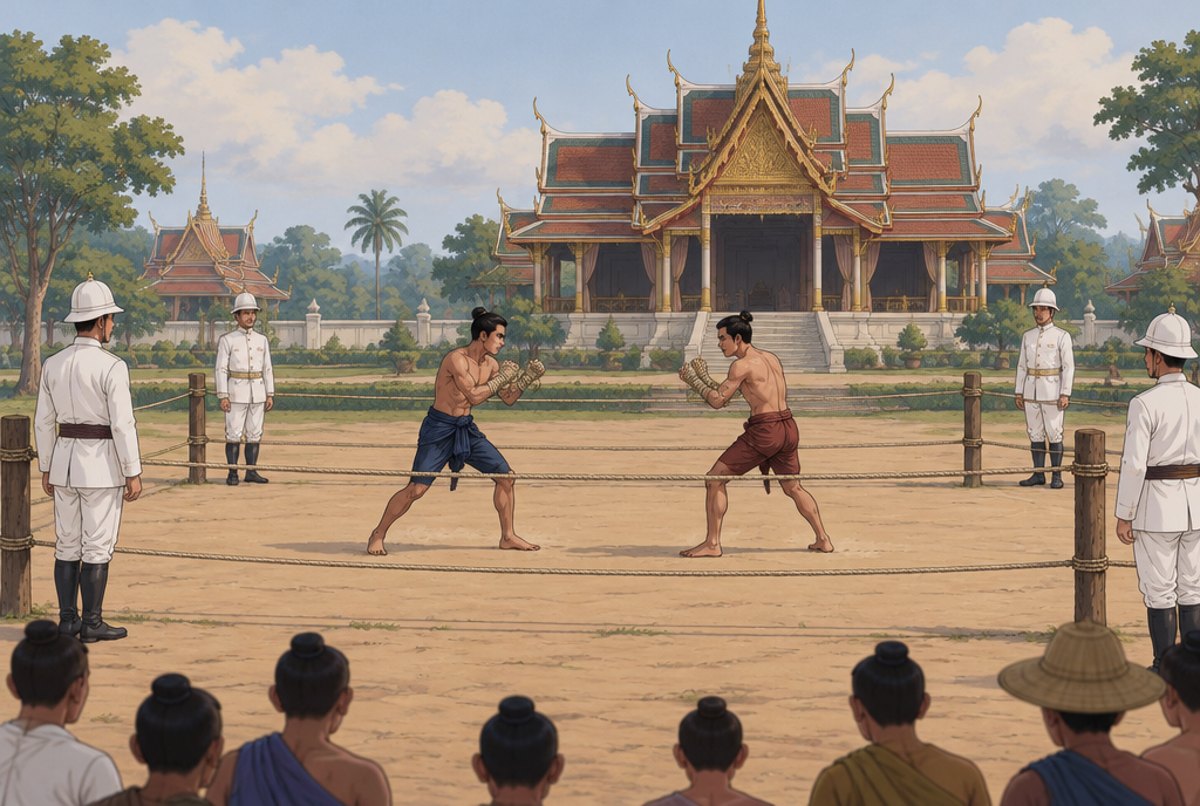
King Chulalongkorn ruled Siam from 1868 to 1910. He held boxing tournaments, set up a royal boxing centre, and gave the winners a noble title, muen. 1 From 1887, boxing was taught in physical education. 1
Three fighters
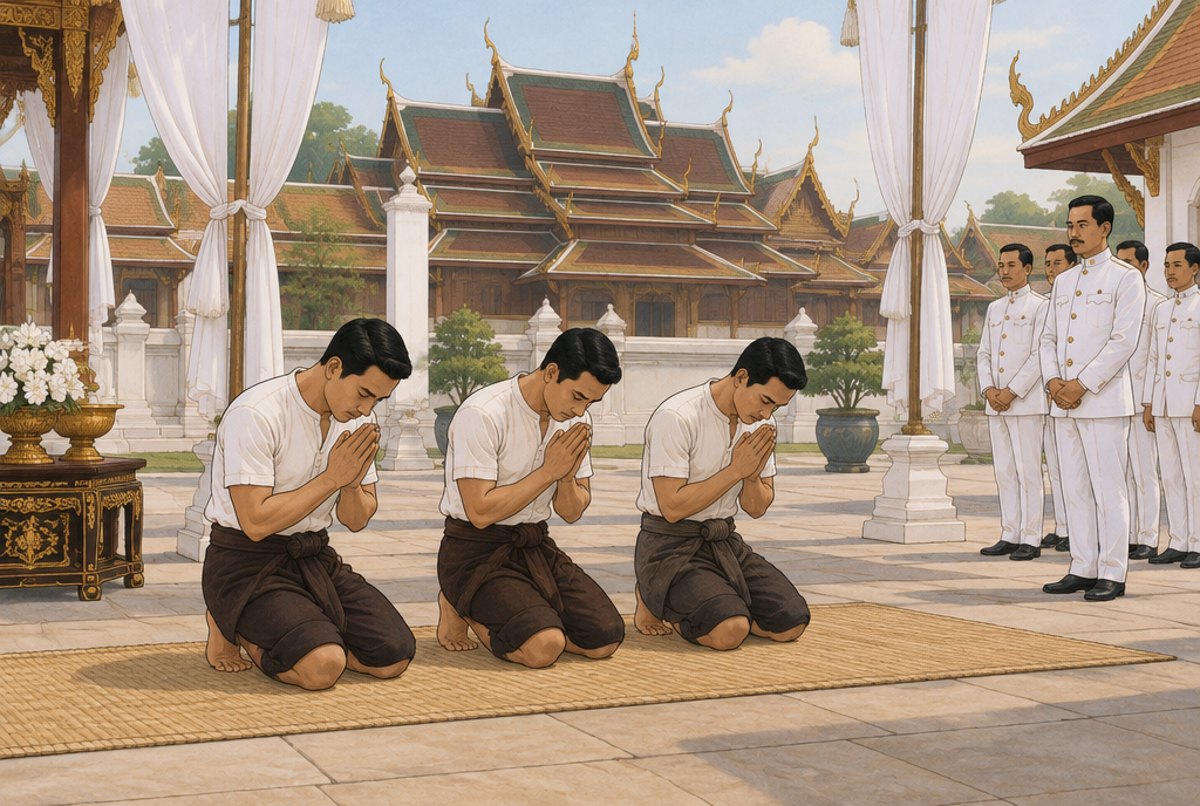
In 1910 a royal prince died. At his funeral, three outstanding fighters were honoured with the title of muen. One came from Lopburi, one from Korat and one from Chaiya. 1,2
Later, people began to talk about the boxing of each of those places as its own style. Today these old styles are called , which means ancient boxing. The name itself is quite new. 1,2
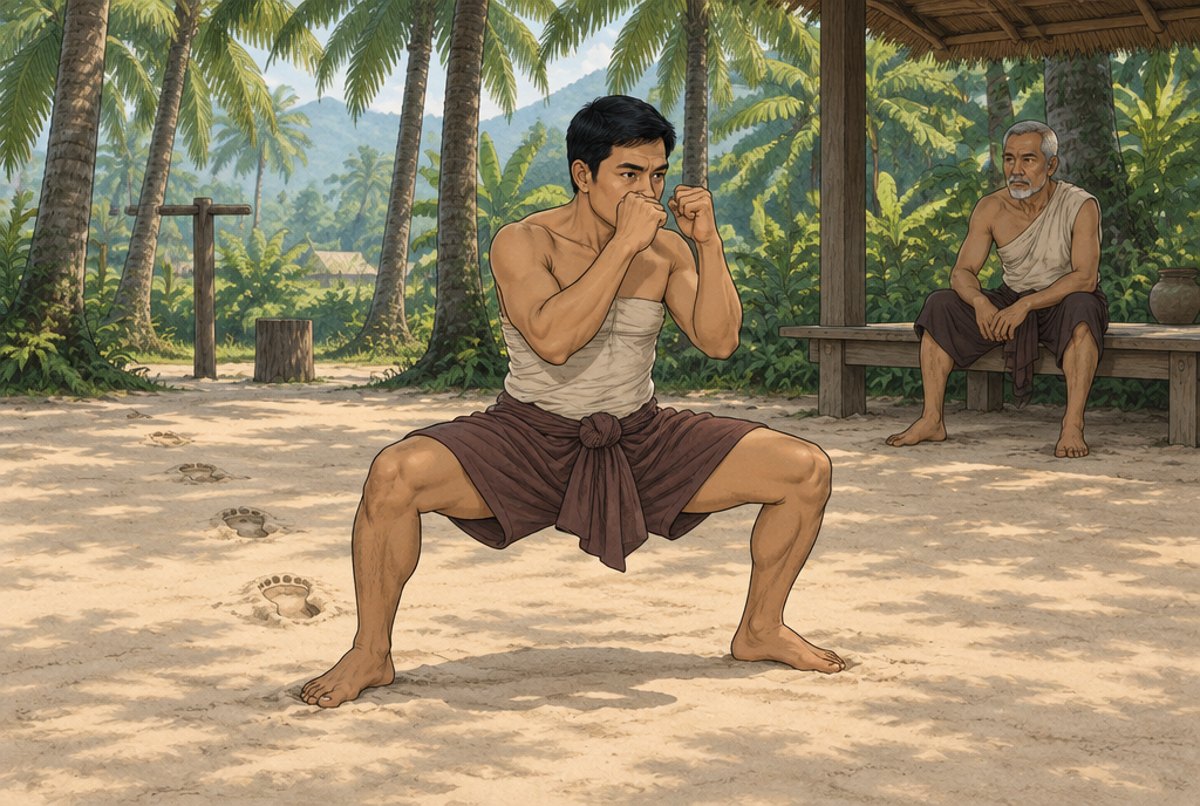
The low stance of Chaiya
, from the south of Thailand, is known for a low stance and a three step way of moving the feet called . 2 Today Yang Sam Khum is also one of the finishing movements of the wai kru dance that IFMA judges in competition. 22
Sword and staff
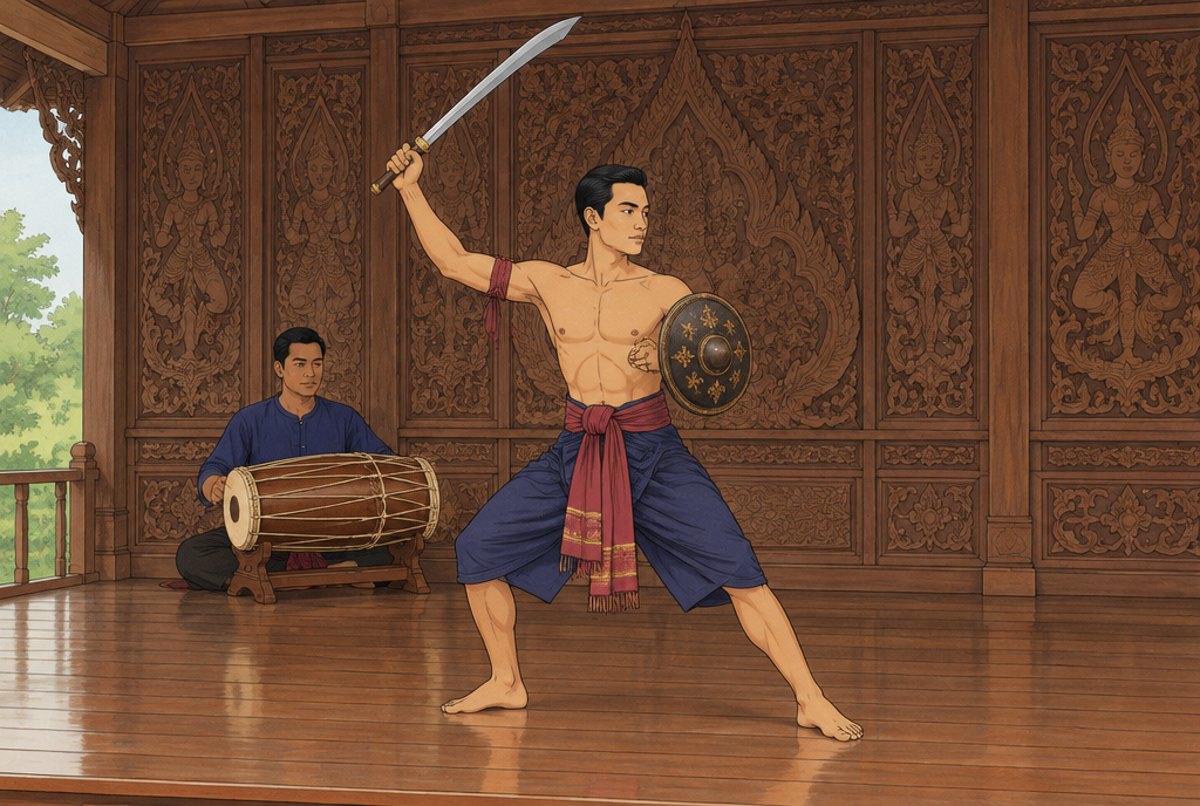
Thailand also has a weapon art, . The krabi is a sword and the krabong is a staff. It is a different art from Muay Thai, but a few gyms teach both, among them Sitsiam Camp in Stalybridge, near Manchester. 10,46
Old Thai boxing is still practised today, in demonstrations and in IFMA's traditional events. 1,2,20,21 But in the 1920s, boxing in Siam was about to change very fast.