

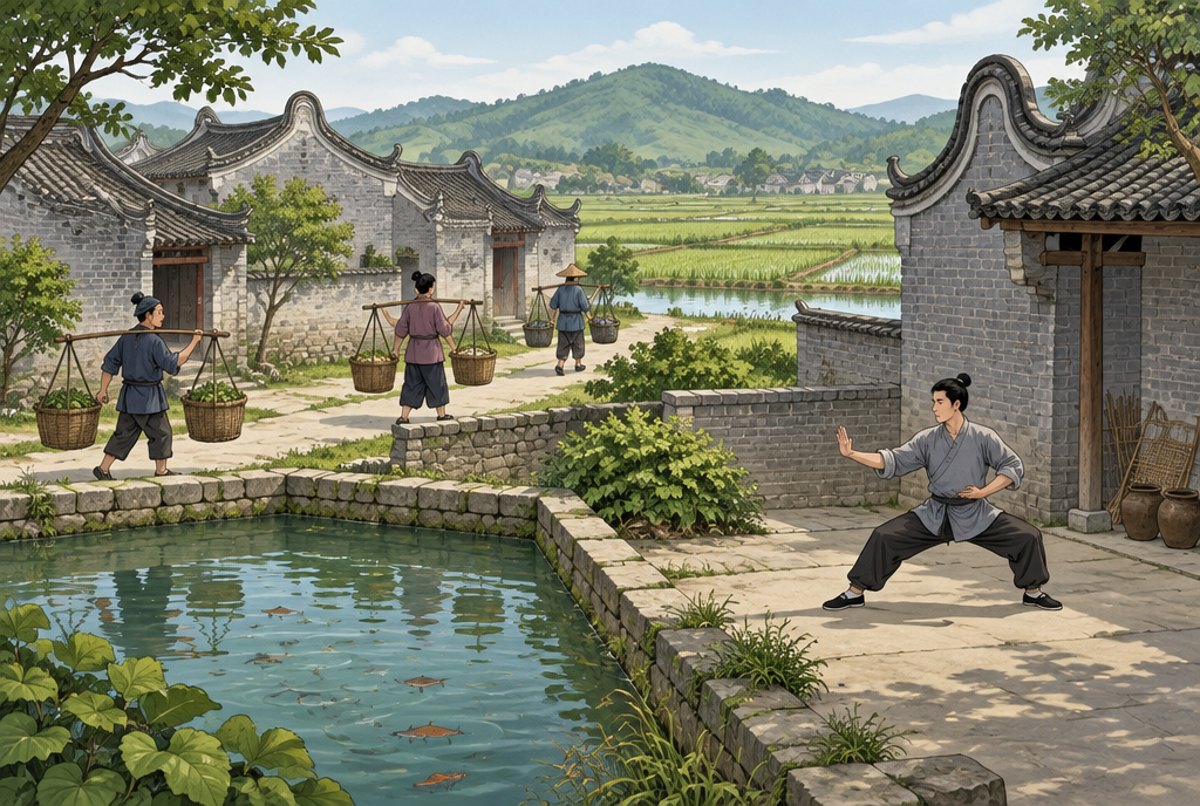
In 1806 a boy called Chan Heung was born in King Mui, a village in Guangdong, in the south of China. 9
Three teachers
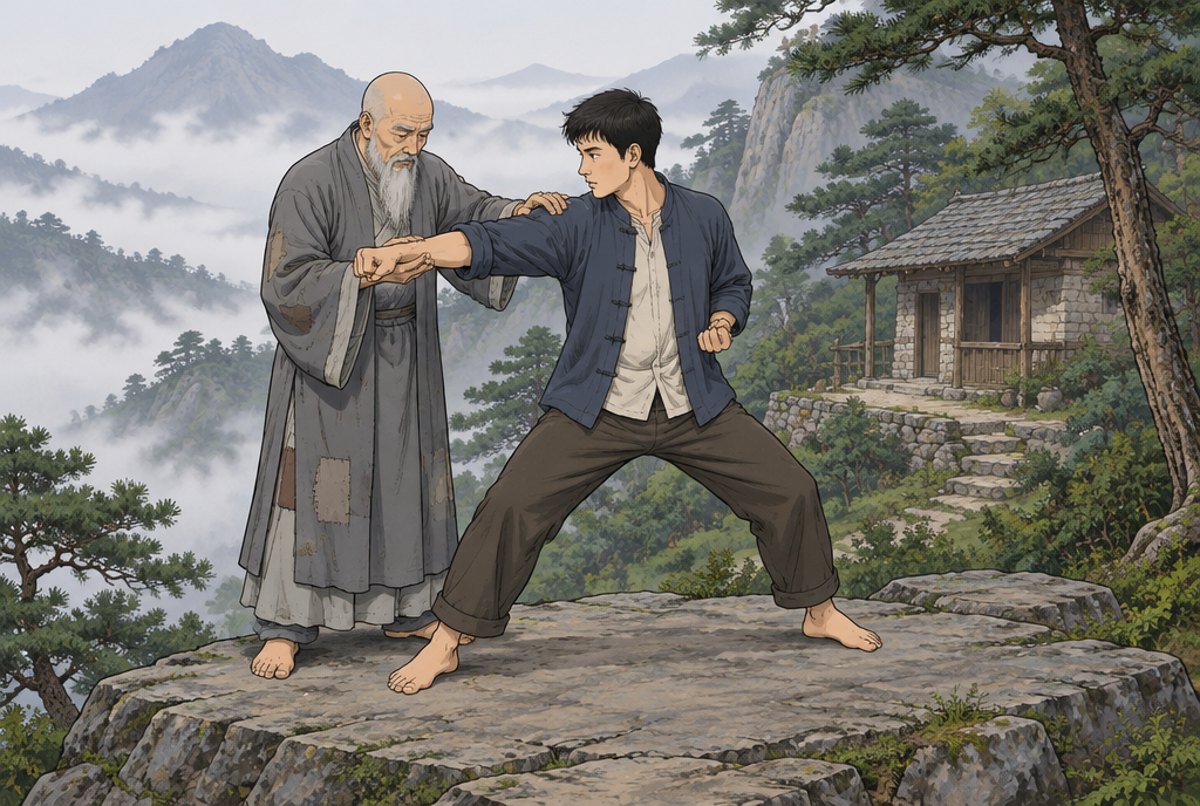
From the age of 7, Chan Heung learned Fut Gar, a Buddhist style, from his uncle. Next he learned Li Gar from a teacher called Li Yau-san. Then he wanted to learn from Choy Fook, a monk who lived alone on Mount Luofu. It took a lot of persuading, but the monk taught him for nine years. 9
A style named after three teachers
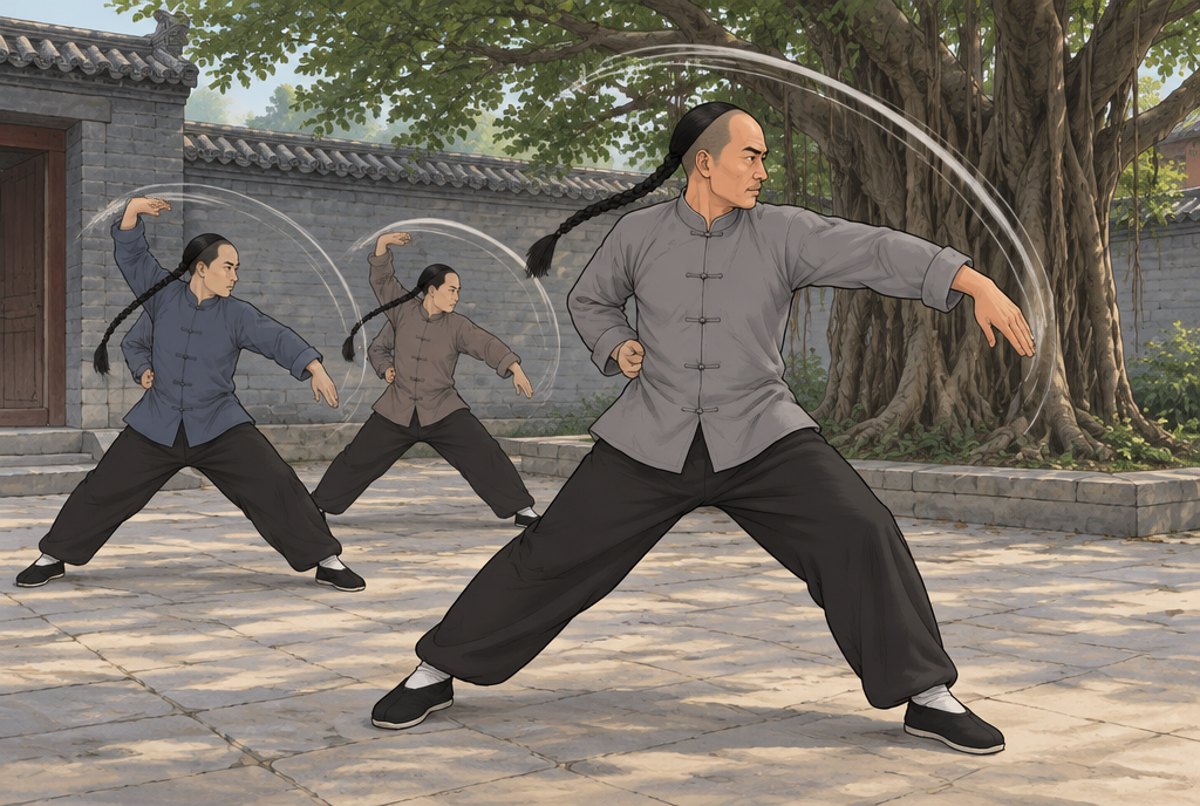
In 1836 Chan Heung started his own style. He named it after the three styles he had learned, Choy Gar, Li Gar and Fut Gar, and so it is called . 9 Its fighters swing their arms in long circles and twist the body for power, which is called , and they shout as they strike. 9 The style has more than 150 forms, and a weapon called the is credited to Chan Heung himself. 9
The doctor of Guangzhou
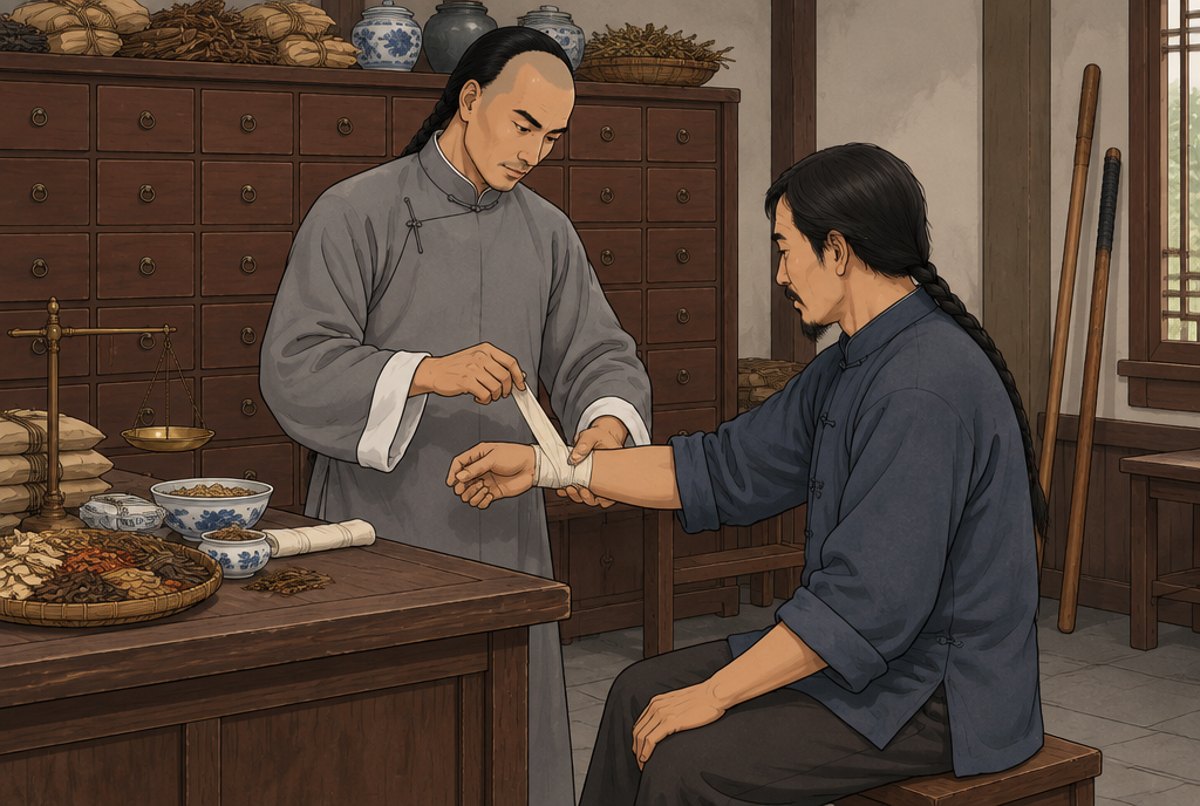
Wong Fei-hung, who lived from 1847 to 1925, was a martial artist and a doctor in the city of Guangzhou. In his own time he was best known for his medicine. 8 He learned from his father, one of the group known as the Ten Tigers of Canton. 8
Wong Fei-hung taught , and he shaped its four great forms: Taming the Tiger, Tiger and Crane, Five Animals and Iron Wire. 8 Iron Wire, , builds strength with breathing and muscle tension, and some people practised it with iron rings on their wrists. 8
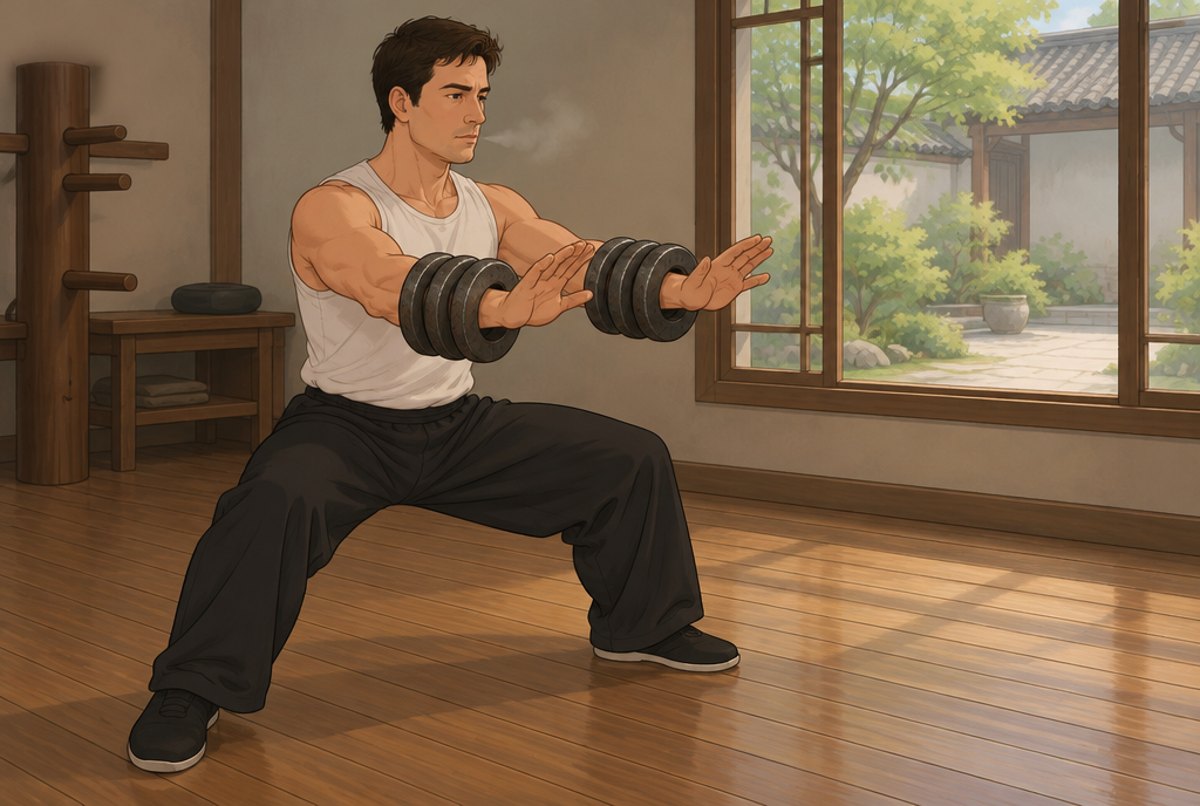
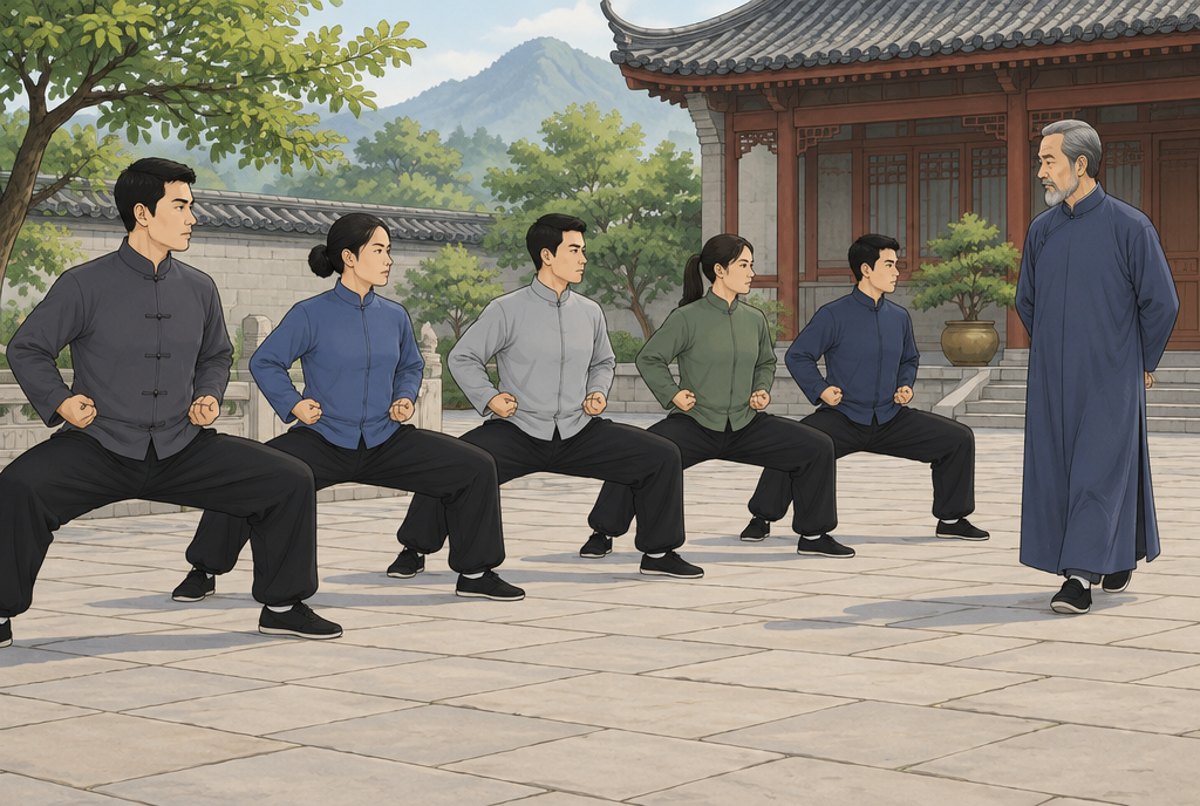
Hung Gar students stand in a low, wide horse stance, , and use the . 8,15 Students once spent months on stance training before they learned a single form. 8
The most filmed hero
Wong Fei-hung is the hero of more films than anyone else. One of them is Jackie Chan's Drunken Master, from 1978, a made up story. 8,16 Films are fun, but they are not history. 6
Masters were teaching in the south. In the north of China, other masters were busy too.