On 22 August 1960, at its session in Rome, the International Olympic Committee voted to add judo to the Olympic Games. 1 More than half a century had passed since Kano became its first Asian member. 2,66
Tokyo, 1964
Judo's Olympic debut came in Tokyo in 1964, in the city where the Kodokan began. 1,2,64 It was for men only, in four categories: under 68 kg, under 80 kg, over 80 kg, and an open category. 1,64 Anton Geesink of the Netherlands won the open category. 1,64
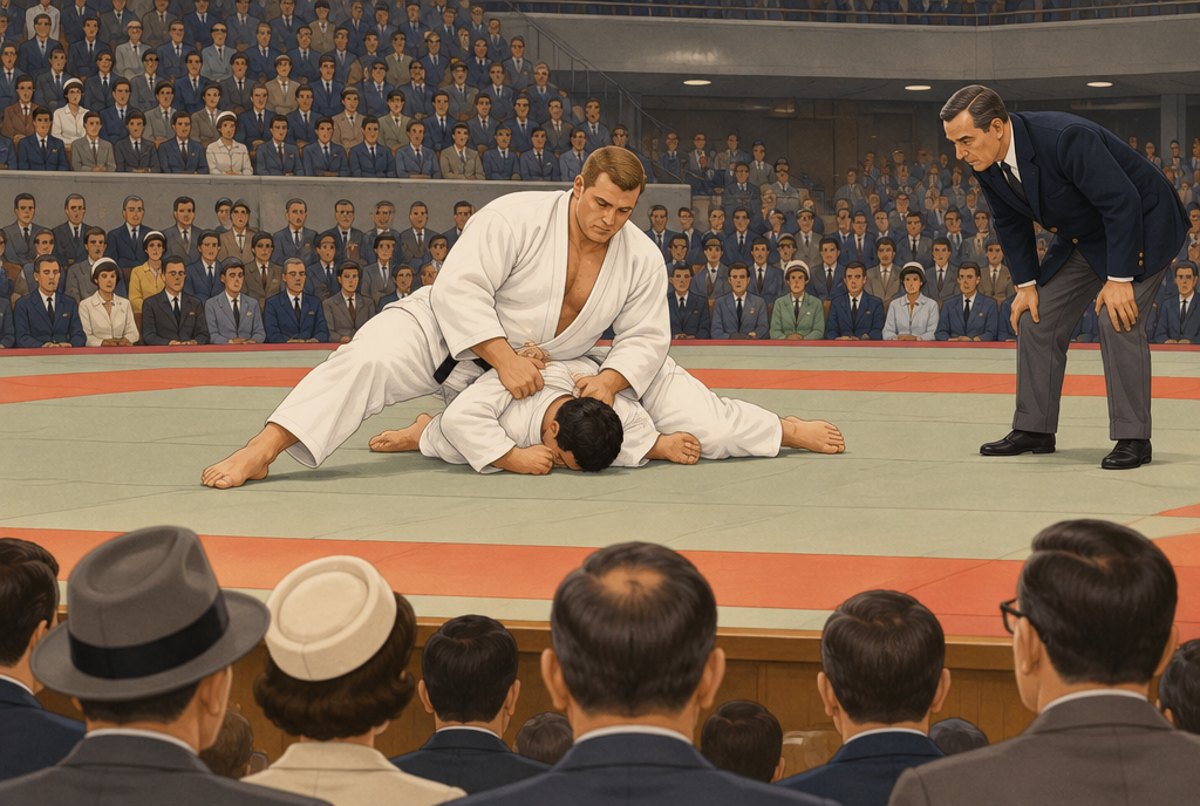
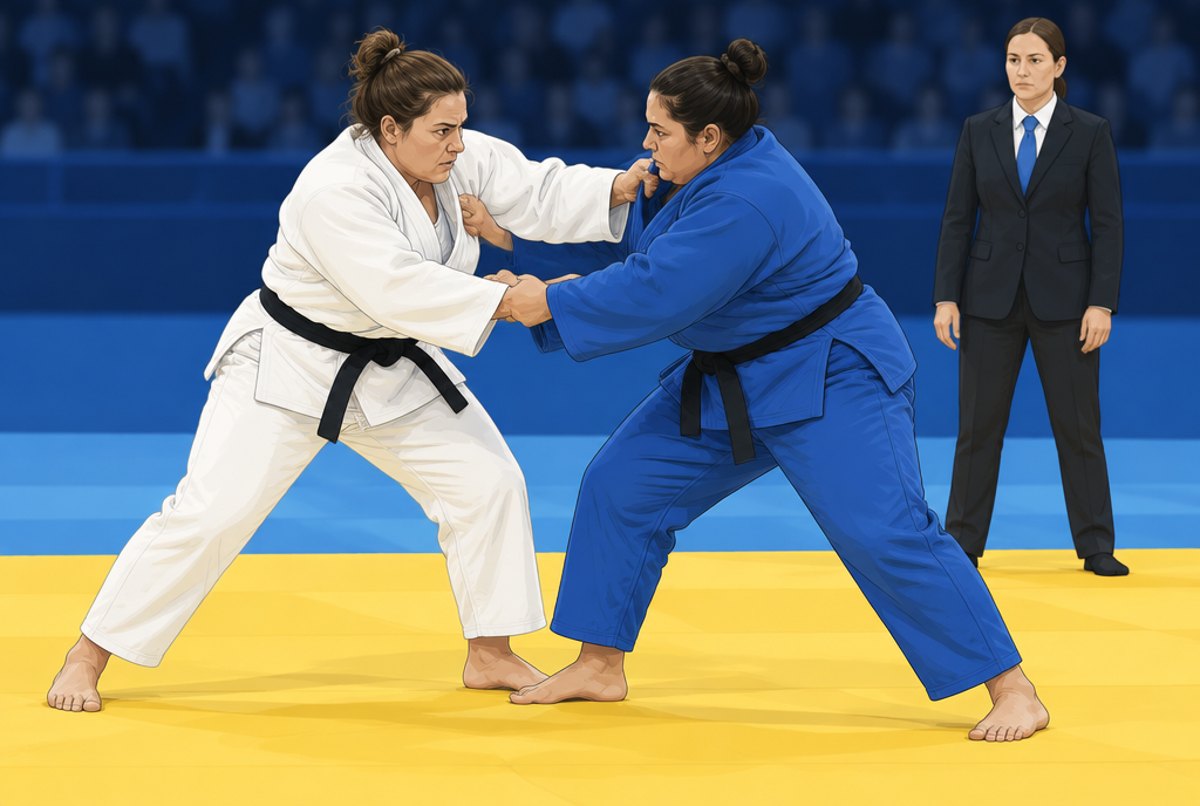
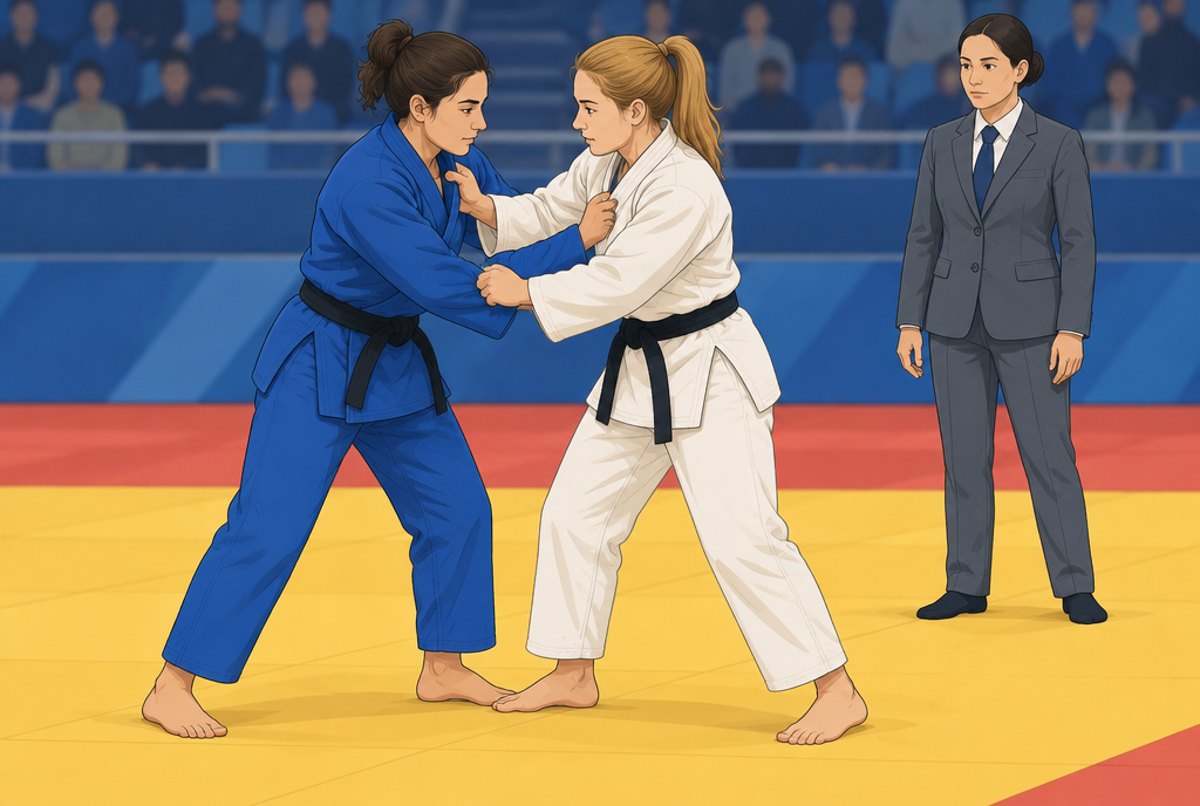
Geesink's mark on judo went beyond that medal. In 1986 he proposed the blue judogi for top level contests, so that one judoka wears white and the other blue. 1 Under today's IJF rules the judogi is white or blue, and its fit is checked with a measuring tool called a sokuteiki. 60
Out and back
Judo was left out of the 1968 Games in Mexico City, came back in 1972, and has stayed on the programme since; British Judo credits Charles Palmer's campaigning for the return. 30,100 Brian Jacks took bronze for Britain in 1972. 36 Neil Adams won silver in 1980 and again in 1984, and in 1981 became Britain's first male world champion. 36
Women's judo
The first women's World Championships were held in New York in 1980. 35,64 At Seoul in 1988 women's judo was a demonstration sport, and in Barcelona in 1992 women won Olympic medals for the first time. 1,30,64 Kate Howey won bronze in 1992 and silver in 2000, and she is the only British woman with two Olympic judo medals. 36
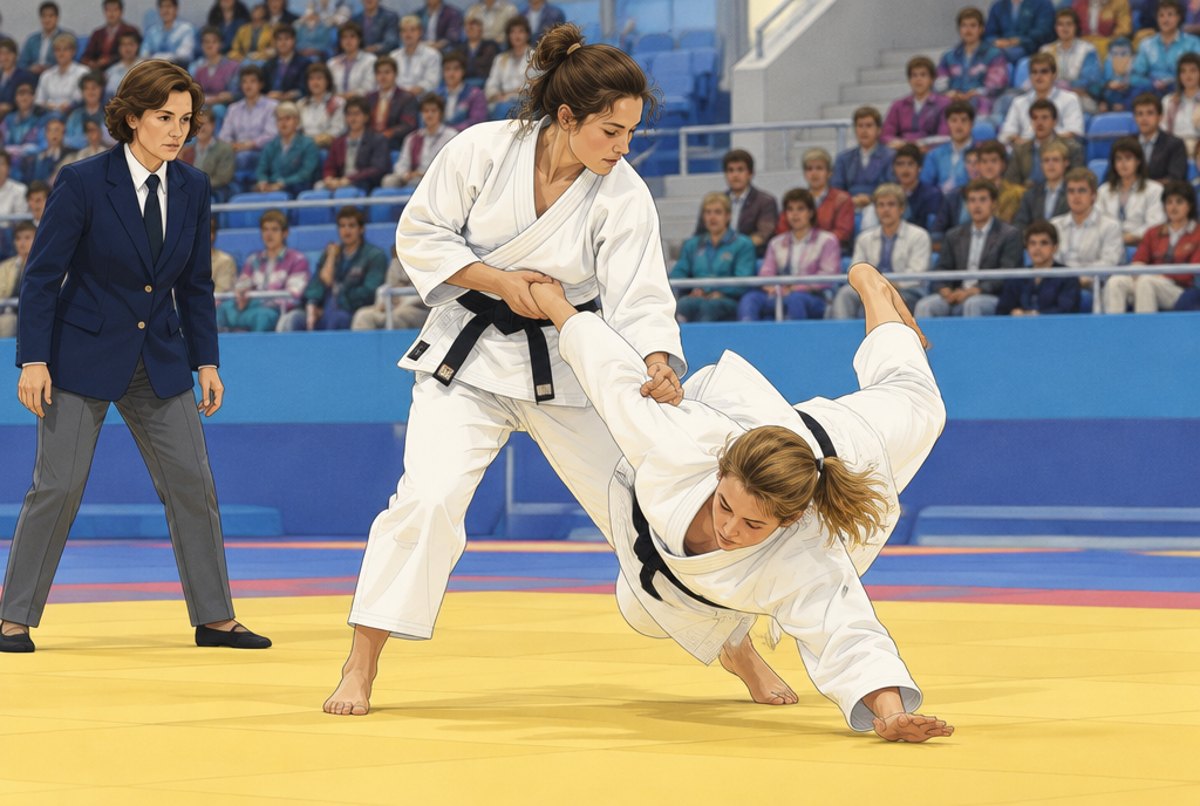
At London 2012 Gemma Gibbons won silver and Karina Bryant bronze. 12,36 The Tokyo Games, held in 2021, added a mixed team event: three women and three men a side, one point for each bout won, and four points to win. 30 Chelsie Giles won bronze for Britain in Tokyo. 12
Paralympic judo
Men's judo entered the Paralympic Games at Seoul in 1988, and women's events followed at Athens in 2004. 1,32 Paralympic judo is for visually impaired athletes, run internationally by the International Blind Sports Federation with IJF rules plus adaptations. 32,70 There are two classes: J1, for athletes who are blind or almost blind, marked by a red circle on the back number, and J2, for partially sighted athletes. 32,70 Contests begin with both judoka already gripping, and J1 athletes are not penalised for leaving the area unless they do it on purpose; the referee calls jogai near the edge. 70 At Paris 2024 the events were split by class for the first time, eight for men and eight for women. 32
Simon Jackson won gold at three Paralympic Games in a row. 12 Chris Skelley won gold at Tokyo 2020 in the under 100 kg class and bronze at Paris 2024, where Dan Powell won silver. 36,101
Paris 2024, and the rules now
At Paris 2024, host nation France won the most judo medals, 10, and Japan the most golds, three. Great Britain won none: a regional newspaper reported that all five British judoka missed the medals. 31,150 The Olympic programme now has seven weight categories for each sex plus the mixed team event. 30,60 Judo has also been part of the Youth Olympic Games since the first, in 2010, and a core Commonwealth Games sport since 2022. 1
Medals are decided the same way in every weight: gold, silver and two bronzes, with a repechage that gives a second chance to those beaten by the finalists. 30,60
The rules keep moving. Under the IJF's rules of 14 August 2026 there are three scores again, , and , and a contest that is level after four minutes goes to , with no time limit. 60 The IJF has said the rules will stay frozen until the Los Angeles 2028 Games. 62 Nobody under 15 may compete in an IJF event, and there is no upper limit: veterans compete from 30, in five year bands up to 70 and over. 60 At home, British Judo runs the British Championships and the English, Scottish, Welsh and Northern Ireland Opens. 97 The competition page has the detail.
On the mat tonight
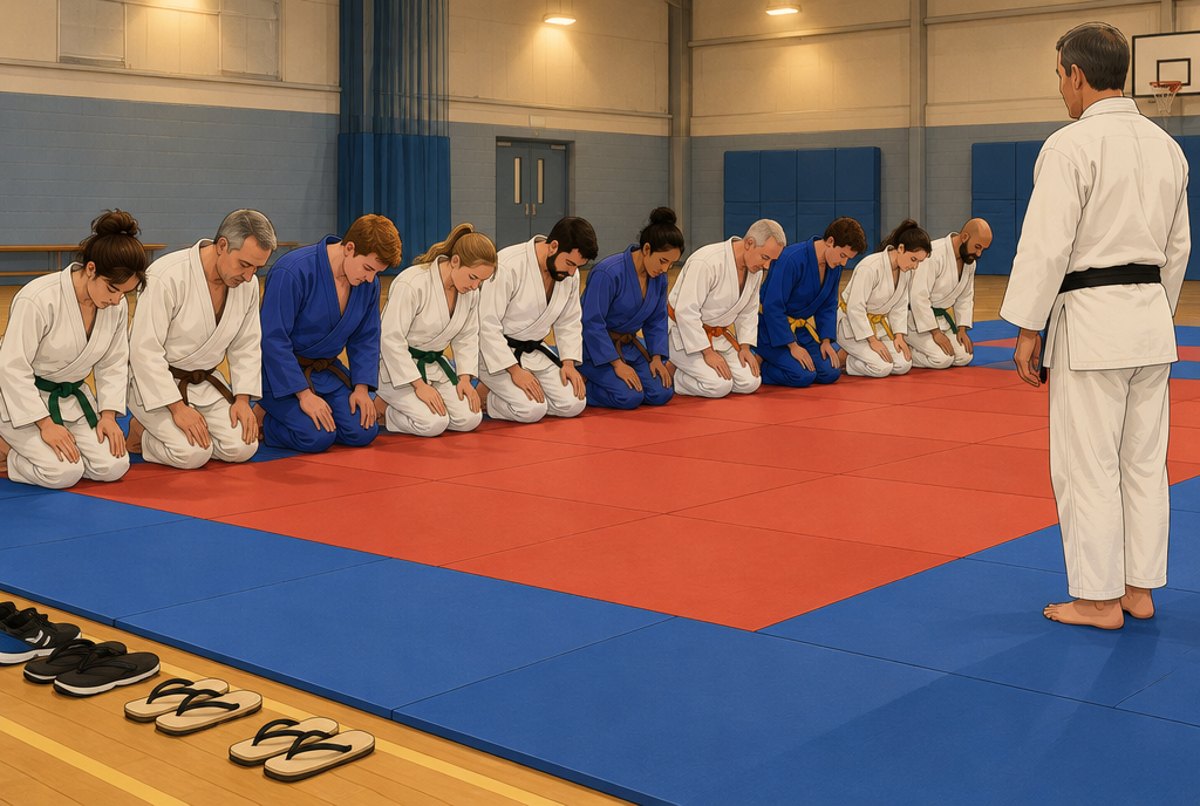
A first judo class in Britain still carries the whole story. Beginners' contests, if anyone wants them, start at Level One, where every competitor receives a medal. 97 But most of the story happens in training. Judoka bow, , on and off the mat. 81,90,123 They learn , breakfalls, before they are thrown. 1 They do and kata, the two ways of learning Kano met under Fukuda and Iso. 1,2,5 Their grades are Kano's Kyu and Dan system, with coloured belts like those recorded at the Budokwai in 1926. 1,17,21
The temple with 12 mats, the music hall stage, the Budokwai on a January Saturday and a sports hall tonight are one story.