

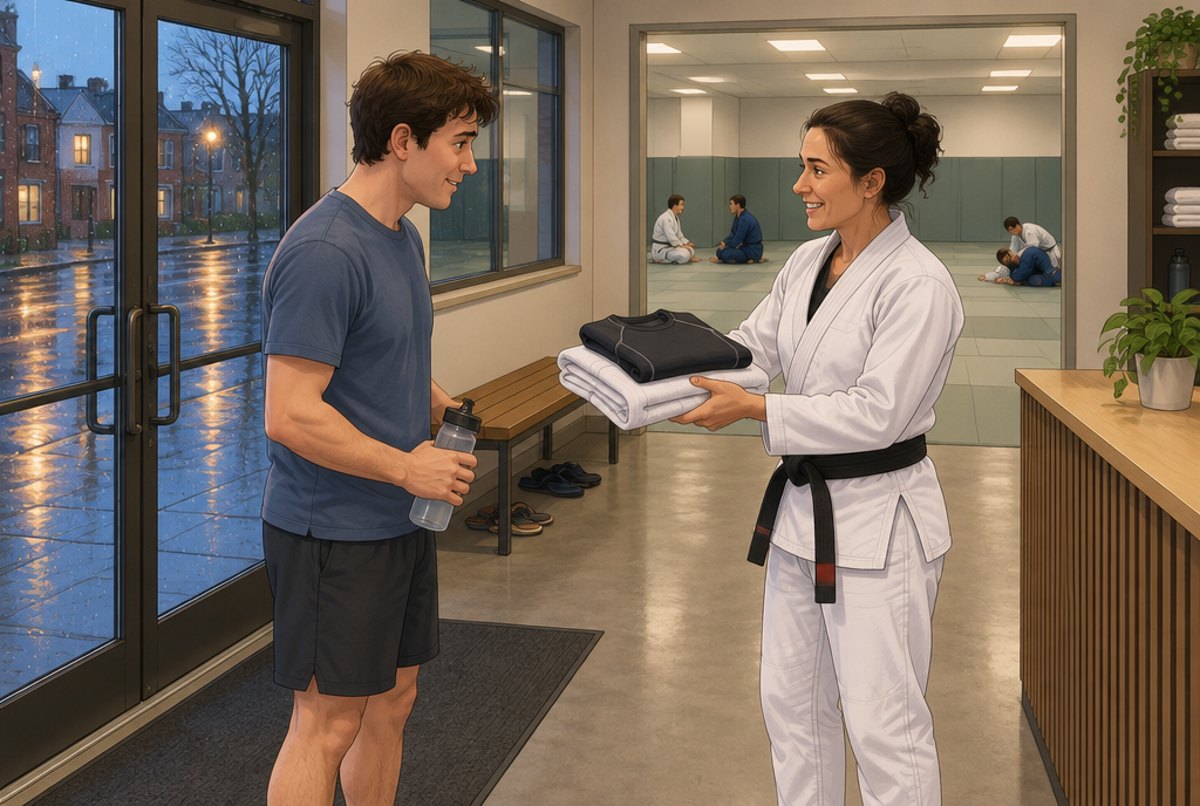
Imagine an academy in a British town on a weekday evening. A new adult student has come 20 minutes early, as the Roger Gracie Academy asks first timers to do, in shorts and a T-shirt, with a water bottle and a pair of flip flops. 104 At Gracie Barra, the academy lends a gi and a rash guard for the first class; at the Roger Gracie Academy a gi comes in a welcome pack. 100,104 Shoes stay on until the edge of the mat, and come off there. 100,104
The one rule that matters most
Before anything else, the new student learns to tap. The UKBJJA's safety policy puts it in three words: "Tapping is training!" Every beginner must understand that tapping is a normal, healthy part of jiu-jitsu and the personal responsibility of every player; holds are applied with control, giving the partner time to tap, and released the instant they do. 86 You tap before there is pain, not after. 86 You pat your partner, the mat or yourself twice, clearly; with a foot if your arms are trapped; or you say so. 43
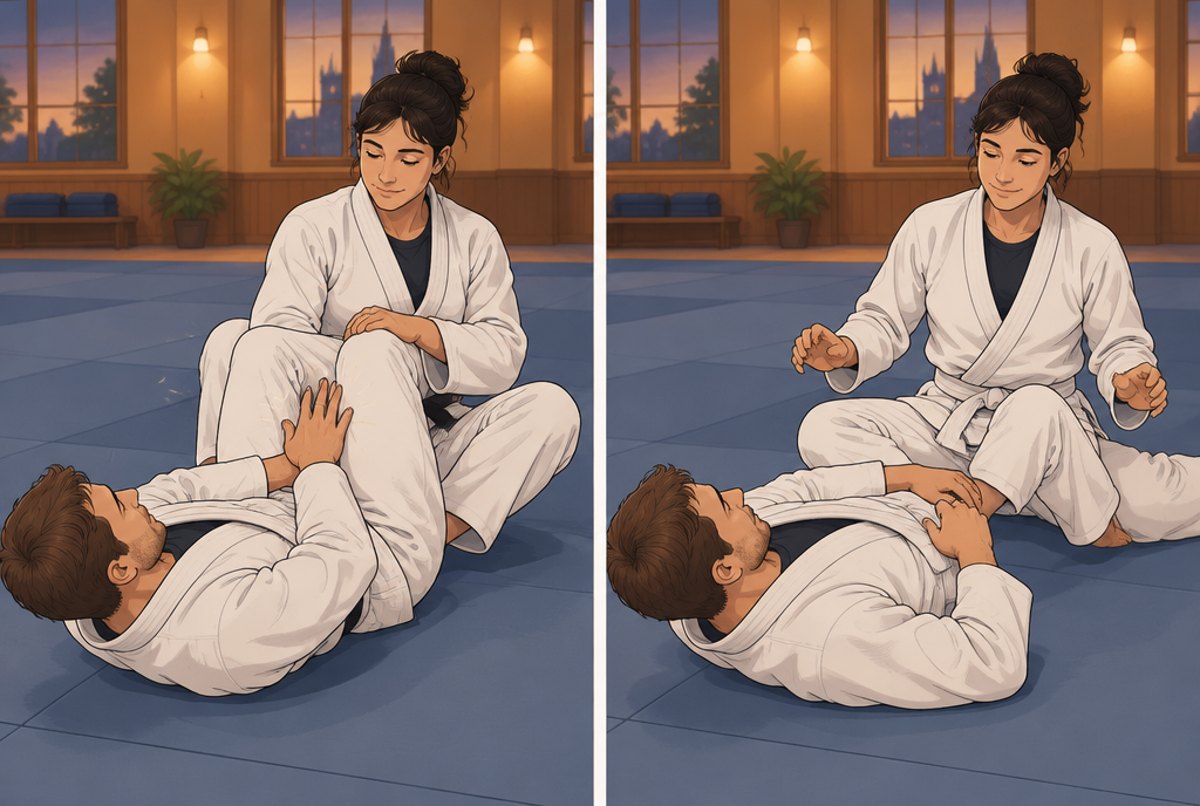
Beginners also learn to roll and breakfall from the start, and the UKBJJA says they should hear about the dangers of slams and about fouls such as grabbing fingers from the first class. 86
What the class contains
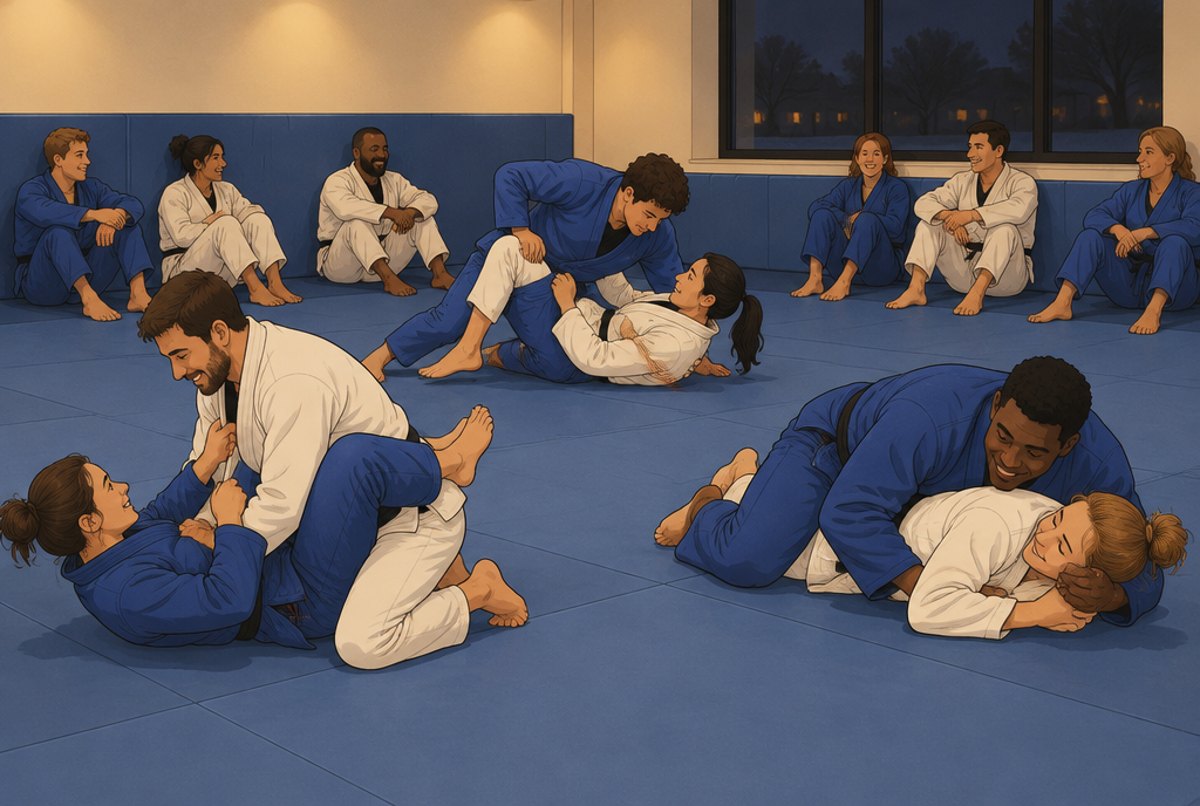
No association sets a class plan, but most classes follow the same shape. The class lines up, often in order of rank, and warms up. 1,86 The professor shows a technique, and pairs drill it, first on a partner who does not resist, then on one who does. 1 Then comes positional sparring, rounds that start in one position with a limited goal, and, usually at the end, rolling: free sparring, which many players call the most essential part of training. 1
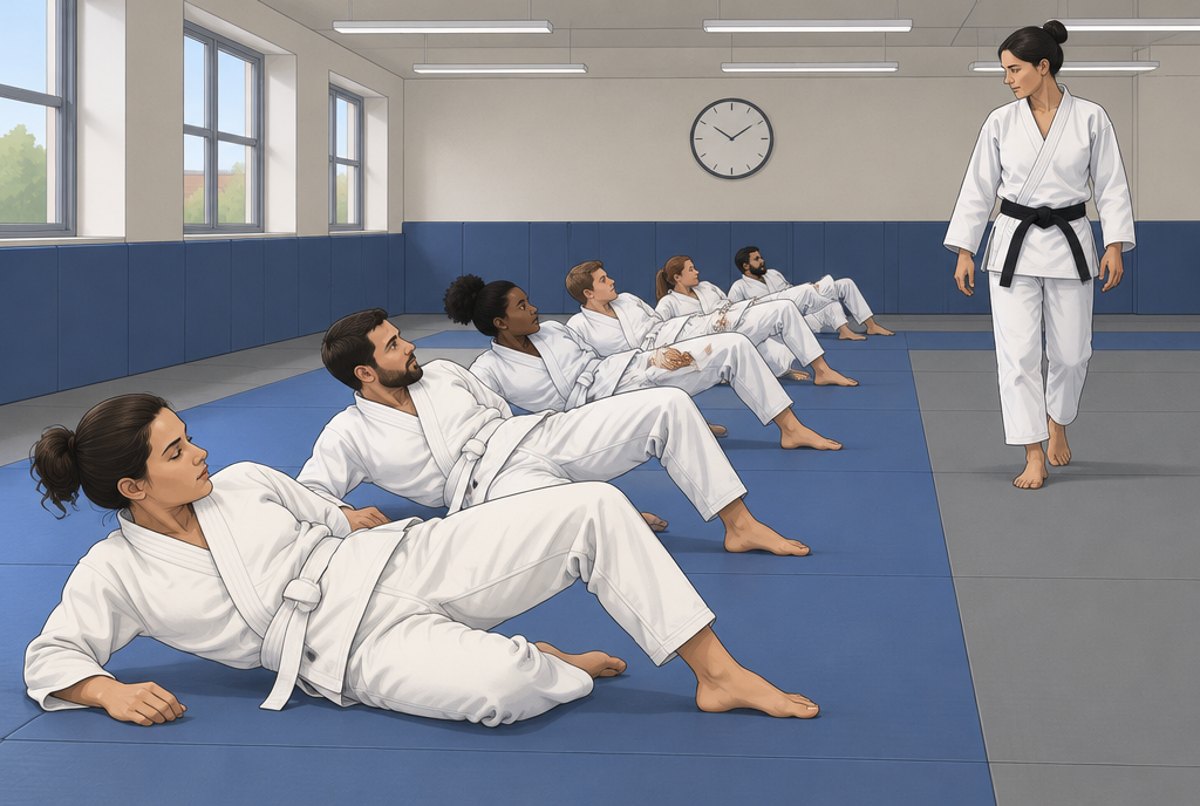
Two movements come in the very first lessons at big teams such as Gracie University and Alliance: the hip escape, or shrimp, sliding the hips away to make space, and the trap and roll, bridging to tip a partner off from on top. 102,106 Many instructors think a white belt should spend most of their time on escapes and defence, because beginners usually end up underneath. 2 Academies often keep beginners out of full sparring at first: Alliance runs its first 60 classes as drilling only, and Gracie Barra moves students into live sparring after three white belt stripes, usually at least four months. 100,102
Position before submission
The idea behind the whole art fits in one line from the IBJJF rulebook: a match is "a progression of positions of technical control that ultimately result in a submission hold". 43 Its points table is a map of good positions: 2 points for a takedown, a sweep or knee on belly; 3 for passing the guard; 4 for mount or back control, each held for three seconds. 43 Players often compare it to chess played with the body, with the submission as checkmate. 1 Being on your back in guard, with your legs between you and your partner, is not a defeat in jiu-jitsu; it is a position to attack from. 1,43
Belts, and who gives them
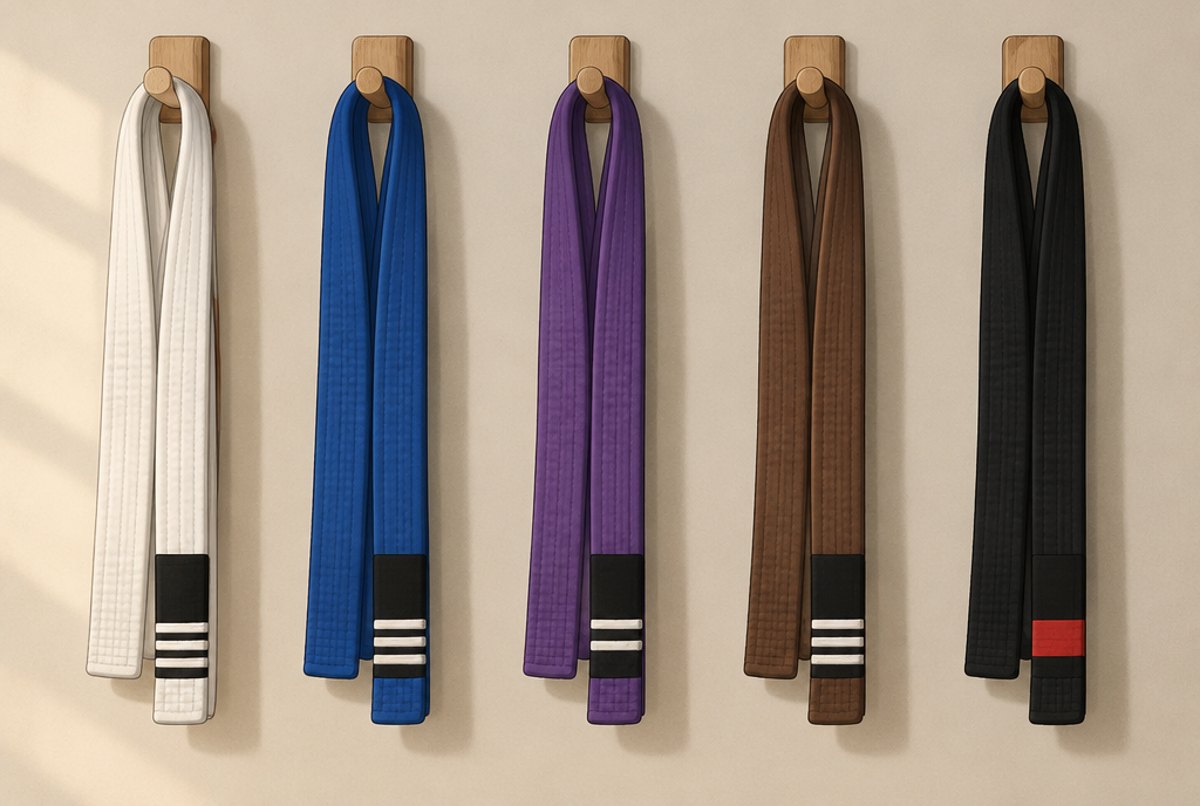
The belt around the new student's waist is white, and it will be a long time before it changes. The belt is given by the student's own professor, not by an association or an examining panel, and most academies promote without a set test. 2,40 The IBJJF sets only minimum ages and times, and says the time from white to black belt "is at the professor's discretion". 40 About 10 years to black belt is typical. 2
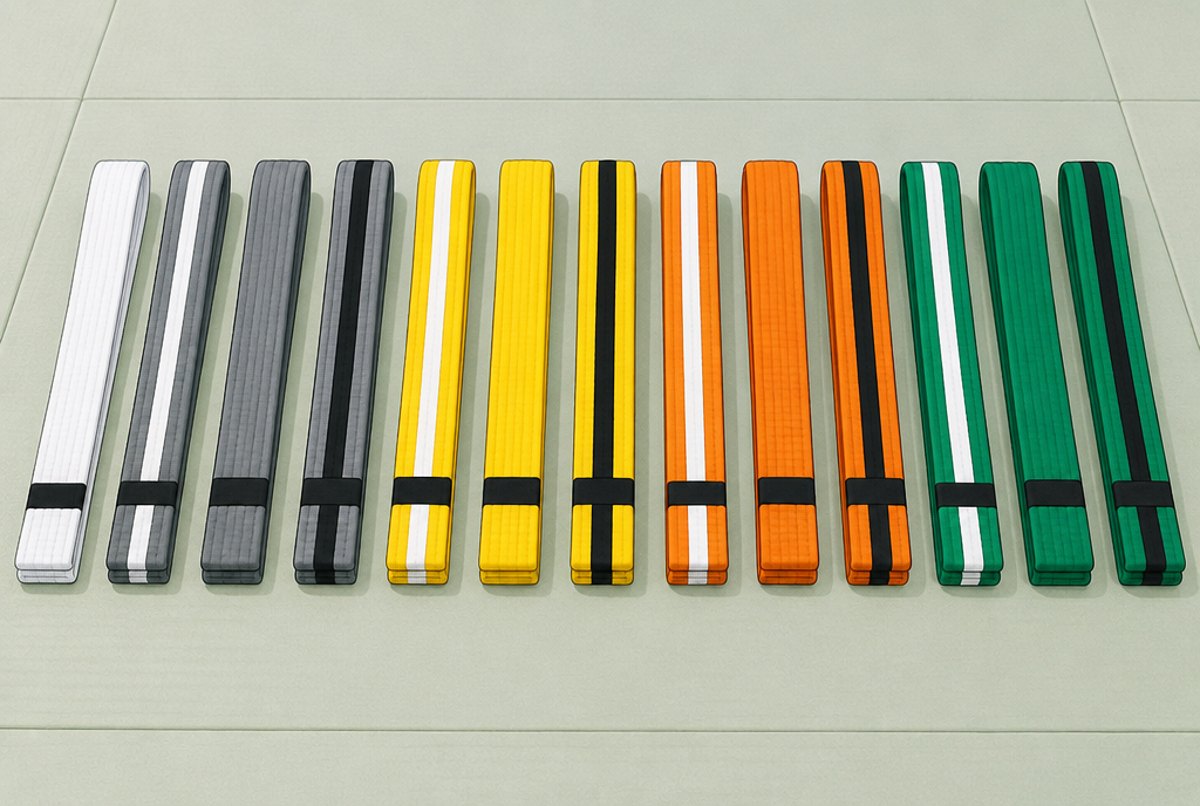
Children, from 4 to 15, wear their own ladder: white, then grey, yellow, orange and green, each in three versions, with a white line along the middle, plain, or with a black line: 13 belts in all, and at 16 they move to the adult belts. 40 A child's belt colour may look different in two academies at the same level, because the IBJJF, the AJP and the Gracie family each publish a different children's system. 3,40,52
Manners and hygiene
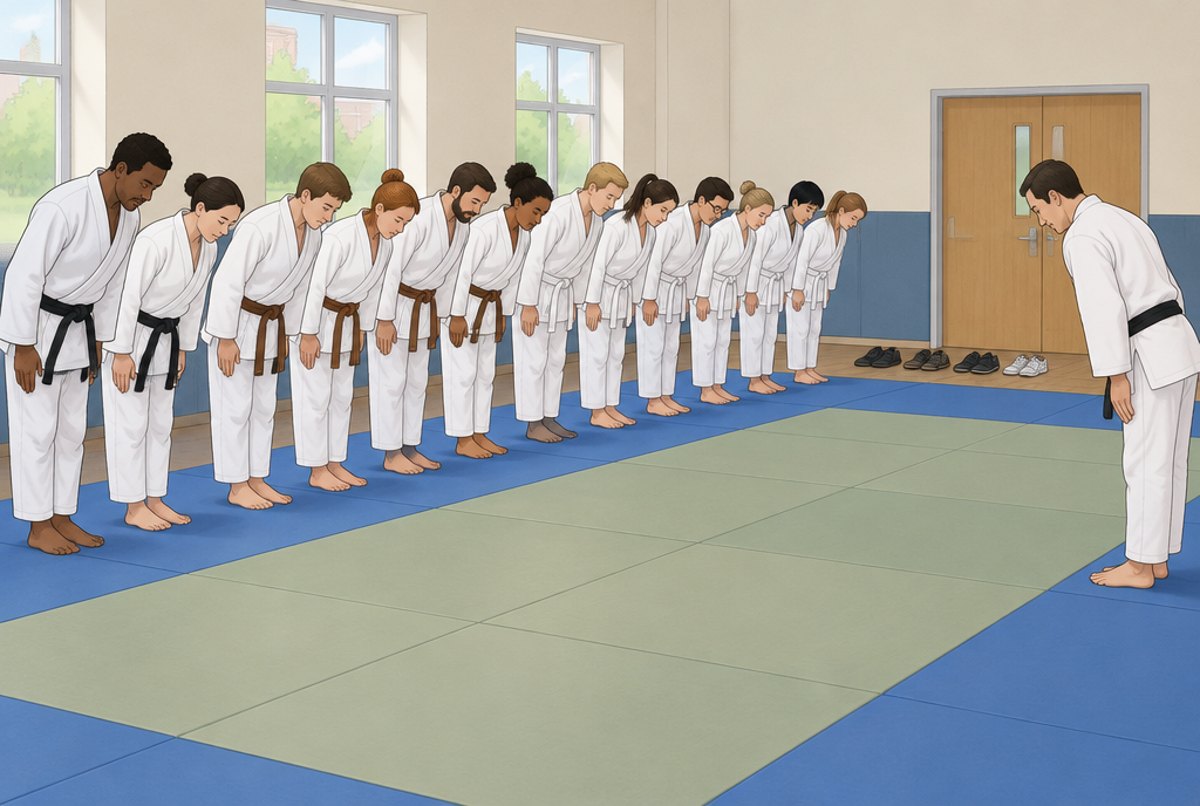
Most academies share the same customs: shoes off before the mat, lining up by rank, calling the teacher coach or professor, a bow or a handshake before and after each roll, cuts covered, a clean gi, and treating a roll with a senior belt as a privilege. 1 Some academies say "oss" as a greeting. 25 Because the art is close contact on shared mats, the gi is washed after every class, and nobody trains with a skin infection. 82,86,104
Is it safe?
Studies of competitions suggest jiu-jitsu has fewer injuries than mixed martial arts, boxing, judo or taekwondo, though the studies were done in different ways. Most injuries are to joints and the neck; head injuries are rare. 1 The UKBJJA tells parents never to shout to a child not to tap, and not to coach from the side of the mat. 84
A judoka on a gangway in 1914, a marine on a beach, a garage in California, a factory in Birmingham, and a beginner tapping twice on a mat tonight: one art, still called by its old name.