

The UKBJJA's own history says Brazilian jiu-jitsu arrived in the UK at the end of the 1990s, first through seminars by visiting Brazilian black belts. 80 Then black belts settled, and London and Birmingham were where regular classes began. 80
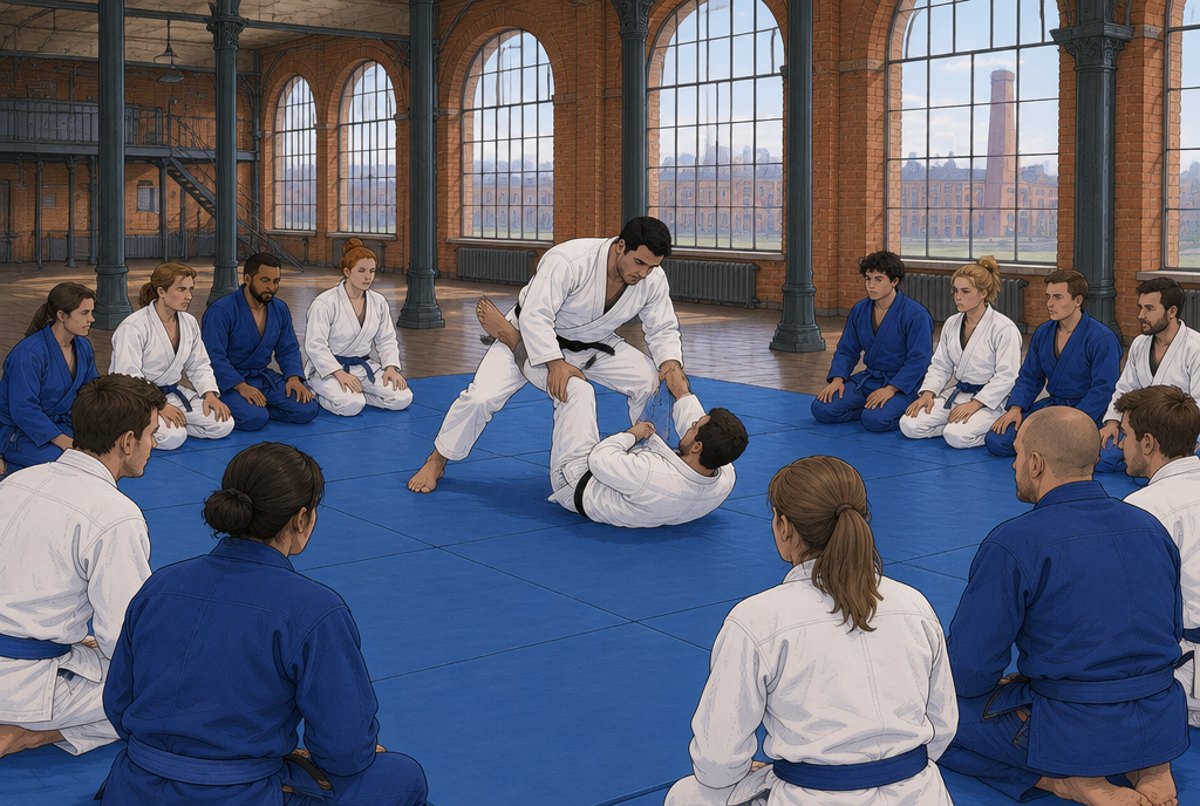
The first resident black belts
The UKBJJA names them. Mauricio Gomes and Chen Moraes taught at the Custard Factory in Birmingham and at the Budokwai in London. Wilson Junior taught in Earls Court, and the UKBJJA says he now runs "one of the biggest, multiple location teams in the country". Roger Brooking taught at the Seymour Leisure Centre, and Braulio Estima at Stevie B's gym in Birmingham. It also names regional pioneers in Essex, Bristol, Wales, Cardiff and on the south coast. 80
Mauricio Gomes
Mauricio Gomes was one of the black belts of Rolls Gracie, the Gracie who taught the founders of Gracie Barra and Alliance. 10 He opened the first Gracie Barra school outside Brazil, in Tokyo, in 1997, then set up Gracie Barra UK, with classes in Birmingham, London, Edinburgh and Belfast, and brought over Braulio Estima and his own son, Roger Gracie, to help. From 2000 he led the jiu-jitsu class at the Budokwai in London. 10
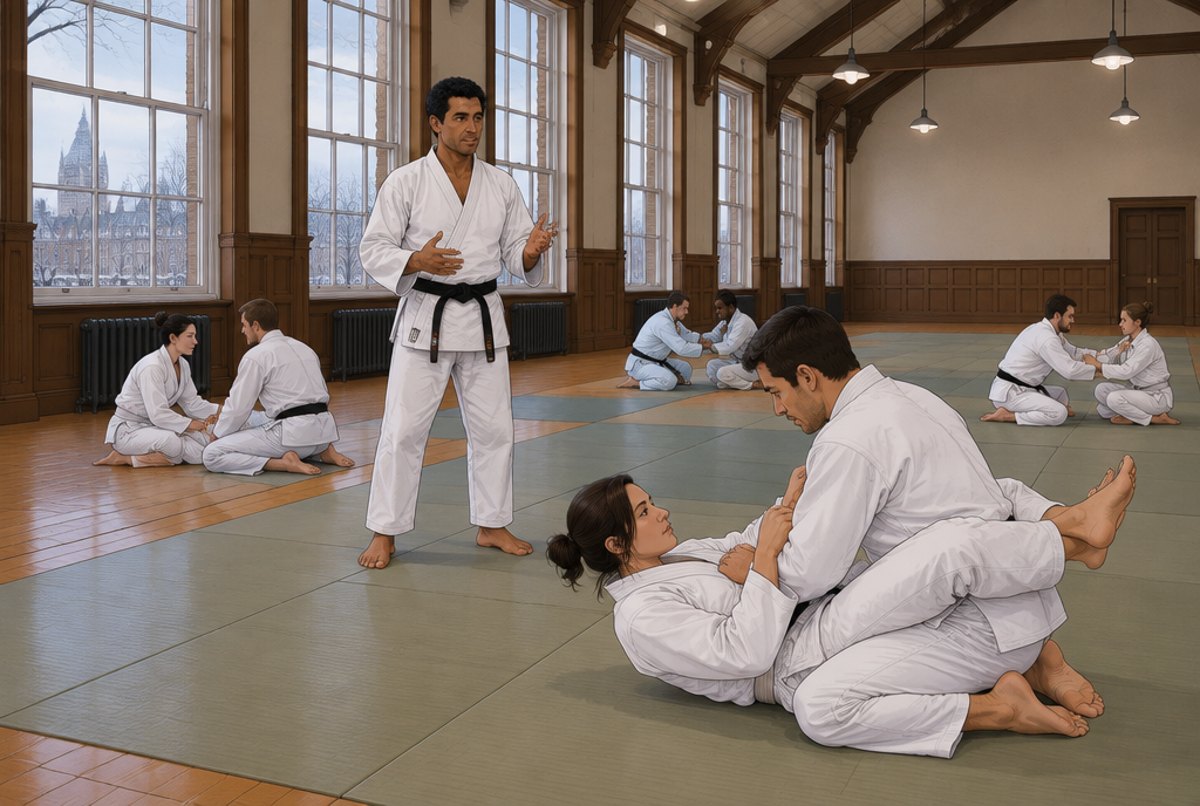
Braulio Estima took over Gracie Barra Birmingham at the end of 2002 and received his black belt from Carlos Gracie Jr. on 4 January 2004. 10
Roger Gracie
Roger Gracie was born in 1981 in Rio de Janeiro, the son of Reila Gracie, a daughter of Carlos Gracie, and of Mauricio Gomes. 10,105 He moved to London as a young man, and in 2004 he opened the Roger Gracie Academy there with his father. 10,105 The academy stands in Hammersmith, and it is the headquarters of the association built around it, the Roger Gracie Association. 104,105
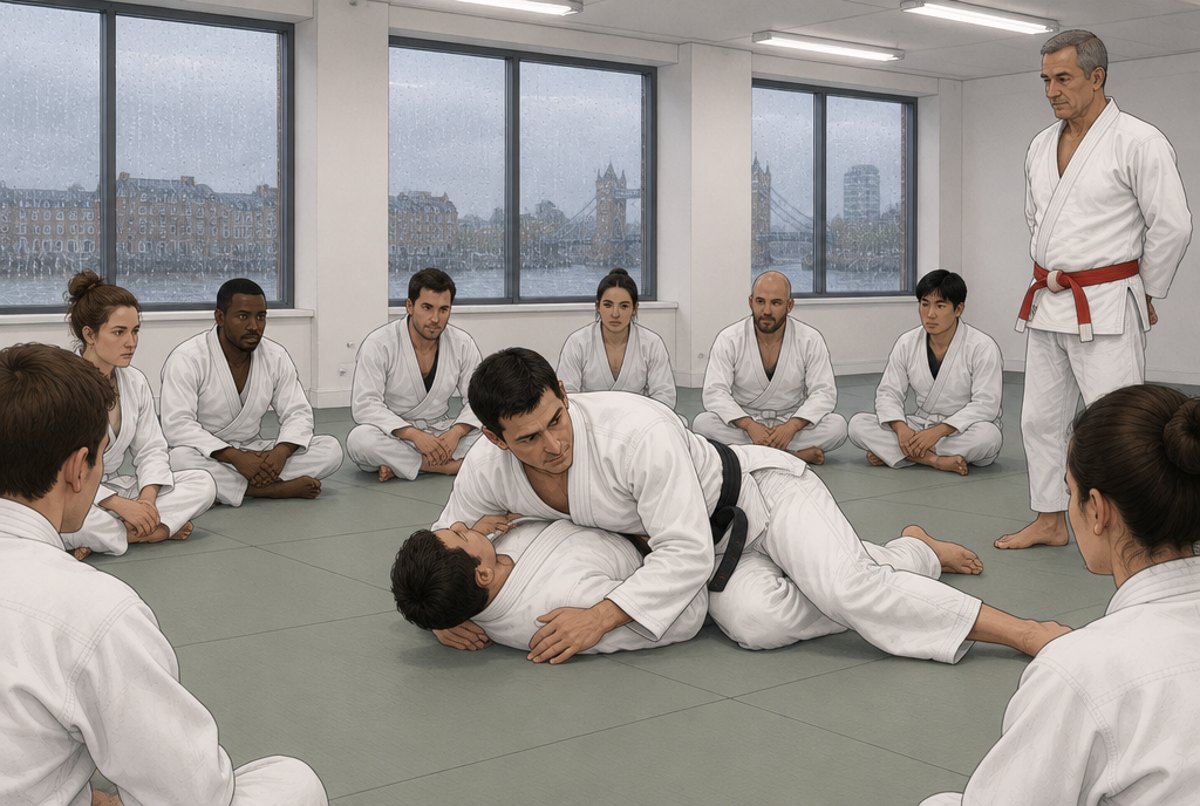
As a competitor he is among the most successful the art has produced. The association lists 10 IBJJF black belt world championships, three ADCC world titles and a mixed martial arts title with ONE Championship, and a place in the IBJJF Hall of Fame. 105 He retired from jiu-jitsu competition in 2017 without ever losing by submission. 10
A governing body formed by rivals
For years jiu-jitsu in the UK ran with no national body at all. Belts came from each academy's professor, and each team ran its own affairs, as they still do. 40,80 In 2012 members of different clubs and teams formed the United Kingdom Brazilian Jiu Jitsu Association, the UKBJJA. It met Sport England's criteria in 2015 and was recognised by the sports councils of all four home nations in 2021. 80 It describes itself as non-political and open to every team, and it does not award belts; its stated aim is to "preserve the integrity of the ranking system". 80,82
Today the UKBJJA says it has over 300 member clubs. 80 In EveryDojo's own club directory, the team names seen most often in UK club names are Gracie Barra, then Carlson Gracie and Roger Gracie. 141
The art in British life
The UK hosts its own events: the UKBJJA's ranked tournaments, with the British Open and English Open counting most, a Kids League and a university league; the UK based submission only promotion Polaris; and at least one ADCC World Championship. 1,18,80,89 In June 2026 the King was presented with a jiu-jitsu white belt during a visit to REORG, a charity that uses the art to support military and emergency services personnel. 81
A seminar in a factory, a judo club in London, a son's academy in Hammersmith. The last chapter is about what all of it looks like on a mat tonight.