

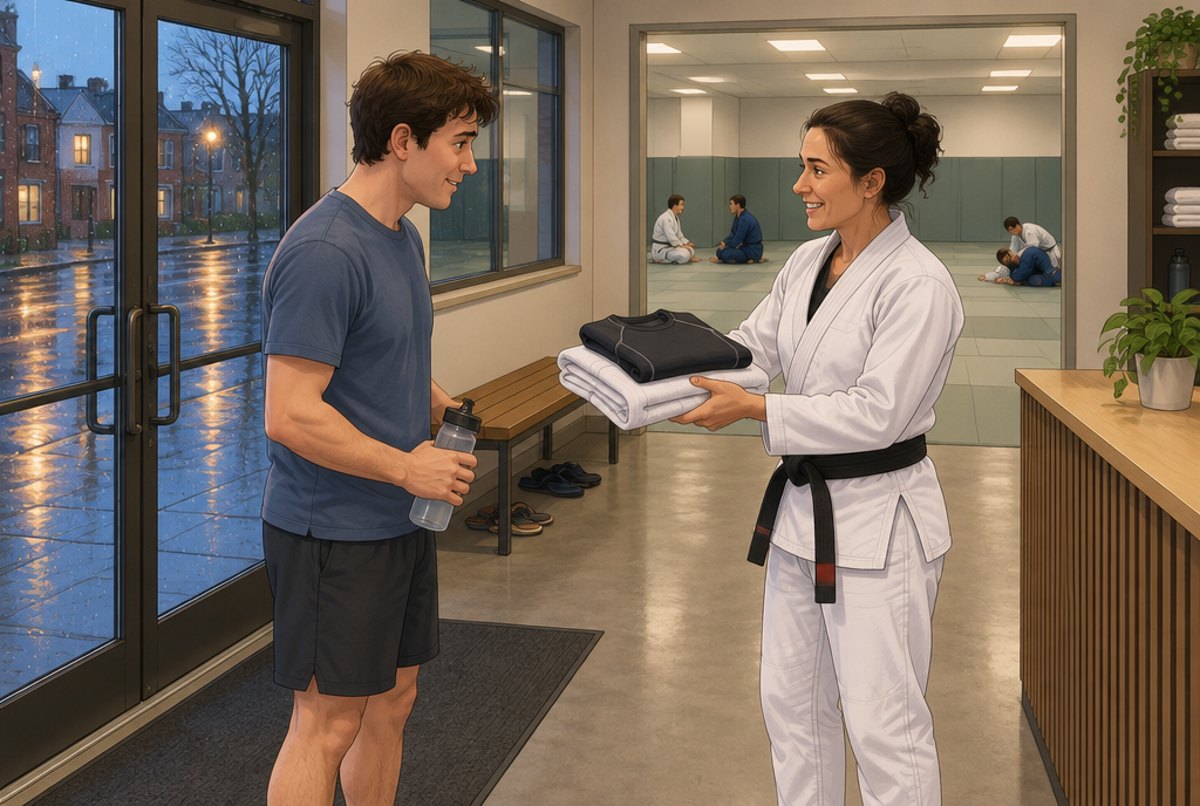
Imagine an academy in a British town one evening. A new student arrives early, in shorts and a T-shirt, with a water bottle and flip flops. 104 At Gracie Barra, the academy lends you a gi and a rash guard for your first class. At the Roger Gracie Academy you get a gi in a welcome pack. 100,104 Shoes stay on until the edge of the mat. 100,104
The most important rule
The first thing you learn is how to tap. The UKBJJA says it in three words: "Tapping is training!" Tapping is a normal, healthy part of jiu-jitsu. Your partner must give you time to tap and must let go the moment you do. 86 You tap before it hurts, not after. 86 You pat your partner, the mat or yourself twice, or tap with your foot if your arms are stuck, or just say it. 43
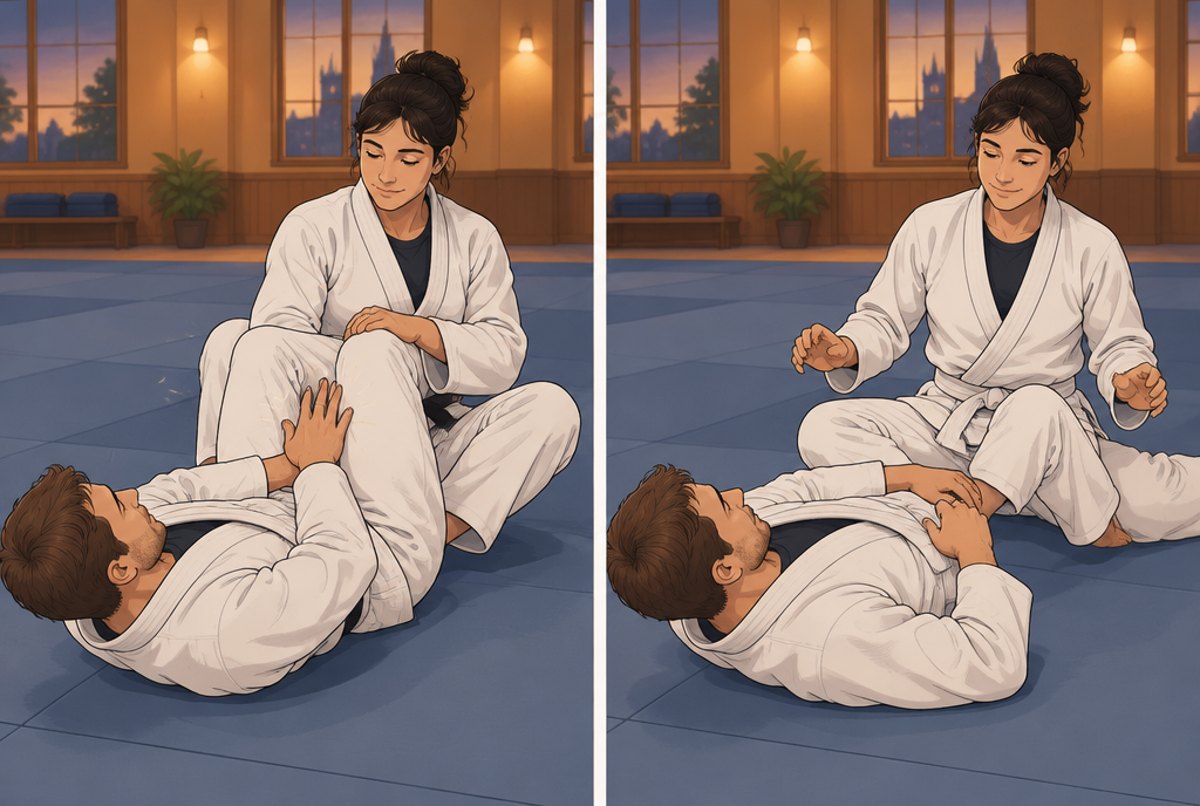
You also learn to roll and breakfall right at the start, and you learn which things are not allowed, like grabbing fingers or slamming. 86
What a class is like
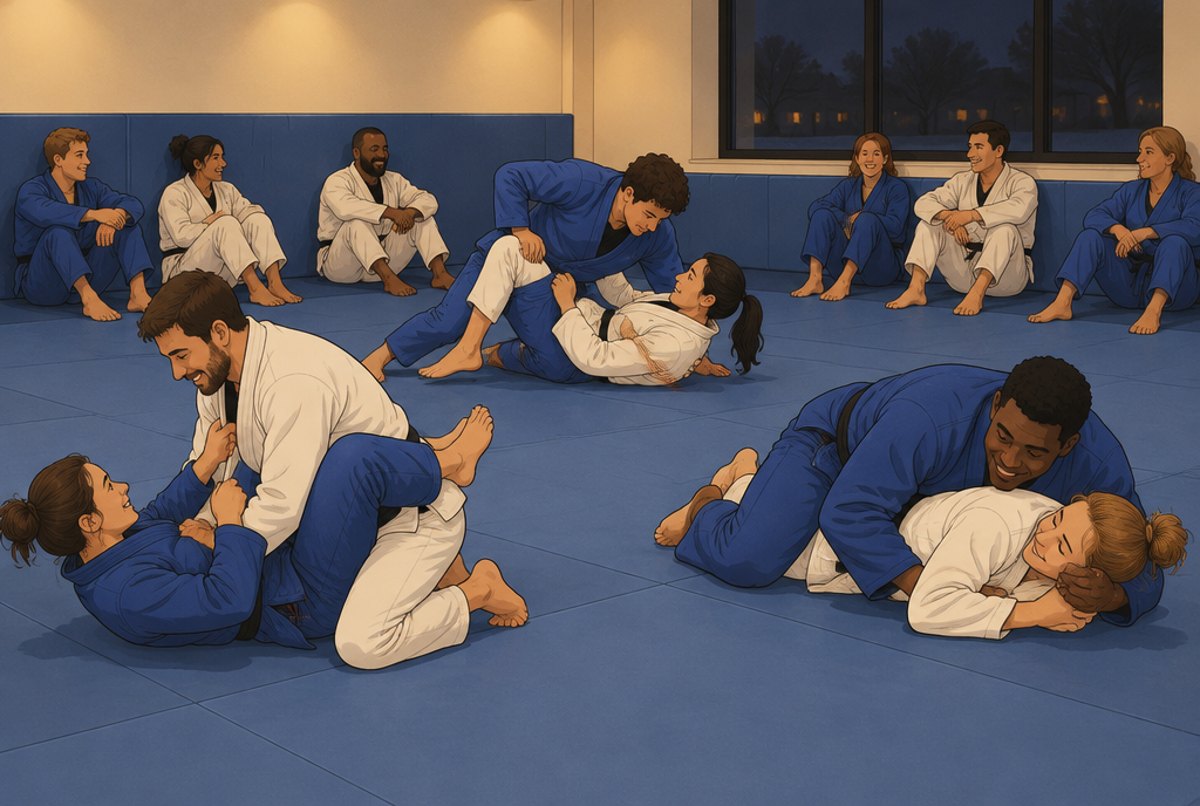
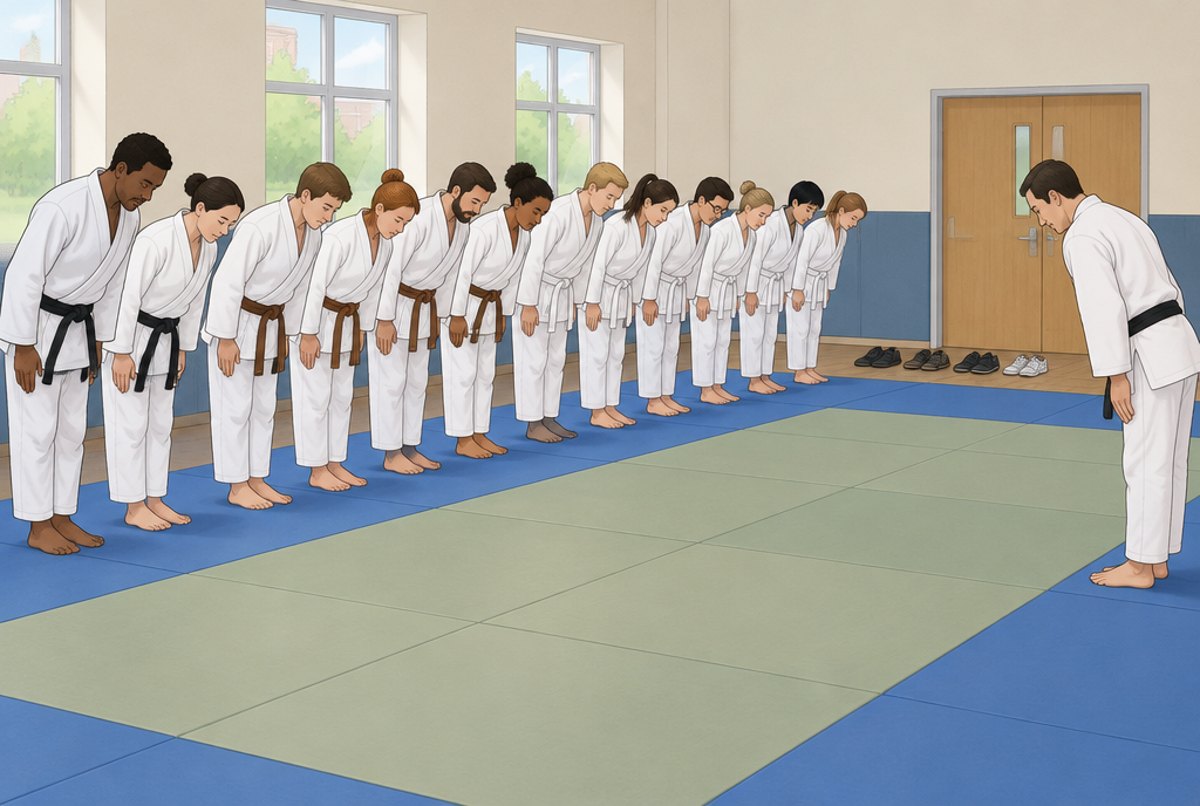
The class lines up, often in belt order, and warms up. 1,86 The professor shows a move. You practise it with a partner who lets you do it, then with a partner who tries to stop you. That is drilling. 1 Then comes positional sparring, where you start in one position and try to improve it. At the end comes rolling, which is free sparring. Many people say rolling is the most important part of training. 1
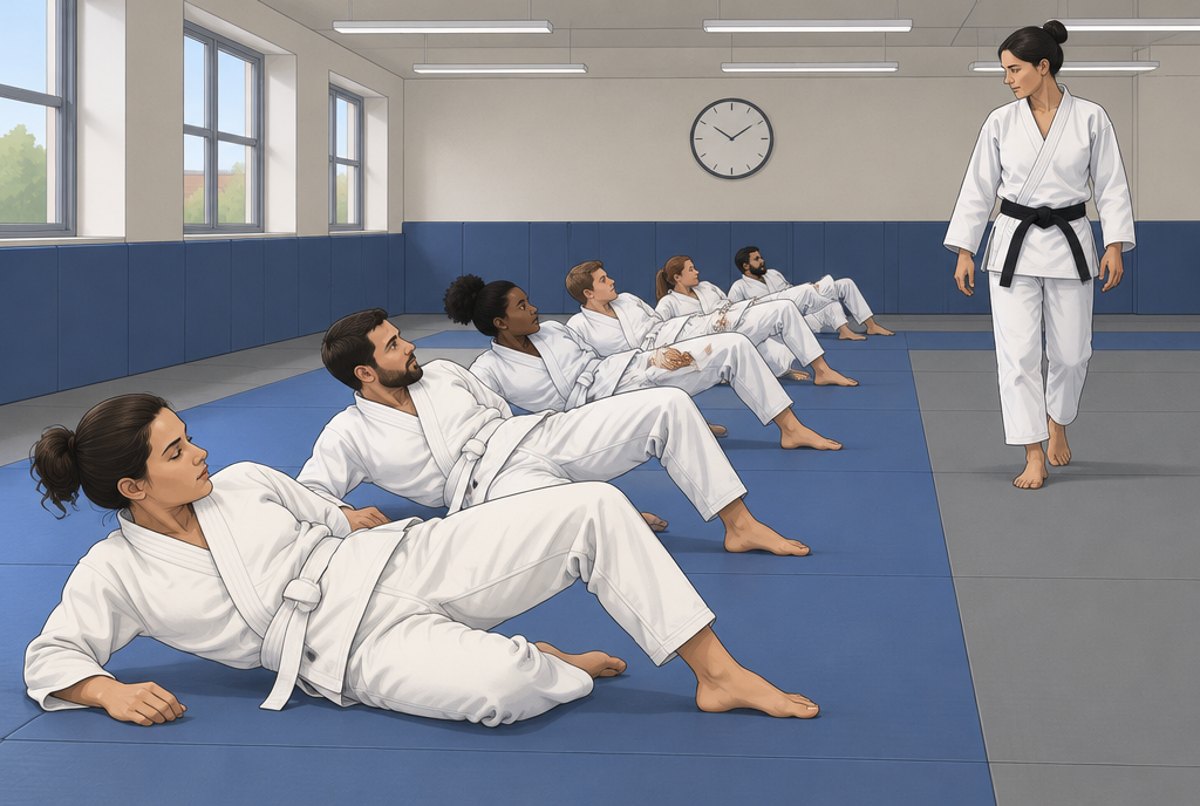
Two moves you will meet early are the hip escape, or shrimp, where you slide your hips away to make space, and the trap and roll, where you bridge to tip a partner off you. 102,106 Beginners spend lots of time on escapes, because beginners often end up underneath. 2
Position first
Here is the big idea. The IBJJF says a match is a chain of positions of control that ends in a submission hold. 43 Its points show which positions are good: 2 points for a takedown, a sweep or knee on belly, 3 for passing the guard, and 4 for mount or back control. 43 People often say it is like a game of chess, and the submission is checkmate. 1 Being on your back in guard, with your legs between you and your partner, is not losing. It is a place to attack from. 1,43
Belts
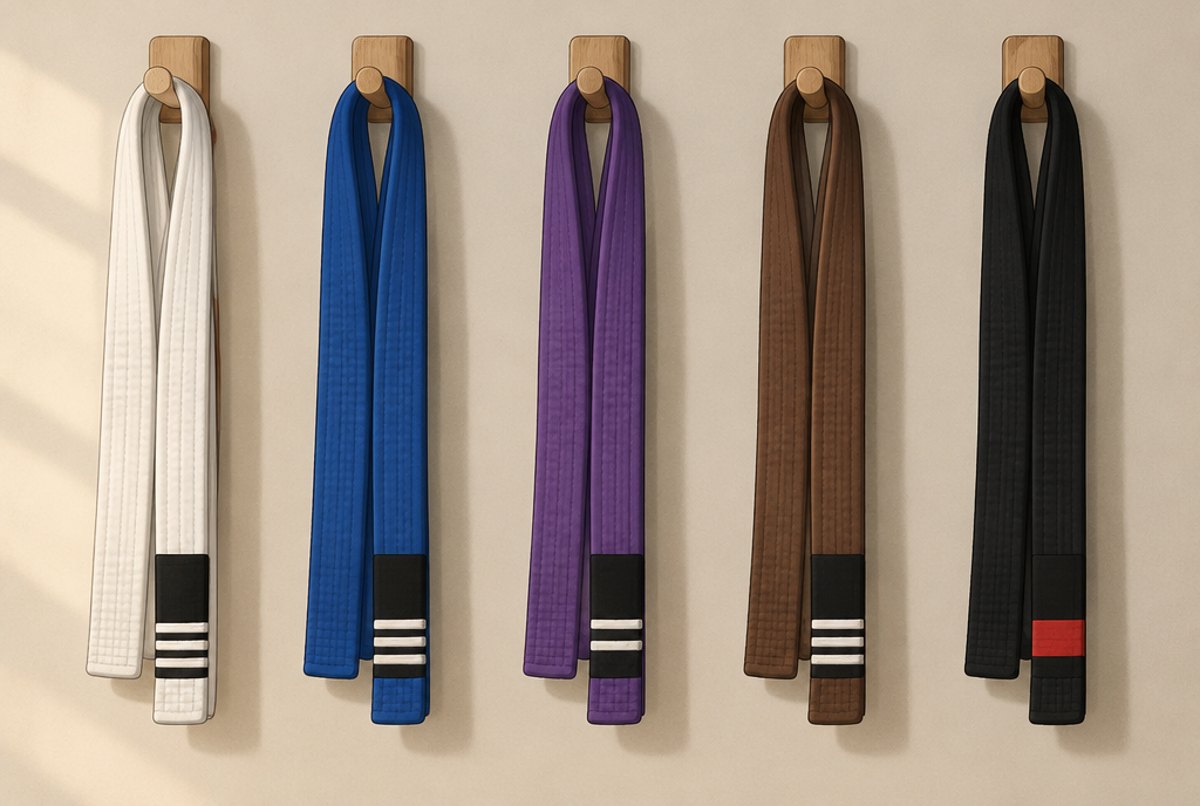
Your belt comes from your own professor, not from a panel or an association, and most academies do not hold a test. 2,40 For adults the belts go white, blue, purple, brown and black, and a black belt takes about 10 years. 2,40
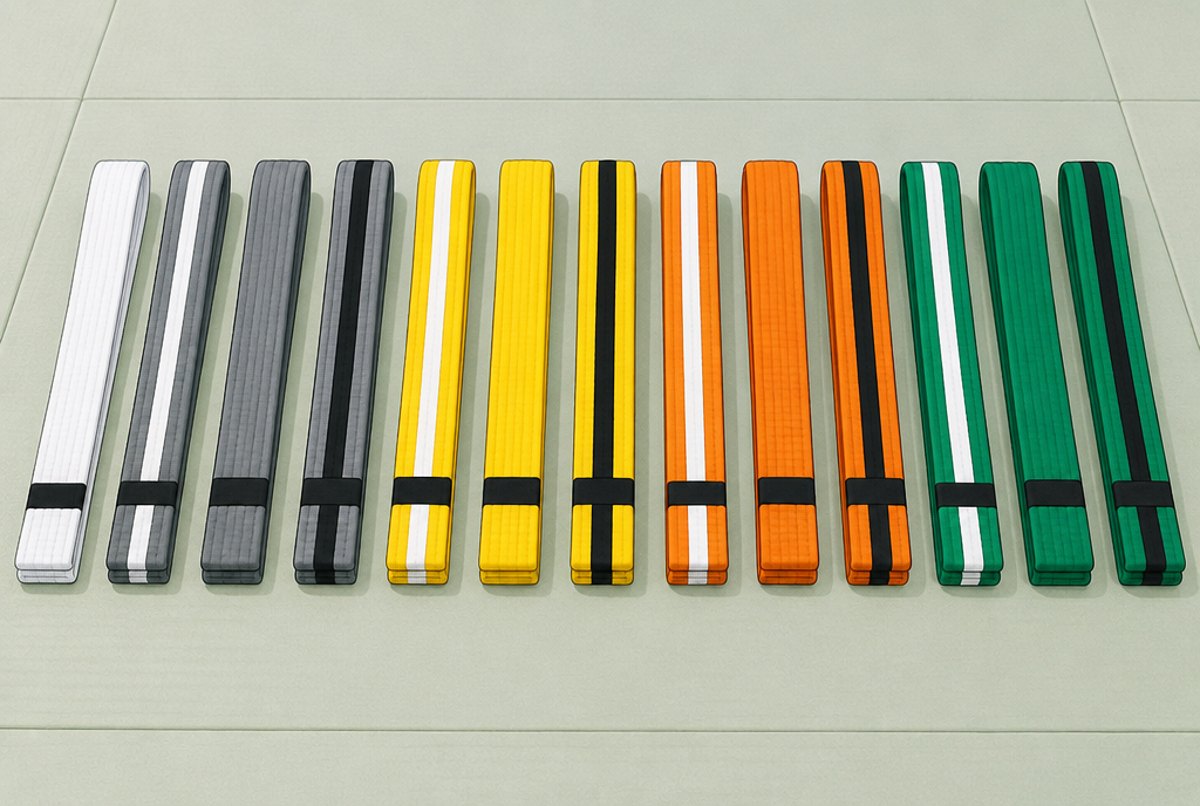
Children from 4 to 15 have their own ladder: white, then grey, yellow, orange and green, Each colour comes three ways: with a white line along the middle, plain, or with a black line. That makes 13 belts. At 16 you move to the adult belts. 40
Manners
Shoes off before the mat. Line up by rank. Call the teacher coach or professor. Bow or shake hands before and after every roll. Keep your gi clean. 1 Some academies say "oss" as a hello. 25 Wash your gi after every class, and never train with a skin infection. 82,86,104
The UKBJJA tells parents never to shout at a child not to tap, and not to coach from the side of the mat. 84
A judo expert on a ship in 1914, a marine on a beach, a garage in California, a factory in Birmingham, and you, tapping twice on a mat tonight. One art, still called by its old name.