

Imagine a harbour in Brazil in 1914. A small, strong Japanese man walks down from a ship. For 10 years he has travelled the world, fighting anyone who would try him. His name is Mitsuyo Maeda, but in the ring people call him Conde Koma, which means Count Koma. 4
A judo student goes travelling
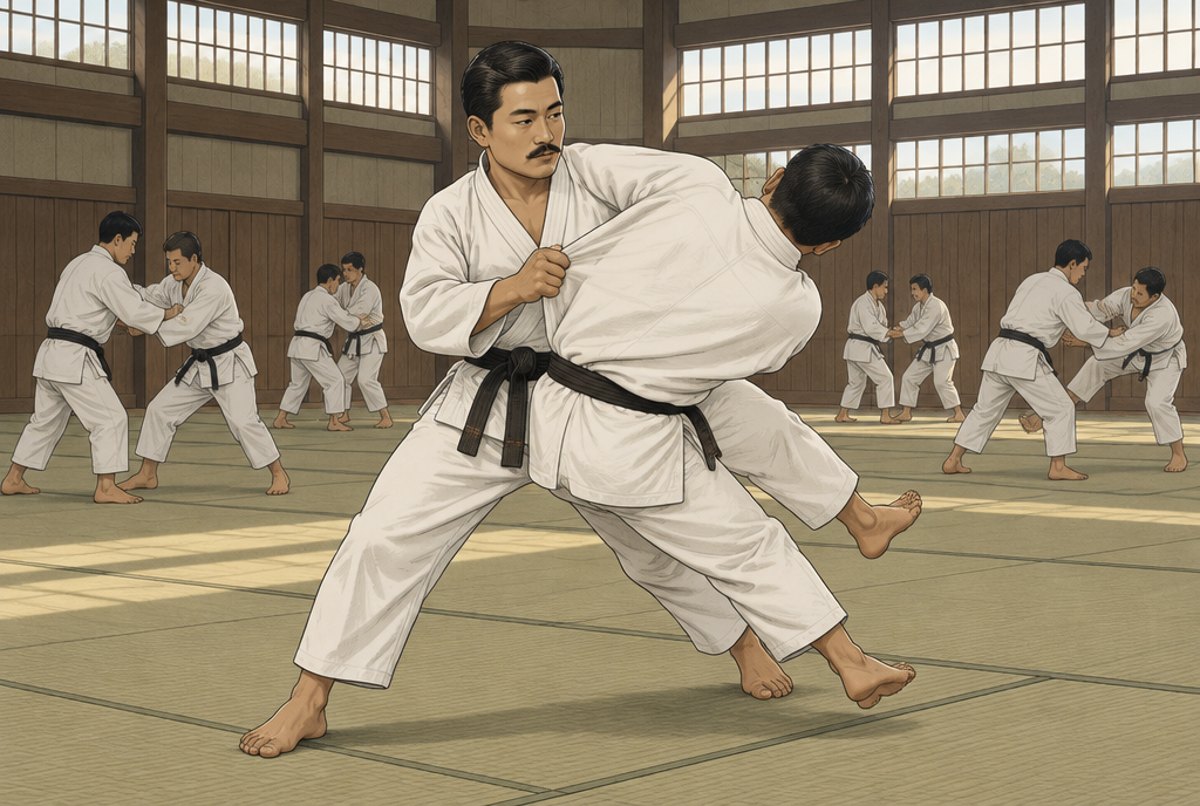
Maeda was born on 18 November 1878. He learned judo at the Kodokan, the school in Tokyo where judo was invented. 4 In 1904 he left Japan to show judo to the world. He fought wrestlers, boxers and all sorts of fighters in the United States, Europe, Cuba, Mexico and South America. 4 Around 1910 he wore a smart long coat and carried a walking cane. 160
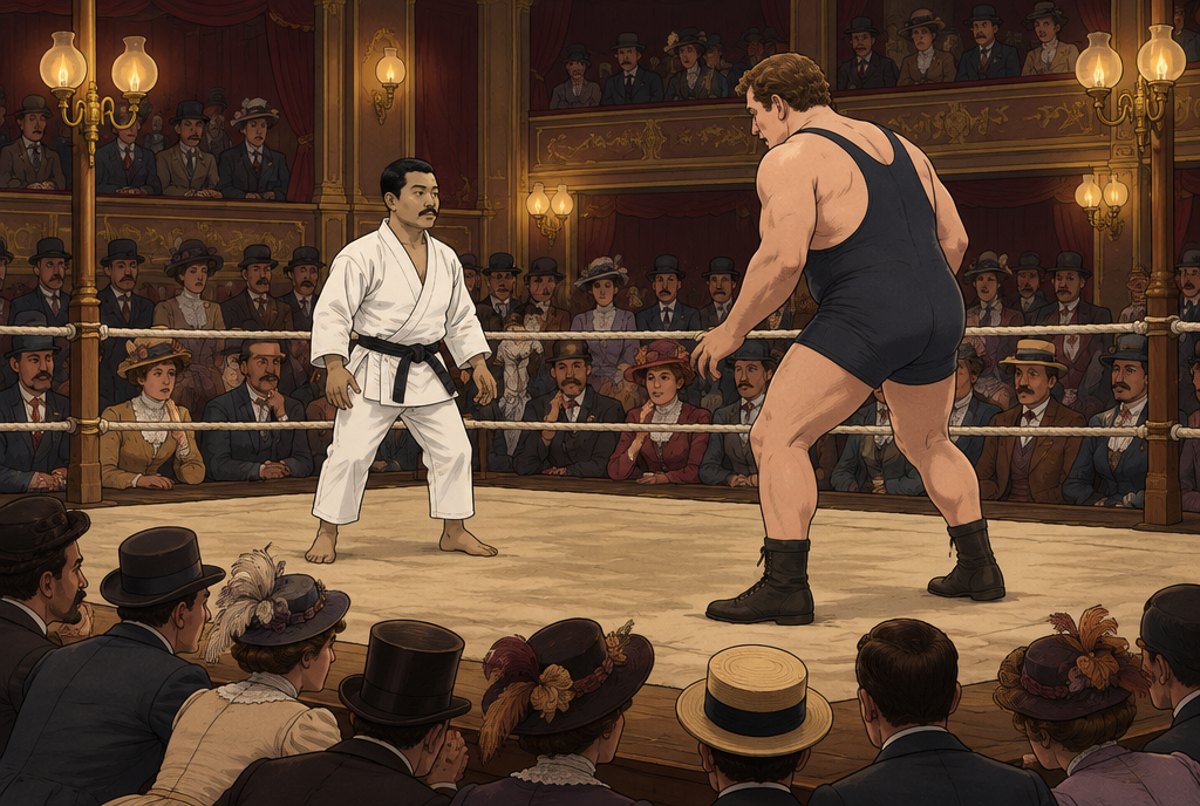
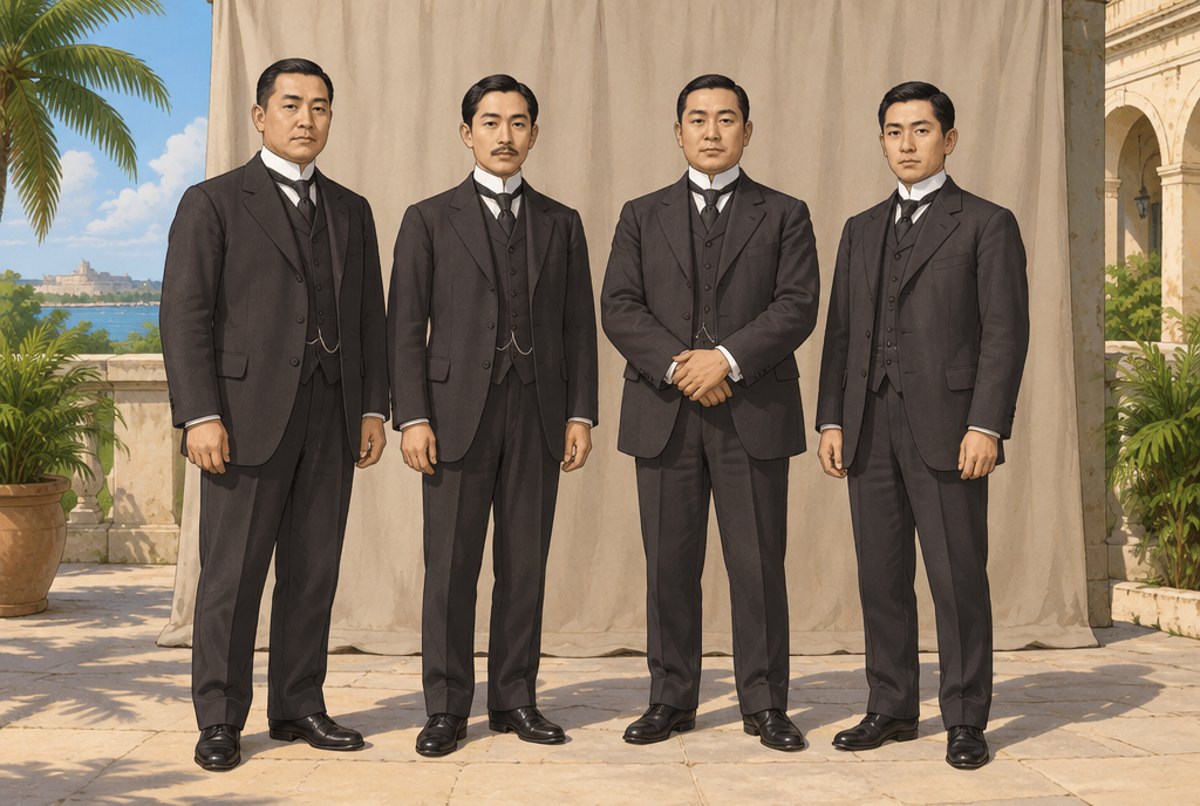
In Spain in 1908 he took his ring name, Conde Koma. 4 By 1911 he was in Cuba. In the spring of 1912 three other Japanese judo experts were there with him: Tokugoro Ito, Nobushiro Satake and Akitaro Ono. The four put on judo shows together, and people in Cuba loved them. 4,162
Why do we say jiu-jitsu?
Here is a puzzle. Maeda did judo. So why is our art called jiu-jitsu? When Maeda got to Brazil, judo was still called "Kano jiu-jitsu", after Jigoro Kano who invented it, or just jiu-jitsu. The Brazilian newspapers used that name, so the name stayed. 1,4
Brazil
Maeda gave a show in the city of Santos on 24 September 1914, and he reached the city of Porto Alegre on 14 November. That is why some books say he arrived in September and some say November. 1,4
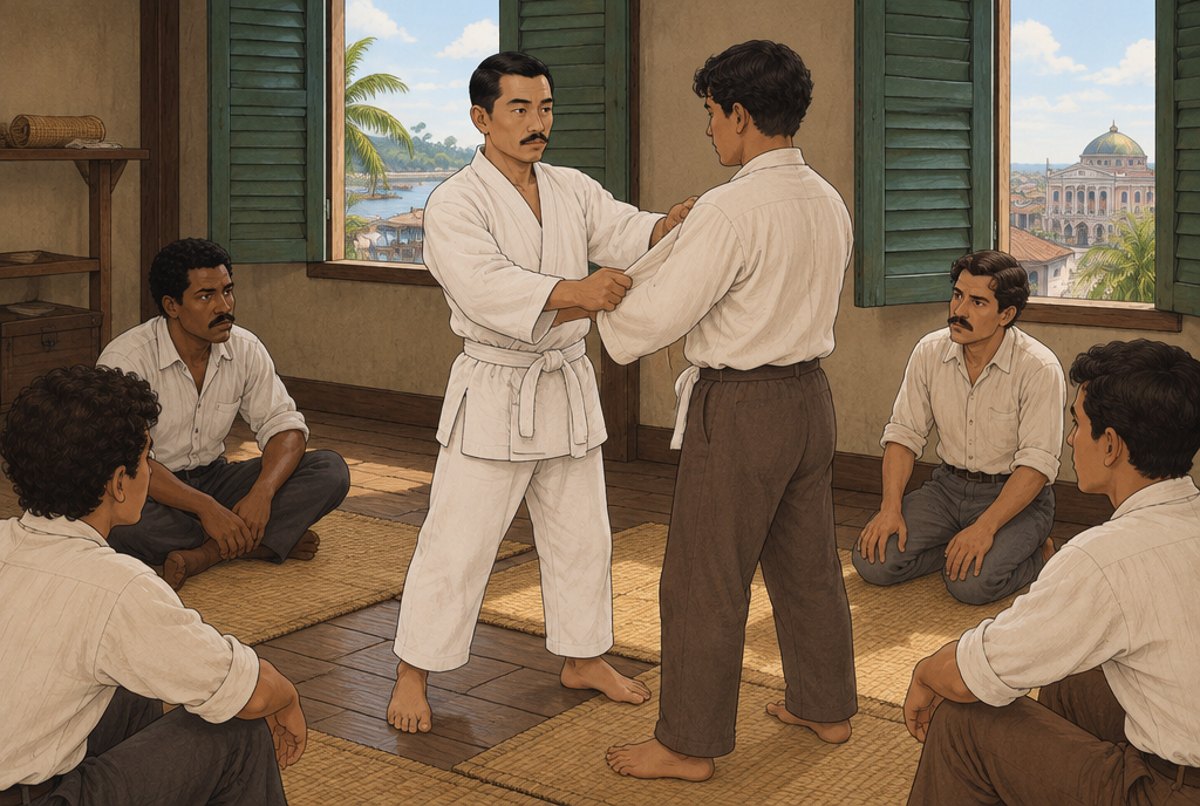
His troupe's first show in Belém, a city in the north of Brazil, was on 20 December 1915. 4 Belém became his home. He became a Brazilian citizen and took the name Otávio. He died there on 28 November 1941, and the Kodokan made him a 7th Dan, a very high judo grade, the day before he died. 4
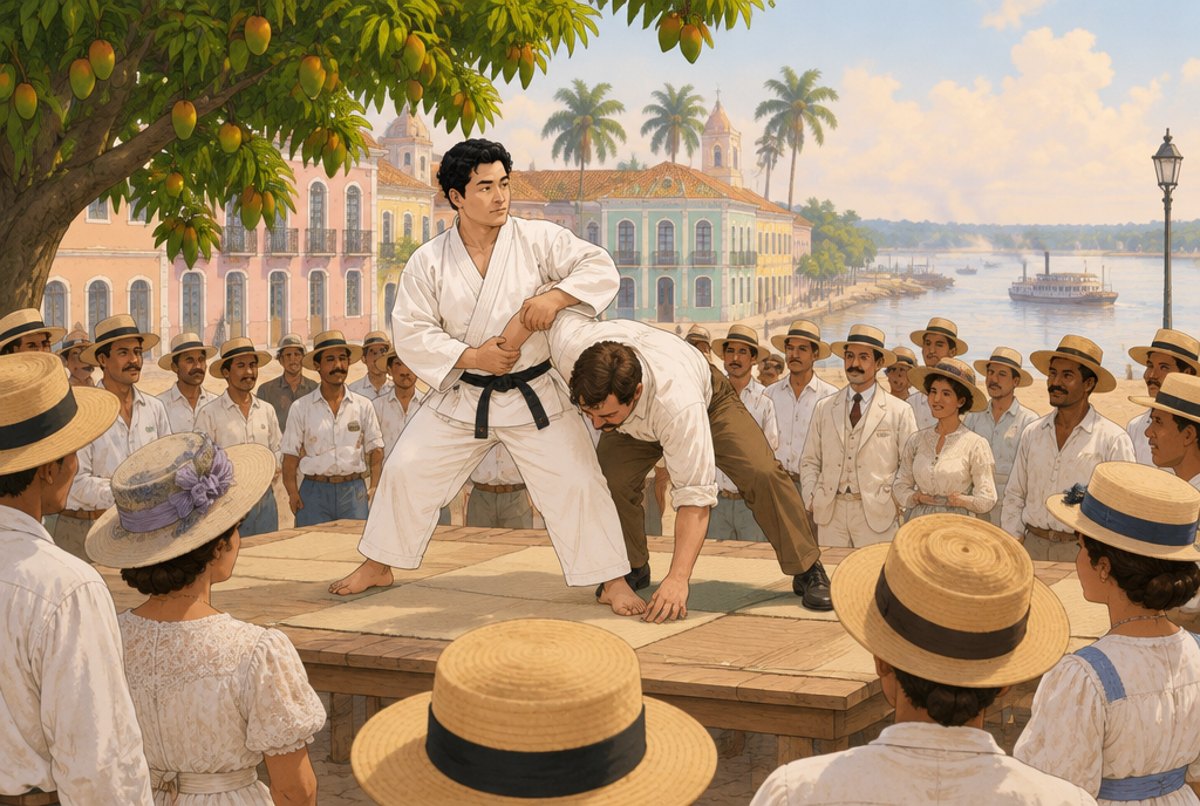
Nobushiro Satake, one of the judo experts who had been with Maeda in Cuba, opened a judo school in the city of Manaus in about 1916. It is said to be the first registered judo school in Brazil. 4,8
What he brought
Maeda brought judo, practised in a jacket you can grab. 1,4,23 The art that grew from it in Brazil is mostly fought on the ground. You take your partner down, hold them still, and finish with a lock or a choke, and your partner taps to say stop. 1,43
In 1916 a circus in Belém put on a show with Conde Koma. A man who helped to run one of the town's circuses had a teenage son. The next year, that son watched Maeda and started to train. 5,7 The next chapter is about him.