

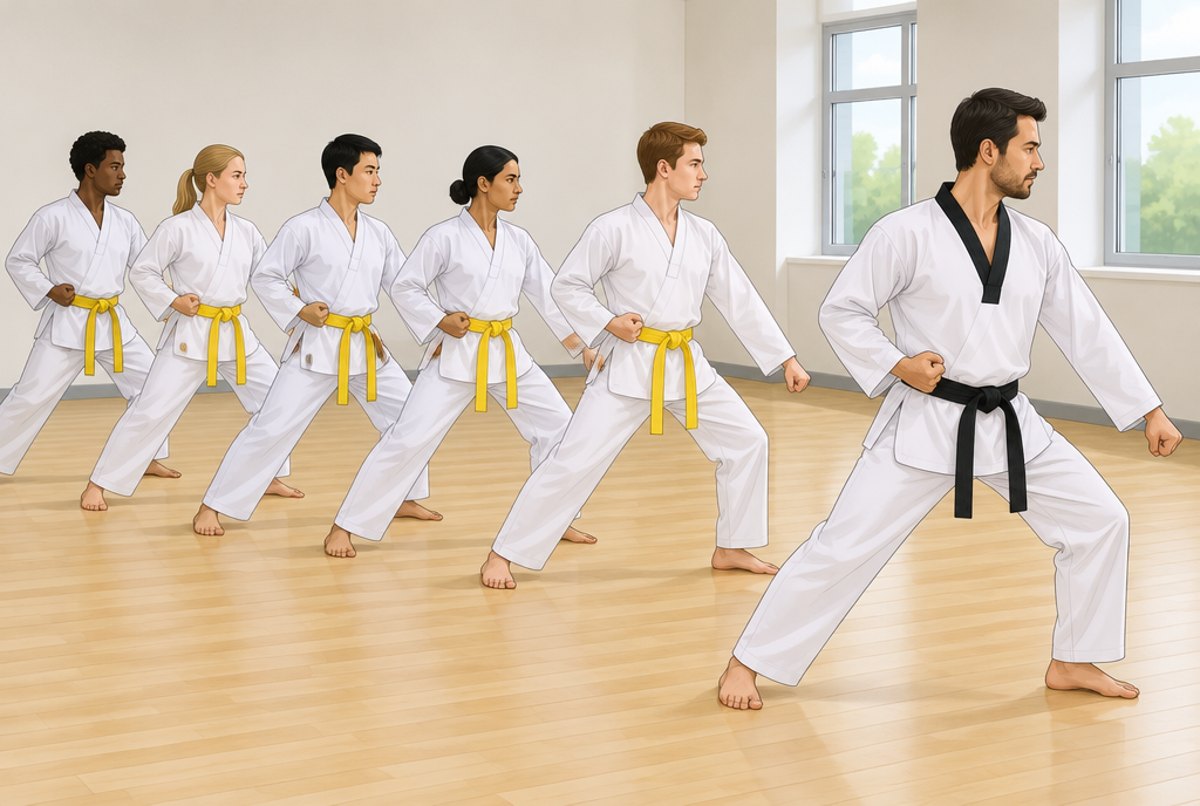
Every taekwondo student learns patterns: set sequences of blocks, strikes, kicks and stances against imaginary opponents. 1,87 The ITF family calls them . The WT and Kukkiwon family calls them . Older schools say . 1 The two sets are completely different, so a child who moves between an ITF club and a WT club starts patterns again. 1,54,62
What makes the ITF patterns memorable is who they are named after. General Choi's Encyclopedia says each pattern's name, its number of movements and its floor diagram refer to a figure or event in Korean history. 62
Heaven and earth, then a legend
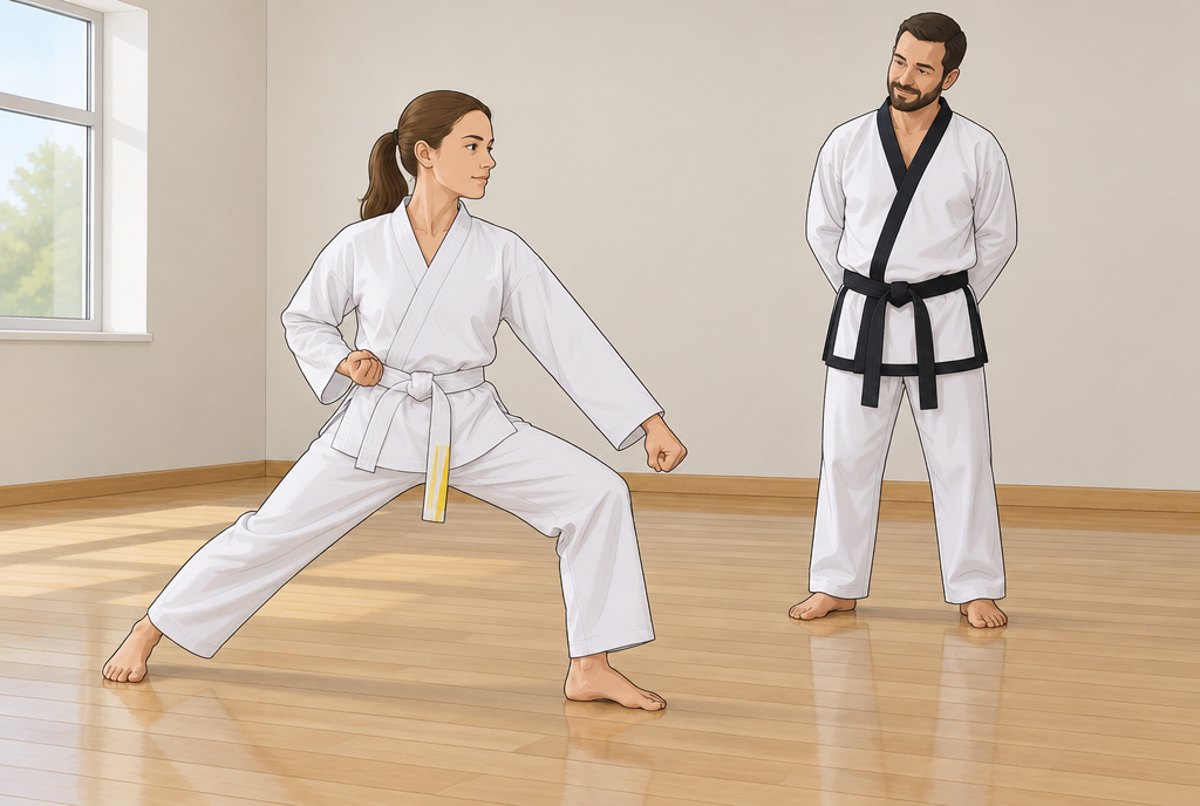
The first pattern is Chon-Ji, "heaven and earth", the creation of the world. 13,62 It has 19 movements and a white belt with a yellow stripe learns it. 62
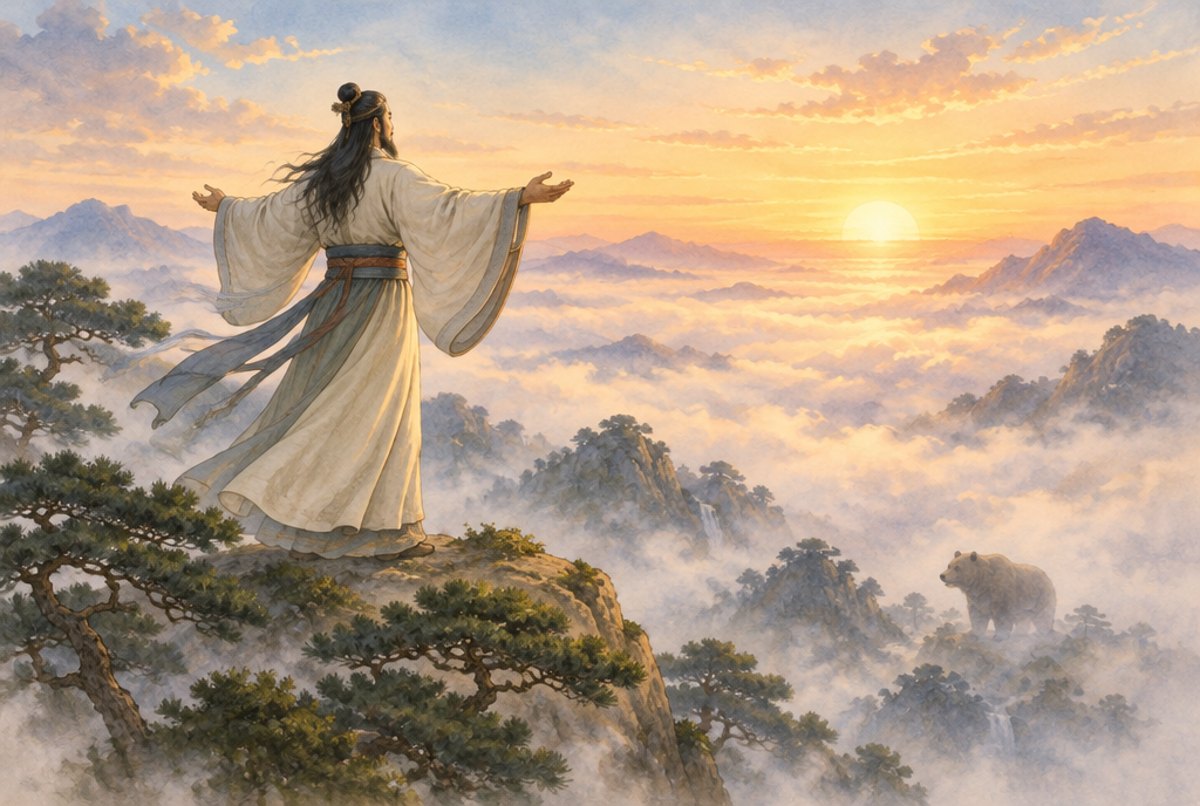
The second, Dan-Gun, with 21 movements, is named after Dangun. 13,62
Numbers that tell a life
Many of the patterns carry a number with a meaning. 62
- Do-San, 24 movements: the pen name of the patriot Ahn Chang-Ho, 1878 to 1938; the 24 stand for his life of work for education and independence. 62,160
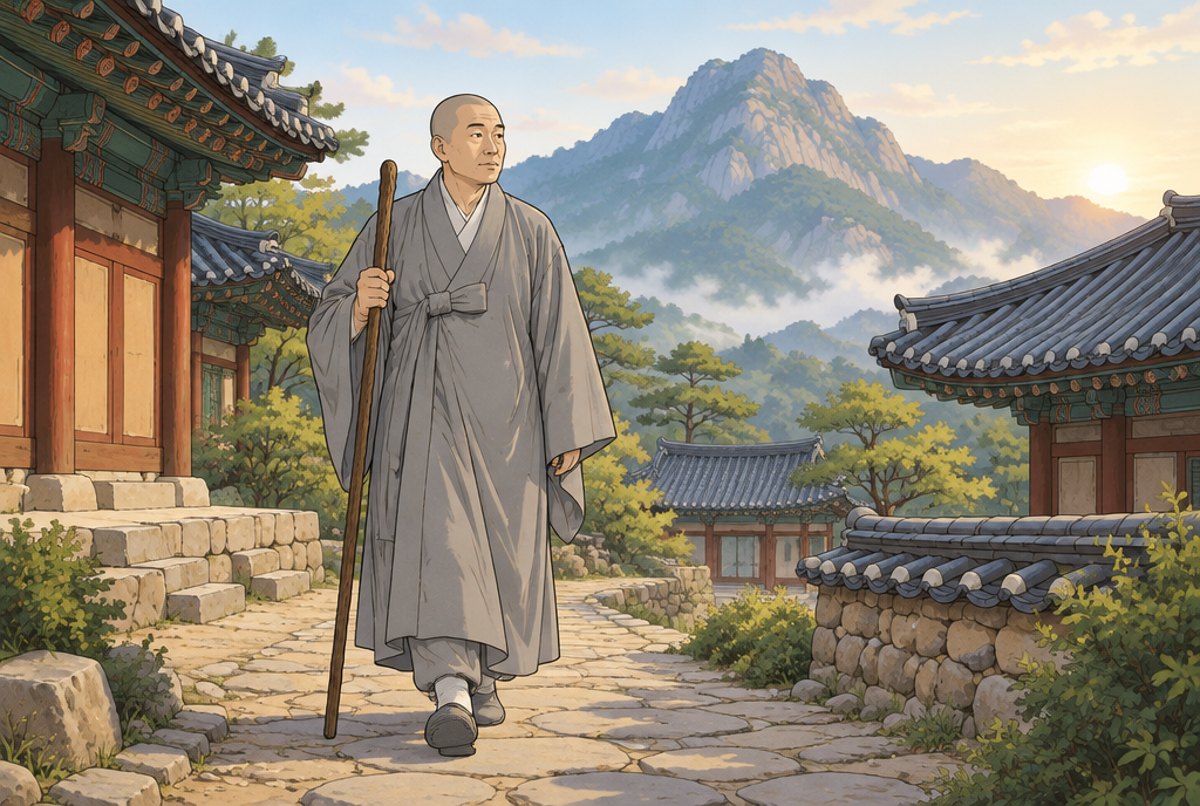
- Won-Hyo, 28 movements: the great Silla monk Won-Hyo, 617 to 686. The Encyclopedia credits him with bringing Buddhism to Silla, though Silla had adopted Buddhism in 528, before he was born. 13,62,161,162
- Yul-Gok, 38 movements: the pen name of the scholar Yi I, 1536 to 1584; 38 for his birthplace, near the 38th parallel.
- Joong-Gun, 32 movements: the patriot Ahn Joong-Gun; 32 for his age when he was executed in 1910, counted the Korean way, though he was 30. 62,163
- Toi-Gye, 37 movements: the pen name of the scholar Yi Hwang; 37 for his birthplace on the 37th parallel.
- Hwa-Rang, 29 movements: the Hwarang youth group of Silla; 29 for the 29th Infantry Division, where Taekwon-Do developed.
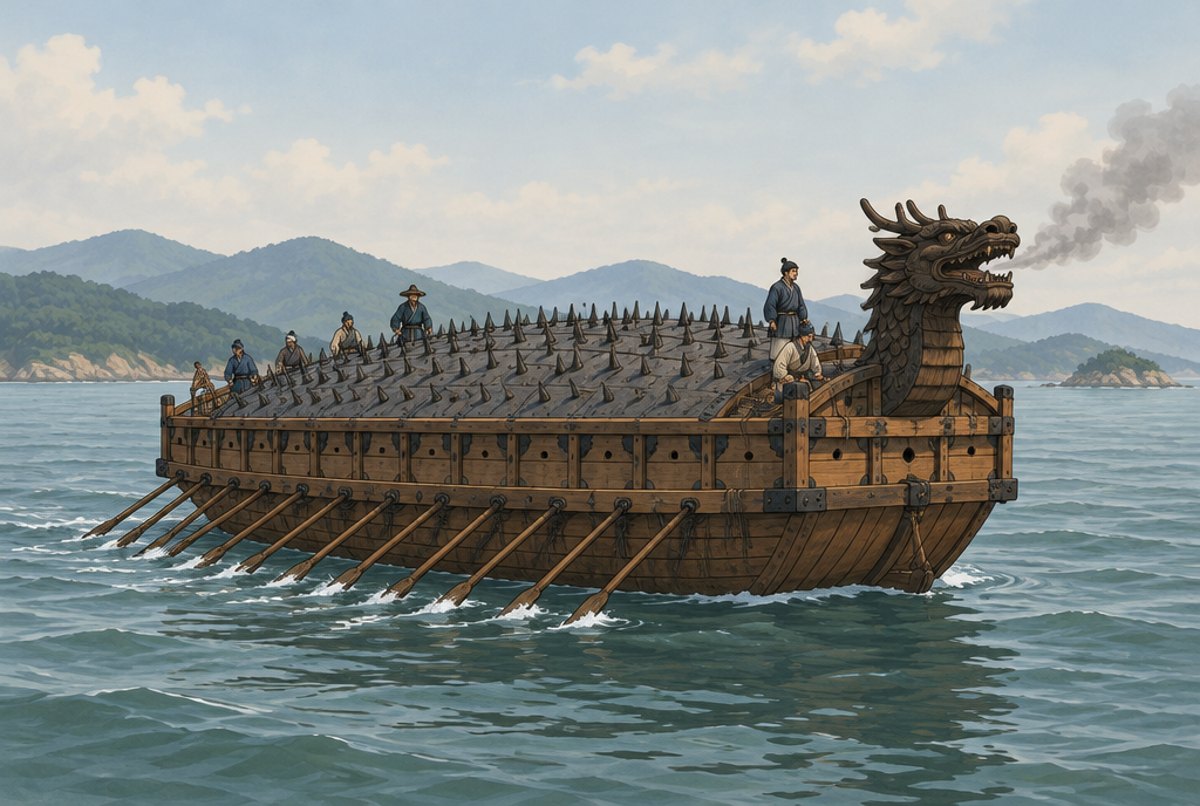
- Choong-Moo, 30 movements: Admiral Yi Sun-Sin, credited with the armoured "turtle ship" of 1592. The pattern ends with a left hand attack, for what the Encyclopedia calls his "regrettable death". 13,62
- Kwang-Gae, 39 movements, the first black belt pattern: King Gwanggaeto of Goguryeo, who regained lost territory; 39 from the year 391. 62
General Choi wrote about these people with feeling. Of Admiral Yi he wrote that the pattern's last move stands for a death that came before the admiral could show all he was capable of, held back by his loyalty to the king. 62
The last of the 24, Tong-Il, stands for the reunification of Korea. 13
Nine points, and a pattern that changed
The Encyclopedia lists nine points for performing a pattern, which in short are: start and finish on the same spot, keep correct posture and facing, tense and relax the muscles at the right moments, move rhythmically, speed up or slow down as instructed, perfect each pattern before the next, know the purpose of each move, perform with realism, and use both sides equally. 62
Not every pattern has stayed the same. A pattern called Juche is said to have replaced Ko-Dang in the early 1980s, and an older pattern, U-Nam, named after President Syngman Rhee, was dropped in the 1960s. 13
The Kukkiwon's patterns: eight trigrams
The WT and Kukkiwon family tells a different story with its patterns. Coloured belts learn eight poomsae, Taegeuk 1 to 8 Jang, and British Taekwondo says there is generally one new poomsae per belt. 80 British Taekwondo explains Taegeuk as the origin of all things, from "tae", vastness, and "geuk", eternity, and each of the eight is linked to one of the eight trigrams of the I Ching, four of which appear on the South Korean flag. 12,54,87
Taegeuk 1 Jang stands for heaven and light, the beginning of all things. Taegeuk 8 Jang stands for the earth, where all things grow, and as the last coloured belt form it carries jumping attacks. 54 Before the Taegeuk set, the Kukkiwon style is said to have used eight forms from about 1967, replaced around 1971; some schools still teach them. The Kukkiwon has not confirmed the dates. 11,12
Black belts learn nine more poomsae, from Koryo to Ilyeo. 80 Koryo takes its name from the Goryeo dynasty and the "seonbae", a learned person of strong martial spirit; Keumgang means diamond, too strong to break; Taebaek, "bright mountain", is linked to Dangun, the same legendary founder the ITF's second pattern honours. 54,87 And the last poomsae, Ilyeo, "oneness", draws on the thought of the monk Wonhyo, the same monk whose name the ITF gives to its fourth pattern. 54,87
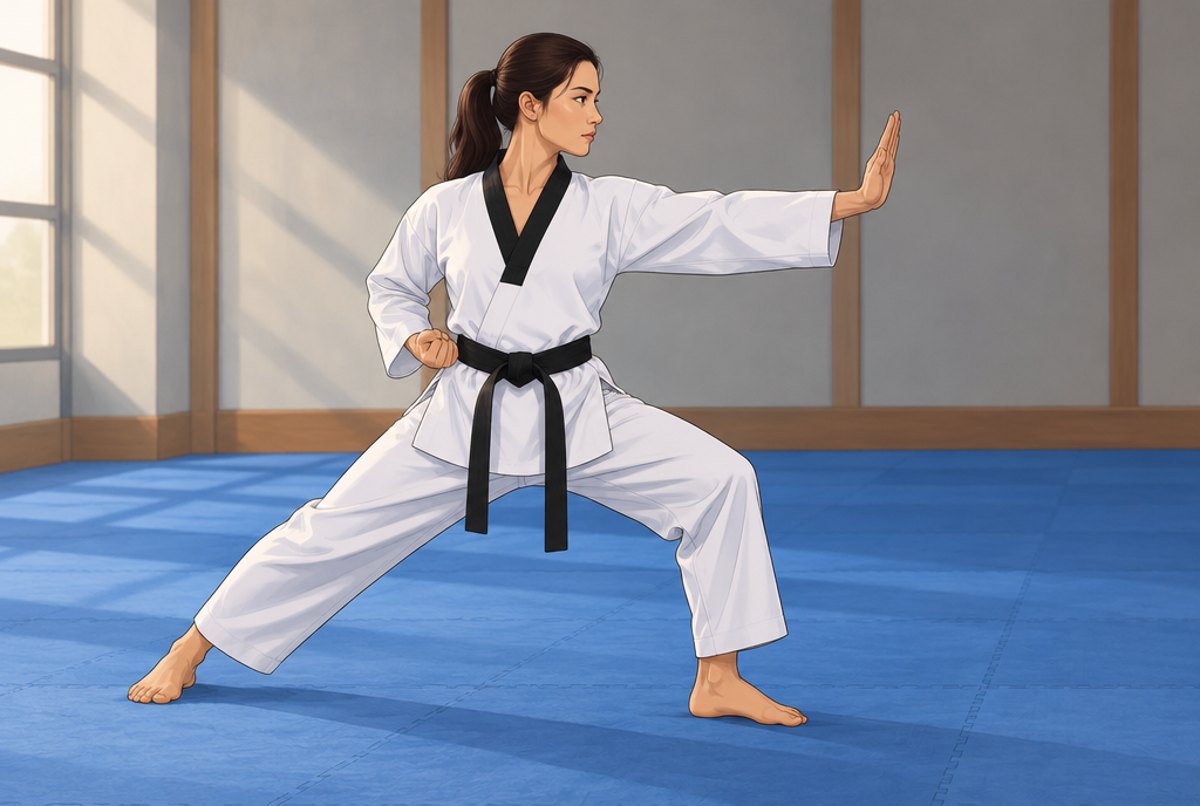
Two families, two sets of patterns, and the same monk in both.