

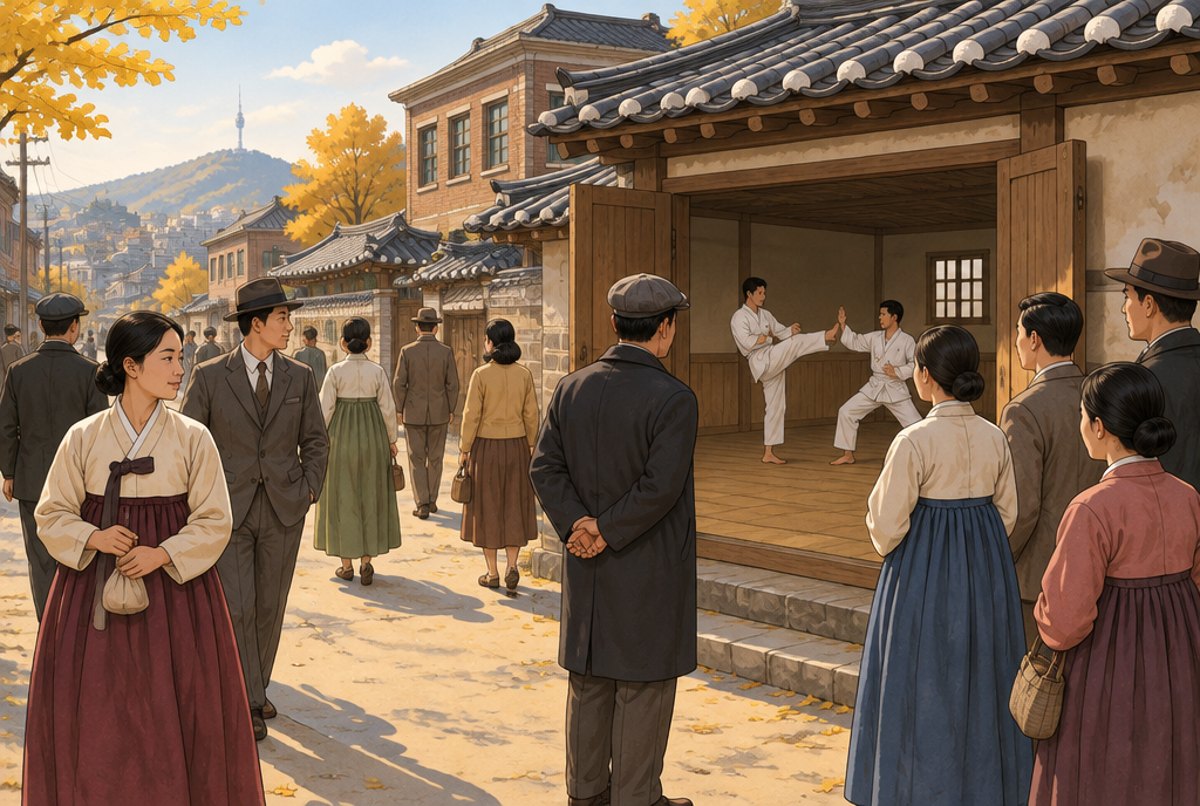
Imagine Seoul in the autumn of 1945. Japan's rule over Korea, which had lasted for decades, has just ended. All over the city, new schools of unarmed fighting are opening their doors. 1,52 Each one is called a , a school or hall. 1,52 What they taught, and where they had learned it, is where the story of begins.
A young man and two arts
Choi Hong Hi was born on 9 November 1918, under Japanese rule. 2 He would become a South Korean army officer, rise to the rank of two star general, and give taekwondo its name. 2 But first he was a student. His own account, which UK ITF still tells, says that as a teenager he studied Taekkyeon, an old Korean kicking art, which his account spells Taek Kyon, and that he studied karate in Japan. 101
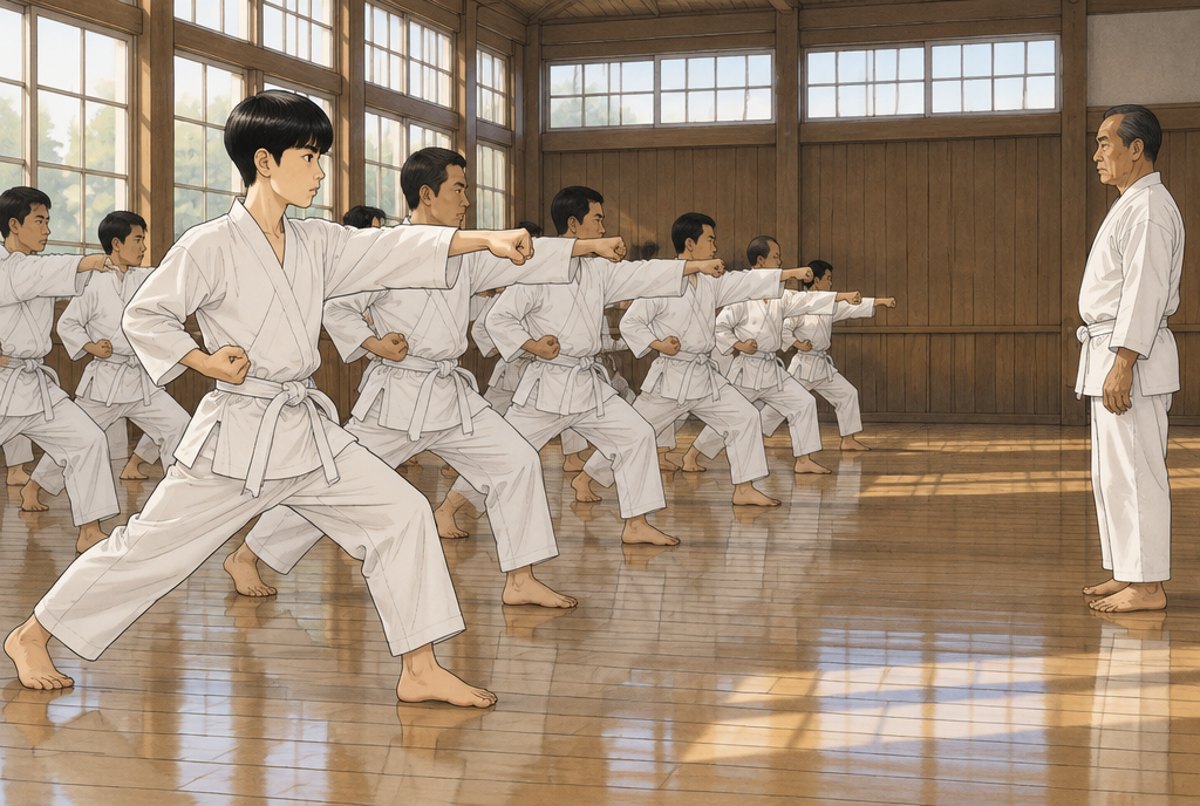
He was not alone. The Kukkiwon, the headquarters of the Olympic style of taekwondo, records that by the end of the Japanese occupation Koreans had learned Manchurian martial arts and "Tangsoo", meaning karate, in Japan. 52
What the owners say, and what historians say
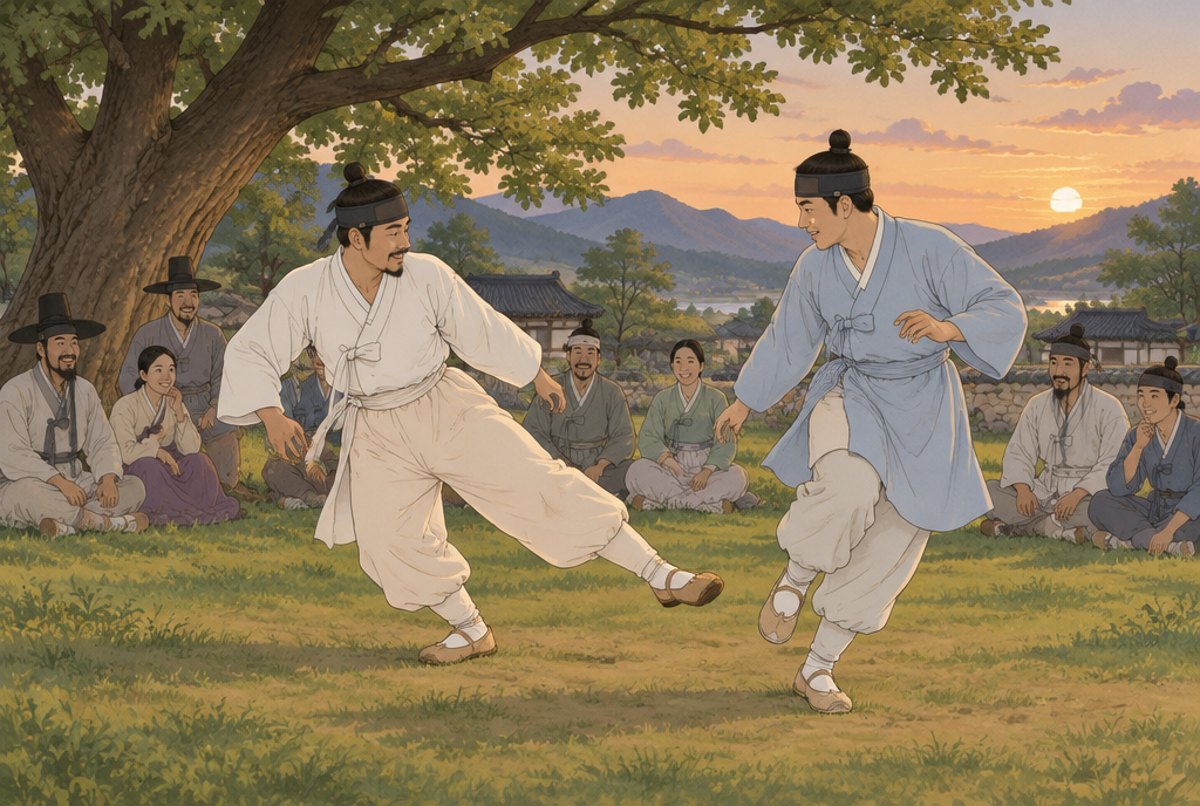
Ask the two world headquarters of taekwondo where the art comes from and you get an old answer. The Kukkiwon and World Taekwondo trace it to older Korean traditions: , recorded in medieval Korean histories, and , a kicking game and martial art of the Joseon period. 46,52
Historians are divided into two camps. A "traditionalist" view says taekwondo is mainly a native Korean art. A "revisionist" view, often called the main one today, says modern taekwondo grew mainly out of Japanese karate, brought home by Koreans who had studied in Japan during the occupation. 1 The Kukkiwon's own history sits somewhere between the two: it says that kicking techniques "inspired by Taekkyeon" were added after 1945. 52
The kwans
After liberation in 1945 the new schools, the kwans, opened in Seoul. 1,52 Even their number is told two ways.
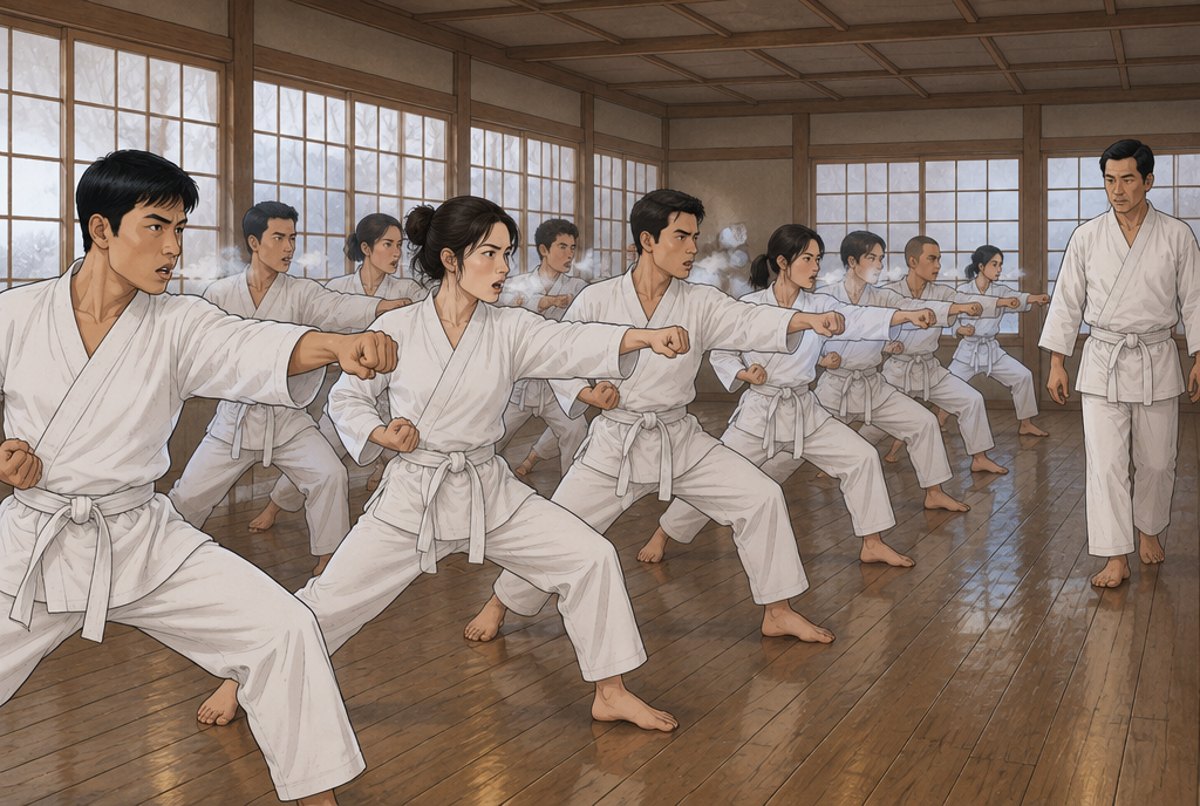
The kwans did not yet share a name. Several were in use, including Tang Soo Do, Kong Soo Do and Tae Soo Do. 1 "Tangsoo" is the word the Kukkiwon uses for the karate Koreans had learned in Japan, and Tang Soo Do lives on today as a separate traditional Korean art, rarely taught in the UK. 1,52
The kwans would not last for ever. In 1978, as chapter five tells, they agreed to close in favour of a single ranking system under the Kukkiwon. 51,53 But in 1945 they were where taekwondo began.
What the name means
The word that would join the kwans together is usually explained in three parts. means foot, or striking with the foot. means fist, or striking with the hand. means the way. So taekwondo is roughly "the way of the foot and the fist". 46 The Kukkiwon describes it as a martial art and sport of bare handed attack and defence, marked out by its kicking, practised for self-defence and self realisation. 52
In 1945 nobody was using that word yet. Ten years later a general would call a meeting to choose it.