

The southern Chinese styles share a founding story, and UK clubs still tell it. Here it is told as a legend, with the name of whoever tells each version, and the historians' view beside it. 5
The burning of the temple
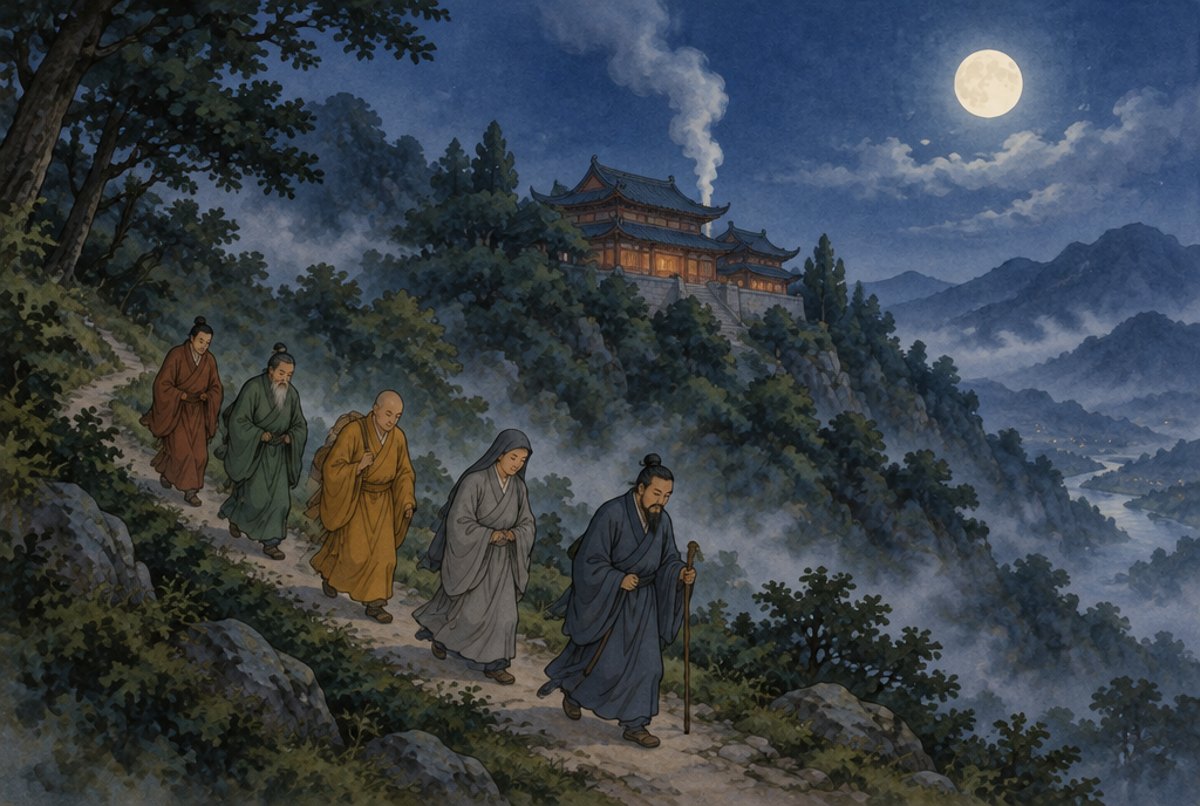
The dates given for the fire include 1647, 1732 and the middle of the 19th century. 5 Historians call the account a legend "with little, if any, documentary evidence". The historian Barend ter Haar suggests that stories of a burning were circulating in southern China by the late 18th century and were taken up by martial artists and by secret societies. Three places in Fujian claim to be the southern temple, and none has convincing evidence. 5
The masters tell it themselves
Ip Man, the Wing Chun teacher of chapter five, wrote his own account, translated by Samuel Kwok, who teaches in Ip Man's line. It does not place the fire in Fujian at all. It places the burning at the Shaolin Monastery on Mount Song, in Henan, in the Kangxi era, 1662 to 1722, names the nun Ng Mui as a survivor and puts her at the White Crane Temple. 103
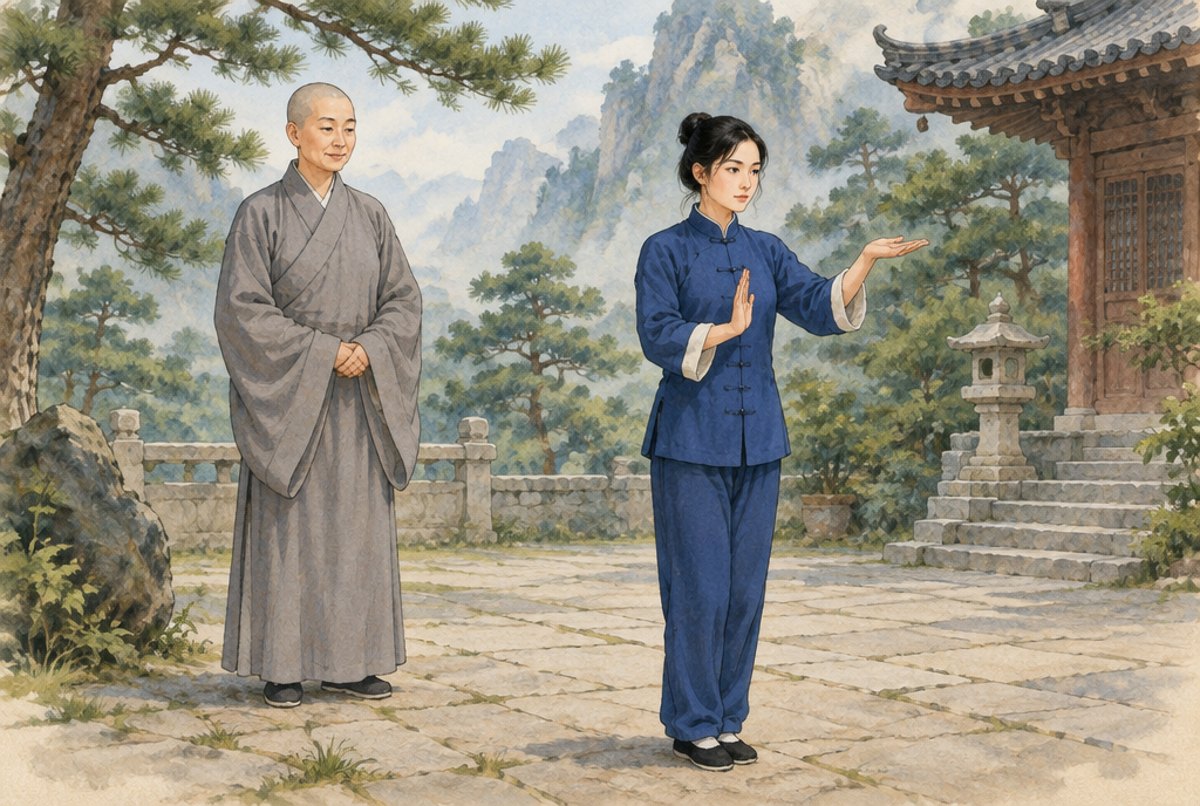
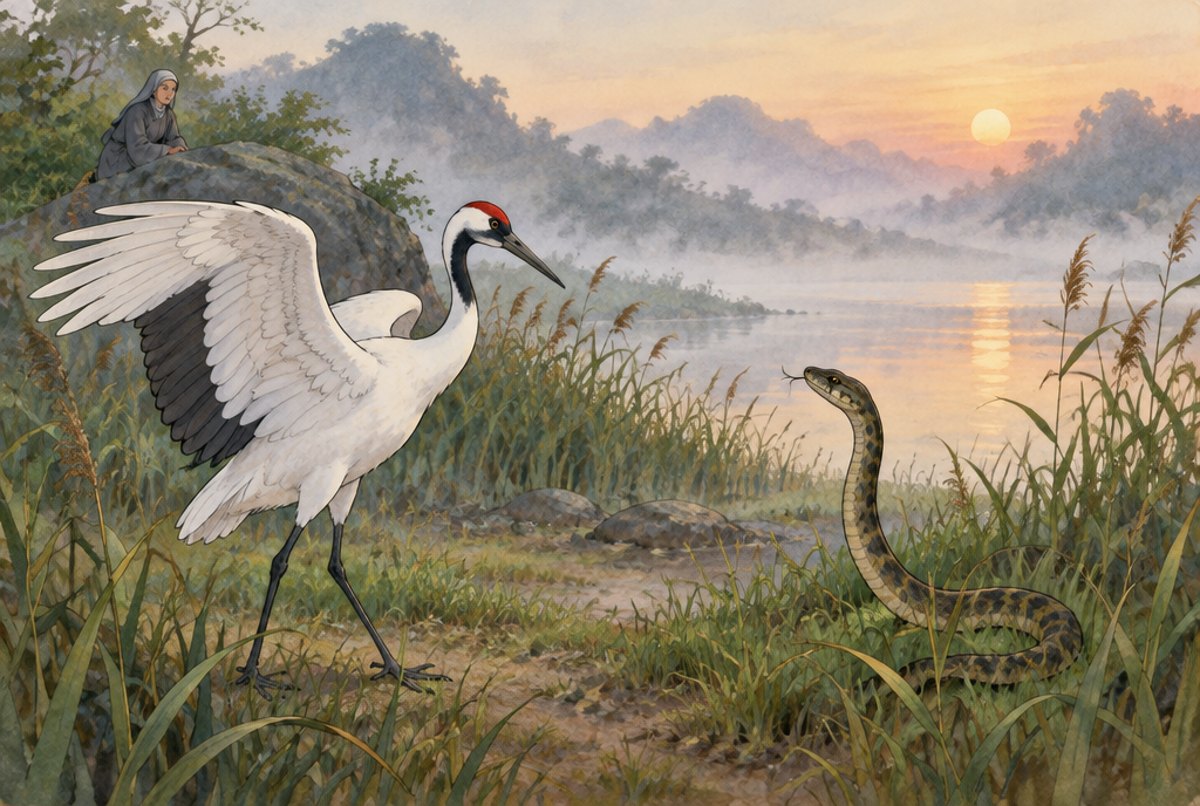
UK schools tell it in their own ways. Kamon says Ng Mui created Wing Chun in the 17th century. 104 The Hong Kong Wing Tsun Association UK says it began "over 400 years ago" when Ng Mui watched a crane fight a snake. 108
Tiger and crane
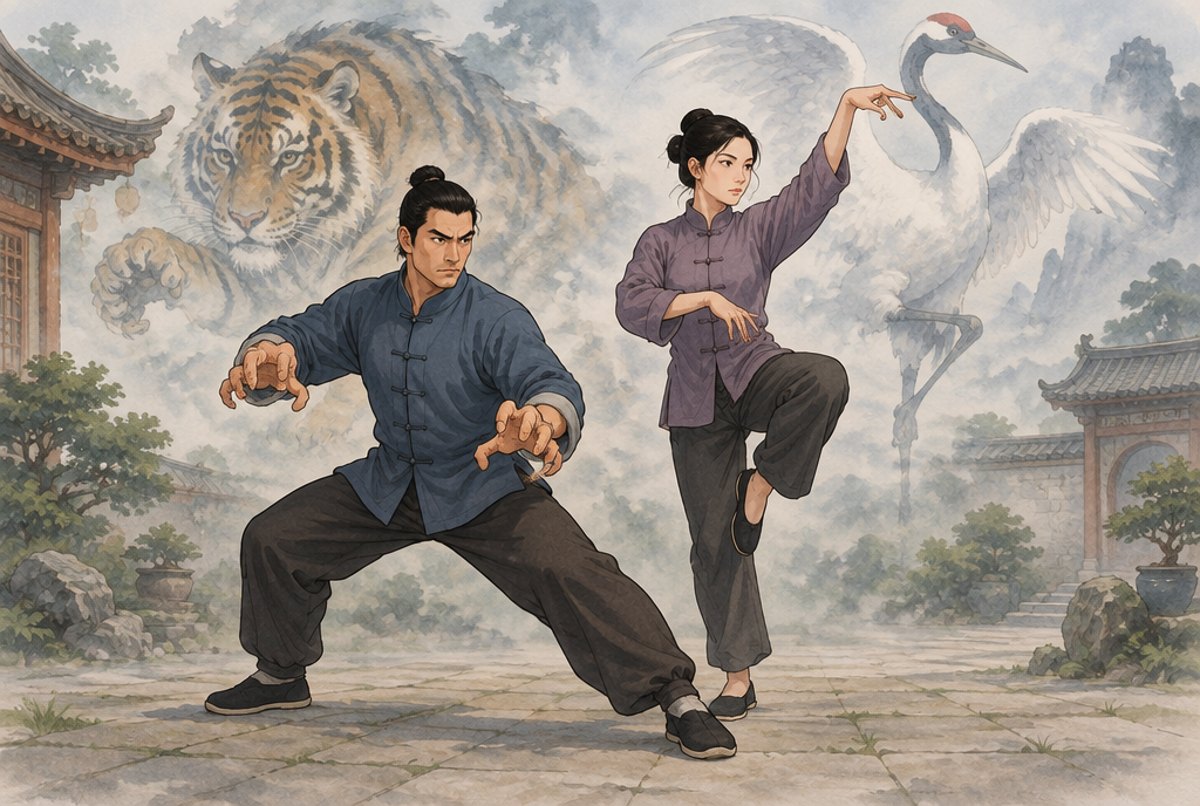
History adds a thread of its own. The character Hung, 洪, echoes the reign name of the first Ming emperor and was used by anti Qing secret societies, the Hung Mun, and the styles called Hung Kuen spread in Guangdong and Fujian with those societies. 8
has a legend too: Lau Saam Ngaan, "Three-Eyes" Lau, a student of Jee Sin, is said to have founded it. 5 The British Kung Fu Association's own lineage page begins later, with a teacher called Yau Luk Sau in Kowloon. Whether the two are the same tradition is not confirmed. 5,100 Mok Gar, the fifth family style, is credited to the monk Mok Da Si. 19
The woman who watched a crane
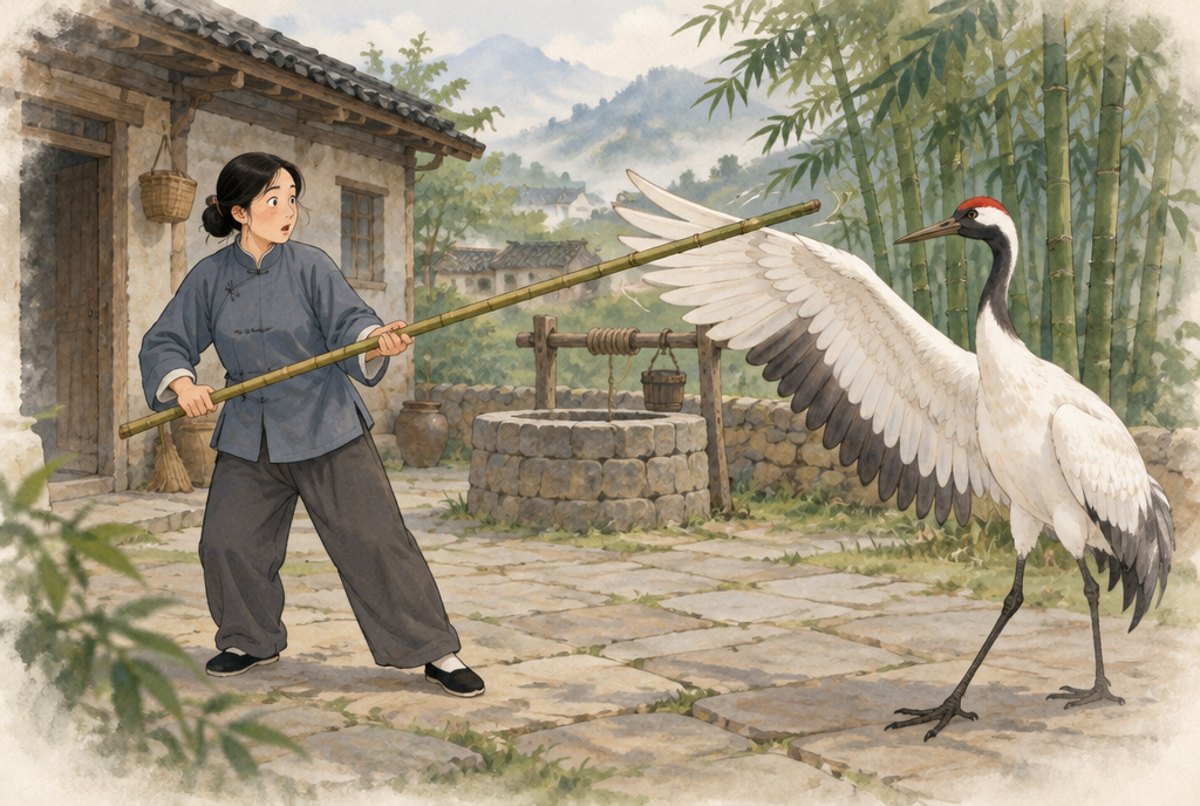
Here the records come closer. Her father, Fang Zhong, is said to have lived in Funing, Fujian, in the Shunzhi era, 1644 to 1662, and she and her husband taught in Yongchun, where an ancestral hall still honours them. 10 Fujian is a half hard, half soft style of short range strikes that copy the crane's beak, with few kicks, and it is thought to have had a major influence on the Naha-te styles of Okinawan karate. 10
Same name, different art
Legends carry a style's memory and its values. The next chapter turns to two southern masters whose lives were written down.