

Spellings vary. Korean terms are written in English letters in several ways. British Taekwondo's own list uses forms such as ap kubi, makki, jireugi and chagi; ITF documents use makgi, jirugi, joomuk and sonkal; and the same body sometimes spells a word two ways in one document. Clubs teach whichever their association uses. Below, the WT and Kukkiwon name comes first, as in British Taekwondo's list, with the ITF name where it differs and is sourced. 61,62,65,87
What families will hear. Taekwondo is best known for its kicks. The Kukkiwon lists its defining features as bare handed defence and attack, sparring at kicking distance, and an emphasis on kicking. 52 Beginners also learn stances, blocks, punches and strikes, which the patterns string together. 80
The building blocks
| Group | Korean | What it means |
|---|---|---|
| Stance | (ITF: sogi) | How you stand |
| Block | (ITF: makgi) | A defence with the arm or hand |
| Punch | (ITF: jirugi) | A straight punch |
| Strike | Striking with the knife hand, back fist, elbow, hammer fist and so on | |
| Thrust | tzireugi | Spear hand, fingertip, thrusts |
| Kick | Any kick |
Sources: 13,62,87. ITF rules name the striking tools instead, such as forefist, knife hand and footsword. 61
Heights. Techniques are aimed at three levels: high, , the face; middle, , the body; and low, . 87
First months, white to yellow belt, roughly
These appear in the first Taegeuk and ITF patterns and in British Taekwondo's basic movement list. A rough guide only; each body sets its own order. 54,62,87
| Technique | Korean | Plain English |
|---|---|---|
| Attention stance | Feet together, standing straight | |
| Parallel stance | Feet shoulder width apart; the usual ready position | |
| Walking stance | A natural step forward | |
| Forward stance | Long and deep, front knee bent | |
| Riding stance | Wide, both knees bent, as if on a horse | |
| Low block | Sweeps the forearm down to clear a low attack | |
| Middle block | Across the body at chest height | |
| High block | Raises the forearm above the head | |
| Middle punch | A straight punch to the body | |
| Front kick | Straight forward with the ball of the foot | |
| Turning kick | The classic taekwondo kick, swinging round to the target with the top or ball of the foot | |
| Ready | The starting position before a pattern or exercise |
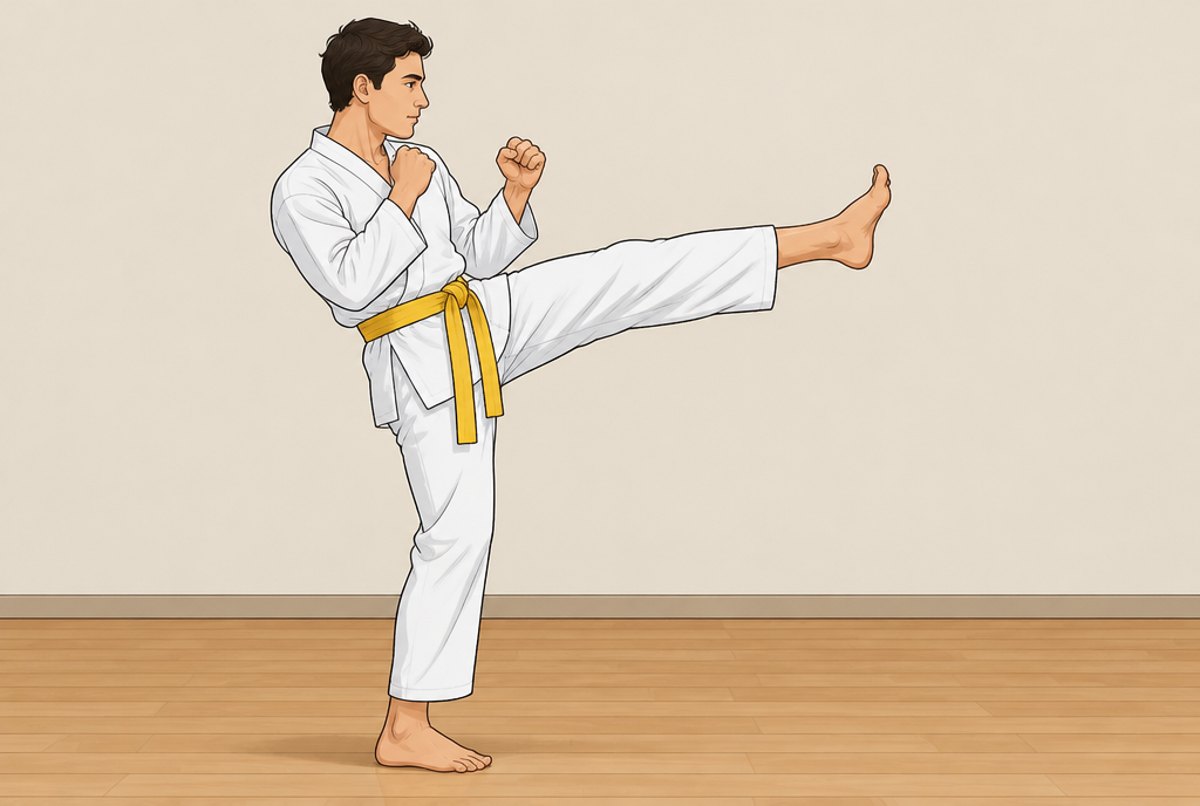
ITF beginners also practise the four direction punch, Saju Jirugi, and four direction block, Saju Makgi, before their first pattern, Chon-Ji. 13,62
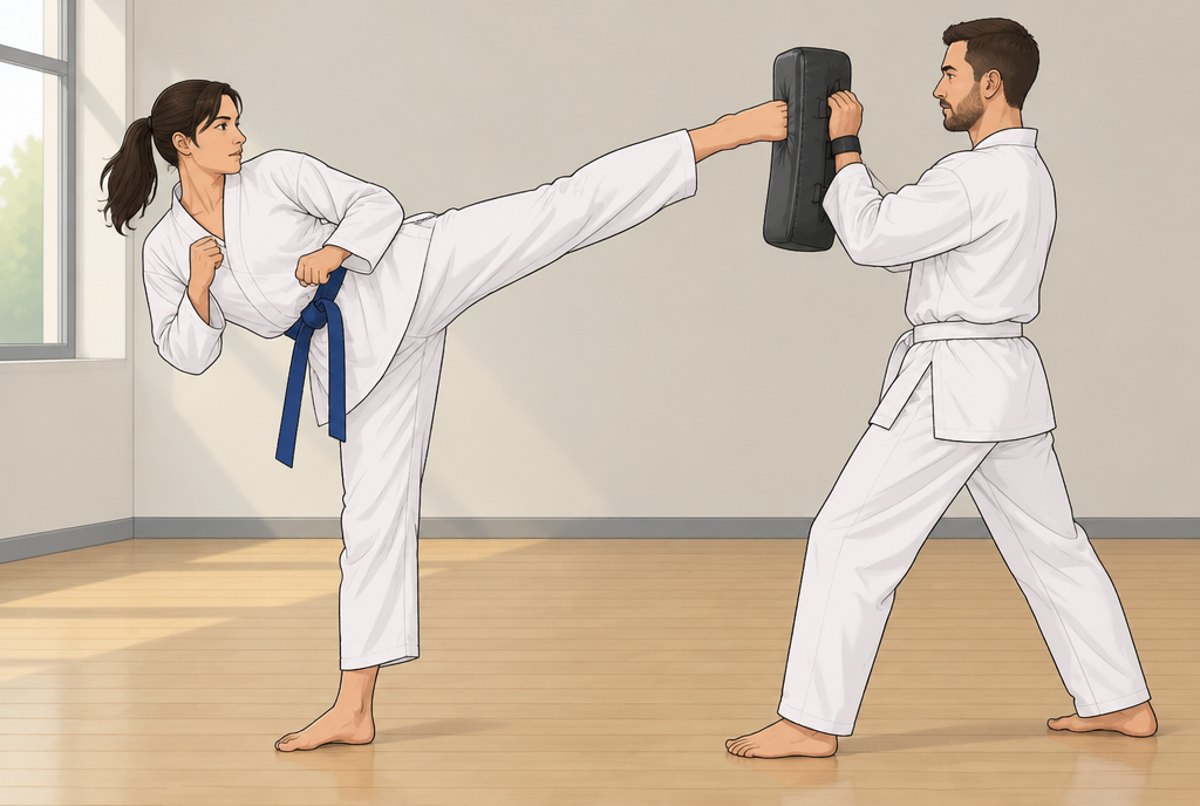
Coloured belts, green to red, roughly
| Technique | Korean | Plain English |
|---|---|---|
| Back stance | Weight mostly on the back leg; used with knife hand blocks | |
| Tiger stance | Short, front foot lightly on the ball | |
| Crane stance | Standing on one leg | |
| Knife hand block | Blocking with the edge of the open hand | |
| Knife hand strike | Striking the side of the neck with the edge of the hand | |
| Back fist strike | Striking with the back of the knuckles | |
| Elbow strike | Elbow round into the target, or into the other palm | |
| Side kick | Sideways with the edge or heel of the foot | |
| Spear hand thrust | Fingertip thrust | |
| Step sparring | one, two or three step | Pre arranged attack and defence with a partner; three step for beginners, then two and one step 62,80 |
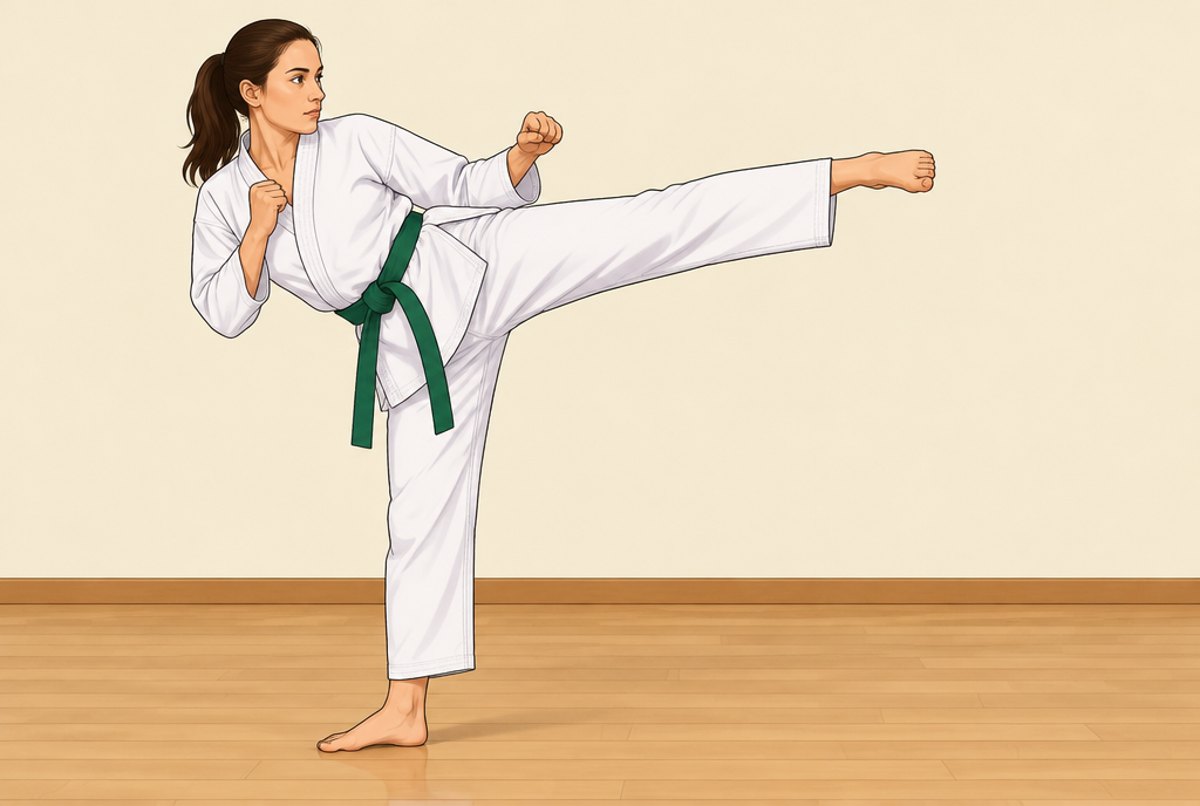
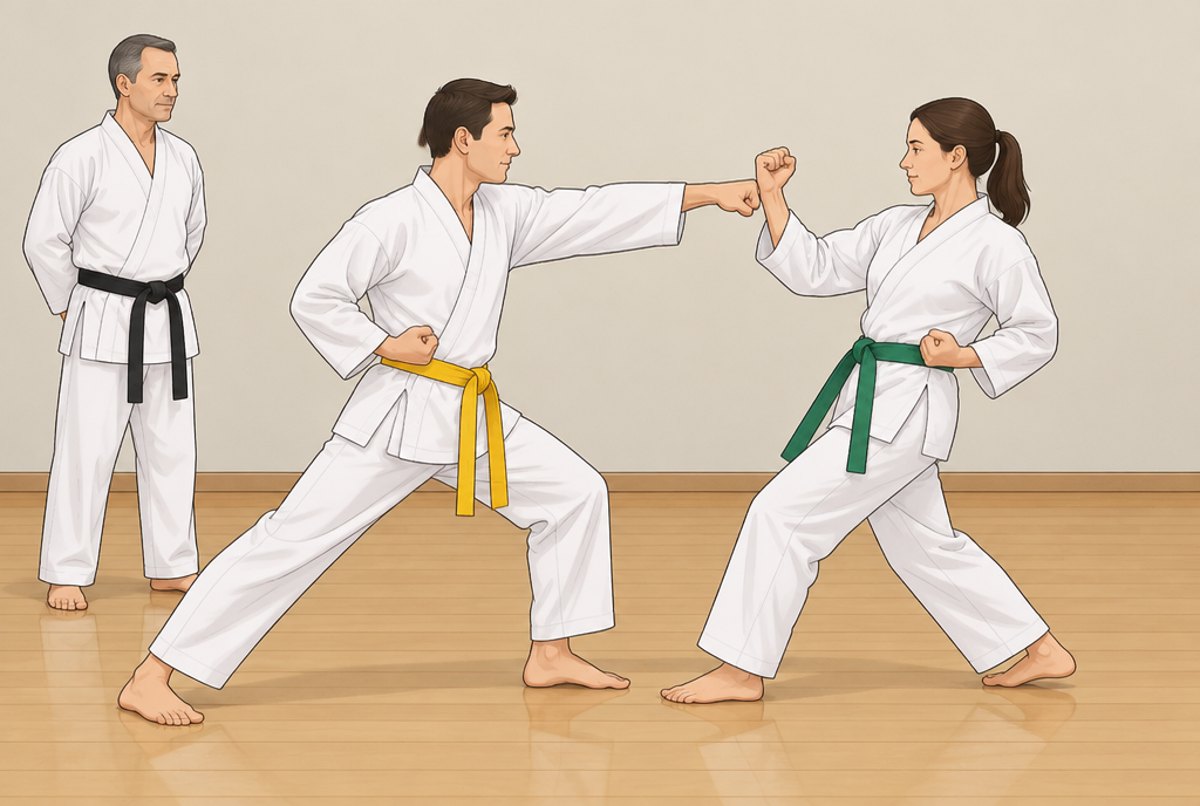
Black belt and competition kicks
| Technique | Name used | Plain English | Where it matters |
|---|---|---|---|
| Back kick | Turning away and kicking straight back with the heel | In WT sparring it only counts as a turning kick, with double points, if the head and shoulders turn too 40 | |
| Reverse turning kick | (ITF) | Spinning round and hooking the heel into the target | British Taekwondo 2nd to 4th Dan breaking tests 82; an ITF special technique 61 |
| Jumping and flying kicks | (ITF: flying) | Kicks done in the air, for height or distance | The ITF special technique event: flying high kick, flying turning kick, flying reverse turning kick, mid air 360 degree kick, overhead kick 61,66 |
| Self-defence | Escapes from grabs, locks and takedowns; knife defence at British Taekwondo 3rd Dan 1,82 | Part of every British Taekwondo Dan grading 82 | |
| Breaking | (BT: kyukpa) | Breaking boards with a technique, to show power and accuracy | Gradings and ITF competitions; foam boards for 15 and under at British Taekwondo dan tests 1,82,87 |
Which parts of the body strike
| English | British Taekwondo list | ITF documents |
|---|---|---|
| Forefist | ap joomuk or apjumok | |
| Back fist | dungjumok | |
| Knife hand | sonkal | |
| Hammer fist | not confirmed | |
| Ball of the foot | ap kumchi | |
| Edge of the foot, footsword | not listed | |
| Back of the heel | dwitchook |
How the two families think about technique
- ITF Theory of Power. General Choi's system rests on six ideas: reaction force, concentration, balance, breath control, mass and speed, with speed treated as more important than size. ITF pattern judges still mark power on reaction force, concentration, mass, breath control and speed. 1,61
- Sine wave. Many ITF clubs raise and lower the body's centre of gravity through each movement, a later refinement by General Choi; not all ITF schools use it. The ITF led by Paul Weiler awards marks for "Overall Rhythm and Sine Wave" in some pattern events. 1,65
- What scores in sparring. In WT sparring only two kinds of technique score: a straight punch with the knuckles of a tightly closed fist, to the body only, and any kick using the foot below the ankle bone, to the body or head. 40 In ITF sparring, forefist and back fist punches to head and body, and kicks with any part of the foot, score. 61
A note for families: reading about a technique is for understanding it. Kicks, strikes and self-defence are learned from an instructor, in a hall, with pads and partners.