

The one thing every family should know: Muay Thai uses eight weapons, two fists, two elbows, two knees and two shins, plus the , where fighters hold each other's head or arms to knee, elbow or unbalance. Beginners start with the guard, footwork, punches, the round kick, the push kick and knees on pads; elbows and clinch work come later, and children's competition rules remove elbows, knees or all strikes to the head, depending on the body and the age. 1,21,42,45
Two families of technique
Thai teaching divides techniques into , major or mother techniques, and , minor or child techniques. The Kru Muaythai Association expects a Khan 10 candidate to know 15 of each, and the UK Muaythai Federation describes the same two groups. 1,32,40 IFMA's traditional demonstration, , groups techniques into basic skills (stance and movement; the weapons: punch, elbow, knee, push kick and kick; defence), tactics and strategy. 22
Stance, guard and footwork
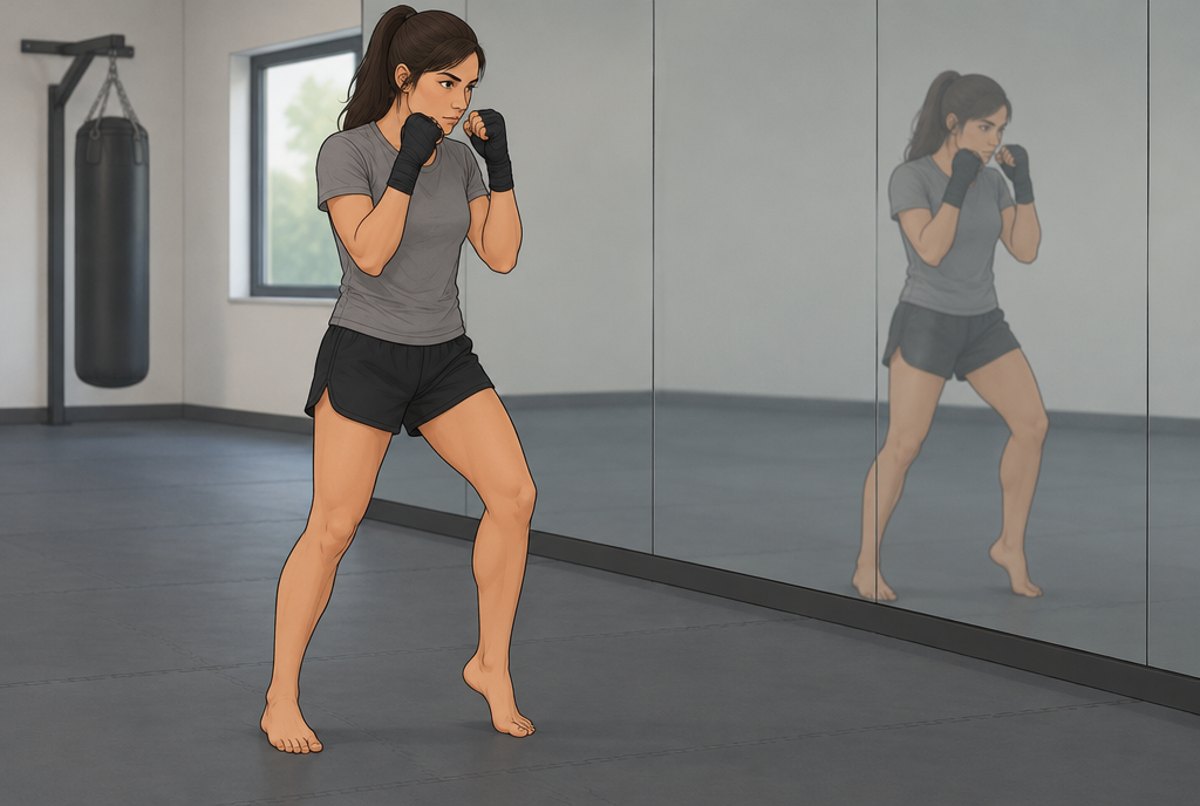
- . Hands high, elbows close, weight balanced so the front leg can lift quickly to block a kick. 1
- Thai or Western stance. A more upright Thai stance or a Western boxing stance, depending on range. 1
- In the old styles. is known for a low stance and a three step pattern, . 2
Punches
| Technique | What it is |
|---|---|
| and | Straight punches with the lead and rear hand |
| and | Curved and rising punches, adopted from Western boxing |
| Overhand, shovel and corkscrew punches; backfist | Other punches now common in Muay Thai |
| Older Thai punches | Crosses, and a long circular strike landing with the heel of the palm |
Muay Thai uses body punches less than many sports, because bending forward exposes the head to knees and elbows. 1
Kicks and the push kick
| Technique | What it is |
|---|---|
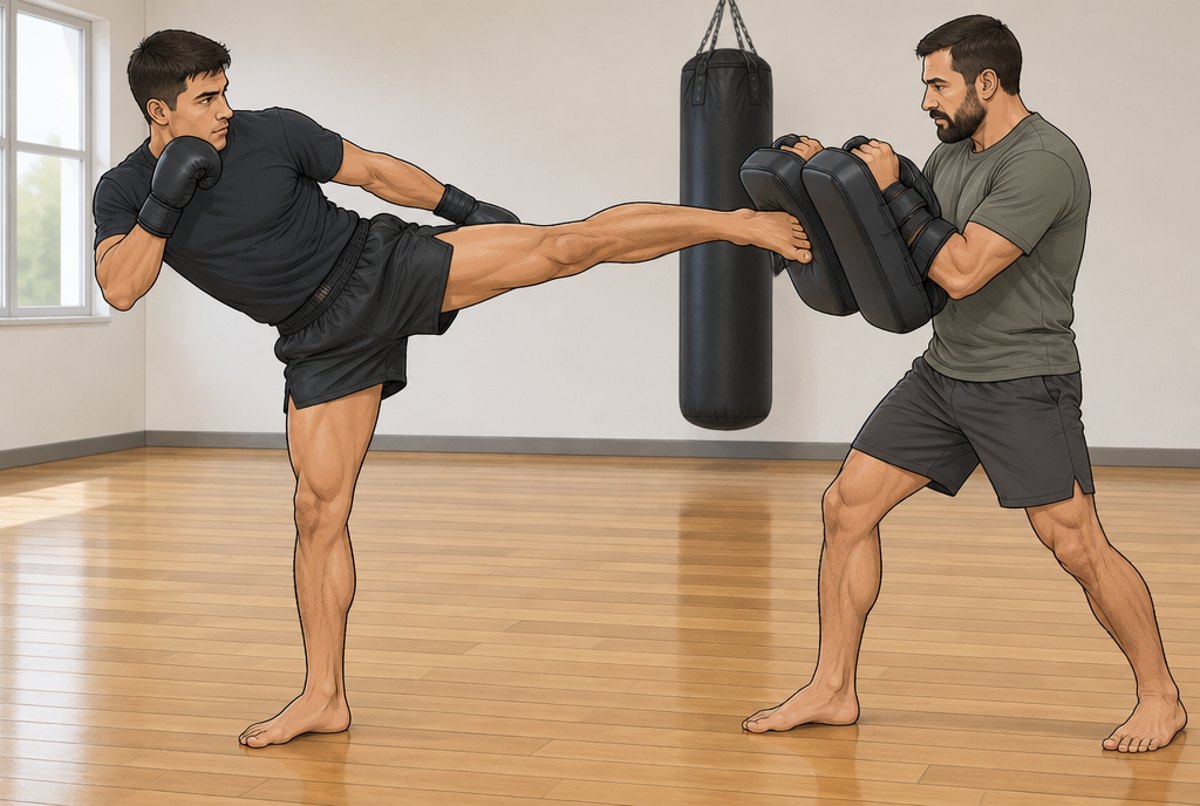
| Round kick, | The signature kick: the whole body turns and the shin strikes the leg, body or head |
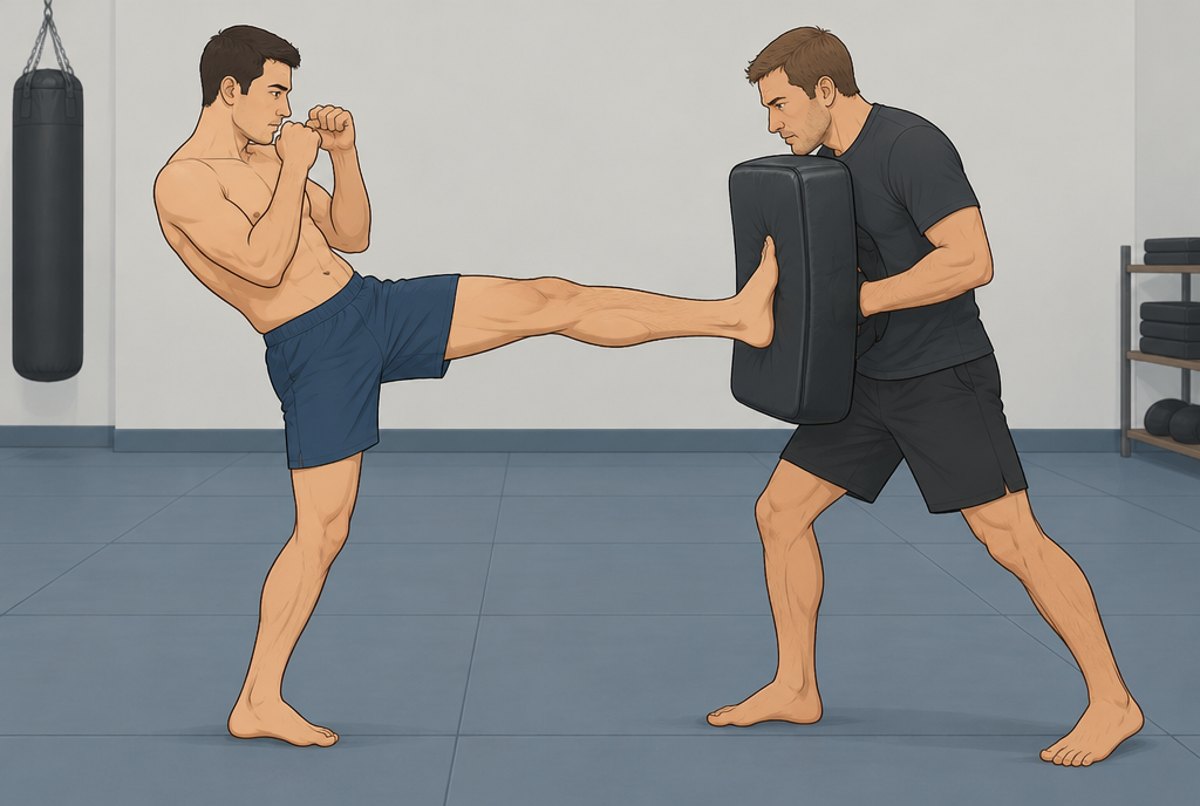
| Push kick, | A straight thrust with the sole of the foot, the "foot jab", to keep distance, stop an attack or unbalance |
| A round kick to the outside or inside of the thigh |
Thai boxers strike with the shin rather than the foot, which has many small bones, and condition their shins on pads and bags. 1
Knees and elbows
| Technique | What it is |
|---|---|
| Straight knee, | Driven forward, often from the clinch |
| Jumping knee, | The fighter jumps off one leg and strikes with that knee |
| Flying knee, | A running or stepping jump into a knee |
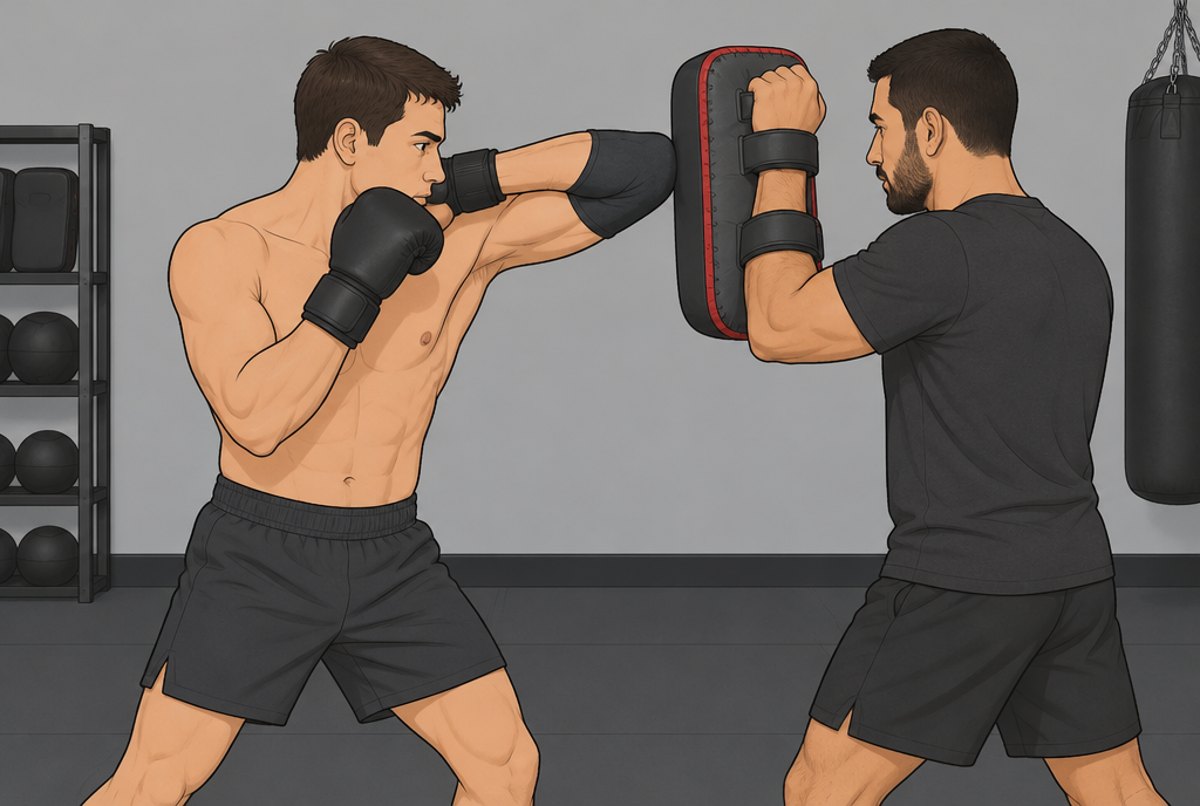
| Elbows, | Horizontal, upward, downward, diagonal, spinning and flying, used at very close range or as blocks |
The elbow is often called the most dangerous attack in the sport, and elbows can cause cuts, which is why most junior rules leave them out. 1,11
The clinch
Unlike boxing, the referee does not separate fighters as soon as they hold. In the clinch, , they control the head, neck or arms to land knees and elbows or to unbalance the opponent, and the referee calls , break, to separate them, for example when neither is striking with power. 1,11,21,42 The front clinch has both hands behind the opponent's head, one palm over the back of the other hand and the fingers not interlaced; there are also arm, side and low clinches. 1
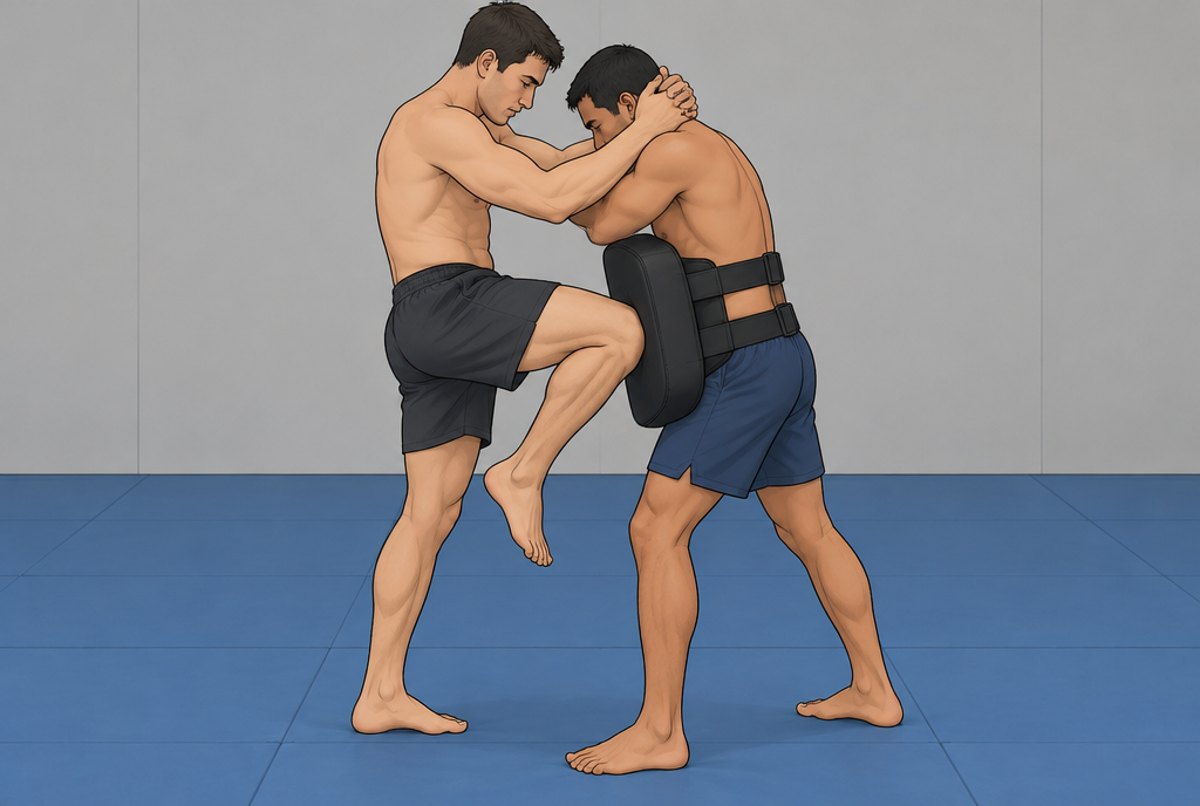
- Not allowed in the clinch under IFMA's rules: biting, head butting, joint locks, lifting the opponent, hip throws, tackles, tripping without a Muay Thai strike, hooking the legs with the calf or heel, and holding a caught leg while pushing forward more than two steps without striking. 21
- Muaythai GB lists similar illegal throws and adds chokes such as a guillotine hold. 42,44
Defences
| Kind | Example |
|---|---|
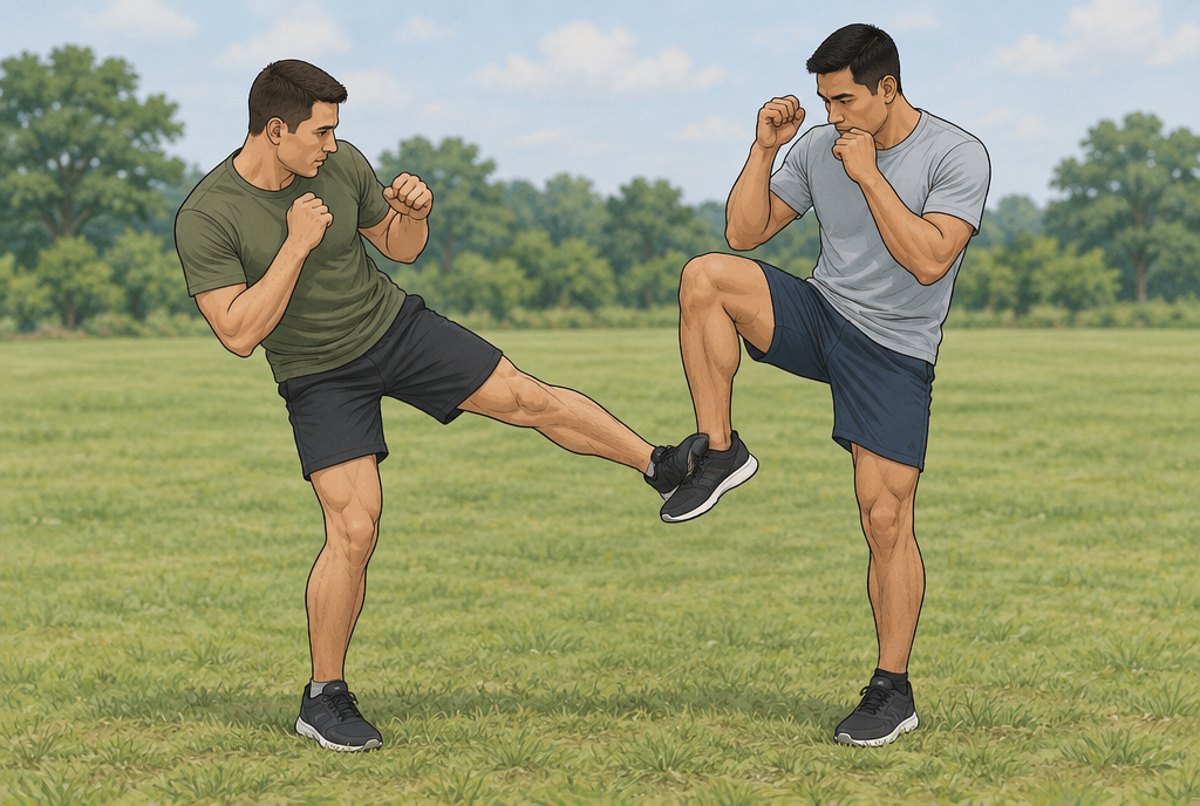
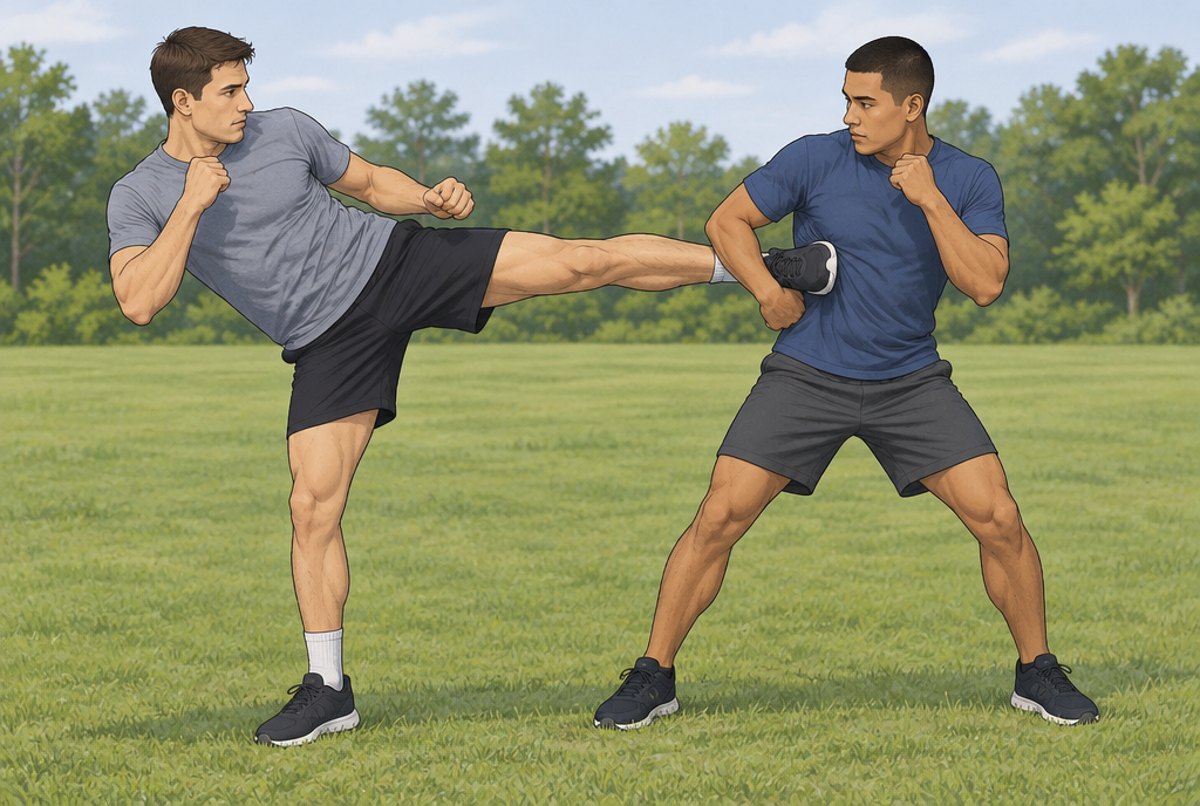
| Blocking | Stopping a kick with the raised shin, a |
| Parrying | Turning a punch aside with a small tap of the hand, a |
| Avoidance | Moving the target just out of range, then countering |
| Evasion | Moving the whole body away |
| Disruption | Stopping an attack early with a jab, push kick or leg kick |
| Anticipation | Catching a kick, a , or countering before it lands |
High strikes are blocked with the forearms and shoulder, and hooks with a raised elbow and forearm. 1 Under IFMA's rules, strikes that land on a well placed guard do not score. 21 Muaythai GB's junior and professional rules give the point to a kicker whose caught leg is used to throw them down, and warn a fighter who falls on purpose after a leg catch. 42,44
What children and adults may use in competition
IFMA, world amateur rules revised 11 May 2026. Age groups go by year of birth: a competitor is in the group for the age they reach by 31 December. 21
| Age group | Restriction |
|---|---|
| Masters, Elite, U24, U18 (16 and 17) and U16 (14 and 15) | None: all eight weapons, with head guard, elbow pads and shin guards for all, and a body protector for younger athletes and older Masters |
| U14 (12 and 13) | No elbow or knee strikes to the head |
| U12, U10 and U8 (6 to 11) | No strikes to the head at all |
| Semi contact, , all ages | Controlled light contact; a knockdown or injury from a strike disqualifies the striker |
All rows from IFMA's rules. 21
Muaythai GB, the UK body with the fullest free junior rules. 42,43,44,45
| Group | Restriction |
|---|---|
| Juniors, 6 to 15, junior rules | No strikes to the head in any junior division; body shield, shin pads, 6 to 8 oz gloves |
| Professional N and C class, from 16 | No elbows to the head, face or neck unless agreed in advance with elbow pads |
| Professional, by age | Padded elbows from 17, bare elbows only from 18, in A class |
| Training, its safe practice policy | Head contact light at all times, and avoided altogether for non competitive under 16s; no knuckle press ups or heavy bag work for children |
Training methods
- Pad work, with a trainer holding on the forearms, often with a belly pad, so the student can punch, kick, knee and elbow in live combinations. 1
- Bag work, , skipping, running and conditioning. 1
- Sparring is usually light to medium, often limited to one skill, such as clinch and knees only. Muaythai GB allows sparring across ages and sexes only in touch contact learning drills. 1,45
How Muay Thai differs from kickboxing
| Muay Thai, IFMA rules | WAKO's , the nearest kickboxing format | |
|---|---|---|
| Elbows | Allowed for adults, limited for juniors | Not allowed |
| Knees | Allowed, including from the clinch | Allowed |
| Clinch | Central; the referee calls yaek to break it | Short holds only; no clinch at all from 1 January 2027 |
| Throws and sweeps | Hip throws, tackles and trips without a strike are fouls; unbalancing as part of a strike or after catching a kick is part of the game | Throws not allowed; foot sweeps at ankle level in some formats |
| Ritual | The wai kru before every bout | A handshake |
| Rounds, adult amateurs | 3 of 3 minutes | 3 of 2 minutes |
Muay Thai column from IFMA's rules; K1 Style column from the kickboxing page. 1,21,42,60