

The one thing every family should know: UK Muay Thai has two main amateur routes with different rules for children. IFMA's world rules, used by its UK member the UK Muaythai Federation, count age by year of birth and allow strikes to the head from the year a child turns 12, with no elbows or knees to the head until 14. 's junior rules ban all strikes to the head for under 16s. Professional bouts in the UK can start at 16. Medical bans after knockouts cover training and sparring, not only competition. 21,40,42,44
Olympic and multi sport status
- Recognised, not on the Olympic programme. The IOC Executive Board gave IFMA provisional recognition on 6 December 2016, and the 138th IOC Session in Tokyo gave full recognition in July 2021. Recognition makes IFMA part of the Olympic movement; Muay Thai is not an Olympic sport. 1,20,30
- World Games: on the programme since Wrocław 2017, with 87 athletes; Birmingham, Alabama, 2022, 12 events equal for women and men; Chengdu 2025, six events and 48 athletes. 8
- European Games: 2023 in Poland, at Myślenice, 25 to 28 June 2023. 8,20
- IFMA's 2026 events included its European Championships in Paris, ending on 26 October 2026. 20
IFMA's rulebooks
| Document | Date | Status on 26 October 2026 |
|---|---|---|
| Rules and Regulations for International Competition: combat, technical and cultural | Revised 11 May 2026, approved 3 May 2026 | Current 21 |
| Wai Kru and Mai Muay Rules | Revised 22 May 2025 (v2.05) | A separate earlier edition, which counts age differently 22 |
| Muay Talay rules | 2020 | Current on IFMA's rules page 24 |
| Constitution | September 2025 | Current 23 |
IFMA's age groups
Age is counted by year of birth: a competitor is in the group for the age they reach by 31 December of the competition year, so an Elite or U24 competitor can still be 17 on the day. 21
| Group | Ages in the year | Rounds (combat) | Body protector | Minimum Khan | Restricted strikes |
|---|---|---|---|---|---|
| U8 | 6 and 7 | 3 of 1 minute | Yes | 1 | No strikes to the head |
| U10 | 8 and 9 | 3 of 1 minute | Yes | 1 | No strikes to the head |
| U12 | 10 and 11 | 3 of 1 minute | Yes | 2 | No strikes to the head |
| U14 | 12 and 13 | 3 of 1.5 minutes | Yes | 3 | No elbow or knee strikes to the head |
| U16 | 14 and 15 | 3 of 2 minutes | Yes | 4 | None |
| U18 | 16 and 17 | 3 of 2 minutes | Yes | 5 | None |
| U24 | 18 to 23 | 3 of 3 minutes | Yes | 6 | None |
| Elite | 18 to 40 | 3 of 3 minutes | No | 6 | None |
| Masters 35+ | 35 to 39 | 3 of 3 minutes | No | 6 | None |
| Masters 40+ and 45+ | 40 to 50 | 3 of 2 minutes | Yes | 6 | None |
All rows from IFMA's 2026 rules. 21
- Rest between rounds: 1 minute for U18 and younger, 1.5 minutes for U24, Elite and Masters. 21
- Weight classes run from 16 kg for the under 8s to over 91 kg for Elite men. 21
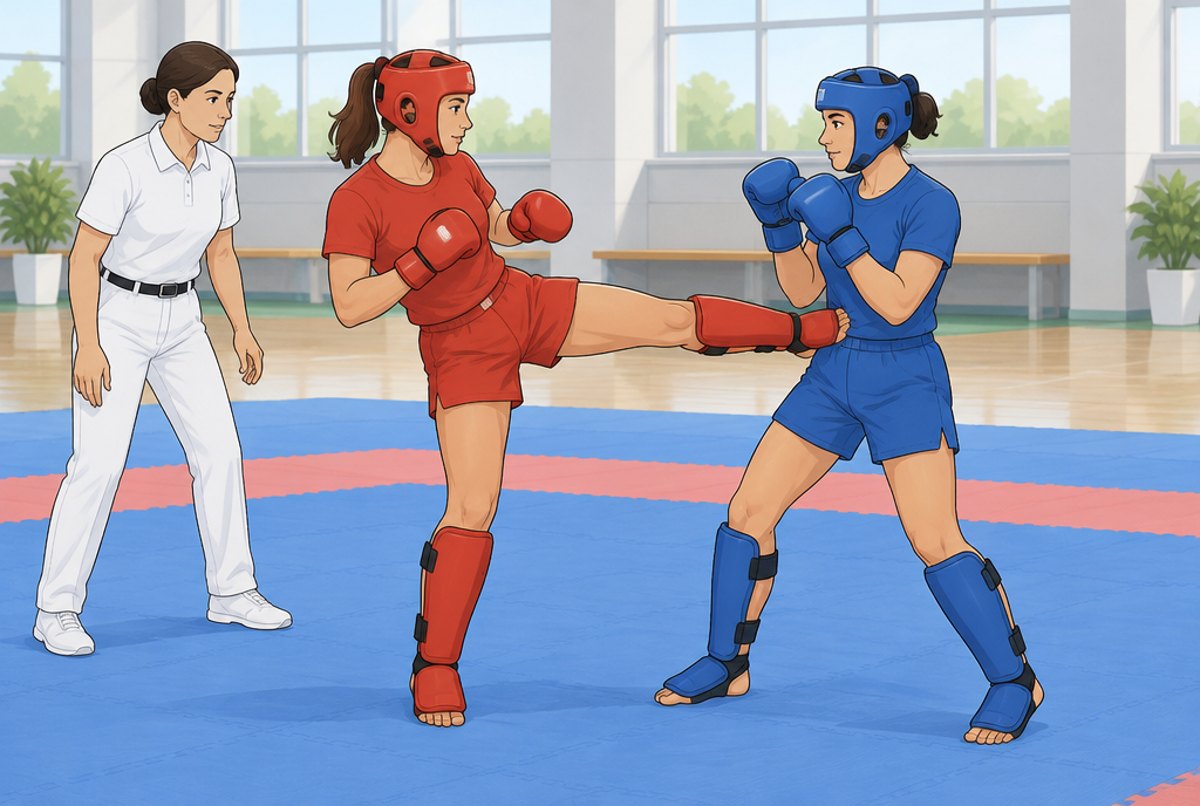
- Three disciplines for every age: , full contact; technical, , semi contact with controlled light contact, where a knockdown disqualifies the striker; and cultural events, the wai kru solo and the duo. 21
- Scoring: the , for effective, forceful Muay Thai skills with punch, kick, knee and elbow; balance, dominance and how a fighter looks at the end can decide close rounds. Strikes on a well placed guard do not score. 21
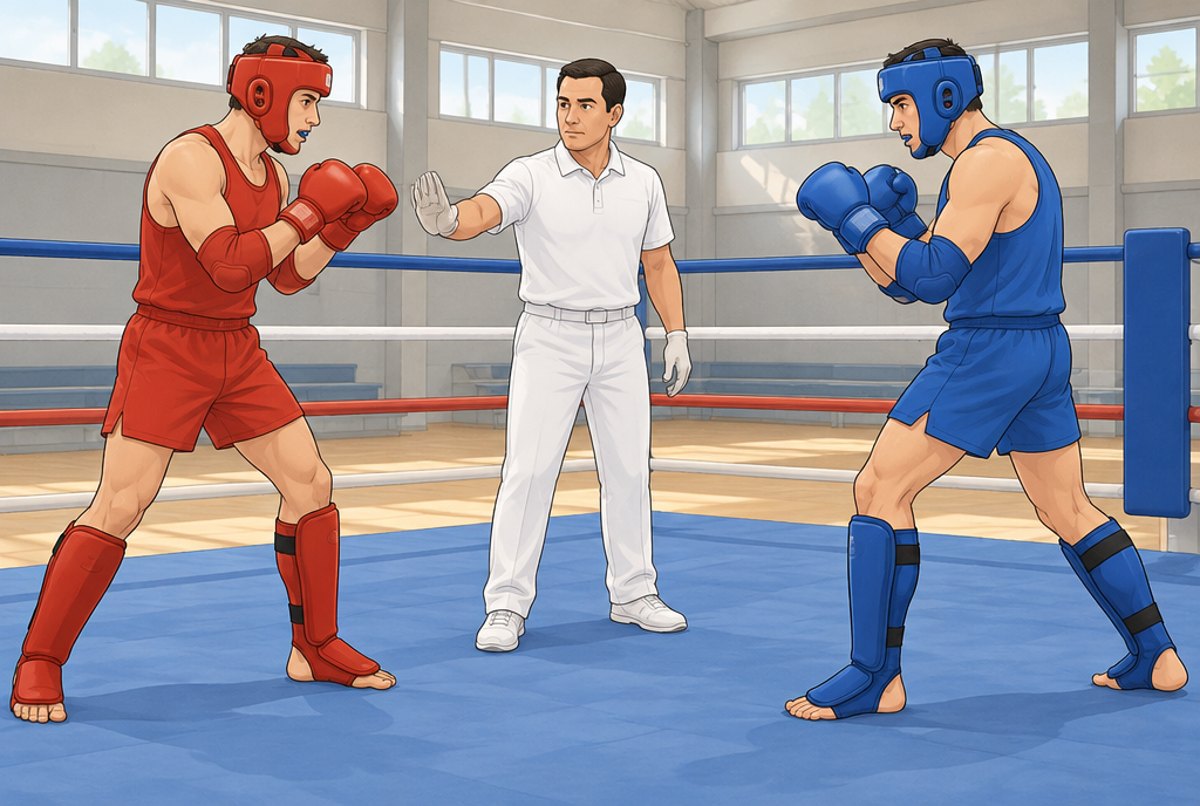
- Commands are given in Thai: , box; , stop; , break; and the count runs from , one, to , ten. 21
IFMA's kit and dress
- Every amateur: IFMA approved 10 oz gloves, red or blue; soft bandages or wraps up to 5 m, tape only at the wrist; a head guard with no cheek, chin or face protection, put on after the wai kru; cloth shin and elbow guards; a fitted gum shield, not red or pink; a groin guard for every athlete; Muay Thai shorts with "Muaythai" on the front, and a singlet in the corner colour. 21
- Female chest protection: compulsory for Elite and Masters 35+ women; optional for younger girls and for Masters 40+. 21
- Mongkhon and prajied: the mongkhon is worn for the wai kru only; a prajied may stay on the upper arm or waist if neatly covered. 21
- Not allowed: ankle supports, hair clips, beards unless a beard net is approved for religious reasons, and grease other than a little petroleum jelly on the face. White head and body covers are allowed for religious or cultural reasons. 21
IFMA's medical and safety rules
- Before: a medical declaration signed by a doctor before travelling, and a doctor's check every competition morning; blood tests for everyone 16 and over, within 6 months; medical tests for under 18s only with a parent's or guardian's informed consent. 21
- After a knockout or a stoppage for head blows (): no competition or sparring for at least 30 days; 90 days after two within 90 days; 12 months after three within 12 months; a neurologist must certify fitness before return. These rules apply equally to head injuries in training, and national federations must explain them in a way minors understand. 21
- Rest after any bout: 7 days after one round; 14 days after up to four rounds; 21 days after 4 to 9 rounds in a tournament; 28 days after 10 or more. 21
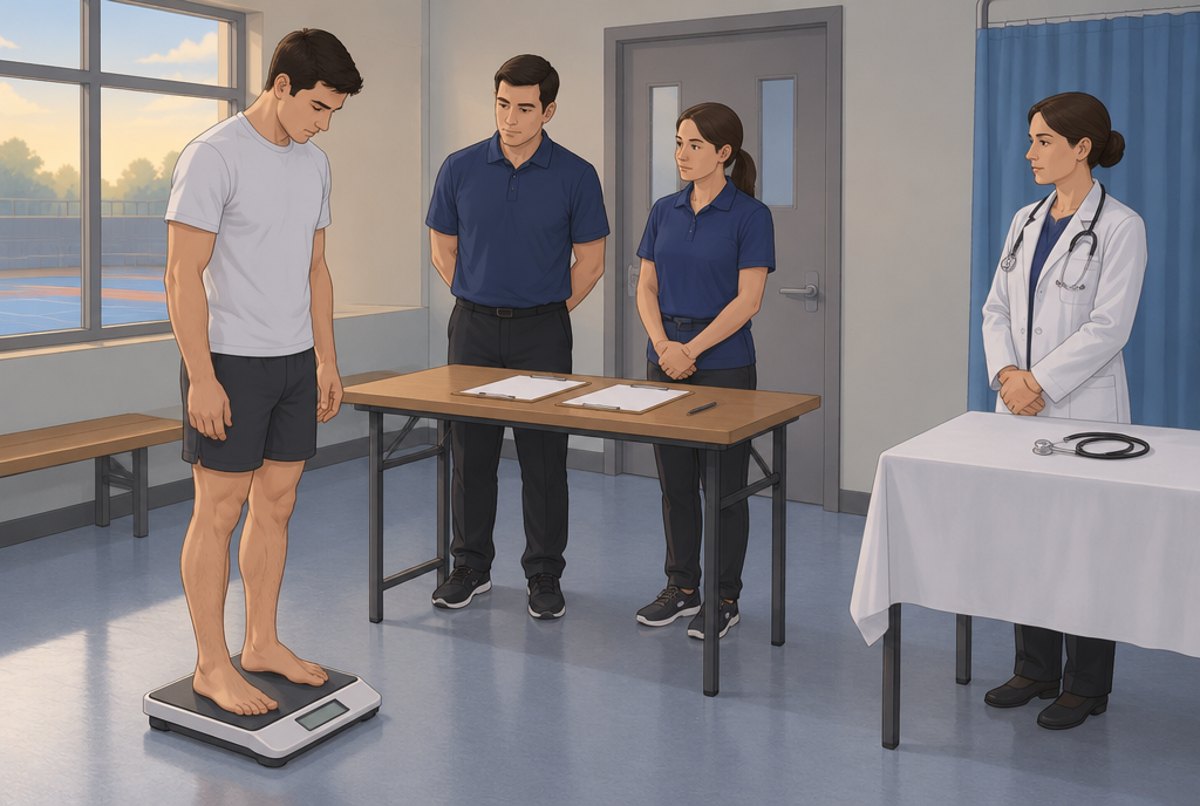
- Weigh ins on each competition morning, at least three hours before bouts. Under 18s' anti doping consent forms need a parent's signature, and athletes from U12 must complete age appropriate anti doping education. 21
Weight cutting
- IFMA: an article on its site advises amateurs to lose no more than 3% of body weight in fight week, and says "Kids shouldn't cut weight on fights at all"; slides from its athletes' commission list the risks of dehydration and weight cutting for young athletes, from stunted growth and kidney damage to greater risk of concussion. 26
- Muaythai GB: each gym's designated team coach must make sure fighters enter at a weight that does not involve cutting dangerous amounts quickly; weigh ins are on the morning, with no allowance. 41
- WBC Muaythai: safety weigh ins 30 days and 7 days before a professional title bout, and the official weigh in 24 to 30 hours before. 31
UK amateur competition
| Juniors, junior rules | Amateurs, amateur rules | |
|---|---|---|
| Who | Under 16, unpaid; minimum age 5, maximum 15 (its strike table starts at 6 to 7) | All in full protective kit, unpaid; youth weight tables from 10 to 11 up to 16 to 17, Under 23 and Senior |
| Rounds | 5 of 1 minute, 30 seconds rest | 1 minute rest; round lengths not published in text |
| Head contact | No strikes to the head in any junior division | Head guard in all head contact bouts; age and strike limits not published in text |
| Kit | 6 to 8 oz gloves, body shield, cotton shin pads, cup for boys, gum shield optional | 10 oz gloves for head contact; head guard; body, shin and elbow guards in full Thai rules (juniors may go without head guard and elbow pads); cup; gum shield |
| Rest after bouts | 7 days after a win in one round; 14 days after 3 rounds; 21 days after 5; 30 days after a knockout; 90 days after a knockout from two head blows, with a doctor's clearance | Not confirmed |
- British Championships, the third in 2026: and British categories; knockout tournaments of up to 3 bouts in a day; under 16s in a body shield and 8 oz gloves, over 15s in elbow pads and 10 oz gloves; entry £30; it feeds selection for Team England at WBC events. 330 athletes from 63 gyms took part in 2026. 41
- University Championships: Freshers, Novice, British and Elite categories, 285 athletes from 23 universities in 2026. 41
- Sanctioned shows: a paramedic and a technician must be present, and promoters must pay "particular attention" to its policy on head contact for juniors. 45
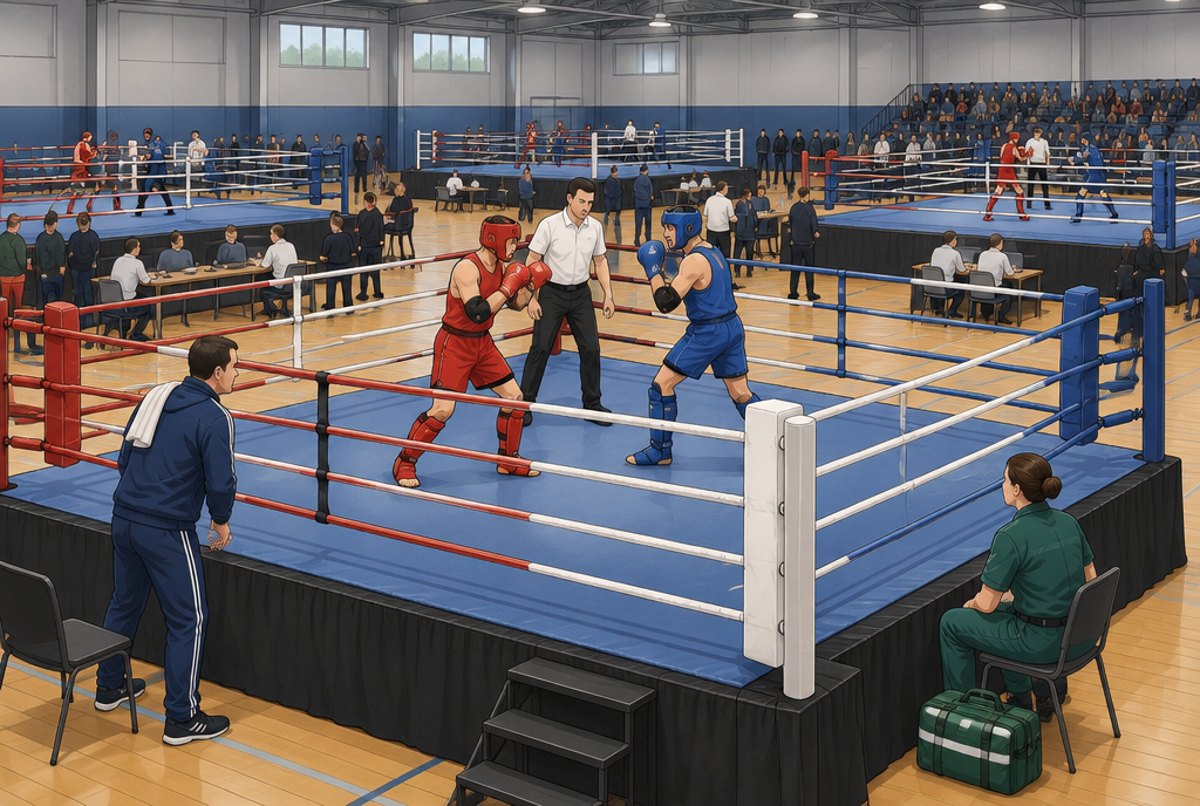
The UK Muaythai Federation, IFMA's UK member: all fighters on its sanctioned shows need a UKMF licence, both camps must be members for a UKMF title, and its trials select fighters for IFMA's European and World Championships. It does not publish its domestic rules, so whether it applies IFMA's youth limits at home is not confirmed. 40
Other bodies. The British Thai Boxing Council says it has rules for professional and amateur Muay Thai and for junior all styles semi contact; ISKA, WKA International and ICO sanction Muay Thai rule bouts in the UK. Their junior rules are not confirmed. 46,52
Professional Muay Thai
- Muaythai GB's professional rules: professional means over 16 without amateur kit, paid or not. N and C class from 16, 5 rounds of 1.5 minutes; B class from 17, 5 of 2 minutes; from 18, 5 of 3 minutes with 2 minute breaks. Padded elbows from 17 and bare elbows from 18; in C and B class, elbows to the head only if agreed in advance. 44
- WBC Muaythai titles: a minimum age of 18 outside Thailand, and 16 in Thailand under the Sports Authority of Thailand's rules; 8 oz gloves up to welterweight, 10 oz above. 31
- Thai stadiums: Lumpinee's rule is that boxers must be older than 15. 7 In 2016, 9,998 boxers under 15 were registered in Thailand; in 2018, after a 13 year old boxer died, a bill to ban under 12s from professional matches was put forward there. Whether it became law is not confirmed. 1,34
- In the UK, a public contest combining boxing or wrestling with martial arts counts as boxing or wrestling entertainment for licensing in England and Wales. There is no known UK wide regulator for professional Muay Thai. 50
Children in combat sports: the UK debate
Kickboxing GB reports that a 2025 parliamentary debate on children's safety in combat sports led it to bar juniors from senior divisions until they are 18 on the day. 51 Muaythai GB's safe practice policy, last reviewed on 10 May 2023, already advised avoiding head contact altogether for non competitive under 16s; its junior rules carry no date. 42,45