

The one thing every family should know: a first kickboxing class is usually a warm up, footwork, punches and kicks in the air and on pads, and some fitness work, with no sparring on day one. Clubs differ in one big way: some train for competition and will later spar with protective kit, some are fitness classes with no contact at all. Before joining, ask which body the club belongs to (Kickboxing GB, another body, or none), whether coaches are DBS checked and insured, whether children train separately by age, and when and how sparring starts. 80,82,87,130
Before the first class
- Is the club affiliated? Kickboxing GB has a public club finder, with 61 locations on 26 October 2026, and approves each new club before it gains recognition and insurance. Kickboxing Ireland has its own finder for Northern Ireland. Many good clubs are independent; for them, ask about insurance and safeguarding directly. 80,84,87,141
- Safeguarding. Kickboxing GB requires safeguarding training for all its coaches and says DBS checks are mandatory for its volunteers. Its safeguarding page explains a change to the law on 1 September 2026: supervised assistants and volunteers working with children in regulated activity may now need checks too. It says it is a signatory of the Safeguarding Code in Martial Arts. 80,81,130
- Contact with children. Kickboxing Ireland tells coaches to contact under 18s only through group messages that include parents. Kickboxing GB's photography policy says children's full names should not appear with their pictures without consent. 85,88
- Forms. Kickboxing GB's parents' code asks parents to complete consent, contact and medical forms. 85
- Prices. No UK body publishes class prices. One example from a council directory: the BCKA in Corby at "£10 plus per pass", for ages 4 to 99, in February 2026. For other prices, ask the club. 91
What to wear and bring
- At first: loose clothes and water. Kickboxing Ireland's answer to "What gear do I need?" is loose fitting clothes and "a big bottle of water". 87
- Jewellery off, nails short, long hair tied back. WKA's code of conduct and WAKO's competition rules both ask for this. 41,58
- Tell the coach about any illness or injury. 58
Kit you will hear about
These are the items WAKO requires in competition; clubs usually ask for them gradually, often gloves and wraps first, then the rest before any sparring. Ask your club what it needs. 41
| Item | What it is | When WAKO requires it |
|---|---|---|
| 8 oz, open palm, fingers and thumb covered at the front | Point fighting | |
| 10 oz, closed, thumb fixed to the glove | Every other fighting format | |
| Cotton strips 2.5 to 5 m long, wound round the hands under the gloves | Compulsory with kickboxing gloves; optional in point fighting | |
| Covers the upper teeth, or both rows with braces on the lower teeth | All fighting formats, all ages | |
| A padded helmet; the face, chin and eyebrows stay open | All fighting formats, all ages | |
| A clear guard fixed to the head guard | Point fighting for children, 7 to 9, and younger cadets, 10 to 12 | |
| Foam pads over the shin; shin and instep together for low kick and K1 Style | All fighting formats | |
| Padded boots open under the sole | Tatami formats and full contact | |
| A hard cup | All fighting formats, male and female | |
| Hard plastic, under the top | Female older cadets, juniors and seniors | |
| Soft pads | Point fighting |
All rows from the WAKO Rules of 2022. 41
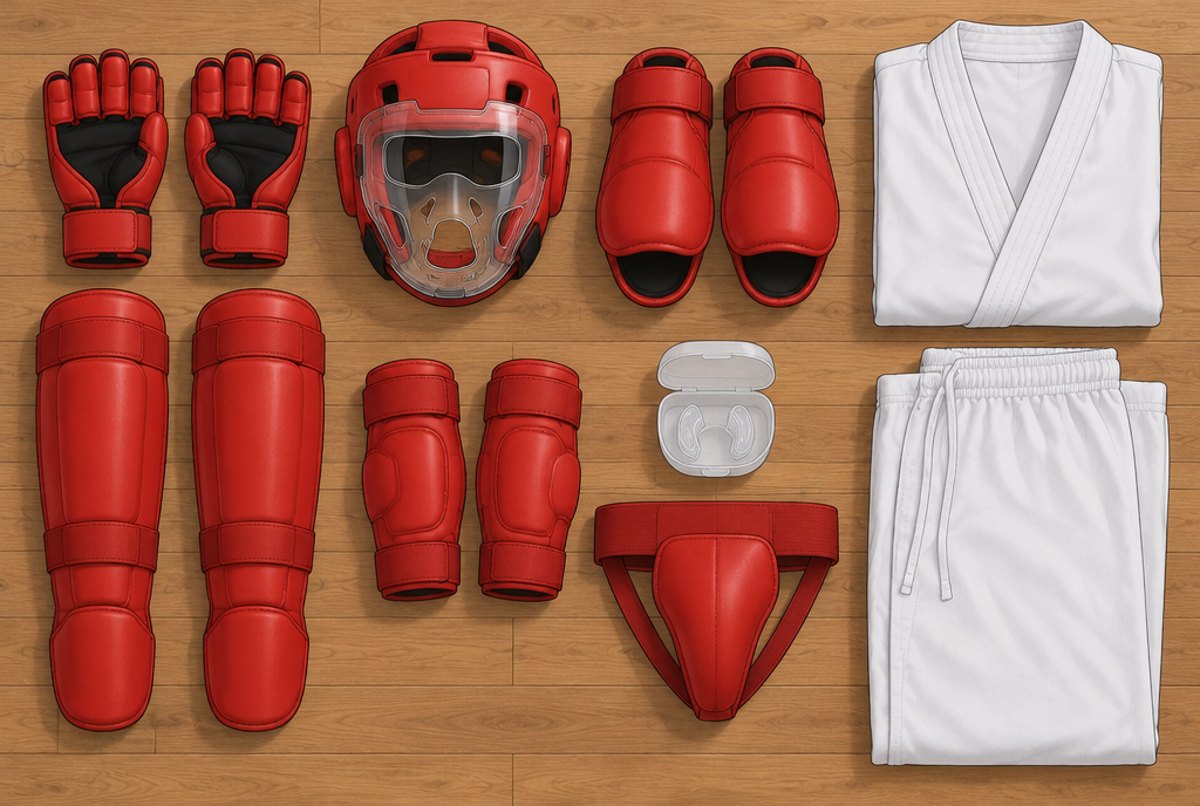
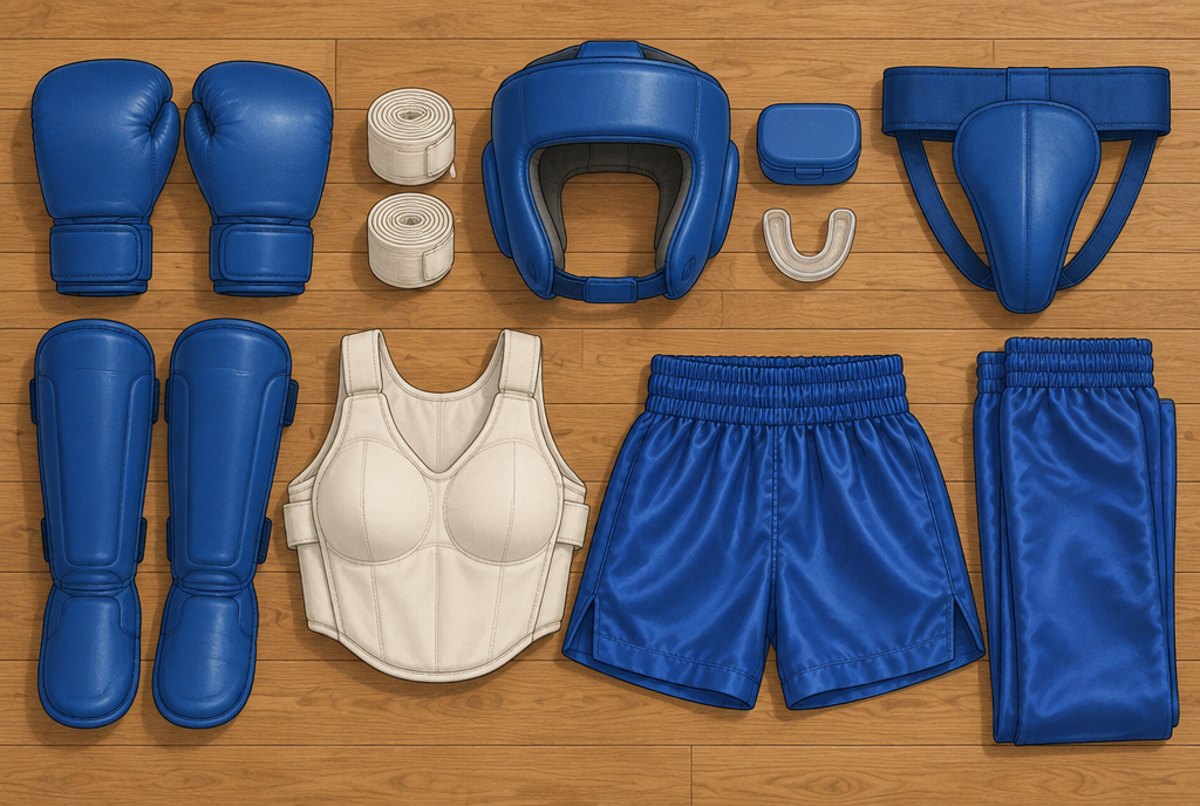
Other bodies differ: WKA's mat sports rules allow but do not require face guards for kids and juniors; ISKA's amateur rules make juniors wear a body guard in K1 Light and allow no visors except on medical grounds. 56,59
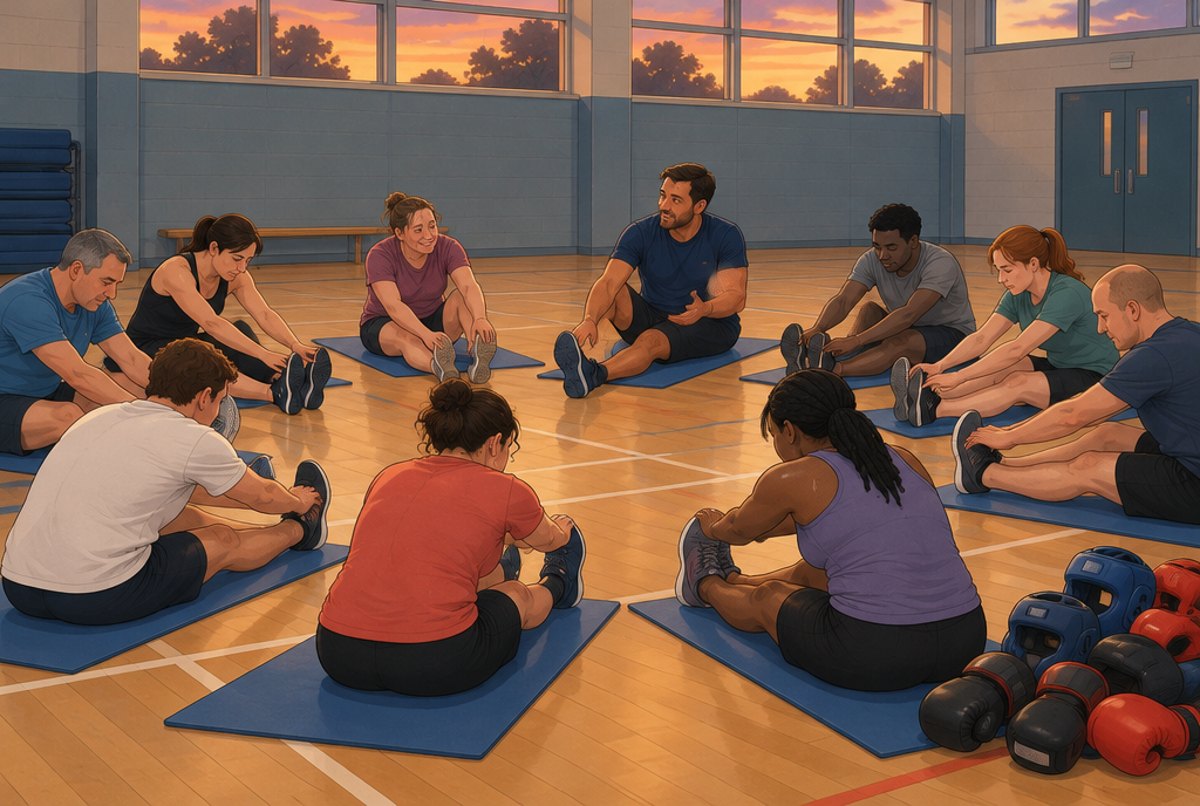
A typical class
From Kickboxing GB's Safe Practise Policy, spelled that way by the body, WAKO's grading programme and WKA's conduct rules. 47,58,82
- A safety check of the hall and mats by the coaches. 82
- A warm up suited to the session, stretching the muscles that will be used. 82
- Guard and footwork: moving forward, back and sideways without dropping the hands. 47
- Techniques: , , , , and , and blocks, first on both sides in the air, then on pads or bags, with gloves on for bag work. 47,82
- Partner drills and, later, sparring with controlled contact and full WAKO kit. 82
- Fitness work: skipping, sprints and circuits appear in WAKO's grades. 47
- A warm down and stretching. 82
Contact and how children are protected
- In training at Kickboxing GB clubs, sparring must use controlled contact for the format and WAKO kit; training should be split by WAKO age groups; sparring across ages or sexes is allowed only as touch contact learning; head contact must be light at all times and kept to a minimum, even where a competition format allows it; head injuries go in the accident book and follow the UK grassroots concussion guidance. 82
- In WAKO competition, children and younger cadets may enter only point fighting and forms, with a face mask; light contact and kick light start at 13; ring formats start at 15, and younger juniors are stopped after two knockdowns rather than three. 41
- Head contact is allowed in WAKO point fighting for children, with control and a face mask. 41
- Juniors in senior divisions. Since August 2025 Kickboxing GB has not allowed juniors into senior divisions unless they are 18 on the day, at home or abroad, even where WAKO's year of birth rule would allow it. 81,82
- Concussion. If in doubt, sit them out: nobody back in sport within 24 hours of a suspected concussion, and WAKO's minimum bans of 30, 90 or 180 days after a knockout apply to training as well as competition. 44,80,81
Common questions
- What age can my child start? WAKO competition starts in the year a child turns 7. Classes start younger in some places: WKUWORLD's Panda programme is for 3 to 7 year olds, and the BCKA lists ages from 4. Each club sets its own minimum. 41,61,91
- Am I too old? Kickboxing Ireland says no and that it has members in their seventies; WAKO's masters category runs to 55 in competition. 41,87
- Do I need to be fit first? No source says so; fitness work is part of every grade in WAKO's programme, and Kickboxing Ireland lists fitness as a main benefit. 47,87
- Will I have to spar? Not at first. Many members of Kickboxing Ireland never take part in combat. Where sparring is part of a grade, WAKO's programme brings in controlled sparring at the grading to blue belt. 47,87
- Is it safe? Kickboxing is classed as a high risk sport by Sport England and Sport Wales for funding purposes, which is why they expect clubs seeking grants to belong to the recognised body. Protective kit, controlled contact, age groups and concussion rules are the main safeguards. 41,82,89
- Is fitness kickboxing the same? No. Fitness classes, including branded ones such as BODYCOMBAT, are usually no contact and do not lead to grades or competition. 92