EveryDojo

Techniques

A guard, footwork, a handful of punches and kicks, and the defences against them. What changes from format to format is where you may hit, how hard, and whether knees and leg kicks are allowed.

The one thing every family should know: almost all kickboxing is built from a small set of punches and kicks, a guard, footwork and defences. Beginners learn the same basics whichever format they later choose. These are plain descriptions; which techniques are allowed depends on the format and the body. 1,12,41,47

Stance, guard and footwork

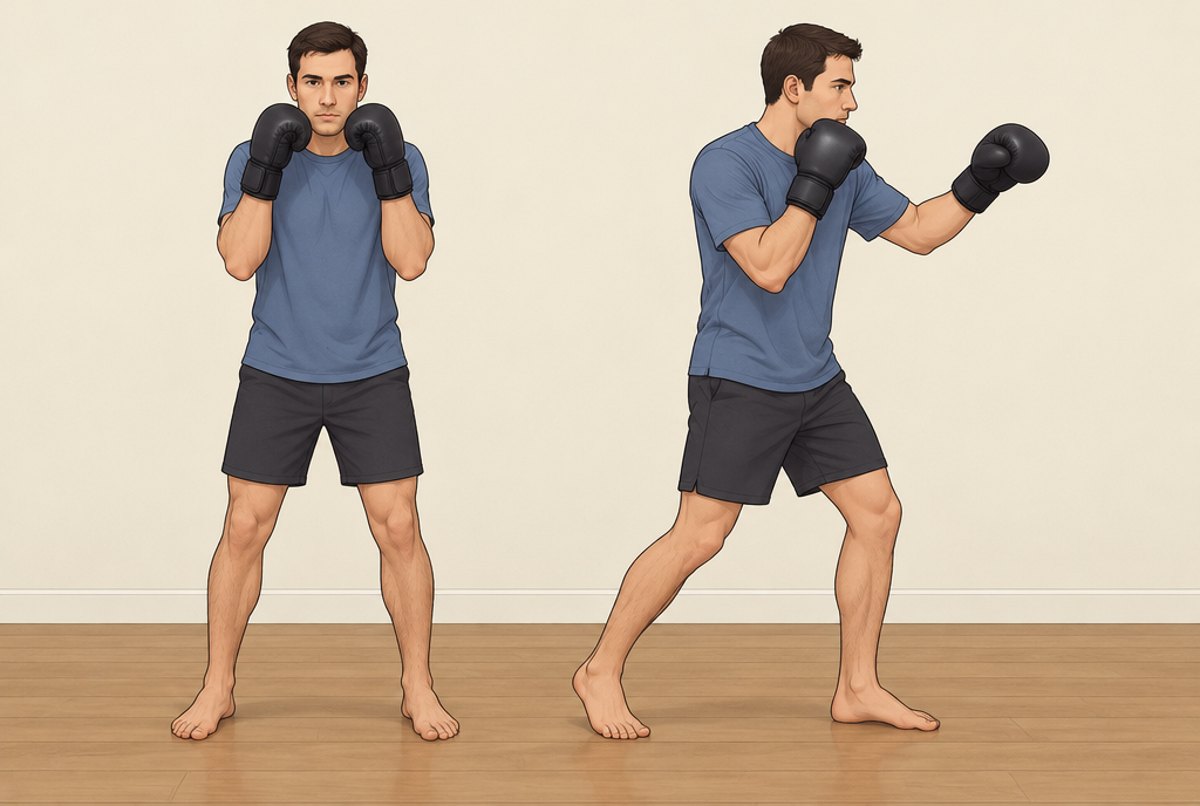
  • : hands up to protect the face, elbows close to the body. WAKO's first grade teaches a front guard and a side guard, each on the left and the right, and moving between them. 47
  • : stepping forward with the front foot and back with the rear while keeping the guard; then stepping in with a punch or a roundhouse kick; later side steps, angled steps and dragging the rear foot up behind the front. 47
  • : short range for hooks and uppercuts, medium for straight punches and knees, long for kicks and long punches. 47
A student shown twice, once in a square front guard and once in a side on guard.

Punches

TechniqueWhat it is
A quick straight punch with the lead hand 12,47
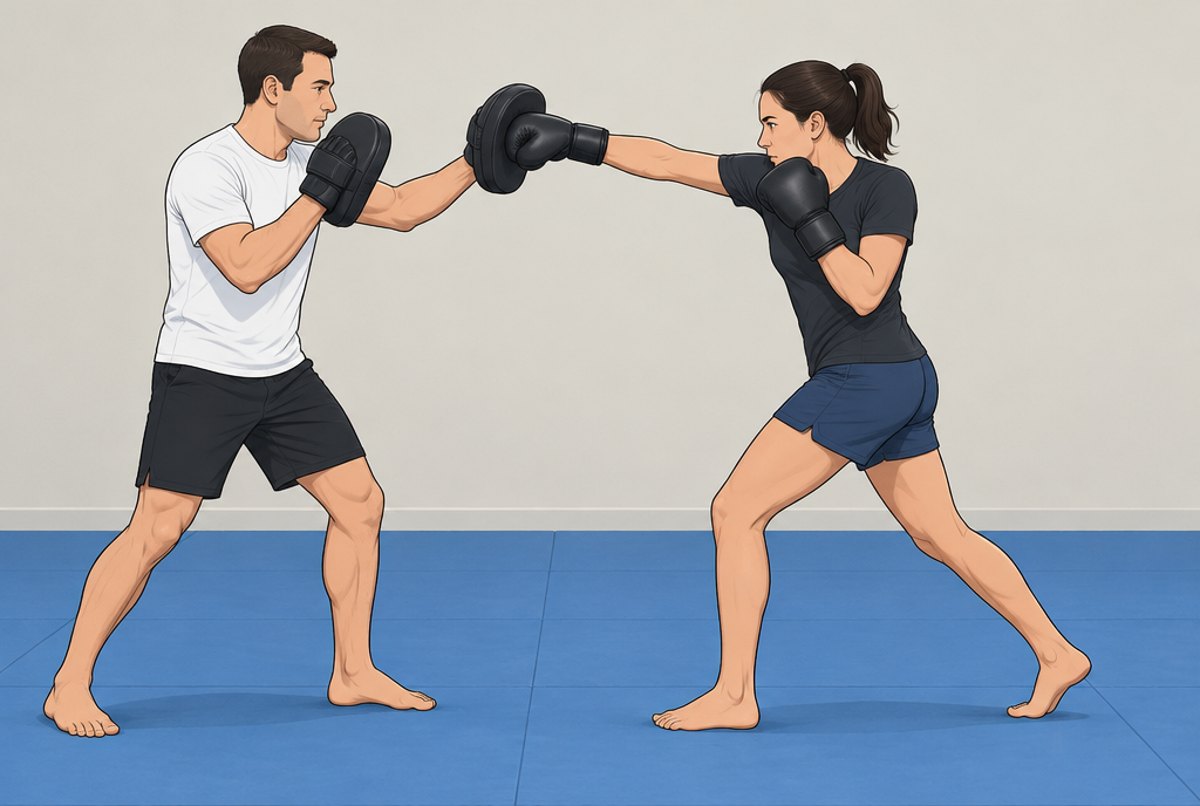
A straight punch with the rear hand, turning the hips; WAKO calls the straight punches direct punches 12,41,47
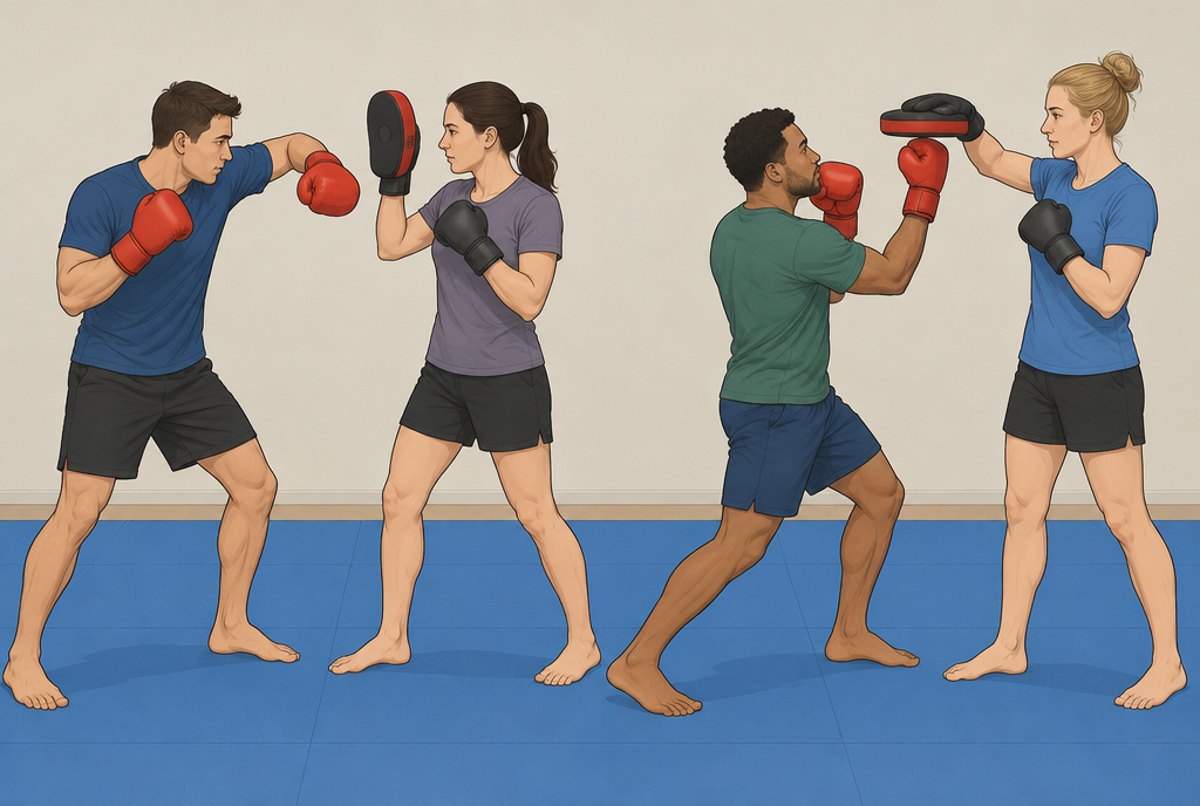
A curved punch to the side of the head or body 12,47
A rising punch, often to the chin 12,47
A strike with the back of the knuckles from a bent arm 1,41
A backfist thrown while turning a full circle 1,41
A strike with the thumb side edge of the open hand 41,59
A student landing a cross on a coach's focus mitt.
Two pairs of students, one practising a hook and one an uppercut on pads.

Kicks

TechniqueWhat it is
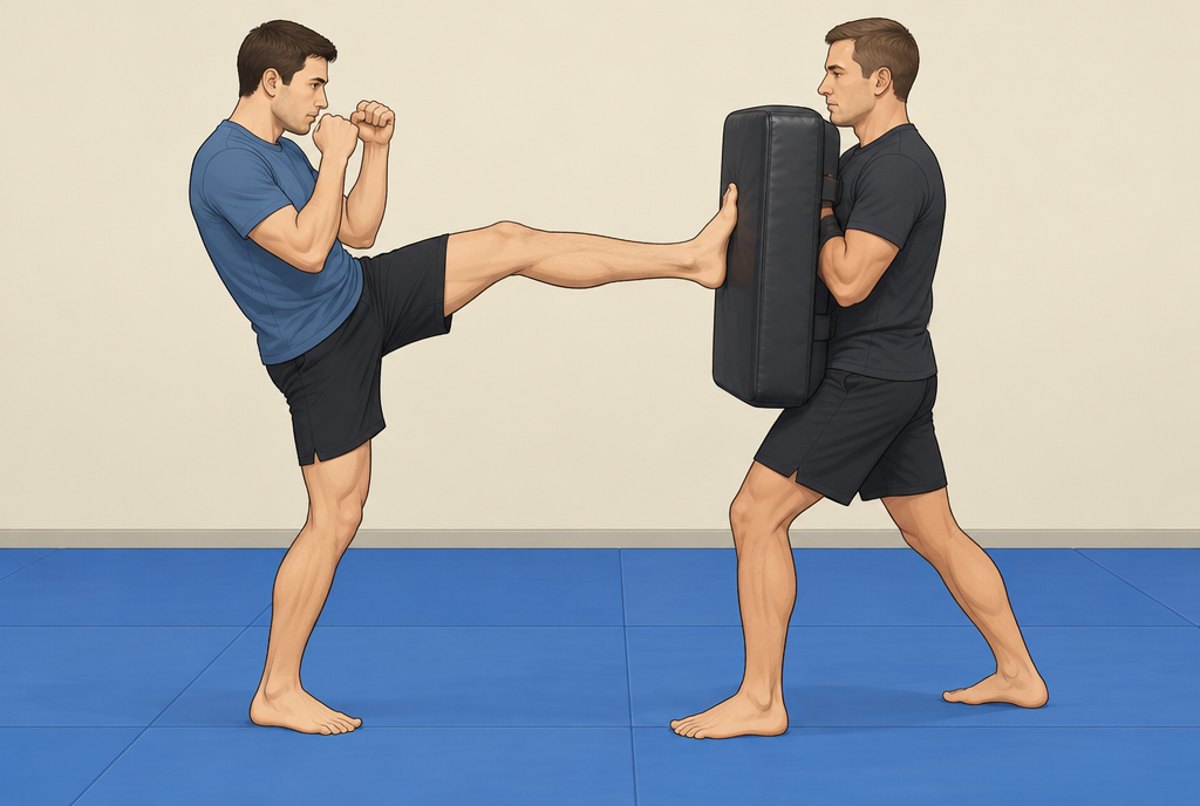
Knee lifted straight forward, foot driven out, usually with the ball or sole of the foot 12,47
The leg swings round to strike with the instep or shin 12
Driven out sideways with the edge or heel of the foot 1,12
The leg extends past the target and hooks back; WAKO tatami rules insist on the sole, because the back of the heel is dangerous 1,41
A sweeping kick in an arc, inside to outside or outside to inside 1,41
The leg raised high and brought down; again with the sole on the tatami 1,41
Turning away and driving the heel back into the target 1
Any kick while turning or in the air 1,41
A roundhouse kick to the thigh 12,41
Sweeping the opponent's foot boot to boot at ankle level to unbalance them 12,41
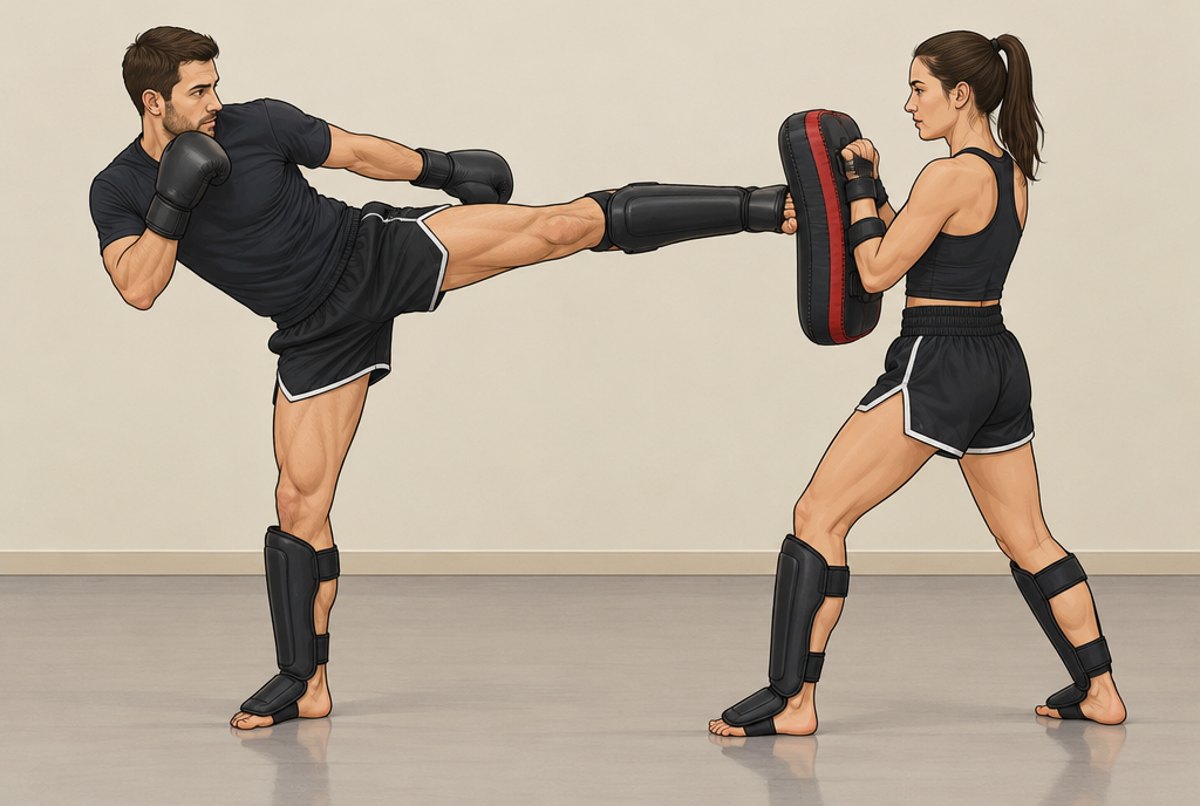
A student driving a front kick into a kick shield held by a partner.
A student swinging a roundhouse kick with the shin into a pad.
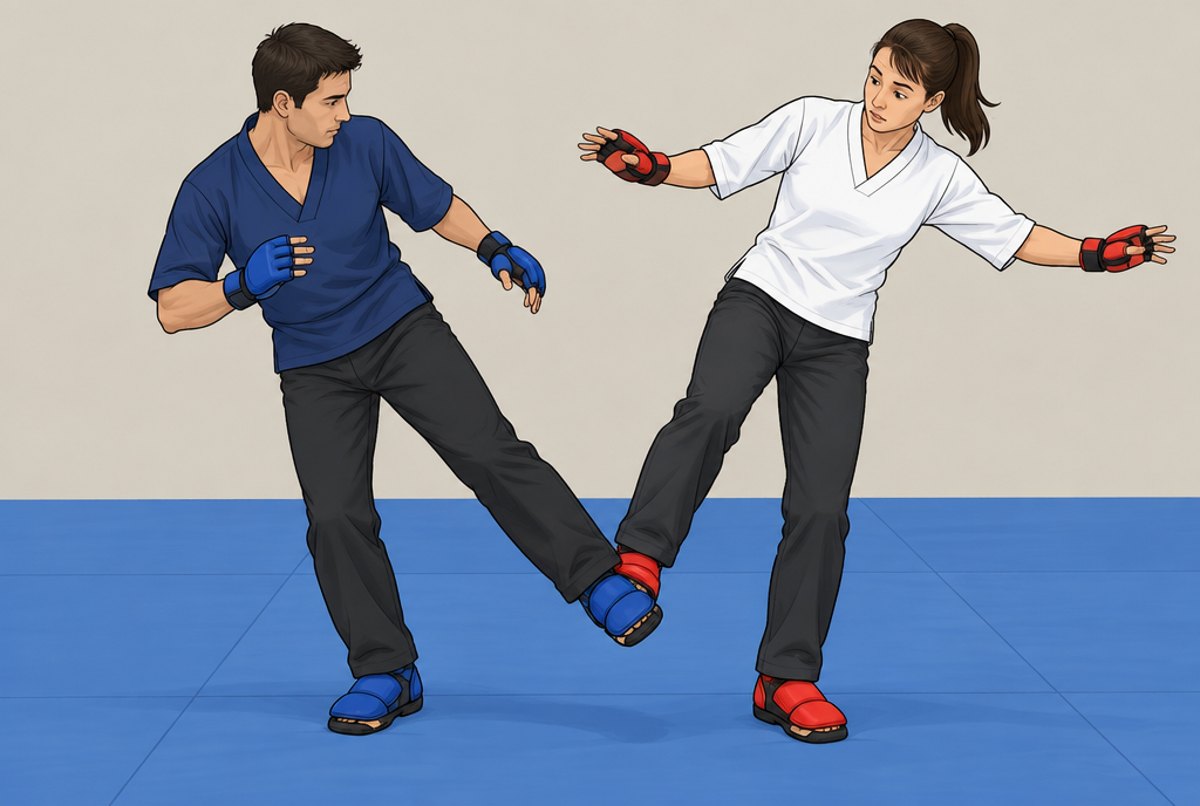
A student sweeping a partner's foot at ankle level with a padded foot.

Knees, the clinch and elbows

  • strikes are driven up or round into the body, legs or head. In WAKO they are allowed only in . 12,41
  • The is close range holding. Under WAKO's 2022 rules K1 Style allowed an active clinch for five seconds and one knee while holding the neck; from 1 January 2027 clinching, holding and grabbing are banned in K1 Style and knees may be thrown without that limit. 12,41,42
  • The is not allowed in any WAKO format; it belongs to Muay Thai. 8,41
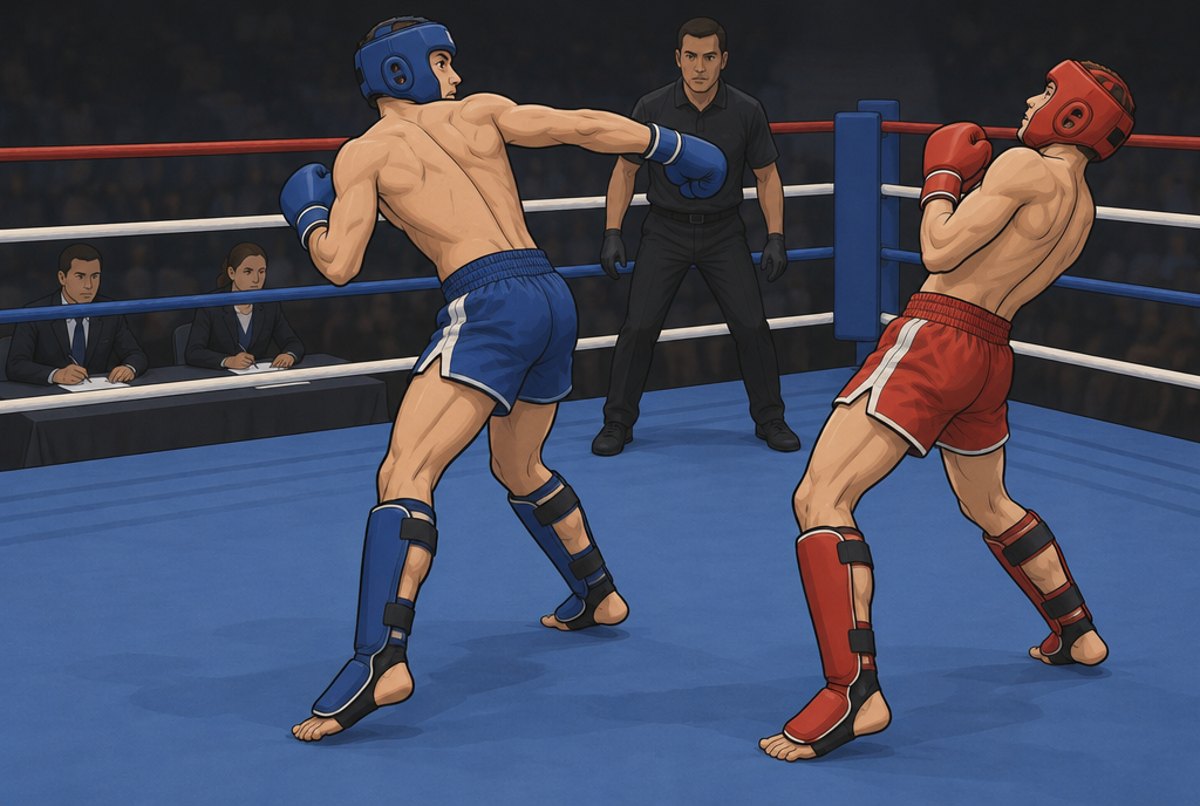
A fighter in a head guard spinning to throw a backfist at an opponent who leans away.

Defences

DefenceWhat it is
Stopping a strike with the forearm or glove; WAKO's first grade lists high, middle and low blocks 1,47
Deflecting a punch sideways with the glove 1
Turning the head and shoulders so a punch passes by 1
Bending the knees to duck under a punch and rising on the other side 1
Gloves and forearms tight to head and body as a last resort 1
Lifting the shin to block a leg kick; in WAKO kick light a deliberately checked thigh kick scores no point 1,41
FootworkStepping out of range or off the line of attack 47
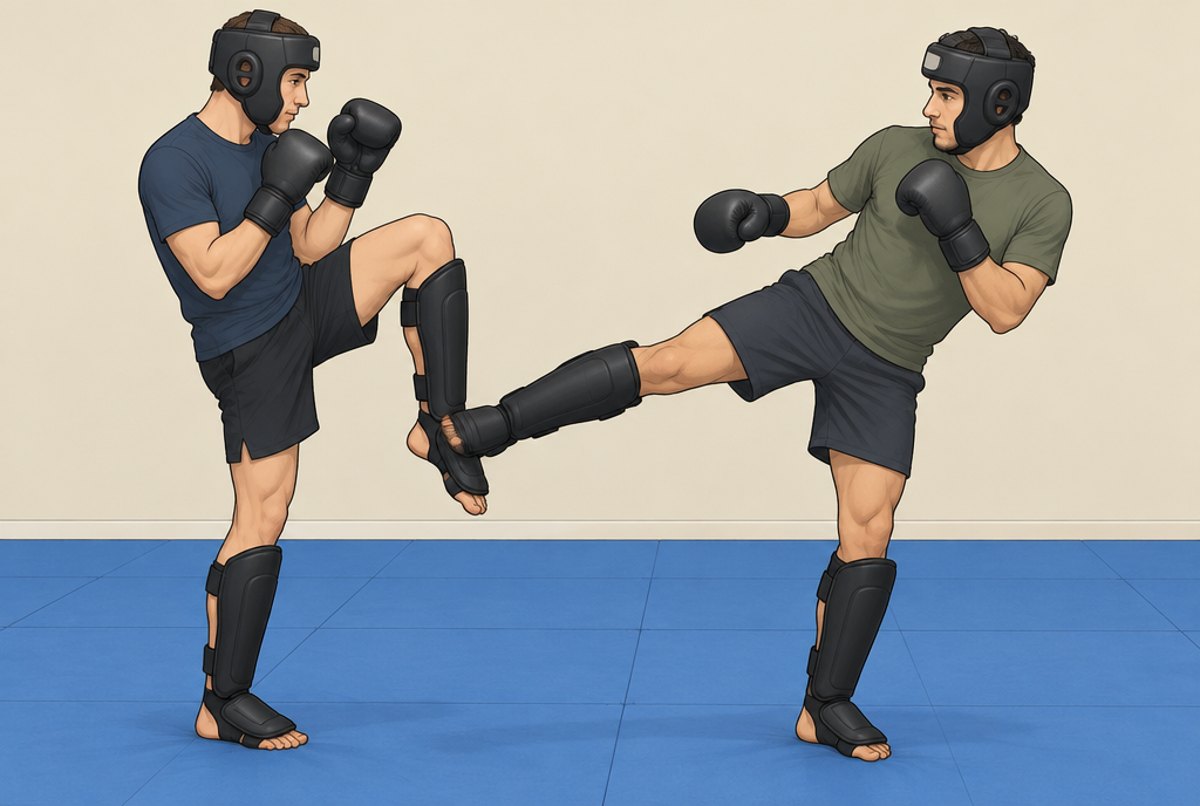
A student checking a low kick by lifting the shin as the partner kicks.

What is allowed in which WAKO format

From the WAKO Rules of 2022, still the current full rulebook on 26 October 2026, with the 2026 K1 Style change. 41,42

Point fightingLight contactKick lightFull contactLow kickK1 Style
ContactLight, stop after each scoreLight, continuousLight, continuousFull powerFull powerFull power
Head targetFront, forehead, side and backFront, forehead, sideFront, forehead, sideFront, forehead, sideFront, forehead, sideFront, forehead, side
Body targetFront and side, above the beltFront and sideFront and sideFront and side, above the waistFront and sideFront and side
Jab, cross, hook, uppercutYesYesYesYesYesYes
BackfistYes, not spinningNot listedNoNoNoSpinning backfist yes
Ridge handYesNot listedNot listedNot listedNot listedNot listed
Front, side, roundhouse, hook, crescent, axe kicksYesYesYes, not to the thigh with front or side kicksYesYes, not to the thigh with front or side kicksYes, not to the thigh with front or side kicks
Jumping and spinning kicksYesYesYesYesYesYes
Kicks to the thighNoNoYesNoYesYes, and to all of the leg
Foot sweepsYesYesYesYes, ankle levelYes, ankle levelYes, ankle level
KneesNoNoNoNoNoYes
ClinchNoNoNoNoNo5 seconds in 2022; banned from 1 January 2027
Elbows, head butts, throwsNoNoNoNoNoNo
Minimum kicksHands and feet equallyEqual emphasisEqual emphasisAt least 6 a roundEqual useEqual use
  • In point fighting a technique must be clean, controlled and seen to land, with the fighter looking at the target, and with reasonable power: touches, brushes and pushes do not score. 41
  • WAKO's low kick list of banned targets includes "legs" while its allowed targets include the thigh; WAKO's wording is unclear, so ask the referee or coach. 41

How other bodies differ

  • WKA point fighting allows the backfist and ridge hand but not hooks, uppercuts or the spinning backfist, and a punch to an opponent who has gone down may score if it comes within 3 seconds; WAKO forbids attacking a downed opponent. 41,59
  • ISKA semi contact scores a body kick 2, a head kick 3 and a jumping head kick 5, where WAKO scores 1, 2 and 3, and has a "3 second rule" for hand techniques on a fighter who falls of their own accord. 41,56
  • ISKA freestyle, its low kick format, allows kicks to the inside and outside of the calf as well as the thigh. 55
  • ISKA light continuous has a continual kicking rule instead of a kick count. 56

Combinations

WAKO's first grade lists a such as jab, cross and hook; jab, cross and a lead leg body kick; and a block followed by a counter punch. Higher grades add kicks to punches and counters to kicks. Club syllabuses differ. 47

Written from checked sources, listed on the sources page. Pictures are drawn, with computer help, under our direction; none shows a real child. Recorded chapters and words are read by a computer voice; a word not yet recorded uses your device's own voice.