

On 26 February 1977, in Berlin, a German named Georg Brueckner founded a world body. 40 WAKO's own history says he and the American Mike Anderson had the vision for a world platform for the sport, and that Brueckner officially founded it. 40 That is how , the World Association of Kickboxing Organizations, tells its own beginning: a European story that began in 1976, a founding in Berlin in February 1977, and a first name that was not kickboxing at all, the "World All-Style Karate Organization". 40
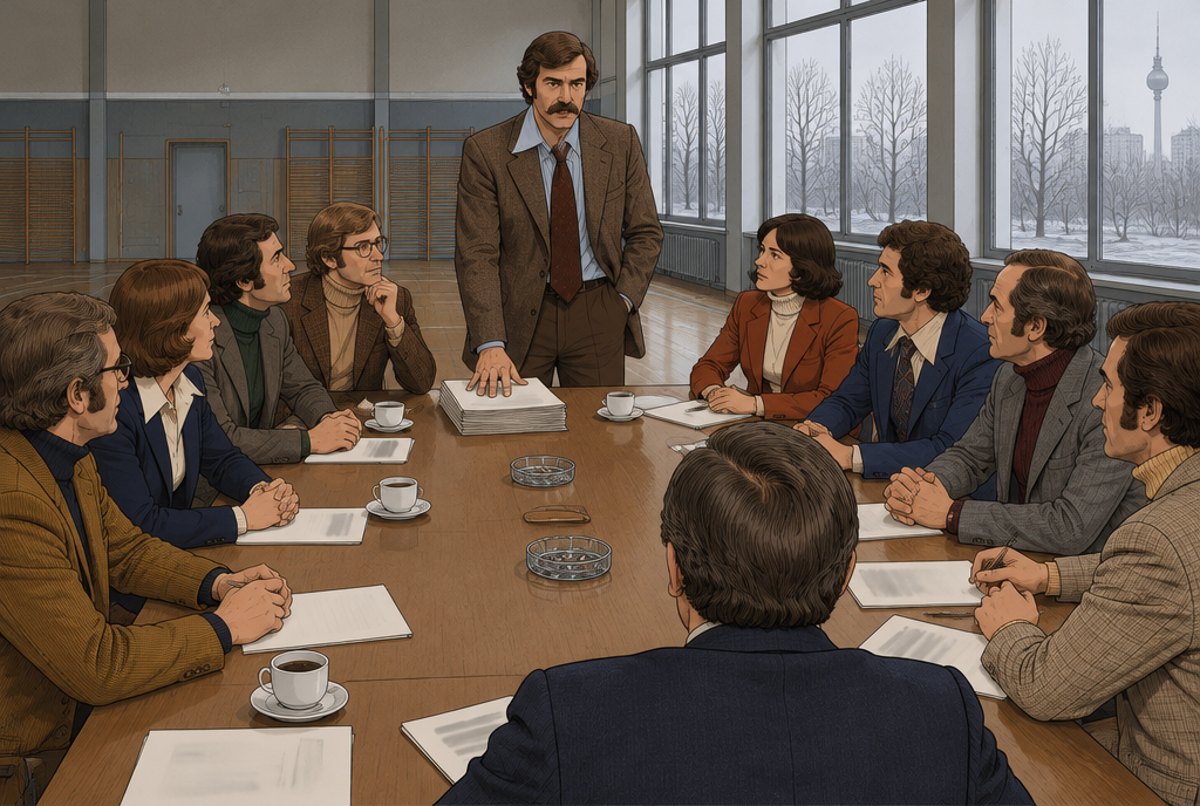
An association in Amsterdam
Kickboxing had reached Europe by another road too. In the Netherlands it arrived in its Japanese form, with knees and low kicks. In 1976 Jan Plas and Thom Harinck founded the Dutch kickboxing association, the NKBB. 1 Dutch rules, with knees to the body and a limited clinch, would later feed into the rules of K-1, the Japanese promotion of the 1990s. 1
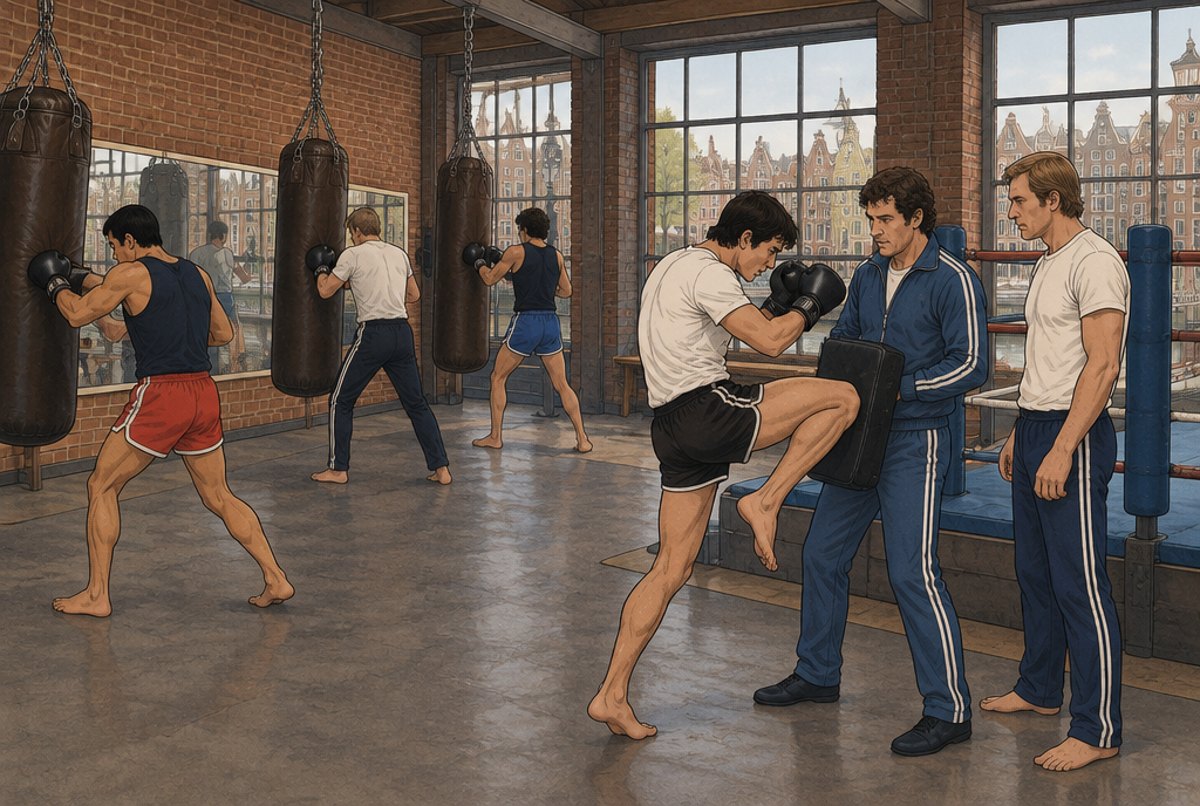
So by 1977 Europe had two kinds of kickboxing side by side: the Dutch kind, close to Japan's, and the all style karate kind that WAKO had just set out to organise. 1,40
The first world championships
WAKO held its first world championships in 1978, in West Berlin: 110 competitors from 18 countries, in semi contact and full contact "karate". 10,40 The word kickboxing came later. WAKO says it adopted the name as its rules developed. 40
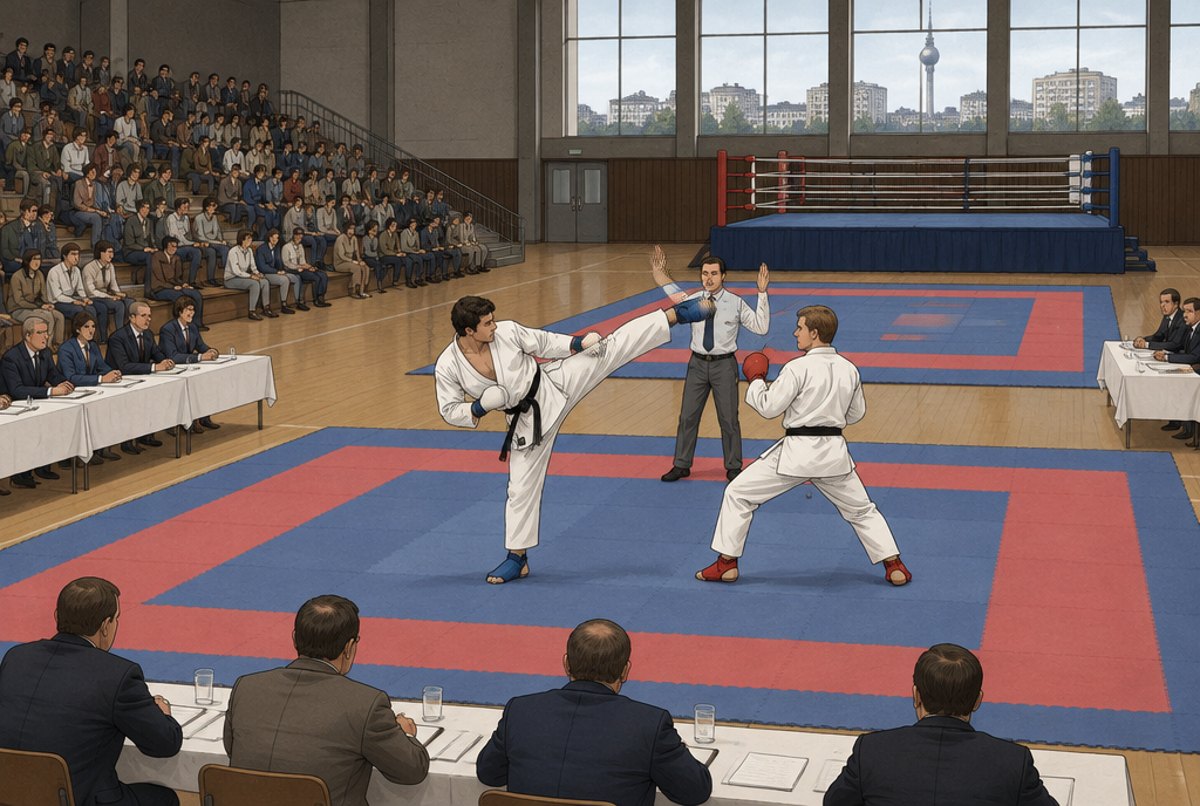
Those two events of 1978 are still the two halves of the sport. Semi contact became : light, controlled contact on a mat, stopped after every score. Full contact stayed in the ring. 41
Mat and ring
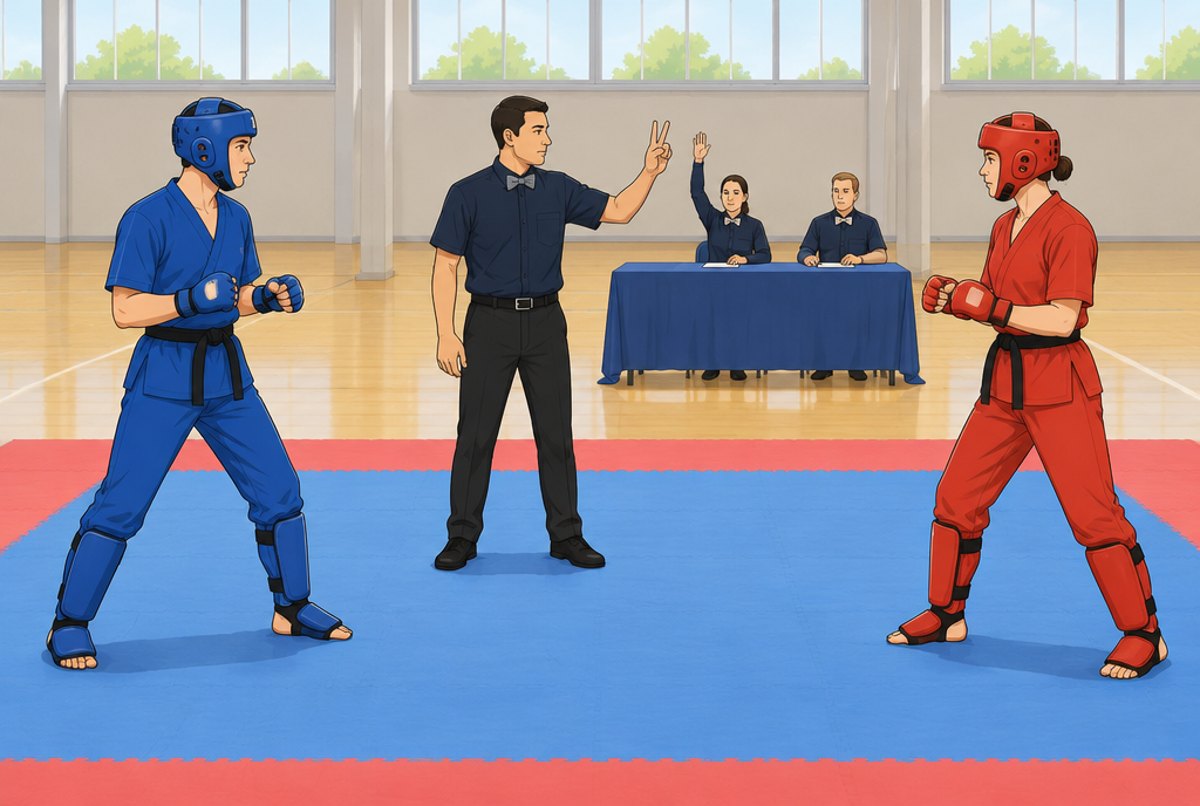
WAKO now runs seven formats, and it sorts them into two families. 40,41 The formats are fought on a 7 m square mat with light, controlled contact and scored on points: point fighting, light contact, kick light and musical and creative forms. 41 The formats are fought at full power in a roped ring and won on points or by a stoppage: full contact, low kick and K1 Style. 41
The split matters for a family more than any history. Children can compete on the tatami from the year they turn 7, in point fighting and forms, and never in the ring. Ring formats begin at 15. 41
Growing up
WAKO added a professional arm, , in 1991. 2 In 2006 it merged with another amateur body, IAKSA. 40 In 2014 it joined the World Games family, and in 2018 and 2021 it won recognition from the International Olympic Committee, which chapter six tells. 40 By its own count it now has 135 affiliated nations, over 4 million practitioners and 40,000 clubs, though elsewhere it gives 130. 40
One of its earliest big championships, though, was not in Berlin at all. It was in London.