

Picture a karate hall in Tokyo in November 1959. The teacher is Tatsuo Yamada, and he has just announced a plan that would have puzzled most karate people of his day: a full contact "karate-boxing". 1,9 contests then stopped short of the body. Yamada wanted something that did not.
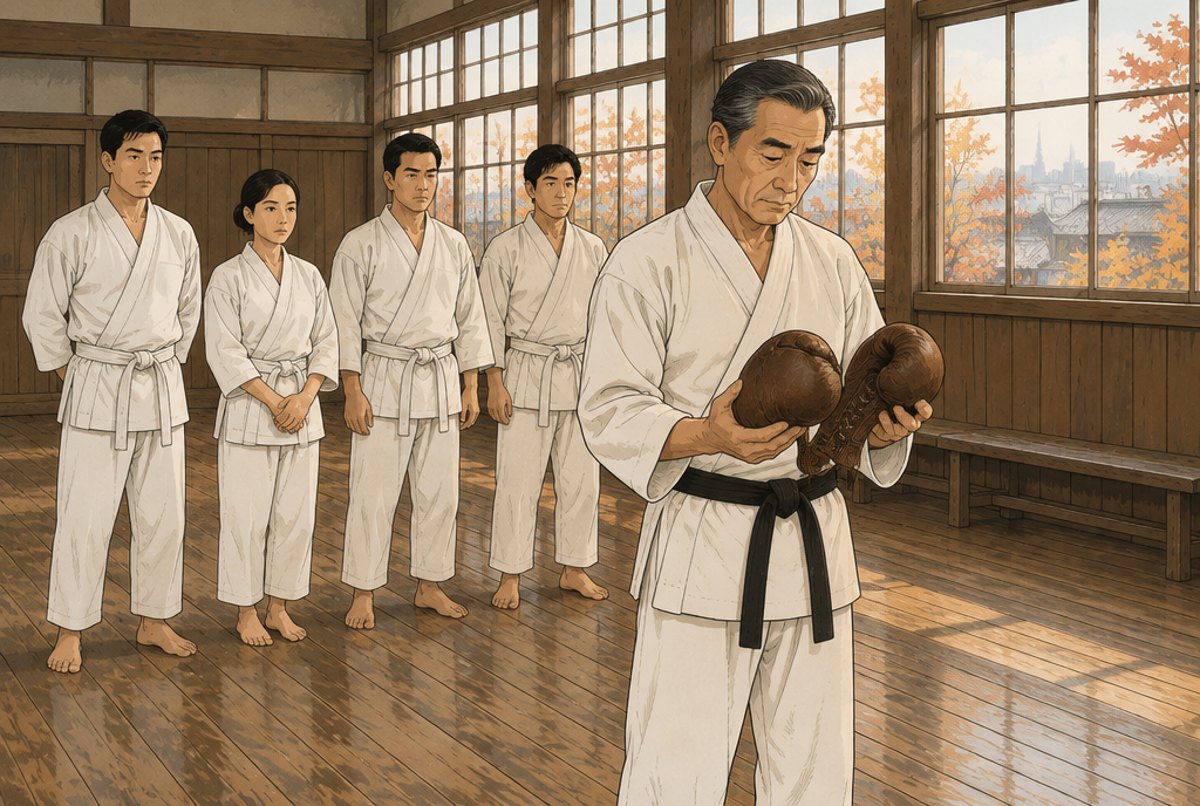
Thai fighters in Tokyo
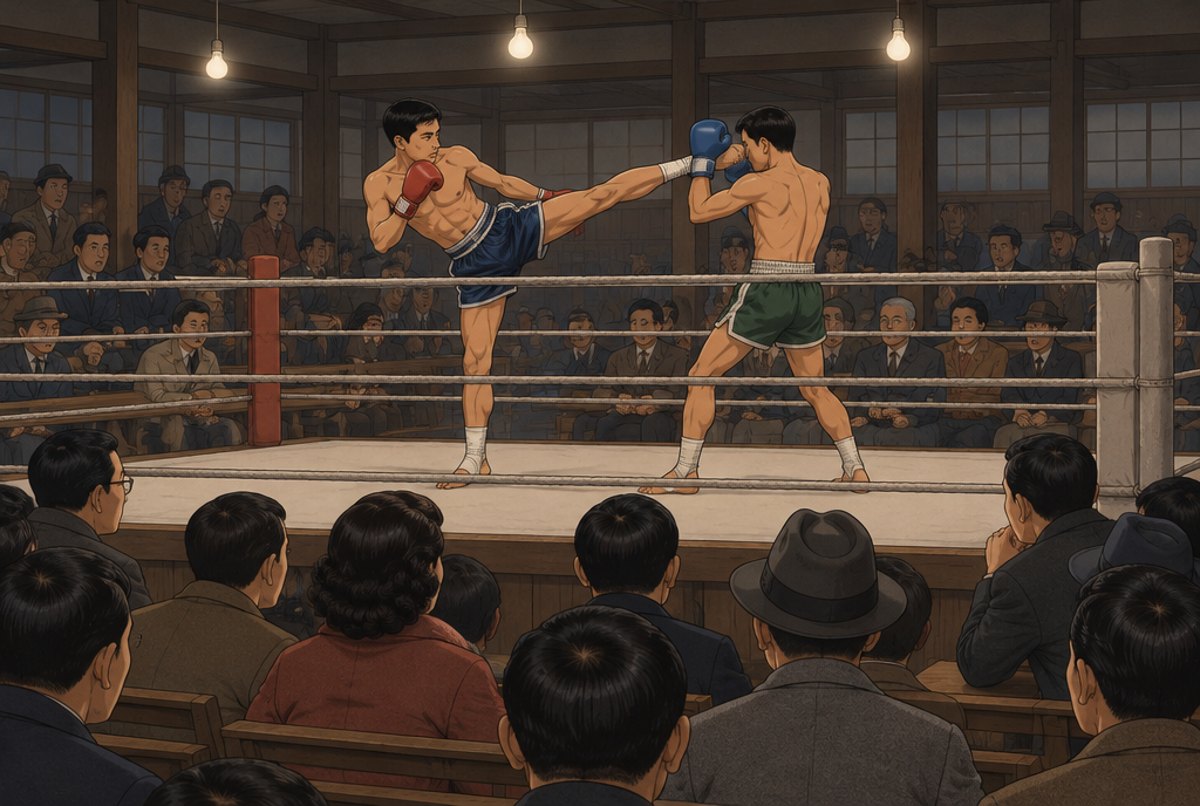
To build it he looked south, to Thailand. Yamada studied , and in December 1959 a Muay Thai event was held in Tokyo. 1,9 Muay Thai is Thailand's fighting sport, often called the art of eight limbs, because it uses fists, elbows, knees and feet, and because fighters hold each other at close range in the and strike with the from there. 8
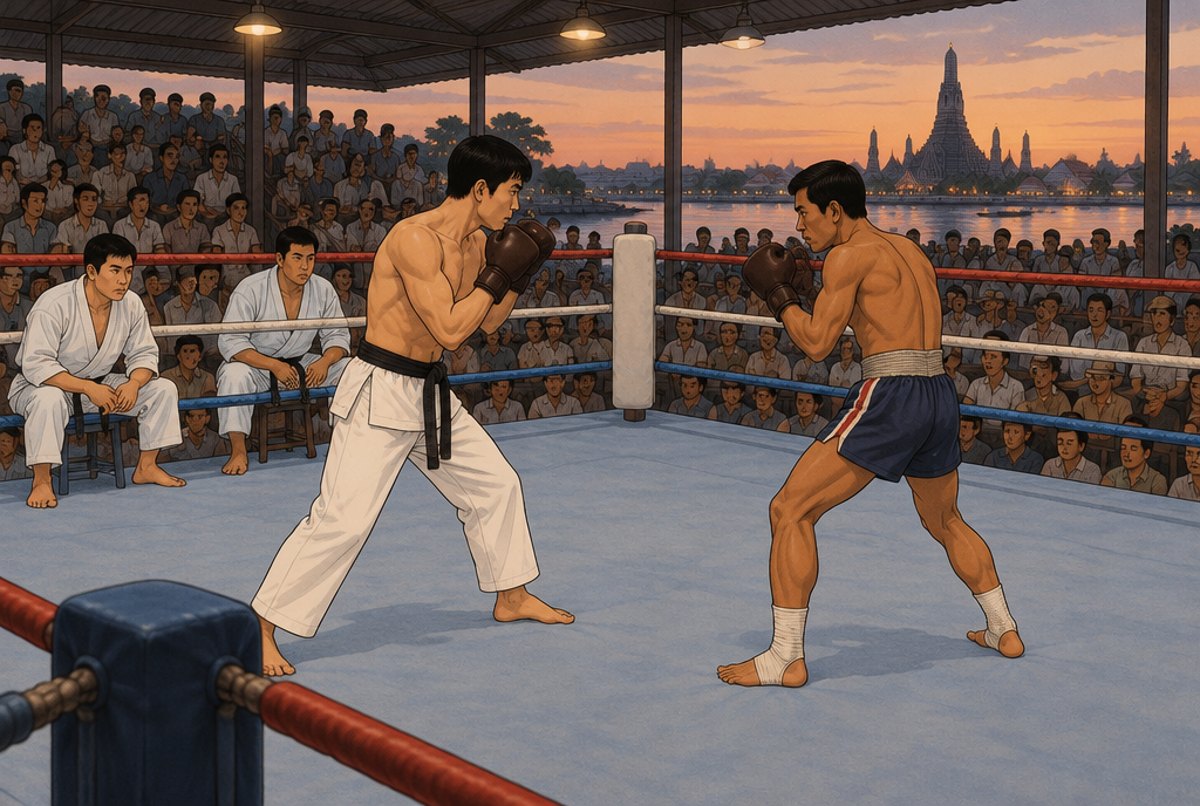
In February 1963 the two arts met in Thailand itself. Three karateka from the dojo of Mas Oyama, the founder of Kyokushin karate, fought three Muay Thai fighters at Lumpinee Stadium in Bangkok. 1
A promoter and a word
The man who turned the idea into a sport was not a karate teacher but a boxing promoter, Osamu Noguchi, who lived from 1934 to 2016. 9 He is credited with developing and naming "kick boxing": a mix of karate and Muay Thai, built for Japanese audiences. 1,9 In 1966 he founded the first body to run it, the Japan Kickboxing Association, and the first event was held in Osaka on 11 April 1966. 1 Japanese kickboxing then boomed on television until about 1980. 1
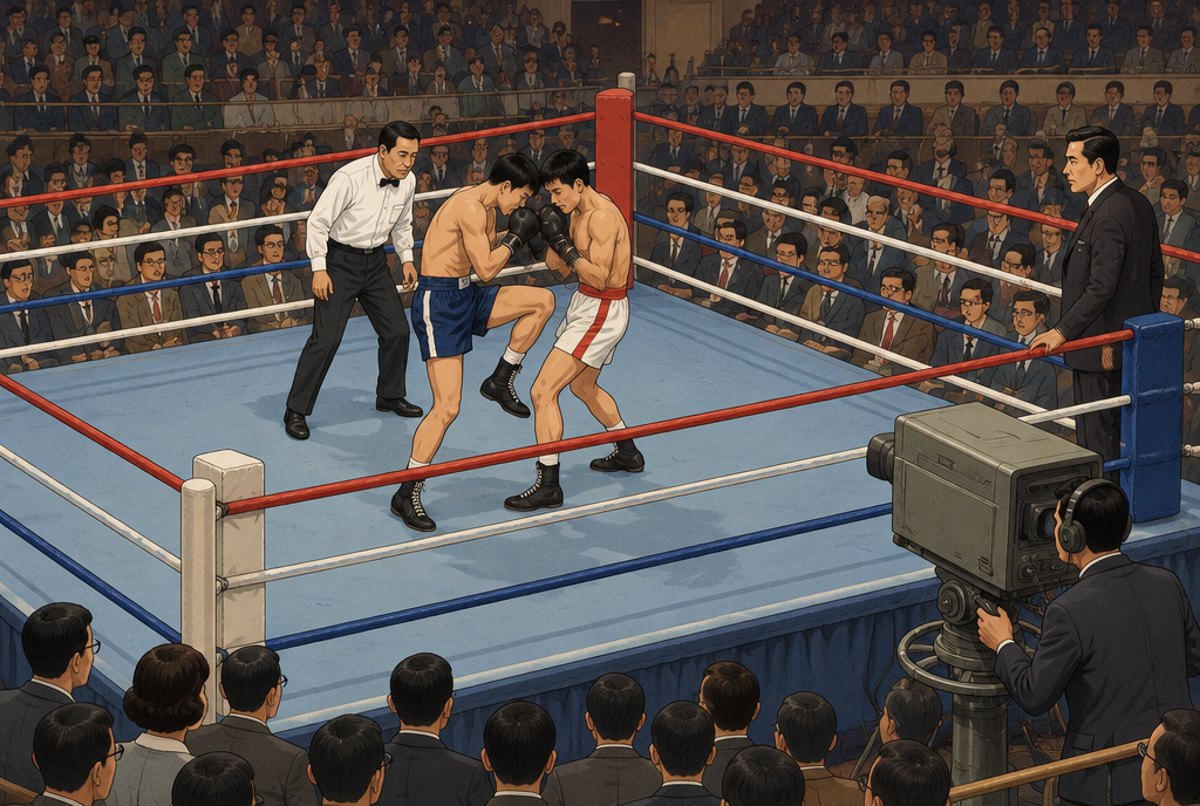
So the word was Japanese before it was anything else, and from the start it meant a mix.
What the word means now
Today the word is used in two ways. In the narrow sense it means the styles that call themselves kickboxing: Japanese, American and Dutch kickboxing and their offshoots. In the wide sense it means any stand up sport that allows both punches and kicks, which would take in Muay Thai, Chinese sanda, French and full contact karate. 1
The world body, WAKO, which the next chapters reach, defines it more tightly: "a modern contact fighting sport" with clearly set formats, split into tatami formats, fought on a mat with controlled contact and scored on points, and ring formats, fought at full power and won by points or a stoppage. 40,41
One thing is the same in every version of kickboxing. The is never allowed. Elbows belong to Muay Thai. 8,41 The clinch, central to Muay Thai, is banned in every WAKO format but K1 Style, and from 1 January 2027 K1 Style bans it too. 41,42 Knees are allowed in K1 Style only. 41
So if someone asks how kickboxing differs from Muay Thai, that is the short answer: no elbows, little or no clinching, and knees only in one format. 8,41,42
Noguchi's sport grew in Japan. But at the same moment, on the other side of the Pacific, an American karate champion was growing tired of winning on points.