

In 1993 a Japanese karate teacher, Kazuyoshi Ishii, founded a professional promotion called K-1. 1,7 It filled arenas, and its rules became the rules of most professional kickboxing in the world. 1,7
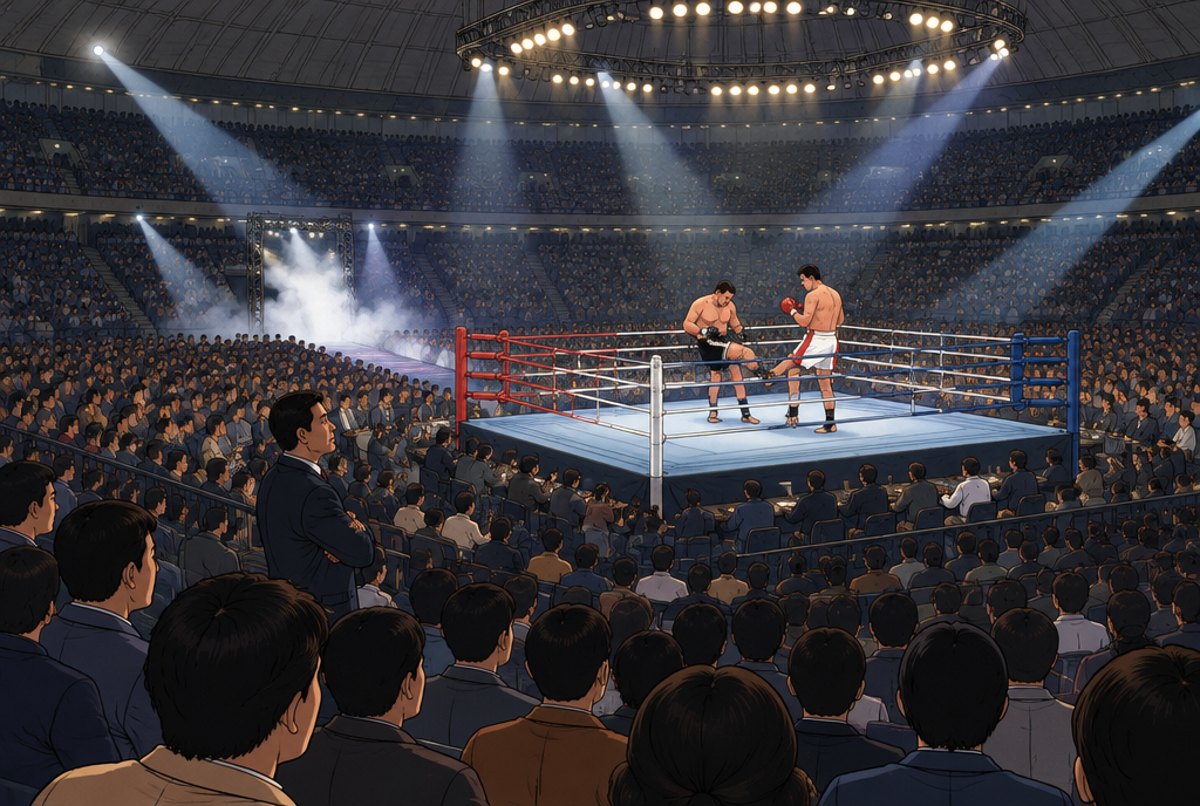
K-1 rules
, also called oriental rules, allow punches, kicks including low kicks, and knees; they allow no elbows and little clinching. 1,7 Those are close to the Dutch rules of the 1970s, which fed into K-1's. 1 The K-1 promotion has been owned since 2023 by M-1 Sports Media. 7
The name travelled. Today "K-1 rules", "oriental rules" and "K1" mean roughly the same thing wherever kickboxing is fought, and WAKO calls its own version . 1,41
Three ring formats
WAKO's three ring formats, fought at full power, differ mainly in what the legs may do. 41
- is the American line: targets above the waist, no kicks to the legs, at least six kicks a round, long trousers and padded feet. 41
- adds kicks to the thigh, inside, outside and back, in shorts with shin and instep pads. 41
- K1 Style allows kicks to any part of the leg, the spinning backfist, and the knee. 41
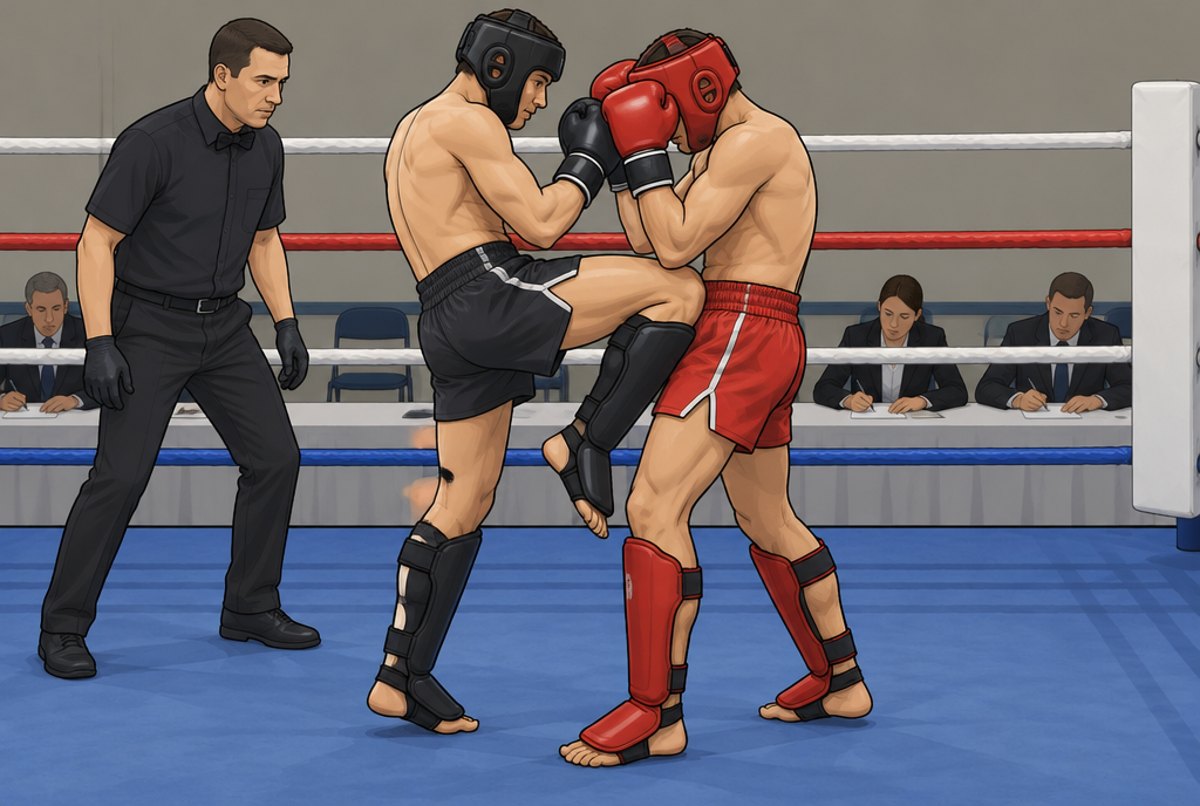
Even K1 Style keeps its distance from Muay Thai. Under WAKO's 2022 rules a K1 Style fighter could hold an active clinch for five seconds and throw one knee while holding. From 1 January 2027 clinching, holding and grabbing are banned in K1 Style altogether, and knees may be thrown without that limit. 41,42
Amateur and professional
Every WAKO championship, every Kickboxing GB amateur competition and the World and European Games are kickboxing: head guards compulsory in every fighting format for every age group, rounds of two minutes, three of them for the ring. 41 Younger juniors, aged 15 and 16, are stopped after two knockdowns rather than three. 41
kickboxing has no single world championship. Titles come from promotions and from the professional arms of the bodies: K-1, Glory, ONE Championship and Enfusion among the promotions, WAKO PRO, ISKA, the WKA and WKUWORLD among the bodies. 1,7,54,58,60 Glory was founded in 2012 and has been owned by a London based company since 2020. 7
In Britain a professional show can appear on Kickboxing GB's own calendar: a K1 show with a WAKO PRO British title in Newcastle on 28 November 2026, for example. 80 In England and Wales a public contest that combines boxing with martial arts has counted, since 2013, as boxing or wrestling entertainment under the Licensing Act 2003, so such shows need a local licence. 90
What a knockout costs
The ring is where the word matters most, and WAKO's medical rules treat it seriously. After a knockout or severe head trauma a fighter is examined by the event doctor and banned for a minimum period: 30 days with no loss of consciousness, 90 days if unconscious for under a minute, 180 days if longer. 44 The ban covers training and sparring too, and a return needs a medical clearance with a negative brain scan. 44 Kickboxing GB applies the same periods to training, and adds the UK grassroots concussion guidance. 80,81
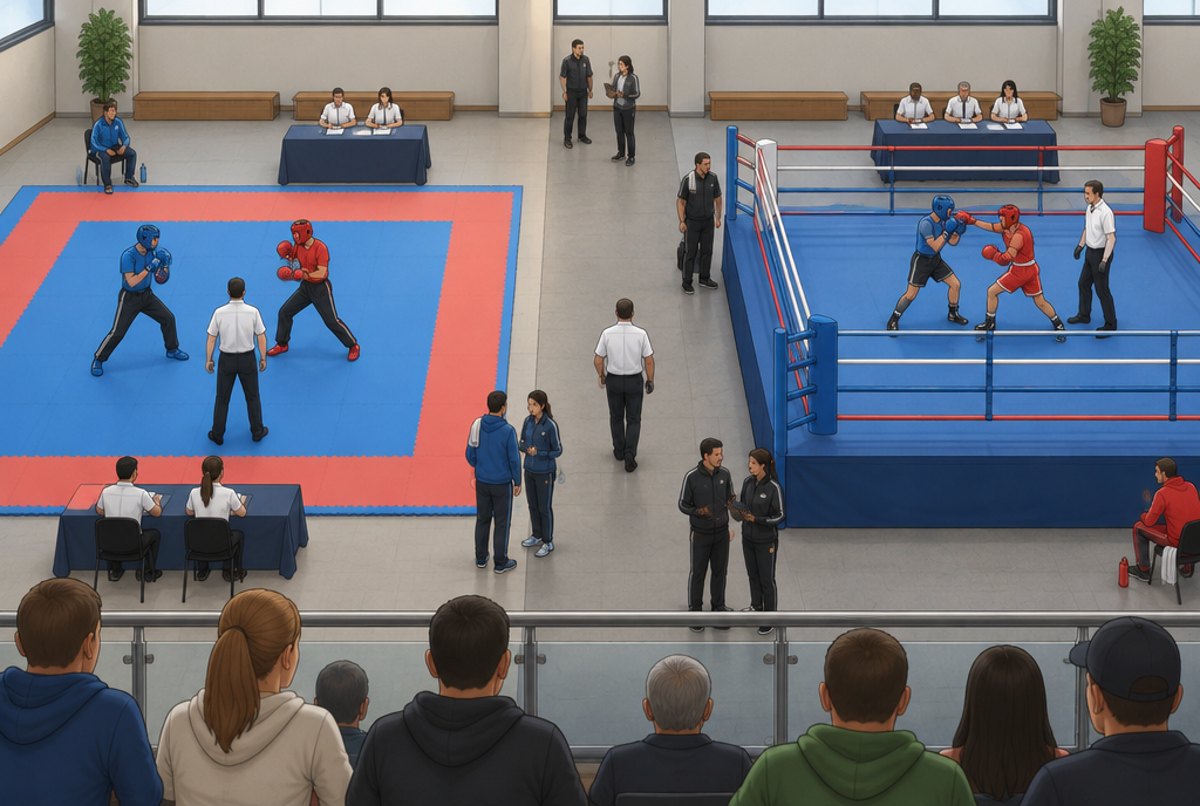
Mat and ring, amateur and professional, six kicks a round or knees from the clinch: the ring formats are where kickboxing looks most like the sport on television. The next chapter asks the question families ask most. Is any of it Olympic?