

Read this first. Kickboxing has no single syllabus and no single theory test. WAKO's grading programme is optional for its national members, Kickboxing GB publishes none, and many clubs, especially competition gyms and fitness classes, do not grade. 47,80 Where a theory question is asked, it belongs to the body or club that sets it. The examples here are a general picture built from WAKO's published programme. They are not any body's syllabus, and an instructor may want a different answer, spelling or rule, and is right for that grading.
What WAKO's programme asks for
- Theory at every grade. Each of WAKO's colour grades lists theory beside its fitness work, guards, footwork, blocks, punches, kicks, combinations and tactics; the content is WAKO's and is only summarised here. 47
- A written paper for black belt. A candidate for 1st Dan must be at least 16 in the year of grading and write a short paper on the history of kickboxing. 47
- A thesis for the senior grades. From 4th to 7th Dan, candidates are graded at an international WAKO seminar and present a thesis. 47
- Competition or a routine. Some colour grades ask for competition entries, with a musical form or aerokickboxing routine as the alternative for students who do not compete. 47
How it varies
- WKA International: a 4 to 5 hour 1st Dan test of techniques and combinations, pad work, controlled sparring and conditioning, for students with high attendance over about 4 years. 58
- WKUWORLD: a published programme with separate preschool, children's and adult strands, minimum ages for each belt and half grades in between. 60,61
- Most clubs: their own way, or no grading at all. ISKA publishes no student grading scheme. 54,57
Three bodies, three answers, and a club in any of them may add expectations of its own.
Practice set: 15 example questions
These are examples of the kind of question a theory section might ask. Each answer shows its source.
- Where and when was the first kickboxing event held, and who named the sport? Osaka, 11 April 1966; the boxing promoter Osamu Noguchi is credited with the name. 1,9
- What are WAKO's seven formats? Point fighting, light contact, kick light and musical and creative forms on the tatami; full contact, low kick and K1 Style in the ring. 41
- What is the difference between a tatami format and a ring format? Tatami formats are fought on a mat with light, controlled contact and scored on points; ring formats are fought at full power in a ring and won on points or by a stoppage. 40,41
- Name the four basic punches. Jab, cross, hook, uppercut. 12,47
- Which strike is never allowed in any WAKO format? The elbow. 8,41
- In which WAKO format are knees allowed? K1 Style only. 41
- How many kicks must a full contact fighter throw in a round under WAKO rules? At least six, 18 a bout. 41
- How does point fighting score a punch, a body kick, a head kick and a jumping head kick? One, one, two and three points. 41
- What is a check? Lifting the shin to block a leg kick; in kick light a deliberately checked thigh kick scores no point. 1,41
- What size are point fighting gloves and kickboxing gloves? 8 oz open hand gloves for point fighting; 10 oz closed gloves for the other fighting formats. 41
- From what age may a child compete in WAKO point fighting, and from what age in a ring format? From the year they turn 7; ring formats from 15. 41
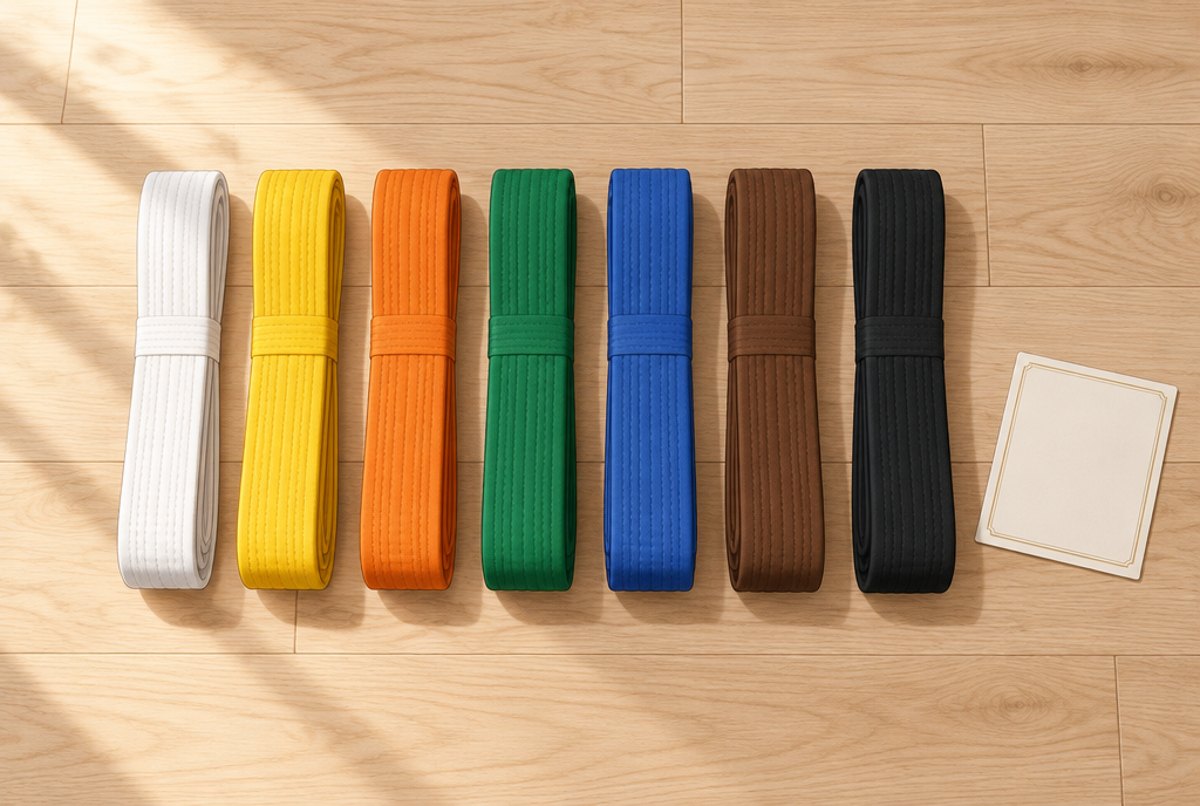
- What are the colours of WAKO's optional belt scheme, in order? White, yellow, orange, green, blue, brown, black. 47
- What must a WAKO 1st Dan candidate be and do? At least 16 in the year of grading, and write a short paper on kickboxing history. 47
- Which body do the UK sports councils recognise for kickboxing in England, Scotland and Wales, and which in Northern Ireland? Kickboxing GB; Kickboxing Ireland. 89
- When was WAKO fully recognised by the IOC, and is kickboxing an Olympic sport? July 2021, and WAKO gives 20 July; no, it is not on the Olympic programme. 2,40,52
Questions only your coach can answer
Your own club's syllabus and the order it teaches techniques, how many months your coach expects at each belt, your body's own history questions, and anything about fees or dates. Those come from your coach. 47,58,61,80